By Martino Crivelli, physiotherapist and co-founder of Kineo, Kineo Escher Wyss
More than pain-free
Classic physiotherapy has a clear aim: relieve pain and make everyday life possible again. Sports physiotherapy goes one step further. It asks: what does your body need to be fully resilient in your sport again, and how do we stop it happening again?
What defines sports physiotherapy
- Sport-specific: A runner needs something different from a footballer or a HYROX athlete. Therapy follows the movements of your sport.
- Active rather than passive: Treatment on the table is one part. The bigger part is targeted training for strength, power and coordination.
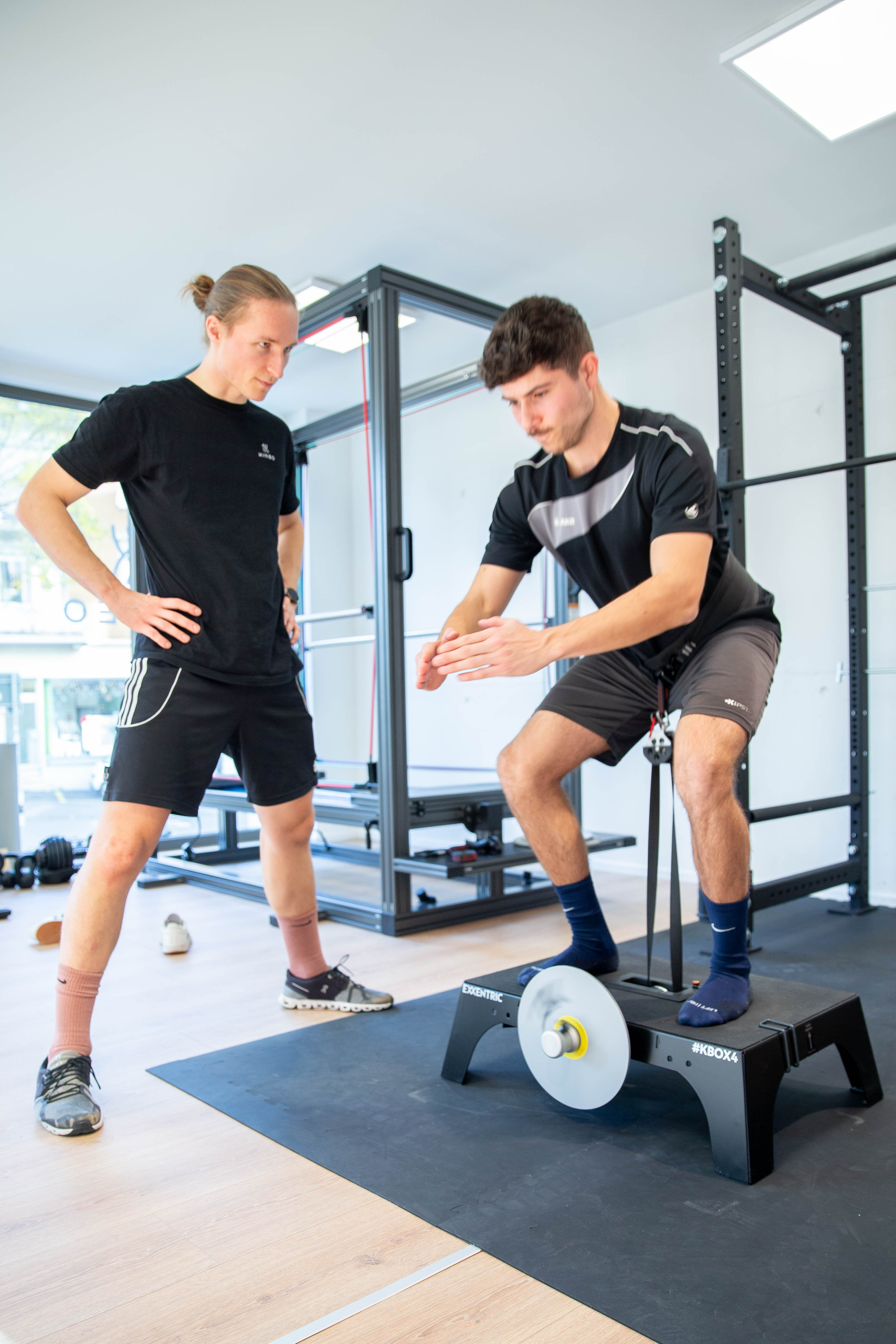
- Measurable: Side-to-side strength comparison, jump tests and performance diagnostics show where you stand.
- All the way to performance: The goal is not just return to sport, but return to performance.
- Prevention: Spot weak points before they become an injury.
Who is sports physiotherapy for?
Not only for professionals. Sports physiotherapy is worthwhile for anyone who does sport regularly and wants more than just being pain-free:
- Runners with knee, shin or Achilles tendon problems
- Ball and racket sport players after ligament injuries or strains
- HYROX, CrossFit and strength athletes with overuse problems
- Anyone who wants to get back to sport after an operation, for example on the cruciate ligament or meniscus
- Returners who want to build up safely
Is sports physiotherapy paid for by health insurance?
With a doctor's prescription, physiotherapy is billed through basic health insurance, even if it has a sports physiotherapy focus. You pay for training sessions and performance diagnostics without a prescription yourself.
How a treatment works with us
Sports physiotherapy follows a clear sequence. Each phase has a goal and a measurable criterion before you move on.
1. Assessment: what we examine in your first session
- Conversation: How the injury happened, your sport, training volume over recent weeks, competition dates and goals
- Examination of the affected structure: Palpation, mobility, provocation and stability tests
- Strength compared side to side: The injured leg or arm is compared with the healthy side.
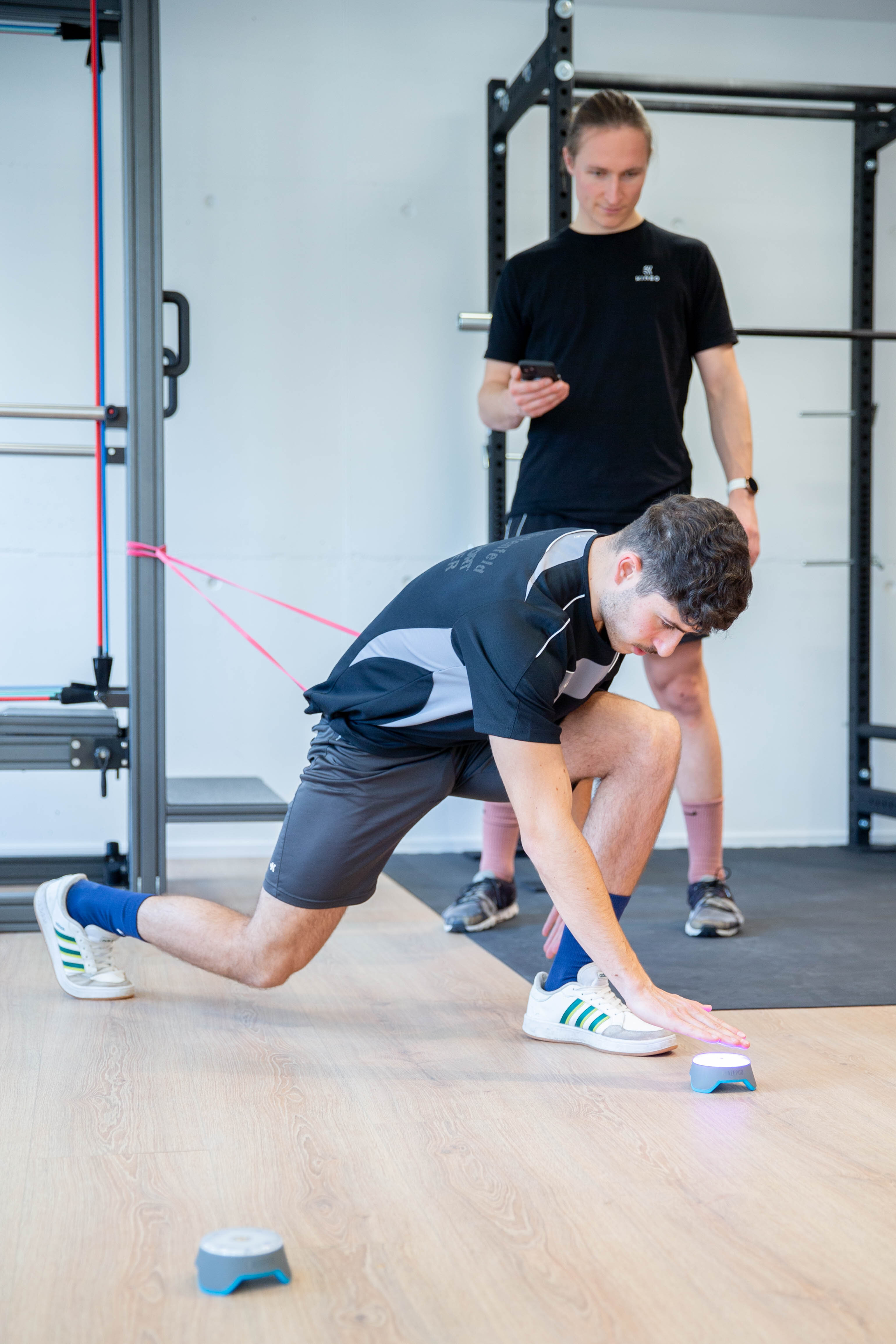
- Movement quality: Single-leg squat, landing after a jump, running pattern
- Load history: Has your volume changed a lot recently? That is often where the real cause lies.
2. Treatment in phases
- Acute phase: Control pain and swelling, treat in a targeted way and stay active from the start wherever possible
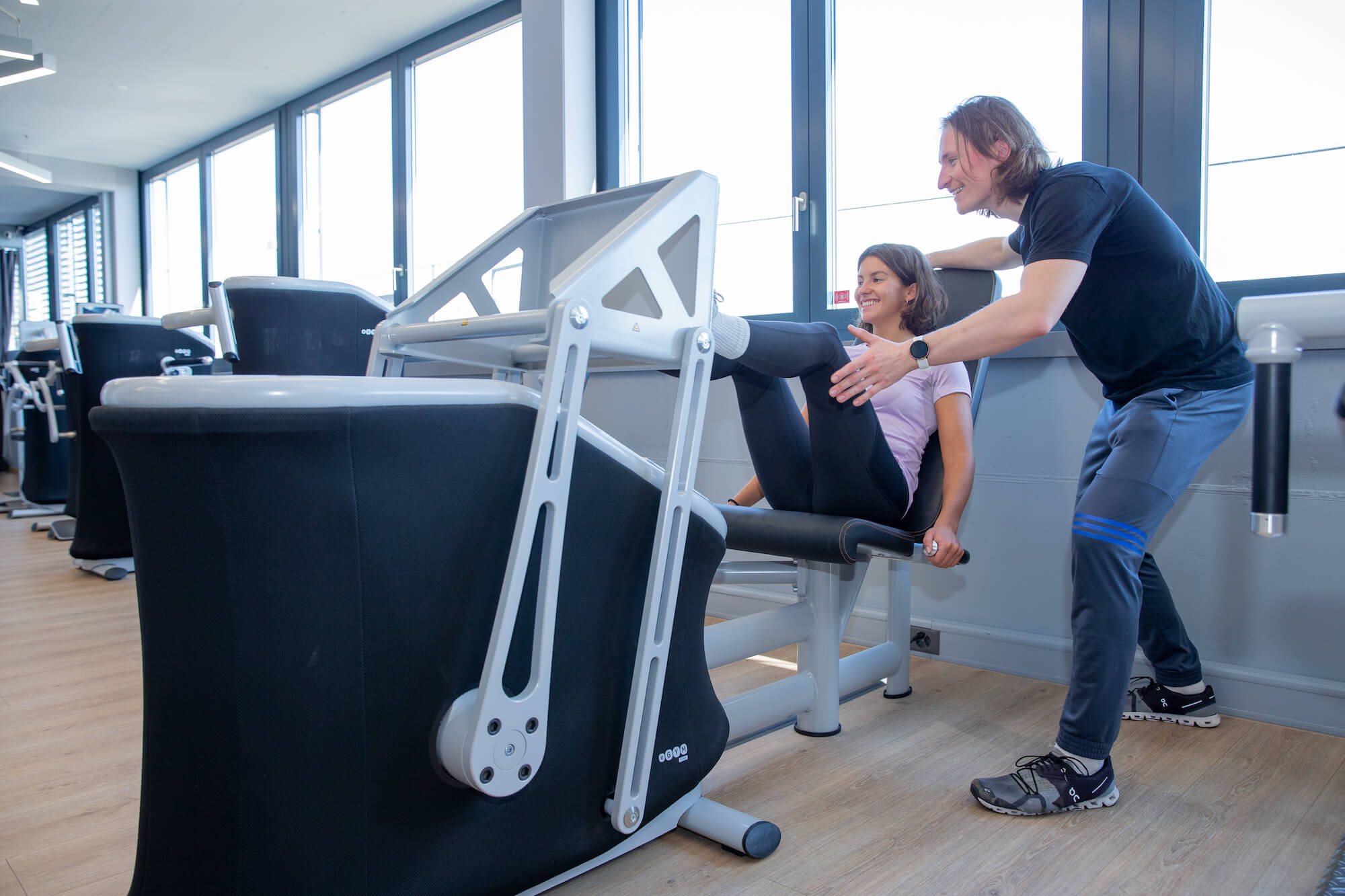
- Build-up phase: Progressive strength training right here on our training floor, not just an exercise sheet for home
- Sport-specific phase: Jumping, sprinting, changes of direction and the movements of your sport
- Return-to-sport tests: Strength, jump tests and load tolerance decide on clearance, see Return to sport
- Prevention: A maintenance programme so the injury doesn't come back
3. Kineo services we use
- Manual therapy, dry needling and trigger point treatment for pain and mobility
- Shockwave therapy for stubborn tendon problems
- Cold therapy with Game Ready after injuries and operations
- Senso Pro training for balance, reaction and coordination
- Power training and sport-specific training for the final steps back
- High-intensity interval training to rebuild endurance
Typical complaints in sports physiotherapy
- Knee: runner's knee, jumper's knee, cruciate ligament tear
- Foot and lower leg: Achilles tendon, ankle, plantar fasciitis
- Hip and groin: groin pain
- Shoulder and arm: shoulder injuries, tennis elbow
- Muscles: strains and muscle tears
Physiotherapy or sports physiotherapy: the difference
- Goal: Classic physiotherapy is about everyday life without pain, sports physiotherapy about full load tolerance in sport.
- Tools: Besides manual therapy, plenty of strength, jump and speed training.
- Measurement: Progress is backed up with tests, not just with how the pain feels.
- Timing: Sports physiotherapy is also worthwhile as prevention, before anything happens.
Measuring load instead of guessing
In rehab the same question always comes up: how much is right at the moment? For strength and tissue, we test that in physiotherapy. For the cardiovascular system, performance diagnostics provide the answer. A lactate step test shows up to which heart rate your body still works mainly aerobically. Below that limit you can maintain your endurance even during an injury, for example on the bike or in the water, without putting extra stress on your body.
From the treatment room to training
From group training at Kineo HYROX we know a principle that also works in rehab: every exercise can be scaled. Weight, tempo, range of motion and rest are the adjustable variables.
- Weight: clean movement first, then the load
- Tempo: slow, controlled repetitions are often more effective for tendons than fast ones
- Range of motion: start in the pain-free range and extend it step by step
- Rest: longer rests allow more quality per repetition
That way an exercise in the treatment room gradually becomes your normal training again.

From our practice
Many people only come once they haven't been able to train at all for weeks, or they go straight back to full training after the first pain-free week. Both prolong the break. The people who get back fastest are those who come early and plan their return according to clear criteria.
Kineo Escher Wyss: our sports physio location
Kineo Escher Wyss is at Hardturmstrasse 18 in 8005 Zürich, right at Escher-Wyss-Platz. On two floors and around 280 m² we combine sports physiotherapy, a supervised training floor and HYROX training. You do performance diagnostics such as the lactate step test at the Kineo Performance Lab in Seefeld. We also offer running analysis, shockwave therapy, dry needling and manual therapy. Please bring sportswear and clean sports shoes.
Frequently asked questions
Do I need a doctor's prescription?
For billing through health insurance, yes. Without a prescription you can pay for sports physiotherapy, training and performance diagnostics yourself.
Is a recreational athlete right for this?
Yes. Most of our patients do sport in their free time. What matters is that you want to be resilient again, not your level.
How quickly can I get an appointment?
Usually within a few days. You can see free appointments directly in the online booking.
What should I bring?
Sportswear, clean sports shoes, and if you have them, the prescription and reports from doctors or imaging.
How long does an appointment last?
A physiotherapy appointment at Kineo lasts 30 minutes. In the first session we clarify the cause and start straight away with treatment and first exercises.
Does health insurance cover physiotherapy?
Yes. With a doctor's prescription, your basic health insurance covers the cost. Kineo is recognised by all Swiss health insurers.
You might also like
- Return to sport: when am I ready again?
- HYROX: avoiding typical injuries
- Lactate test: what it measures
Book an appointment
Want to get back to your performance after an injury? Book your appointment at Kineo Escher Wyss.