Shoulder injuries in competitive sport: strong shoulders for maximum performance
The shoulder is the most mobile joint in the human body, and that is exactly what makes it both incredibly capable and prone to injury in competitive sport.
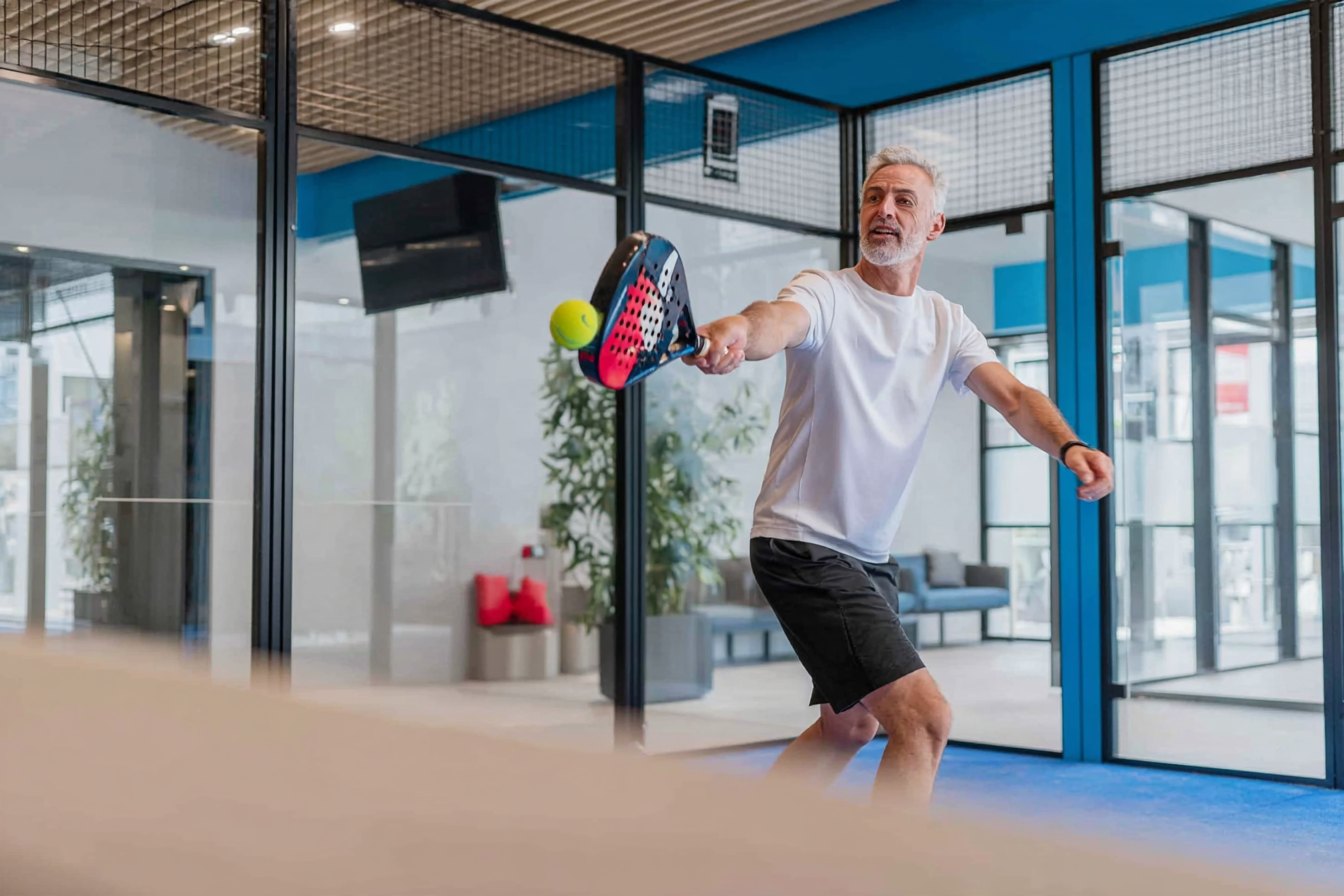
Especially in overhead sports such as:
- tennis,
- handball,
- volleyball,
- swimming,
- CrossFit,
- weightlifting
- or throwing sports
the shoulder has to cope with enormous loads.

Explosive movements, high repetition numbers and intense training volumes mean that:
- tendons,
- muscles,
- the joint capsule
- and the stabilising structures
are constantly under tension.
Many athletes know this:
- pain when throwing,
- a pulling sensation when hitting,
- a feeling of instability,
- loss of strength
- or restricted movement.
If you react early, chronic problems can often be avoided. With targeted physiotherapy support and a structured return-to-play plan, the shoulder can become stable, resilient and high-performing again.
At KINEO, we support athletes with sport-specific physiotherapy, movement analysis and functional athletic training.
WHY THE SHOULDER IS SO VULNERABLE IN SPORT
The shoulder has to be all of these at once:
- mobile,
- stable,
- powerful
- and precise.
Unlike other joints, it has relatively little bony stability and therefore relies heavily on:
- muscles,
- tendons,
- ligaments
- and coordinative control.
Repeated overhead movements in particular often lead to:
- overload,
- irritation,
- instability
- or structural damage.
The structures most commonly affected are:
- the rotator cuff,
- the shoulder blade,
- the joint capsule,
- the labrum
- and the surrounding muscles.
COMMON SHOULDER INJURIES IN COMPETITIVE SPORT
ROTATOR CUFF INJURIES
The rotator cuff stabilises the shoulder joint during movement.
Through:
- high training loads,
- repeated overhead movements
- or muscular imbalances
it can lead to:
- irritation,
- overload
- or tendon tears.
Particularly often affected:
- swimmers,
- tennis players,
- volleyball players
- and throwing athletes.
SHOULDER INSTABILITY
Under heavy load or after injuries, the shoulder can become unstable.
Typical symptoms:
- a feeling of insecurity,
- a sense of the shoulder "slipping out",
- pain during fast movements
- or repeated dislocations.
Often affected:
- handball,
- volleyball,
- American football
- and contact sports.
IMPINGEMENT SYNDROME
In impingement, the following:
- tendons,
- bursae
- or other structures
get squeezed under the roof of the shoulder.
Typical complaints:
- pain when lifting the arm,
- discomfort overhead,
- pain at night
- or loss of strength.
LABRUM INJURIES
The labrum is the ring of cartilage around the shoulder socket.
Above all:
- throwing movements,
- strong pulling forces
- or instability
can lead to injuries.
Typical signs are:
- deep shoulder pain,
- clicking,
- instability
- or loss of performance.
TYPICAL SYMPTOMS OF SHOULDER INJURIES
Depending on the structure involved, different symptoms can occur.
Common ones are:
- pain during overhead movements,
- loss of strength,
- a feeling of instability,
- restricted movement,
- grinding or clicking,
- discomfort when sleeping on the shoulder
- or reduced sporting performance.
Important:
The earlier symptoms are treated, the better the long-term chances of recovery.
WHAT CAN YOU DO YOURSELF?
FIRST MEASURES FOR SHOULDER PAIN
With acute symptoms or after an injury, simple measures help first:
COOLING
Cold can:
- relieve pain,
- reduce inflammation
- and keep swelling under control.
Recommendation:
- 15–20 minutes,
- several times a day.
RELATIVE REST
Avoid:
- painful movements,
- heavy loads
- and intense training.
Important:
Complete immobilisation usually makes no sense. Controlled movement remains important.
COMPRESSION AND STABILISATION AIDS
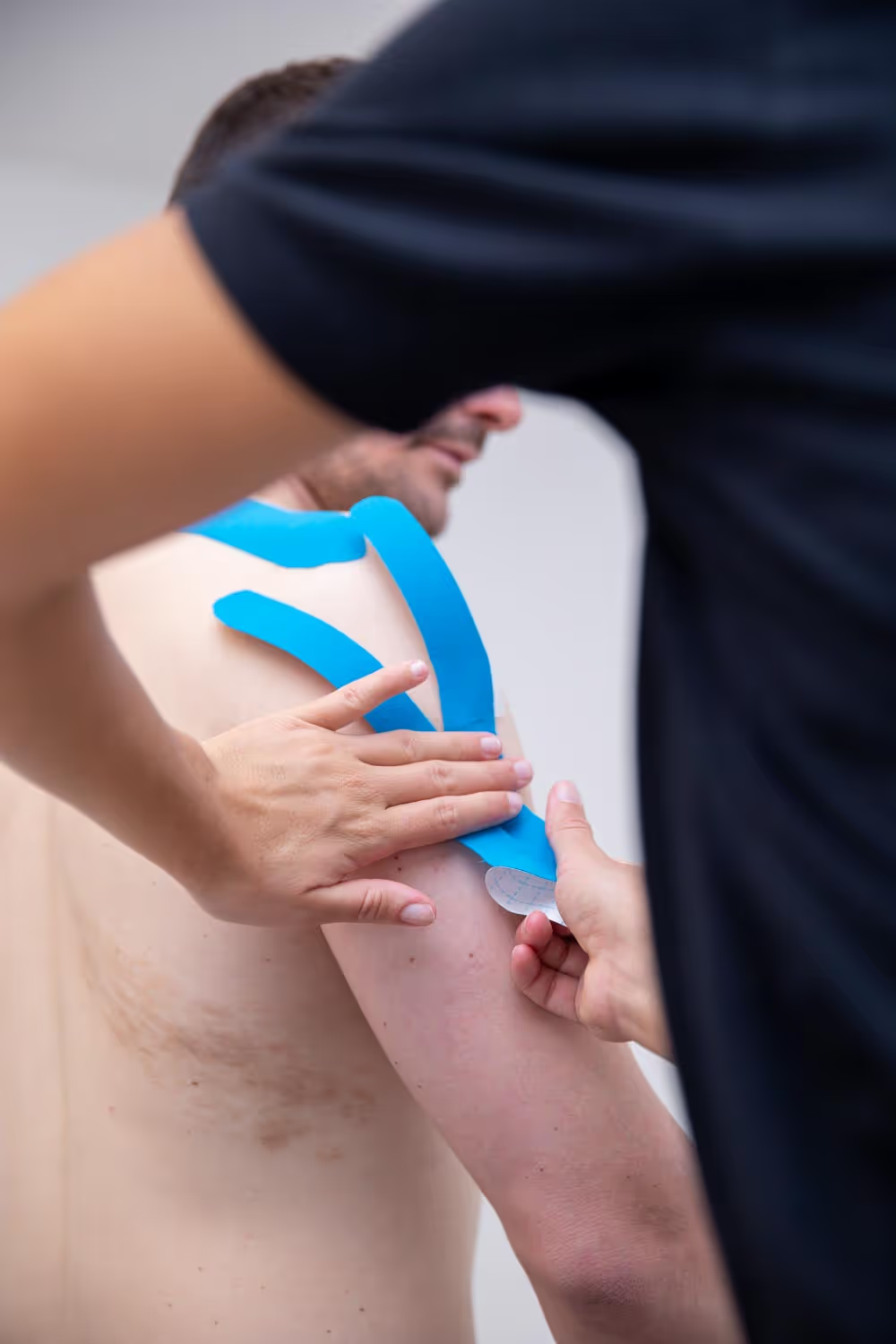
Bandages or tape can:
- provide stability,
- reduce pain
- and improve your sense of security.
EXERCISES FOR REHABILITATION
EXTERNAL ROTATION WITH A THERABAND
One of the most important exercises for the rotator cuff.
It improves:
- shoulder stability,
- control
- and resilience.
Recommendation:
- 3 sets of 15 repetitions per side.
DYNAMIC PLANK WITH BALL STABILISATION
This exercise improves:
- shoulder control,
- core stability,
- and coordinative resilience.
Particularly important for overhead athletes.
Recommendation:
- 3 sets of 10 movements.
CABLE PUNCHES
This exercise simulates:
- throwing movements,
- explosive power
- and controlled acceleration.
It improves:
- sport-specific stability,
- rotation control
- and resilience.
Recommendation:
- 3 sets of 12 repetitions.
OVERHEAD FARMER’S CARRY
An excellent exercise for:
- shoulder stability,
- body tension,
- and load control overhead.
Recommendation:
- 3 rounds per side.
IMPORTANT PREVENTION STRATEGIES
REGULAR STRENGTH TRAINING
Targeted training for:
- the rotator cuff,
- shoulder blade control,
- the trunk
- and the upper limb
improves the shoulder's resilience.
DYNAMIC WARM-UP
A good warm-up prepares:
- muscles,
- joints
- and the nervous system
optimally for load.
Particularly useful:
- arm circles,
- pendulum movements,
- mobilisation exercises
- and activation exercises.
TECHNIQUE OPTIMISATION
Faulty throwing or hitting technique clearly increases the risk of injury.
A good movement analysis can help to:
- reduce loads,
- improve efficiency
- and prevent problems.
RECOVERY
Recovery is essential for long-term performance.
Helpful measures are:
- foam rolling,
- massage,
- active recovery,
- sleep
- and good load management.
HOW KINEO PHYSIOTHERAPY CAN SUPPORT YOU
At KINEO, we offer specialised care for athletes with shoulder injuries.

THOROUGH DIAGNOSTICS AND ANALYSIS
We analyse:
- movement patterns,
- shoulder function,
- stability,
- strength
- and sport-specific loads.
This lets us identify:
- weak points,
- imbalances
- and the causes of your symptoms.
MANUAL THERAPY AND PAIN REDUCTION
Among other things, we use:
- manual therapy,
- dry needling,
- kinesio taping,
- trigger point treatment
- and mobilisation techniques.
The aim:
- reduce pain,
- improve mobility
- and support the healing process.
SCAPULAR CONTROL TRAINING
Good shoulder blade control is crucial for:
- stability,
- force transfer,
- and efficient movement.
Many shoulder problems arise from poor control of the shoulder blade muscles.
RETURN-TO-PLAY PROGRAMMES
We guide you step by step back into your sport.
PHASE 1: PAIN CONTROL AND MOBILITY
Focus:
- reduce pain,
- improve mobility,
- calm the shoulder down.
PHASE 2: STRENGTH AND STABILITY
Focus:
- building up the rotator cuff,
- core stability,
- progressive loading.

PHASE 3: FUNCTIONAL MOVEMENTS
Focus:
- sport-specific movements,
- throwing and hitting movements,
- coordinative control.
PHASE 4: RETURN TO SPORT
Focus:
- maximum resilience,
- reactivity,
- competition simulation,
- performance optimisation.
SPECIALISED SERVICES FOR ATHLETES
In addition, we offer:
- video analysis,
- performance diagnostics,
- training planning,
- load management
- and sport-specific advice.
OUR GOAL: BACK TO SPORT STRONG, STABLE AND SAFE
Shoulder injuries can be stressful and drawn out, especially for ambitious athletes.
With:
- targeted therapy,
- functional training,
- sport-specific rehabilitation
- and structured load management
the shoulder can become again:
- stable,
- high-performing
- and resilient.
We guide you individually, evidence-based and sport-specifically on your way back to training and competition.

FAQ: Shoulder injuries in competitive sport
1. Which shoulder injuries are most common in overhead sports?
Rotator cuff injuries, impingement syndromes, shoulder instability and labrum injuries are common.
2. Should I stop completely if my shoulder hurts?
Not necessarily. Controlled movement and adapted loading often make more sense than complete immobilisation.
3. Why is shoulder blade training so important?
Good shoulder blade control improves stability, force transfer and load distribution in the shoulder.
4. When can I play sport again after a shoulder injury?
That depends on the injury. A structured return-to-play process helps you return safely and in a controlled way.
5. Can physiotherapy improve my sporting performance?
Yes. Through better movement quality, stability, technique and load management, the shoulder can become more powerful and resilient.