
By Lucrecia Guerra, physiotherapist at Kineo Escher Wyss
Quick changes of direction, lots of shots
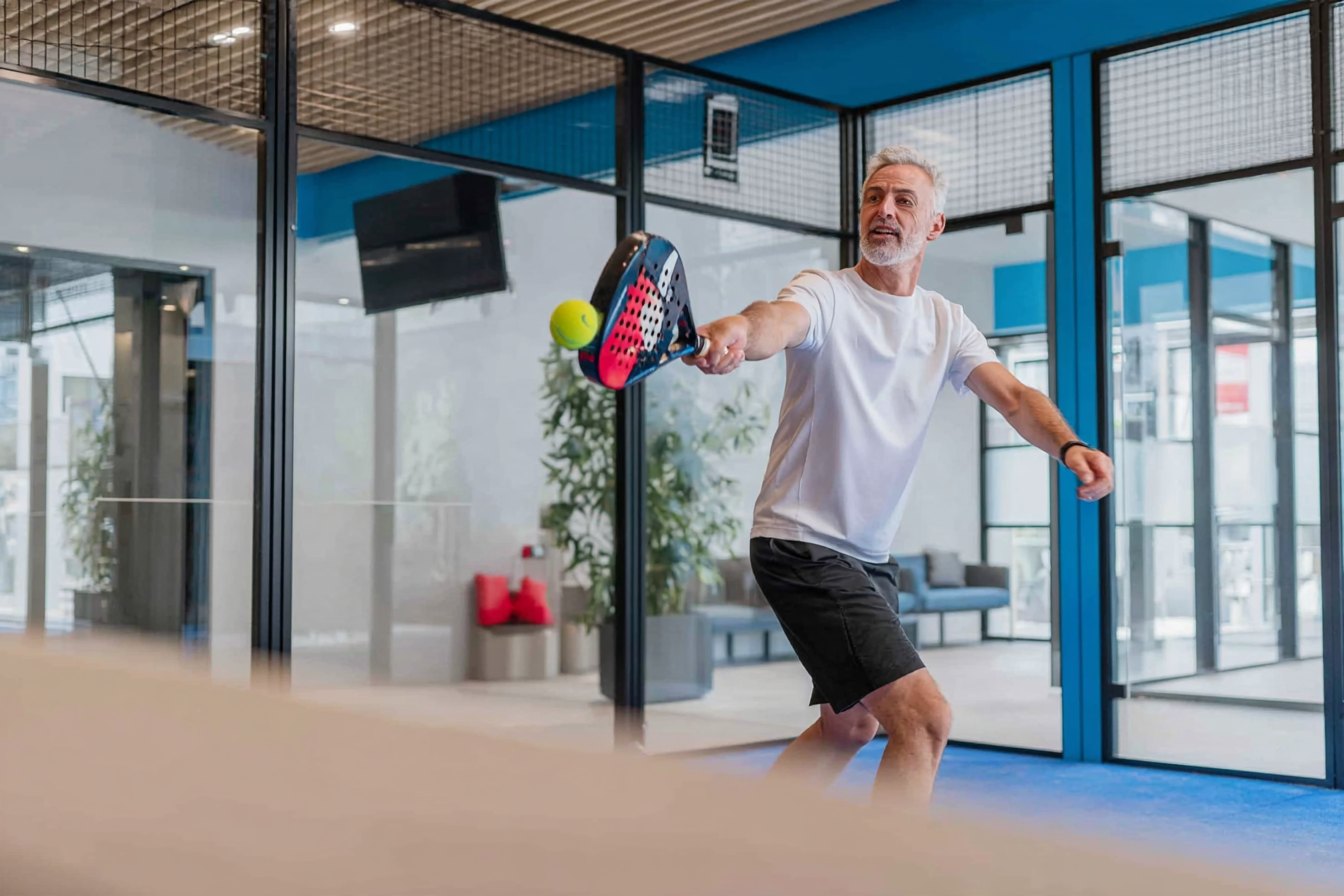
Padel has quickly become one of the most popular sports in Zürich, and tennis remains a classic. Both combine short sprints, abrupt stops and lots of shots, often overhead. Especially if you’re new to the game or play a lot, you’ll soon notice it in your shoulder, elbow and calves.
Typical injuries
- Tennis elbow: pain on the outside of the elbow due to overload of the forearm extensors, common in beginners and with technical errors
- Shoulder complaints: serve, smash and bandeja load the rotator cuff
- Calf strain: the typical “tennis leg” moment during an explosive start
- Ankle: rolling your ankle during sideways movements
- Knee and Achilles tendon due to frequent stops and changes of direction
- Back due to rotation and bending, especially with low balls in padel
How to prevent injuries
- Warm up: 10 minutes with running, side steps, jumps and shoulder activation
- Strengthen the shoulder and shoulder blade, especially the external rotators
- Train your forearm: slow eccentrics for the wrist and finger extensors
- Calves and ankle: calf raises and balance exercises
- Increase playing time gradually, especially when starting padel
- Check your equipment: racket weight, grip size and shoes for the court surface
How we help with complaints
Tennis and padel load the elbow, shoulder, back and calf in similar ways. We don’t just look for the painful spot, but at the whole chain from foot to racket.
1. Assessment: what we examine in your first session
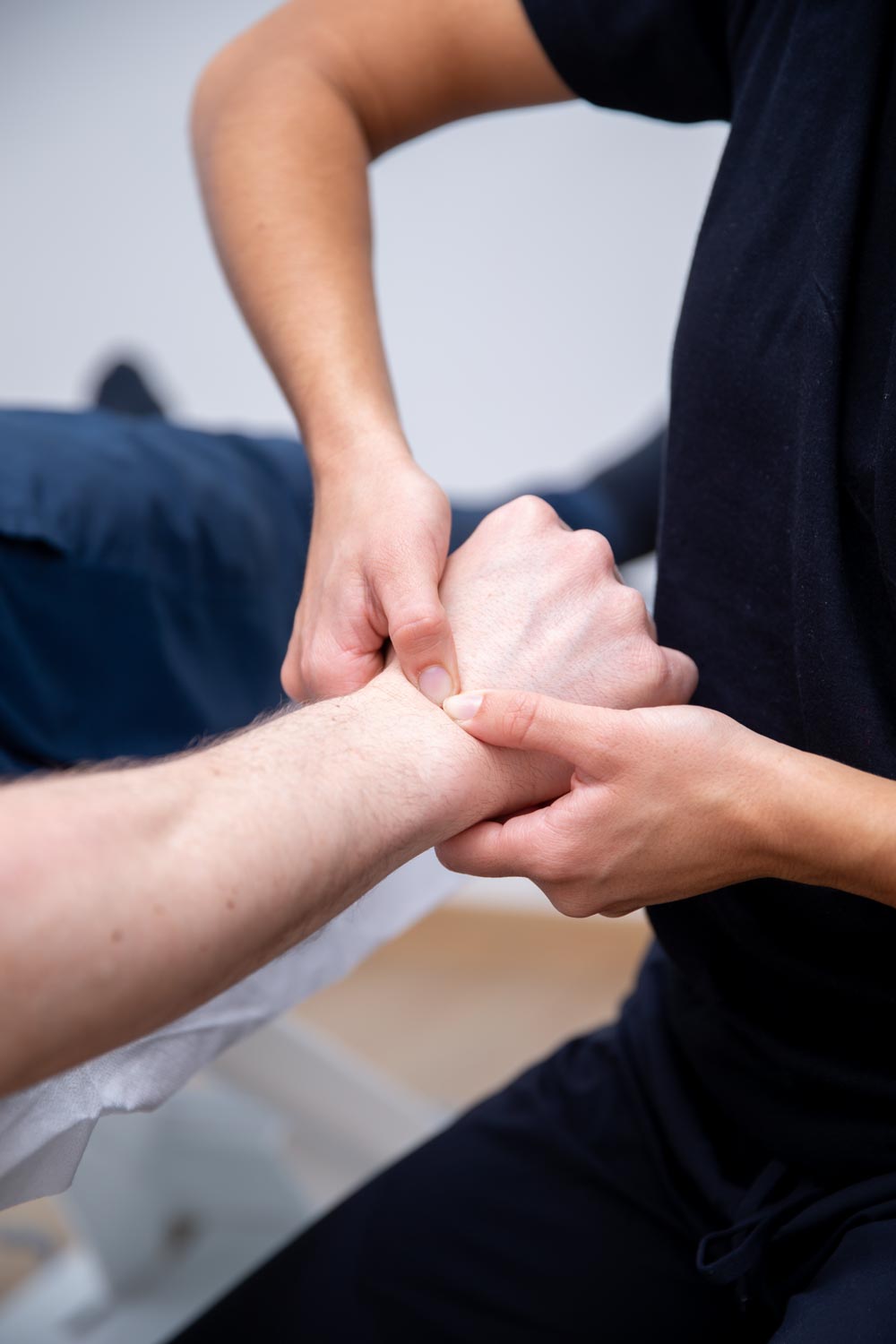
- Elbow: tenderness at the outer bony prominence, pain when extending the wrist and middle finger against resistance, and pain-free grip strength compared side to side
- Shoulder: many players have less internal rotation in their hitting arm. We measure rotation on both sides and check the strength of the external rotators and control of the shoulder blade.
- Trunk and hips: if rotation is lacking in the thoracic spine or hips, the arm has to work harder.
- Calf and Achilles tendon: strength endurance in single-leg heel raises, important for the many stops in padel
- Equipment and load: grip size, string tension, racket weight and how many hours a week you play
2. Treatment in phases
- Phase 1: reduce irritation. Adjust your playing volume, don’t stop completely. Isometric exercises for the forearm or shoulder often already relieve the pain.
- Phase 2: build capacity. Slow, heavy exercises for the forearm, rotator cuff, trunk and legs, for example eccentric work with the Flexbar for tennis elbow.
- Phase 3: fast and specific. Power, changes of direction and stroke movements with a resistance band.
- Phase 4: back on court. Groundstrokes first, then volleys and smashes, serve last. We increase playing time in steps.
3. Kineo services we use
- Deep friction on the tendon for tennis elbow
- Shockwave therapy for tendon complaints that have lasted longer than a few weeks
- Dry needling for the forearm, shoulder and neck
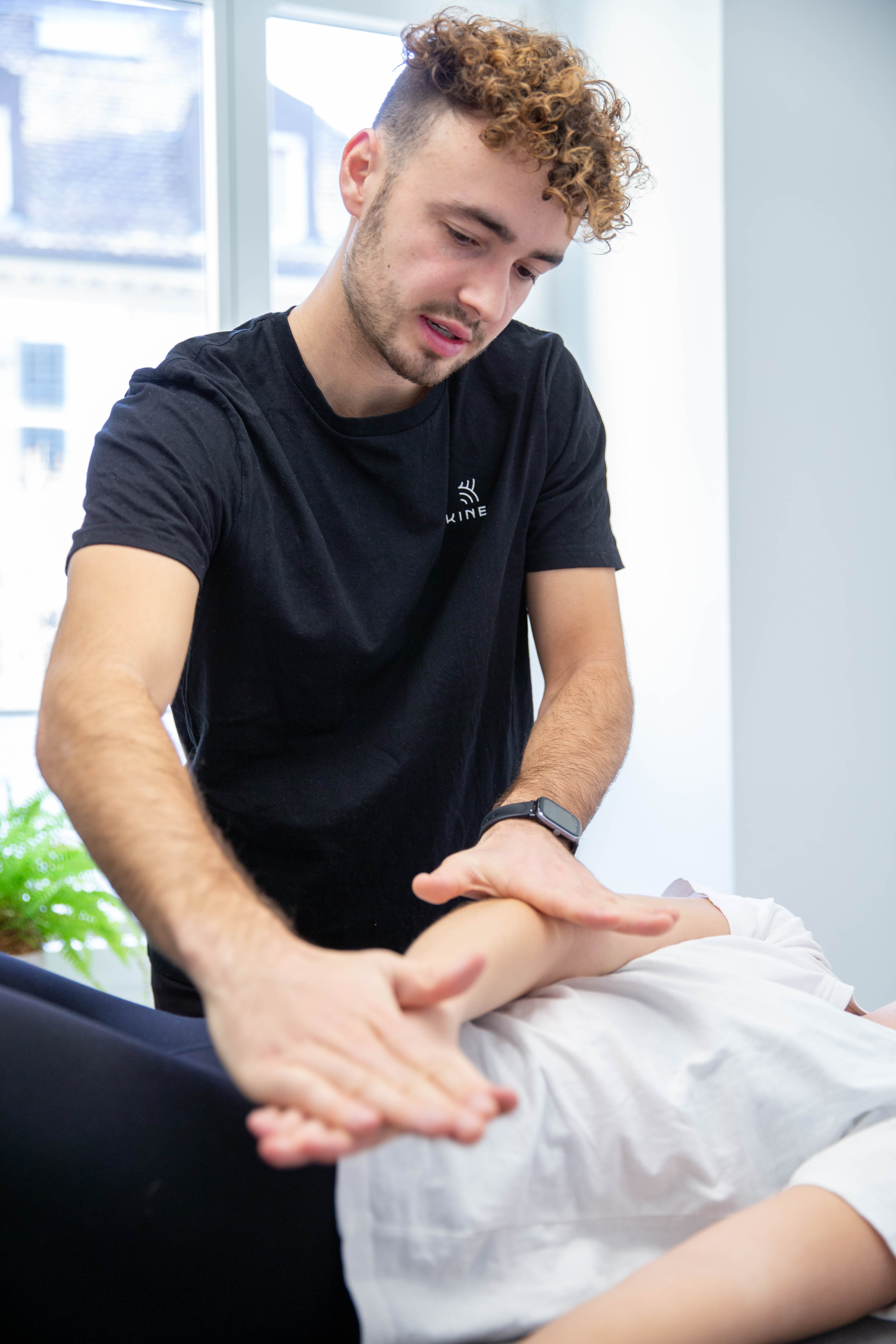
- Manual therapy for the elbow, shoulder and thoracic spine. We also check for pain radiating from the cervical spine.
- Sport-specific training with the movements of your game
10-minute warm-up before the match
- 2 minutes of easy jogging and side steps
- Arm circles and shoulder blade activation with a resistance band
- 10 lunges with rotation per side
- Short sprints and changes of direction across the width of the court
- Easy rallying first, only then full shots and smashes
What athletic training does for your game
Tennis and padel require less endurance than many people think, but lots of speed, braking and rotation. These are exactly the abilities you can train specifically:
- Braking: knee, ankle and calf injuries often happen when stopping. Controlled stops from a sprint and lateral landings train exactly that
- Rotation from the hips: the power for forehand, backhand and smash comes from the legs and trunk. Side medicine ball throws against the wall transfer this kinetic chain, so the shoulder and elbow have to do less
- Eccentric shoulder work: after every serve, the external rotators brake the arm. Slow lowering against resistance makes them more resilient
- Reactive strength: small, quick jumps improve your first step to the ball
We build these elements into personal training at Kineo HYROX or on the equipment at Kineo Fitness, tailored to your game.
From our practice
In padel in particular, we see many beginners who are playing three to four times a week after just a few weeks. The forearm can’t keep up. Those who increase their playing time more slowly and strengthen their forearm almost always stay free of complaints.
Back on court, with support in Zürich West
At Kineo Escher Wyss near Escher-Wyss-Platz, you continue training directly after treatment, with exercises for the shoulder, forearm, trunk and legs tailored to your game. For stubborn tennis elbow, we also use deep friction or shockwave.
Frequently asked questions
Is padel worse for the elbow than tennis?
Not in principle. But many beginners suddenly play a lot and with unfamiliar technique. That overloads the forearm.
Should I wear an elbow brace?
It can provide short-term relief, but it doesn’t replace strength training for the forearm.
How long does tennis elbow last?
With targeted training, often a few weeks to a few months. Without adjustments, it can persist for a long time.
Does health insurance cover physiotherapy?
Yes. With a doctor's prescription, your basic health insurance covers the cost. Kineo is recognised by all Swiss health insurers.
You might also like
Book an appointment
Do your elbow, shoulder or calf complain after a match? Book your appointment at Kineo Escher Wyss.

