By Diego Rojas, physiotherapist at Kineo Seefeld
When the first step in the morning hurts
You get up, and with the first step there's a stabbing pain under your heel. After a few minutes it gets better, and after sitting or standing for a long time it comes back. This is typical of plantar fasciitis, an irritation of the band of tissue on the sole of the foot.
The plantar fascia stretches from the heel bone to the toes and supports the longitudinal arch. With overload, small irritations develop where it attaches to the heel. It is often confused with the heel spur. The spur is a bony outgrowth that often causes no symptoms at all. The pain usually comes from the fascia.
Typical causes
- A rapid increase in running volume or jumping load
- A lot of standing or walking on hard ground
- Little strength in the calves and foot muscles
- Restricted mobility in the ankle joint
- Unsuitable or worn-out footwear
What you can do yourself
- Adjust your load: Less running and jumping, more cycling or swimming instead
- Build calf and foot strength: slow heel raises, toe grips
- Wear good shoes with cushioning, don't go barefoot on hard ground
- Patience: With the right load, symptoms usually subside over weeks to months
How we treat plantar fasciitis
Plantar fasciitis is an overload of the tendon-like tissue on the sole of the foot, not a classic inflammation. That is why gradual loading is at the centre, not rest.
1. Assessment: what we examine in your first session
- Tenderness on the inner side of the heel, where the plantar fascia attaches
- Windlass test: We pull your big toe upwards. If the fascia tightens and it hurts at the heel, that fits plantar fasciitis.
- Ankle mobility: With the knee-to-wall test we measure how far your knee gets over your toes. A stiff calf increases the pull on the fascia.
- Calf strength: How many single-leg heel raises can you do, compared side to side?
- Differentiating: Burning, tingling or numbness point more towards a trapped nerve, pain in the middle of the heel more towards the fat pad. Each is treated differently.
2. Treatment in phases
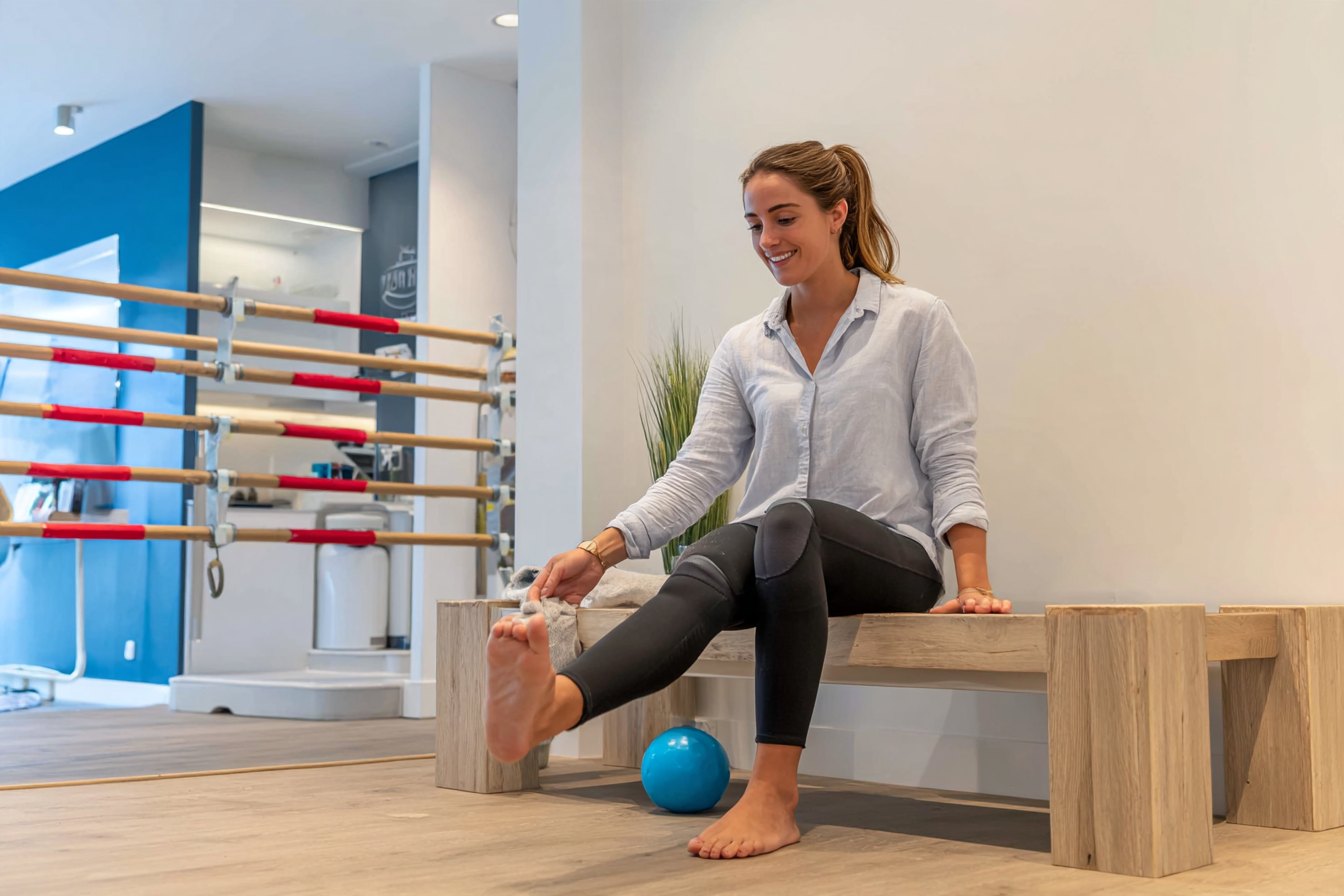
- Phase 1: reduce the irritation (weeks 1–2). Adjust standing time and running volume, shoes with some cushioning under the heel, tape if needed. In the morning before the first step, stretch the fascia: pull your toes upwards, hold for 10 seconds, 10 times.
- Phase 2: heavy and slow (from week 2). Heel raises with a rolled towel under the toes, every second day. Slowly, 3 seconds up, 2 seconds hold, 3 seconds down. Increase the weight until only 8 to 12 repetitions are possible.
- Phase 3: back to running. First hopping and skipping rope, then running intervals. Progression is guided by the morning pain: if it stays the same, you can keep progressing.
3. Kineo services we use
- Shockwave therapy: For symptoms lasting longer than three months, it is one of the best-studied treatments.
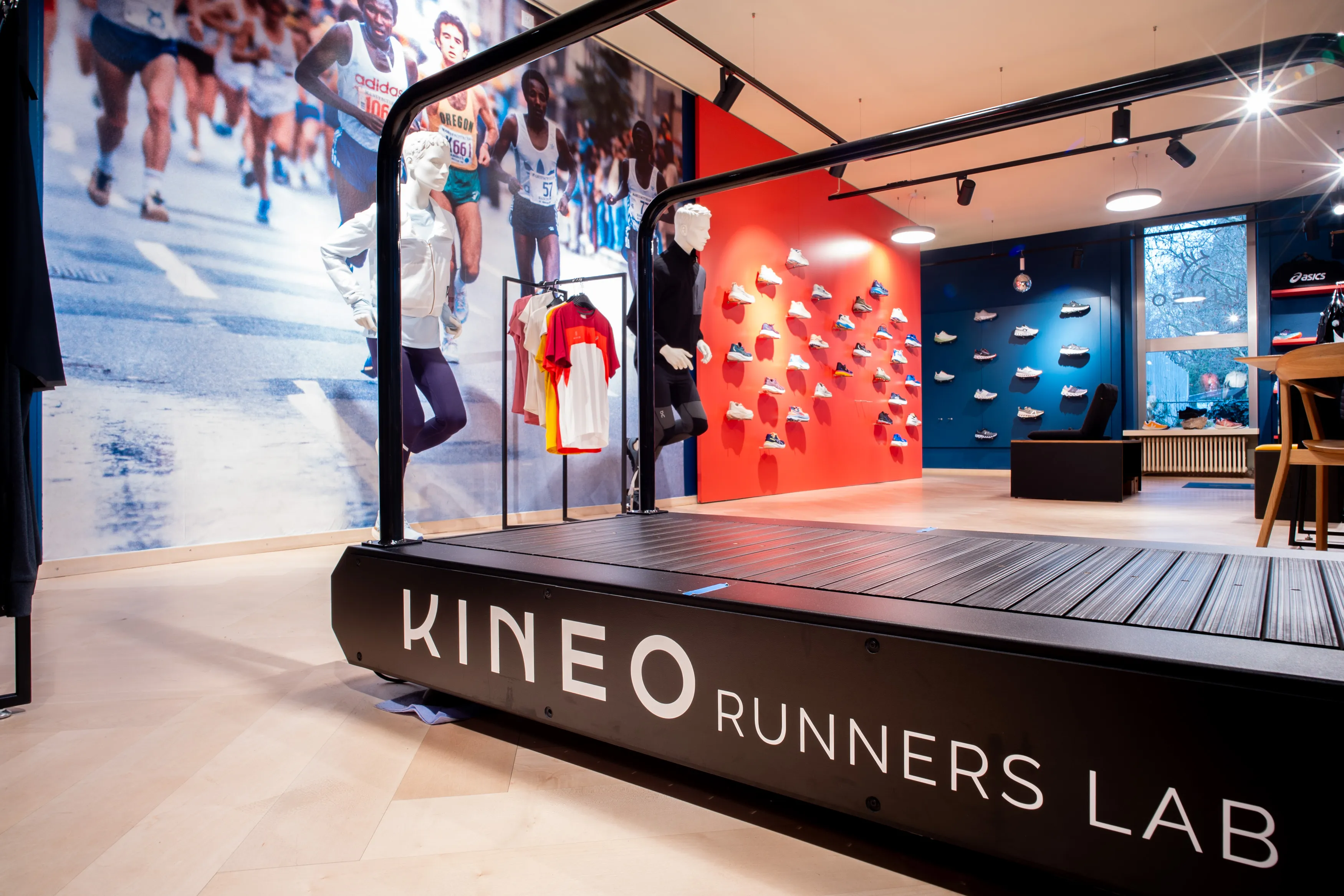
- Runners Physio with Currex 5D running analysis and shoe advice in the Runners Lab
- Trigger point treatment of the calf muscles
- Fascia therapy for the calf and sole of the foot
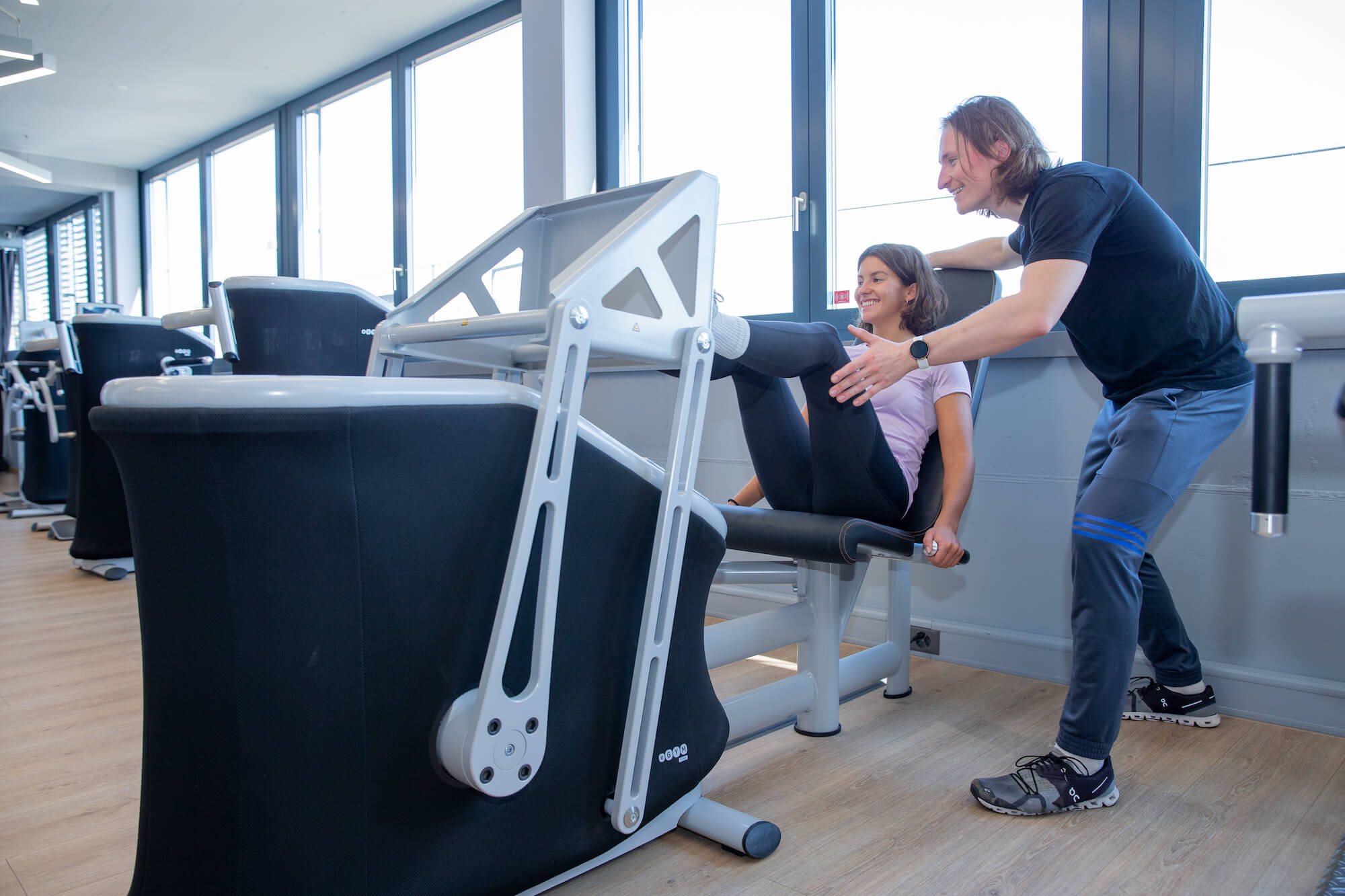
- Medical training therapy to build strength in the calf and foot
Most people become symptom-free again without surgery and without injections. But it takes patience: three to six months is not unusual.
Exercise: heel raises with a toe roll
Place a rolled towel under your toes so that they are stretched upwards. Stand on the affected leg and slowly raise the heel: 3 seconds up, 2 seconds hold, 3 seconds down. Start with 3 x 12 every second day. When it gets easy, add a rucksack with weight. This exercise loads the plantar fascia in a targeted way and makes it more resilient over the weeks.
Changing shoes and running style: what to watch for
In running shoe consultations at the Kineo Runners Lab, we often see that heel pain begins shortly after a change. Typical triggers:
- Lower heel-to-toe drop: A shoe with a smaller height difference between heel and forefoot makes the calf, Achilles tendon and sole of the foot work more. That isn't bad, but you need to get used to it over weeks
- Switching to forefoot running: If you deliberately change from heel striking to forefoot running, the sole of the foot and the calf are loaded much more. A switch is rarely necessary and, if at all, should be made gradually
- Barefoot or minimalist shoes: Good for the foot muscles, but at first only for short distances
Train your foot muscles
The small muscles in the sole of the foot support the longitudinal arch and take strain off the plantar fascia. A simple exercise is the short foot: while standing, keep the ball of the foot and the heel on the floor and lift the arch as if making your foot shorter, without clawing your toes. Hold for 5 seconds, 10 times, daily. Together with heel raises, this makes your foot more resilient over the weeks.

From our practice
Many people have already tried insoles, stretching exercises and new shoes before they come to us. What is almost always missing is targeted strength training for the foot and calf. With a simple exercise programme over a few weeks, symptoms improve clearly in most people.
Foot, shoe and running in view
At Kineo Seefeld on Seefeldstrasse 83, we treat heel pain where your running style and shoes are also checked: in the Runners Lab on the ground floor you get running analysis and shoe advice, and on the first floor physiotherapy and, if needed, shockwave therapy. Stop Feldeggstrasse.
Frequently asked questions
Does shockwave help with plantar fasciitis?
For stubborn symptoms it can support healing, best together with strength training for the foot and calf.
Do I need insoles?
Sometimes they provide temporary relief. In the long term, what counts is that your foot and calf become more resilient.
Can I walk barefoot?
In the acute phase, better not on hard ground. Well-cushioned shoes take strain off the heel.
How long does an appointment last?
A physiotherapy appointment at Kineo lasts 30 minutes. In the first session we clarify the cause and start straight away with treatment and first exercises.
You might also like
Book an appointment
Pain under your heel? Book your appointment at Kineo Seefeld or a running analysis with shoe advice at the Runners Lab.