By Andrina Kümin, physiotherapist at Kineo Seefeld
There is no best running shoe, only the right one
Maximally cushioned, minimalist, with a carbon plate or with support: the choice of running shoes is huge, and every brand promises something different. Which shoe suits you depends on your foot, your running style, your history and your training. A shoe that fits your friend perfectly can cause problems for you.
At the Kineo Runners Lab in Seefeld we advise runners every day, from their first 5 km run to the marathon. Because the physiotherapy is in the same building, we also see what happens when a shoe doesn't fit. In this article we show you what really matters.
The seven features of a running shoe
- Fit: The most important point. About a thumb's width of space at the front, so that your toes don't hit the end when you roll through. The heel sits firmly without slipping, and the midfoot is held without pressure.
- Toe box: Wide forefeet need a wide toe box. Shoes that are too narrow encourage pressure points, black toenails and forefoot pain.
- Cushioning and stack height: More cushioning feels comfortable on long runs and on tarmac. Less cushioning gives more ground feel and challenges the foot muscles more.
- Drop: The height difference between heel and forefoot, usually between 0 and 12 millimetres. The lower the drop, the more your calf and Achilles tendon have to work.
- Stability: More stable shoes guide the foot with a wider sole or firmer elements on the inner side. This can help if your foot collapses inwards a lot and causes problems, but not everyone needs it.
- Rolling shape: Many modern shoes have a curved sole, a so-called rocker. It makes rolling through easier and takes load off the big toe and the sole of the foot.
- Weight and plate: Light shoes and shoes with a carbon plate are made for fast sessions. You don't need them for everyday running.
Which shoe for whom?
- Beginners: A well-cushioned neutral shoe with a medium drop is almost always a good start. More important than the model is building up slowly.
- High-mileage runners: Two different models in rotation, for example a cushioned shoe for long runs and a lighter one for speed. This varies the load.
- Racing: A shoe with a carbon plate can save time over the half marathon and marathon. But only do selected sessions in them and get your calf and foot used to them gradually.
- Trail: Tread, protection from stones and a stable hold at the midfoot matter more than lots of cushioning, for example on the Zürichberg or Uetliberg.
- Heavier runners: More cushioning and a wide, stable sole are often more comfortable, especially on tarmac.
Complaints and shoe choice: the physiotherapy view
A shoe is rarely the only cause of pain. But it can offer temporary relief while you build strength and adjust your training:
- Irritated Achilles tendon: A somewhat higher drop takes load off the tendon in the short term. In the long term, calf strength helps most. More in the article on Achilles tendon pain.
- Heel pain in the morning: Cushioning under the heel and a rolling sole are often comfortable. See plantar fasciitis.
- Shin: Worn-out shoes and an abrupt switch to flat models are common triggers. See shin splints.
- Outer knee: Here your running style and hip strength usually play a bigger role than the shoe. See runner's knee.
- Forefoot and toes: Often the toe box is too narrow or the shoe is half a size too small.
How shoe advice works at the Runners Lab
- Conversation: How much do you run, where, how fast? Do you have a goal or any complaints? Which shoes have you worn so far and why did you switch?
- Looking at your foot: We measure the length and width of both feet, look at the arch of the foot standing and under load, and check the mobility of the big toe and ankle.
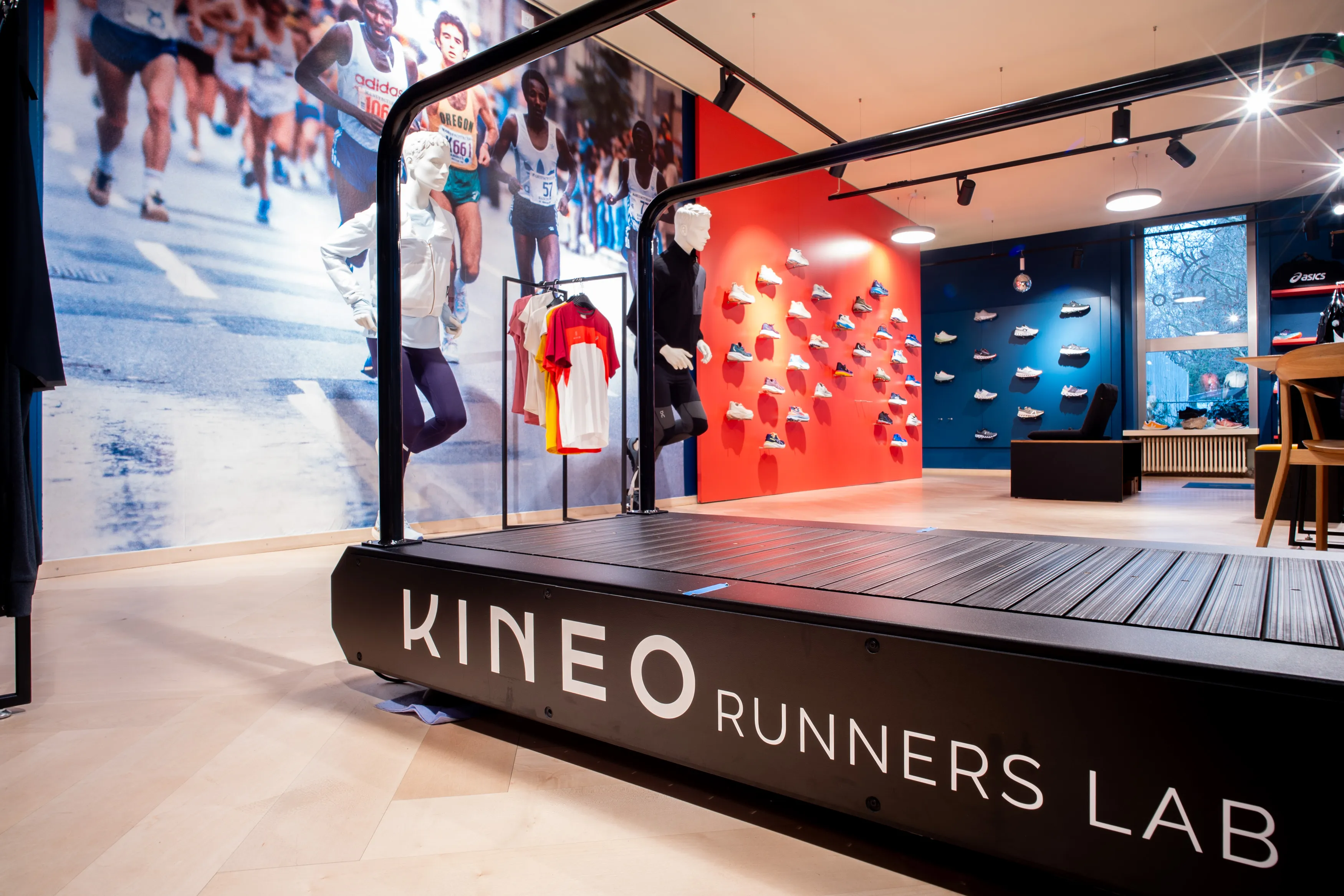
- Measuring foot pressure: With the Currex 5D LAB we see how the load is distributed under your foot.
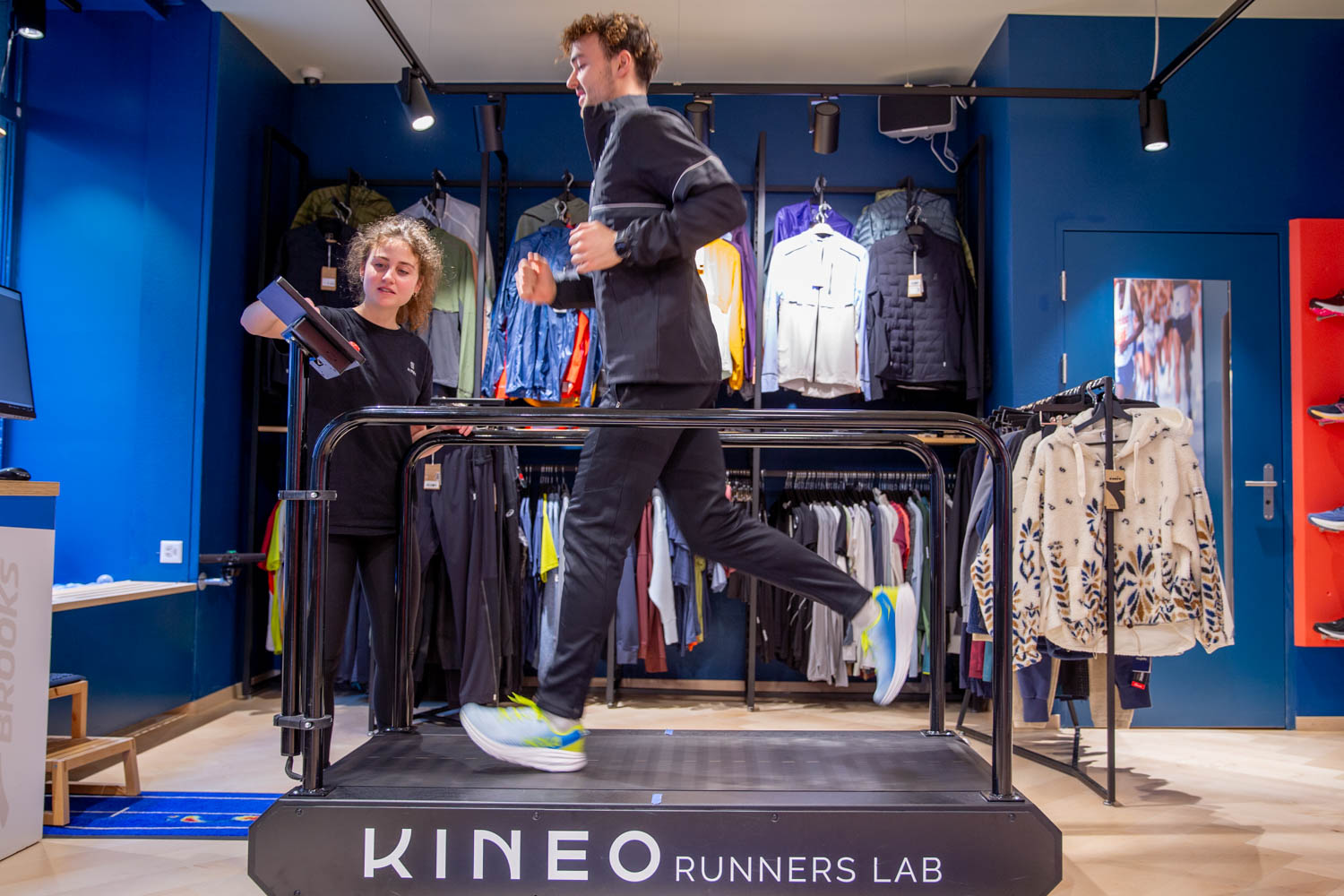
- Trying on and running: You test several models directly on the treadmill. We pay attention to how each shoe feels for you and how it changes your running style.
- Deciding: You choose the shoe that feels best and suits your running pattern. You also get tips on breaking them in and on rotating them with your old pair.
What the Currex 5D running analysis shows in addition
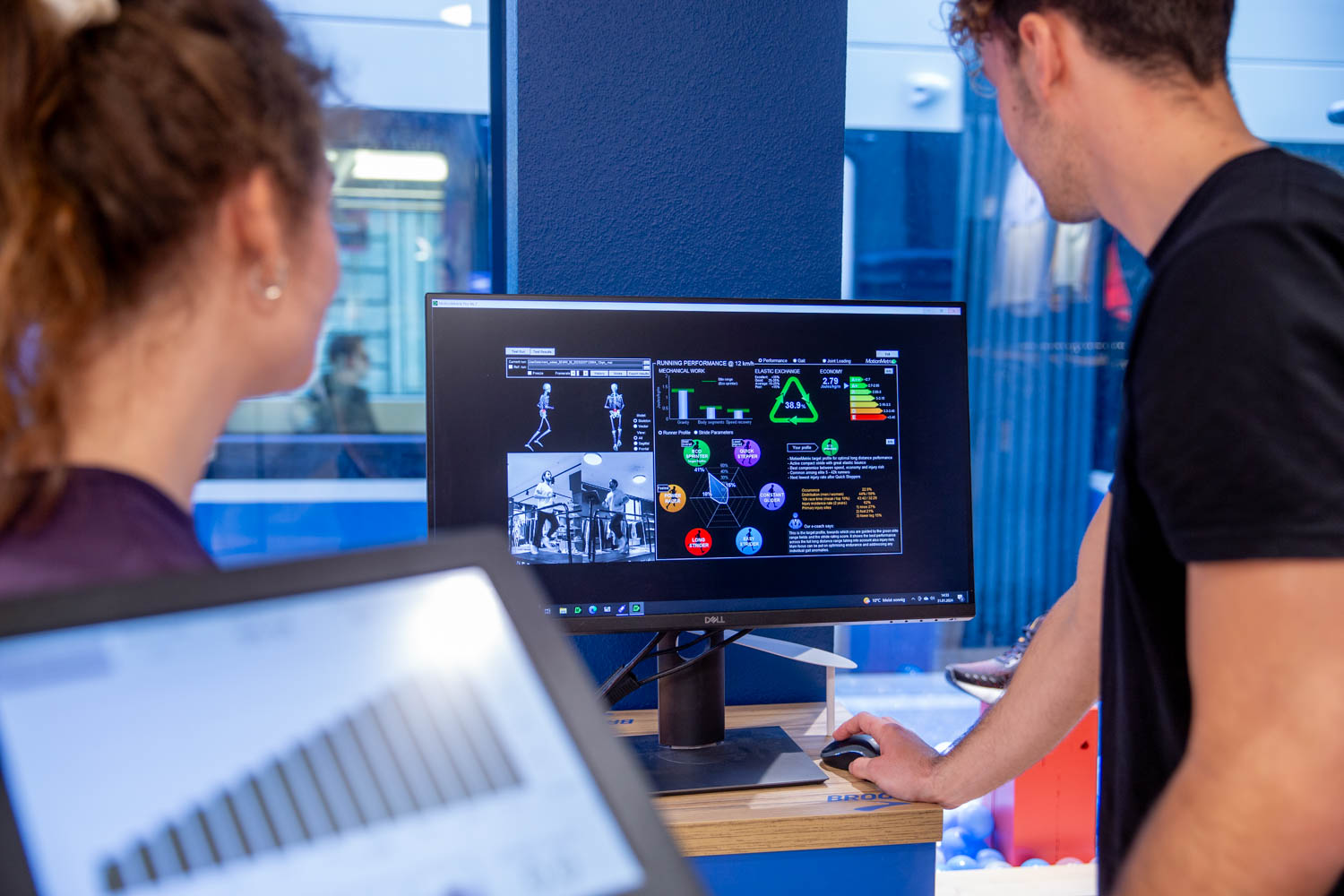
If you want to know more, book the Currex 5D running analysis. 3D cameras with depth sensors capture you on the treadmill, with no markers on your skin. After about 60 seconds of running, the data is ready:
- Axis alignment: Does the knee tip inwards, does the pelvis drop?
- Ground contact time and differences between left and right
- Stride length and cadence
- Load distribution across the foot
The analysis takes one hour. You get direct feedback, running drills and then an exercise plan by email. After eight to twelve weeks, a 30-minute re-analysis shows what has changed.
The brands you will find with us
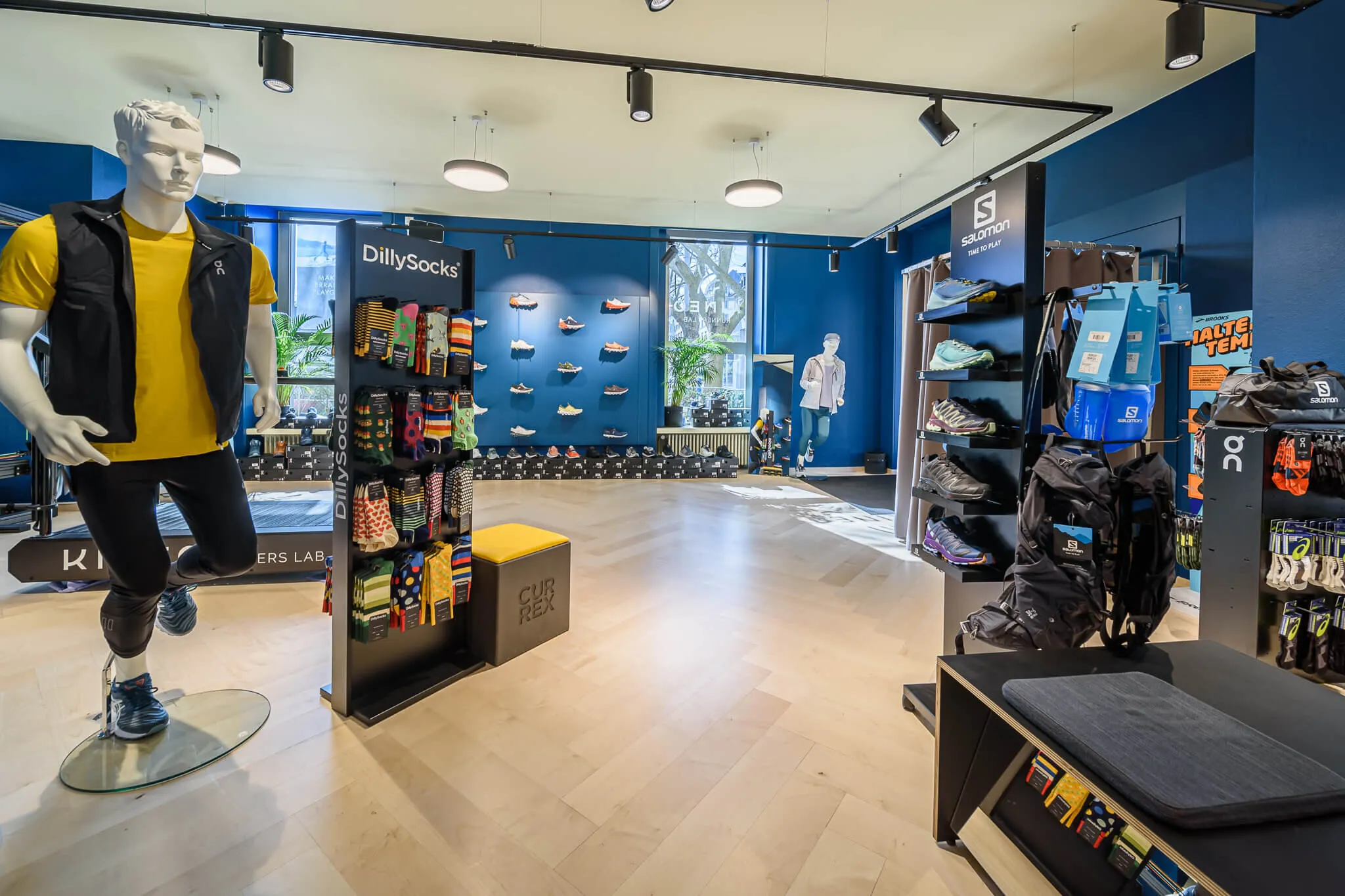
At the Runners Lab you will find road and trail shoes from Adidas, Altra, Asics, Brooks, Hoka, New Balance, On, Puma, Salomon and Saucony. Running shoes cost around CHF 140 to 270 with us, depending on the model. What matters is not the brand, but which shoe suits you.
Typical mistakes when buying
- Buying by looks, brand or test winner
- Choosing shoes that are too small because they feel "nice and snug" in the shop
- Testing the shoe only standing and not while running
- Switching abruptly to a completely different drop or cushioning
- Wearing shoes too long, until the cushioning wears out
Care, rotation and lifespan
- Lifespan: As a guide, 600 to 1000 kilometres, depending on the model, body weight and surface. Light racing shoes often last less long.
- Breaking in: Wear new shoes first on short, easy runs.
- Rotating: If you alternate two models, you spread the load a little differently, and the cushioning recovers between runs.
- Drying: Stuff wet shoes with newspaper, and don't put them on the radiator.
From our practice
Many people come in with a test winner from the internet that never felt right when running. Others switch overnight to a very flat or very soft shoe and have pain in the calf or shin two weeks later. The people who do best are those who compare several models while running, listen to their feeling and make the switch gradually.
Kineo Runners Lab in Seefeld
The Kineo Runners Lab is on the ground floor at Seefeldstrasse 83 in 8008 Zürich, Feldeggstrasse stop, trams 2 and 4. Shoe advice without an appointment during opening hours: Tuesday to Friday 10.30 am to 7 pm, Saturday 10 am to 5.30 pm. Phone 044 500 87 22. On the first floor you will find the physiotherapy with Runners Physio and the Kineo Performance Lab for performance diagnostics.
Frequently asked questions
Do I need an appointment for shoe advice?
No. Advice in the shop is available during opening hours without an appointment. For the Currex 5D running analysis, you book an appointment.
How often should I replace my running shoes?
As a rough guide, after 600 to 1000 kilometres. Watch for fading cushioning, worn soles and new complaints.
Do I need a stability shoe?
Only if your foot collapses inwards a lot and this causes you problems. Many runners are well served by a neutral shoe.
Is a carbon shoe worth it?
For races and fast sessions it can help. For everyday and easy runs it isn't necessary.
Can I bring my old shoes?
Yes, please do. The wear pattern on the sole tells us a lot about your running style.
You might also like
Book an appointment
Looking for the right running shoe? Drop by the Kineo Runners Lab Seefeld during opening hours or book your running analysis.