By Andrina Kümin, physiotherapist at Kineo Seefeld
Shin pain when running
You have stepped up your running training, and suddenly there is a pulling pain on the inner edge of your shin. At first only when you set off, later throughout the whole run. This is exactly how shin splints begin, medically known as medial tibial stress syndrome (MTSS).
It is one of the most common overuse problems in runners, but it also affects sports with lots of jumping and changes of direction, such as football, tennis, handball or dance.
What happens in the shin?
With every step, pulling and bending forces act on the shin bone. The calf muscles attach to the periosteum on its inner edge. If the load increases faster than bone and tissue can adapt, the periosteum and bone react with irritation. The result is a broad, pulling pain along the lower two thirds of the inner edge of the shin.
Typical causes
- Increasing distance or pace too quickly, for example when preparing for a race
- Returning after a break with too much volume
- Hard surfaces and lots of downhill running
- Worn-out or unsuitable running shoes
- Strong rolling in of the foot (overpronation)
- Weak calf, foot and hip muscles
- Strides that are too long with a hard heel strike
Symptoms
- Diffuse pain on the inner edge of the shin, usually over several centimetres
- Pain at the start of a run, which sometimes eases as you warm up
- Later, pain during and after exercise
- Tenderness along the edge of the bone
Important: telling it apart from a stress fracture
With continued overload, shin splints can develop into a stress fracture. Warning signs are a pinpoint, clearly localised pain, and pain when walking or at rest and at night. In this case you should stop training and have it checked by a doctor. You can read more in the article on stress fractures in elite sport.
What you can do yourself
- Reduce volume instead of stopping completely: Run shorter, slower and on soft surfaces, as long as the pain stays low.
- Train in other ways: Cycling, swimming or aqua jogging maintain your endurance without loading the shin.
- Increase slowly: Raise your weekly running distance only moderately, as a rule of thumb by around 10%.
- Check your shoes: Running shoes lose cushioning and stability after a few hundred kilometres.
- Build strength: Calf raises and foot and hip exercises make your leg more resilient.
How we treat shin splints at Kineo
It starts with a thorough examination. We clarify whether it is shin splints or a stress fracture, and find out why the overload came about.
1. Assessment: what we examine in your first session
- Pattern of tenderness: With shin splints, the inner edge of the shin hurts diffusely over several centimetres. A pinpoint, very strong tenderness at one spot is a warning sign of a stress fracture.
- Hop test: If hopping on one leg clearly hurts at one spot, we arrange a medical check-up, often with an MRI.
- Calf strength: Single-leg heel raises to fatigue. As a guide, runners should manage 25 repetitions per side.
- Foot and hip: How much does the arch of the foot drop under load? How stable is the hip during a single-leg squat?
- Training history and energy: How quickly was the volume increased? Are you eating enough for your training? Too little energy weakens the bones.
2. Treatment in phases
- Phase 1: reduce load (1–3 weeks). Cut your running volume far enough that the pain stays low during and on the day after a run. Maintain endurance on the bike or with aqua jogging.
- Phase 2: build strength. Heel raises with a straight and a bent knee, exercises for the deep shin muscle at the back and for the hip, three times a week with increasing weight.
- Phase 3: get the bone used to impact. Short series of hops and skipping in small doses.
- Phase 4: running with a plan. Run-walk intervals on soft surfaces, then continuous running. A cadence 5 to 10 percent higher reduces impact load.
3. Kineo services we use
- Runners Physio with a load plan for your return to running
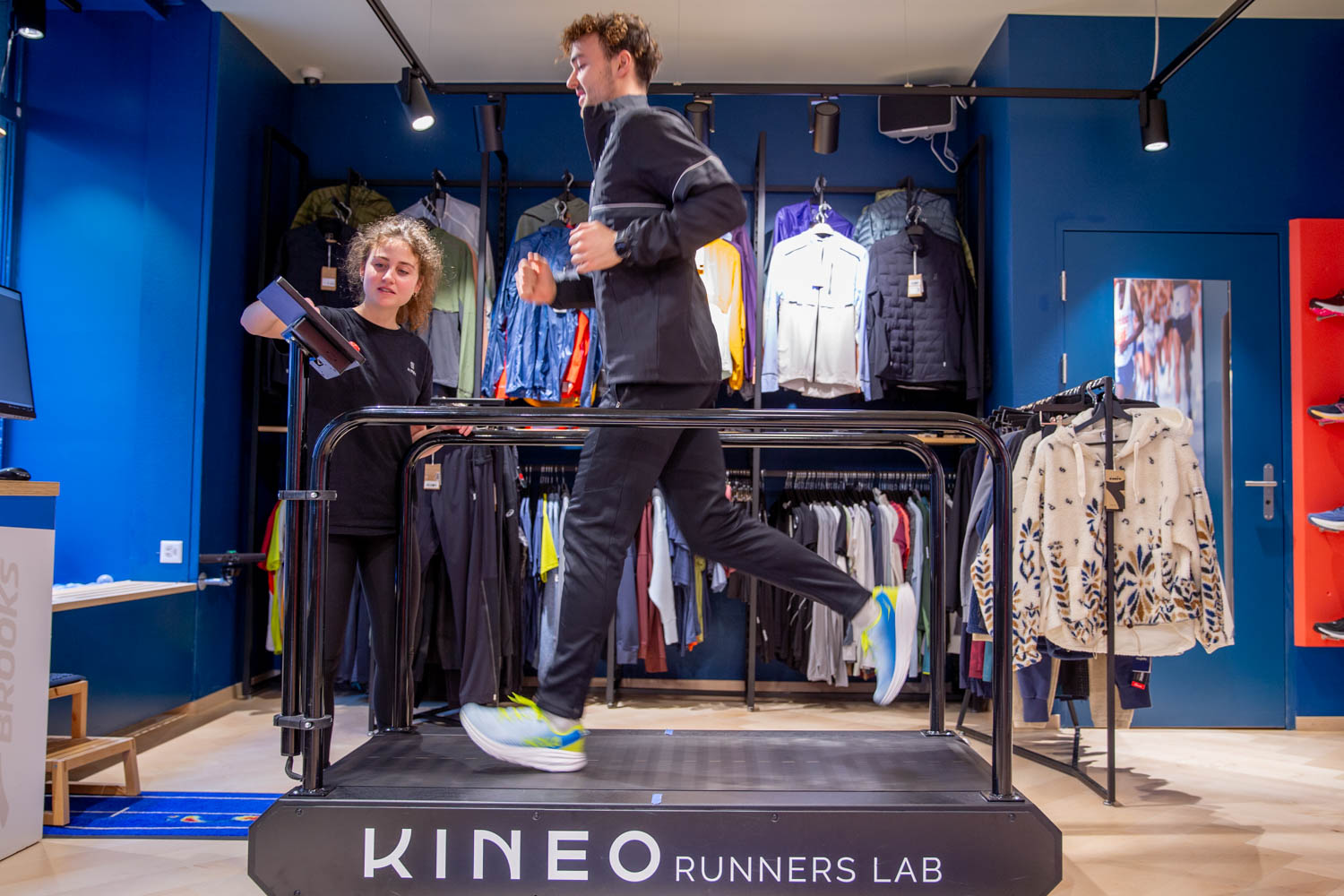
- Running analysis at the Kineo Runners Lab with advice on the right running shoe
- Medical training therapy for calf, foot and hip
- Fascia therapy for the lower leg muscles
- Shockwave therapy as a complement for stubborn symptoms
With the right load progression, most runners are back running pain-free after a few weeks.
Three exercises for a resilient shin
- Single-leg calf raise: Slowly up and even more slowly down. 3 x 15 per side.
- Toe raises at the wall: Back against the wall, heels on the floor, lift your toes. Strengthens the muscles at the front of the shin. 3 x 20.
- Single-leg stand on a soft surface: 3 x 30 seconds per side for the foot muscles.
What running analysis shows for the shin
For shin splints, in the running analysis at the Kineo Runners Lab we look above all for patterns that load the lower leg more heavily:
- Overstriding: The foot lands far in front of the body. This brakes you with every step and increases the load on the shin
- Low cadence: Few, long steps mean more impact per step. Even 5 to 10 percent more steps per minute at the same pace can noticeably reduce the load on the knee and lower leg
- Ground contact time and side-to-side differences: They show whether one leg works harder than the other
You can practise a higher cadence well with a metronome or your running watch, first on short sections.
Bones need energy
Bone stress is not only about training. If you eat too little relative to your training, you give the bone too little material to rebuild itself. Specialists call this relative energy deficiency in sport (RED-S). It clearly increases the risk of stress reactions and stress fractures. Warning signs are persistent tiredness, frequent infections and, in women, menstrual irregularities. If you have repeated problems with your shin, you should also have your nutrition and energy intake looked at.
From our practice
Many runners get shin pain in the first weeks of a new training plan or after switching to new shoes. Usually it is enough to cut your volume briefly and strengthen your calves and hips. If you keep running instead, you risk a stress fracture and a much longer break.
Running is our focus in Seefeld
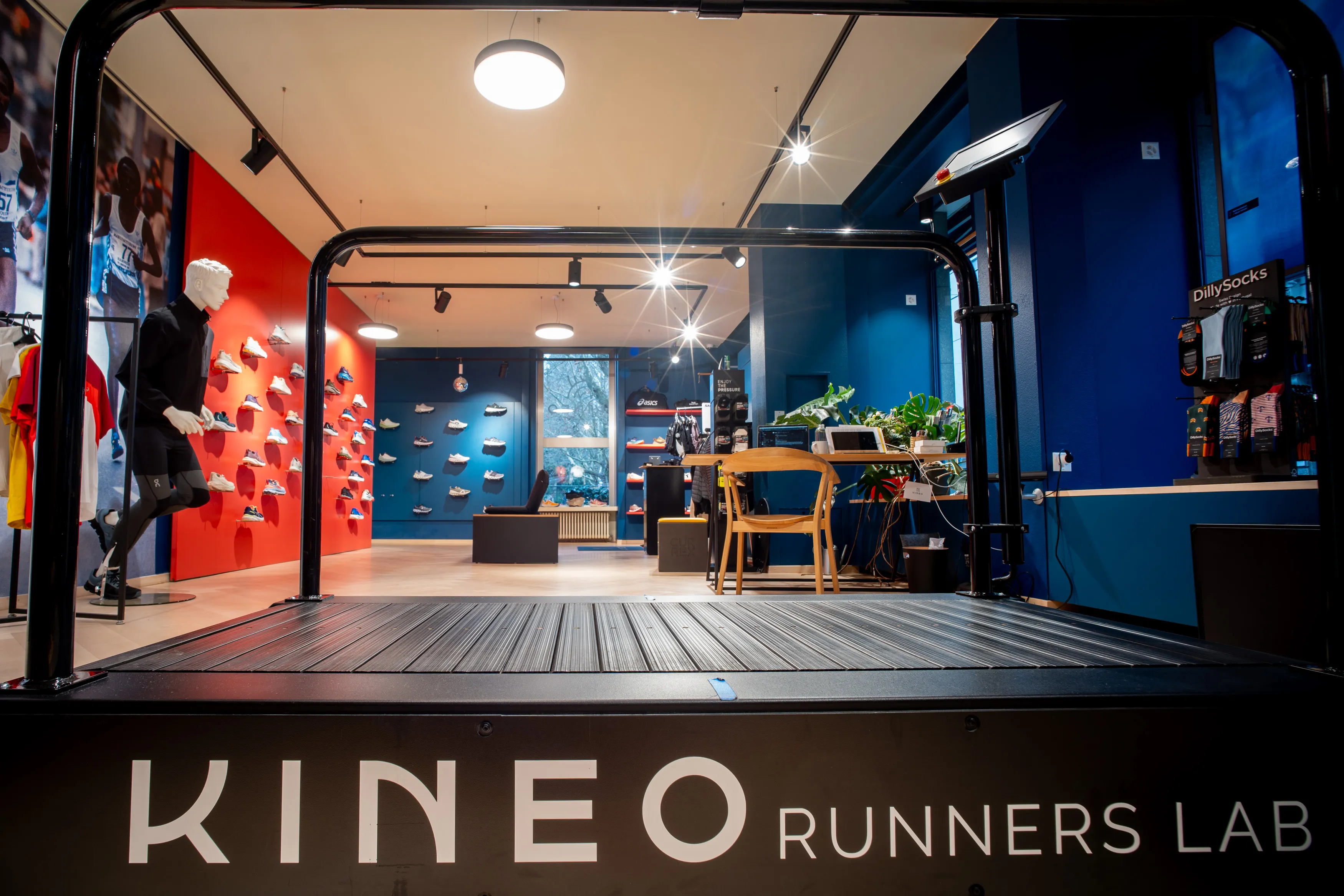
At Kineo Seefeld at Seefeldstrasse 83, you will find the Kineo Runners Lab on the ground floor with Currex 5D running analysis and running shoe advice, and physiotherapy with Runners Physio on the first floor. This way we check your running style and shoes in the same place where we treat you. Feldeggstrasse stop, trams 2 and 4.
Frequently asked questions
Can I keep running with shin pain?
If the pain is mild and does not get worse while running, often yes, with reduced volume. Pinpoint pain or pain at rest should be checked.
Do compression socks help?
Some people find them comfortable, but they do not replace load management and strength training.
Do I need new running shoes?
If your shoes are several hundred kilometres old or do not suit your running style, possibly. A running analysis will show.
How long does an appointment last?
A physiotherapy appointment at Kineo lasts 30 minutes. In your first session we clarify the cause and start straight away with treatment and first exercises.
You might also like
Book an appointment
Do you have pain in your shin? Book an appointment at Kineo Seefeld or go straight for a running analysis at the Runners Lab.