By Andrina Kümin, physiotherapist at Kineo Seefeld
Why runners need strength
With every running stride, a multiple of your body weight acts on your foot, knee and hip. Muscles and tendons absorb this force. If they are too weak, joints and bones take on more load, and overuse injuries such as runner's knee, Achilles tendon pain or shin splints become more likely.
Targeted strength training makes you more resilient and can improve your running economy at the same time. You don't need a gym membership for it, but you do need consistency.
The most important muscle groups
- Calves and Achilles tendon: they do the main work with every push-off
- Glutes and hips: they stabilise the pelvis and stop the knee from collapsing inwards
- Thighs: they absorb the landing, especially downhill
- Trunk: it keeps your upper body stable when you get tired
- Foot: the small foot muscles support the arch

Five basic exercises
- Single-leg calf raises, slowly, with both a straight and a bent knee
- Bulgarian split squat for thighs and glutes
- Single-leg deadlift for the posterior chain and balance
- Side plank with leg raise for hips and trunk
- Step-downs from a step for knee control
Start with 2 sessions a week, 2–3 sets of 8–12 repetitions each. Increase the weight when it gets too easy. Jumping exercises such as skipping or hops come in later.
When and how often?
- Strength training on the same day as a hard run, so the easy days stay easy
- Reduce the volume during race preparation, but don't drop it completely
- After an injury: building strength is part of returning to running
Sample week for recreational runners
- Monday: easy run
- Tuesday: intervals, then 20 minutes of strength
- Wednesday: rest or bike
- Thursday: easy run
- Friday: 20 minutes of strength
- Saturday: long run
- Sunday: rest
Heavy or light? What research shows
Many runners train strength with light weights and lots of repetitions. For running performance, though, the opposite often works better: heavy loads with few repetitions, around 3 to 6 per set, improve running economy in studies. You then need less energy for the same pace, without building any significant muscle mass.
- Technique first: heavy loads only once the movement is clean with a light weight
- Add jumping power: short, reactive jumps such as skipping or jumps over small hurdles train your tendons as springs
- Combine strength and running: heavy strength sessions on the day of a hard run, so the easy days stay easy
How to tell it is working
The effect of strength training shows up in performance testing: at the same heart rate you run faster, or at the same pace your pulse drops. If you do a lactate threshold test at the Performance Lab in Seefeld before and after a training block, you see this shift in black and white. In a running analysis, a more stable leg alignment is often noticeable after just a few weeks. For supervised training on machines, Kineo Fitness in Thalwil has the right space.
How we test and plan your strength training
A good strength programme starts with taking stock. That way you train your weak spots, not just what already goes well.
1. Our strength screening
- Calf strength: single-leg heel raises to fatigue. Guide value for runners: at least 25 clean repetitions per side.
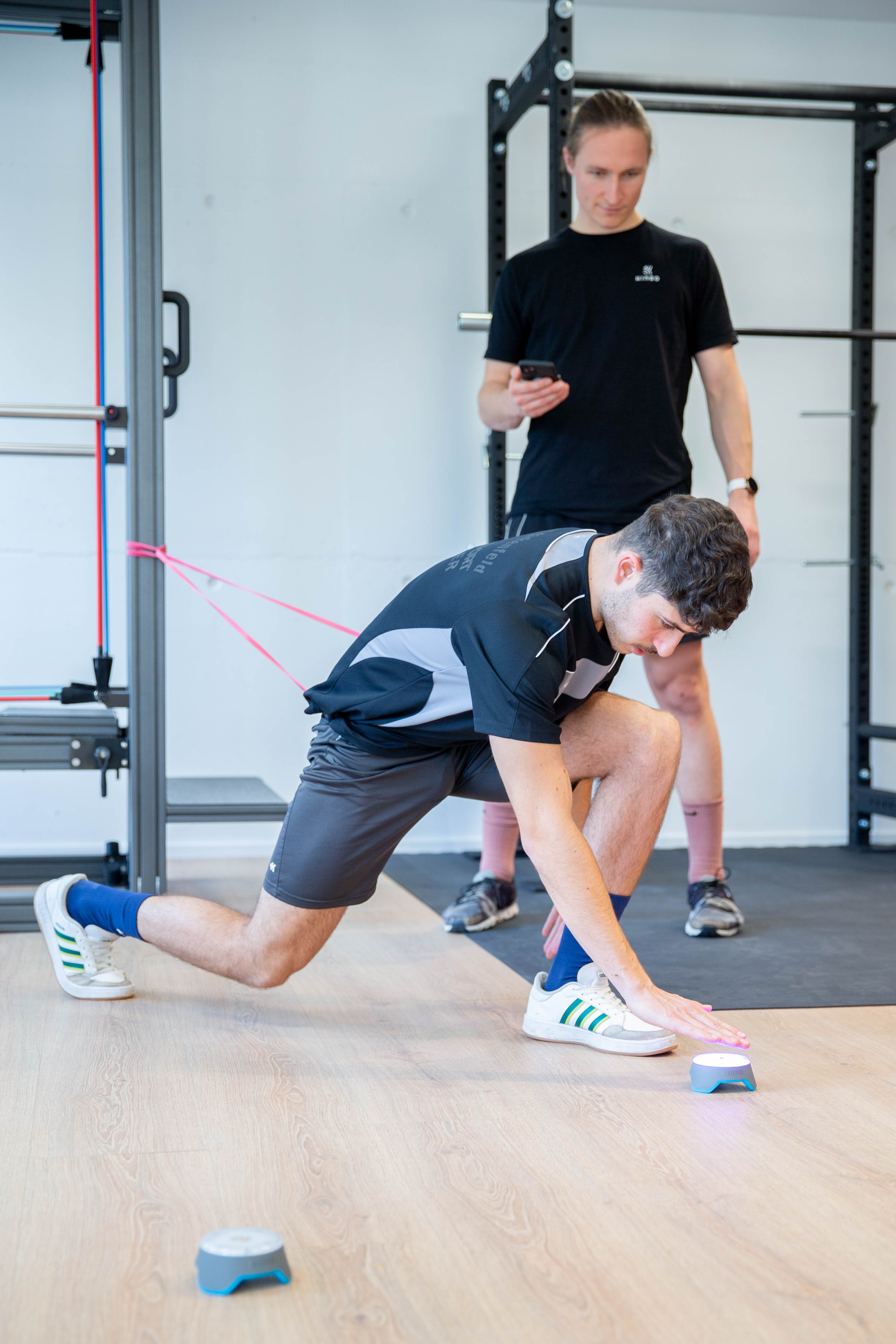
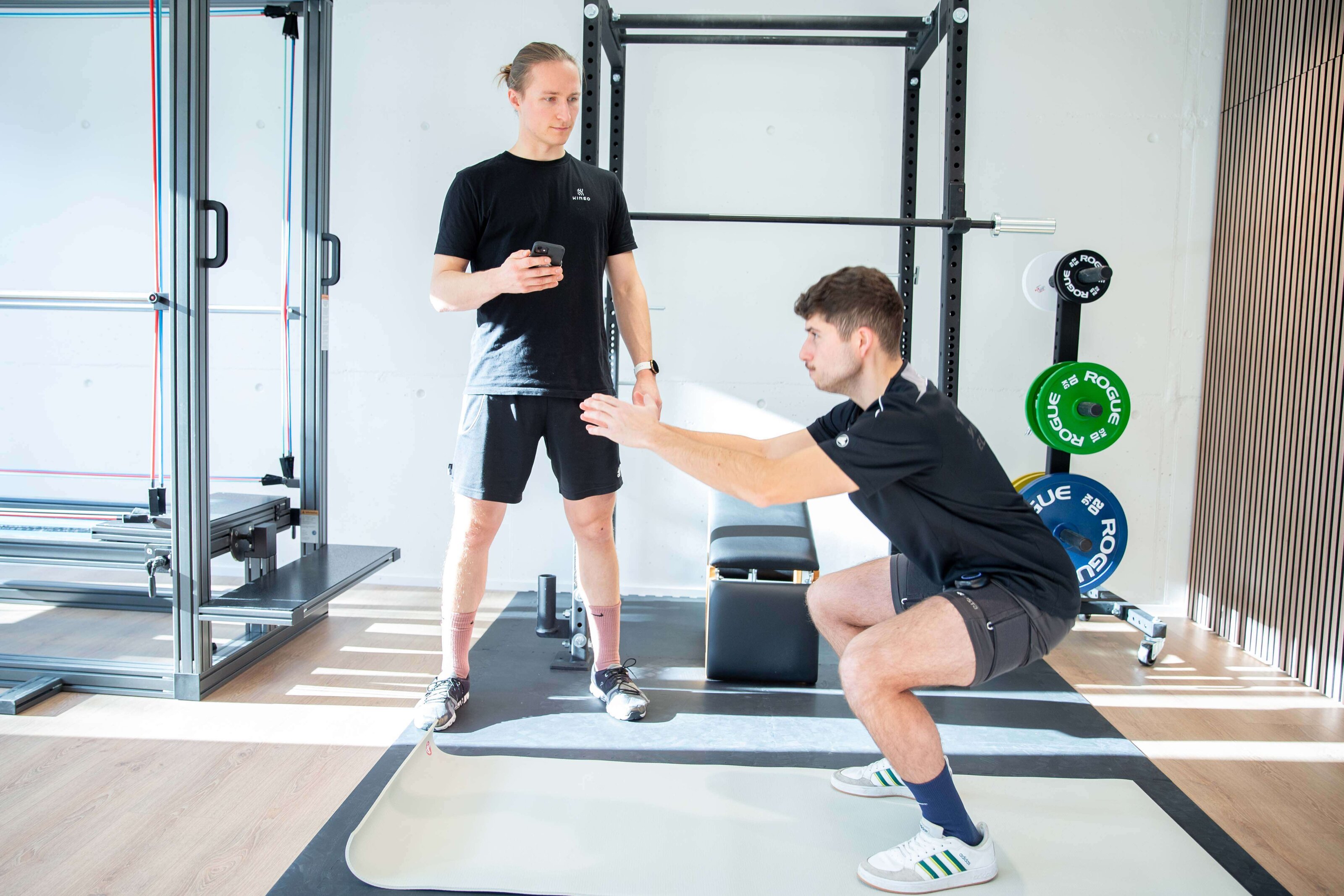
- Single-leg squat and step-down: does the pelvis stay level? Does the knee point over the foot?
- Side plank: holding time compared side to side as a measure of lateral trunk and hip strength
- Single-leg bridge: endurance of the hamstrings and glutes
- Hop tests: how springy and controlled is your landing? This shows whether you are ready for jumping exercises.
2. How we build your programme
- Foundation (4–6 weeks): clean technique, 2–3 sets of 8–12 repetitions, two sessions a week
- Strength (from week 6): heavier loads with 4–6 repetitions. Heavy training in particular improves running economy.
- Jumping and power: skipping, hops and jumps over small hurdles, short and with full quality
- In the race block: reduce volume, keep intensity. One short session a week maintains your strength.
3. Kineo services we use
- Runners Physio: strength screening and a programme tailored to your running week
- Medical training therapy when you are rebuilding after an injury
- Power training for jumping power and running economy
- Kineo Fitness in Thalwil and Kineo HYROX in Escher Wyss as training spaces
From our practice
Many runners only come to us with an injury and then say: «Strength training? I didn't have time for that.» Two short sessions of 20 minutes a week are often enough to make the typical overuse injuries much less frequent.
Your strength programme from the Runners Lab
At Kineo Seefeld, Seefeldstrasse 83, we use the running analysis in the Runners Lab to find out where your weak spots are, and on the first floor we put together a strength programme with Runners Physio that fits your running training. Feldeggstrasse stop, trams 2 and 4.
Frequently asked questions
Will strength training make me heavier and slower?
No. With the right programme you get stronger without building significant mass. If anything, your running economy benefits.
Are bodyweight exercises enough?
To get started, yes. Over time you need extra weight so the stimulus stays big enough.
How long does it take before I notice an effect?
After six to eight weeks of regular training, most people notice that they run more stably.
How long does an appointment last?
A physiotherapy appointment at Kineo lasts 30 minutes. In your first session we clarify the cause and start straight away with treatment and your first exercises.
You might also like
Book an appointment
Want to run stronger and injury-free? Book your appointment at Kineo Seefeld.