By Lucrecia Guerra, physiotherapist at Kineo Escher Wyss
Pain-free is not the same as ready
After an injury, the biggest question is: when can I train fully, play or compete again? Many people go by pain. But pain-free does not automatically mean ready for load. Strength, jumping ability and coordination often take longer to recover than the tissue. If you return too early, you risk a relapse.
The phases of returning
- Return to participation: you train with the group again, but restricted and adapted.
- Return to sport: you do your sport fully again, but not yet at your previous level.
- Return to performance: you reach your old performance level or exceed it.
How we measure readiness
We decide based on criteria, not time. One principle: the injured side should reach at least 90 per cent of the healthy side. This is called the Limb Symmetry Index.
1. The tests we do before clearance
- Strength compared side to side: front and back of the thigh, hip, calf or shoulder, depending on the injury
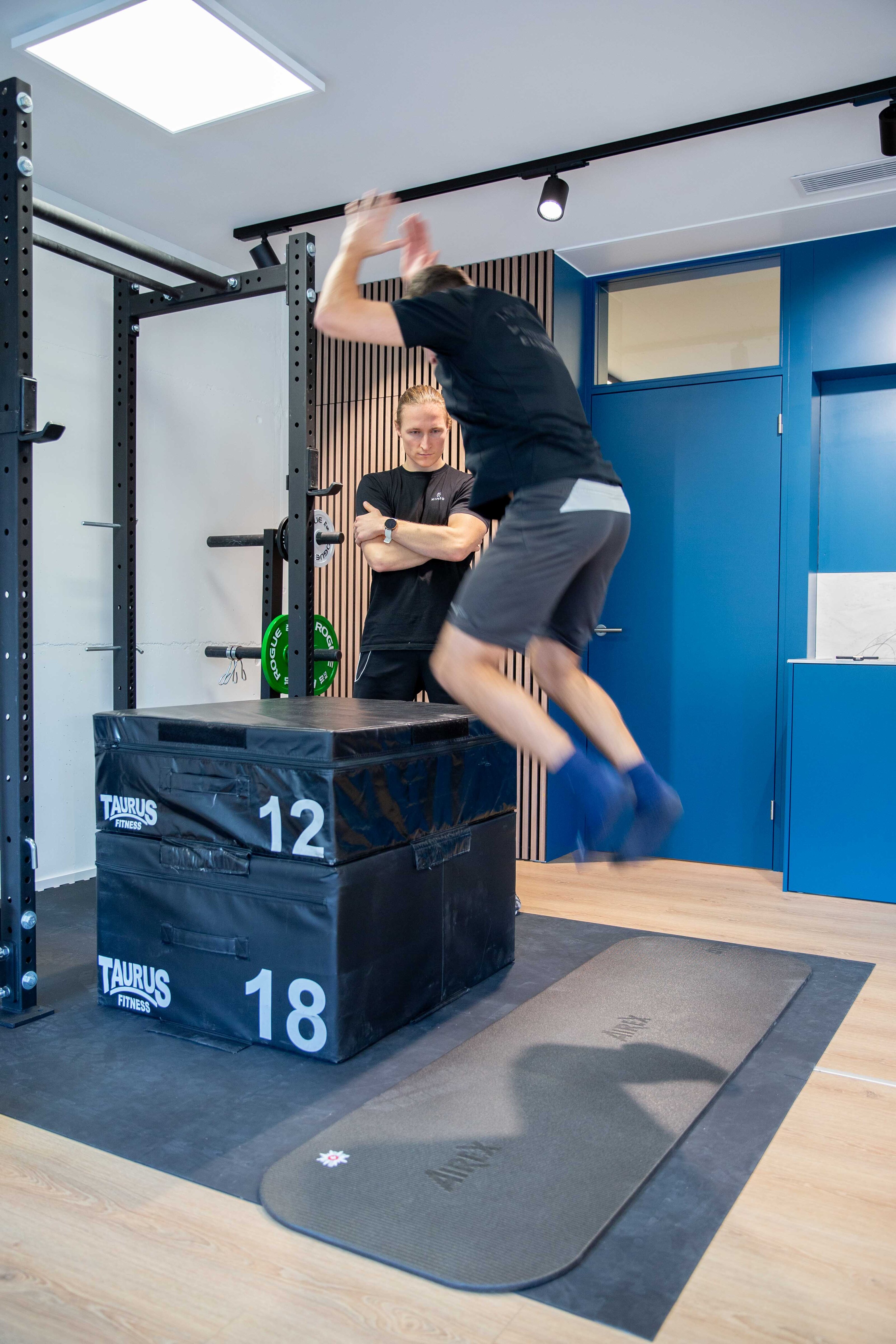
- Hop tests: single-leg hop for distance, triple hop, crossover hops and 6-metre timed hop on one leg. We compare the distance and the landing.
- Balance and reach: in the Y-Balance Test you reach in three directions on one leg. Large differences between sides increase the risk of injury.
- Landing quality: does the knee cave inwards in the drop jump? Is one side being protected?
- Change of direction and speed: timed agility tests for ball sports
- Head: a short questionnaire measures your confidence. Fear of re-injury is a risk factor in its own right.
2. How we decide on your return
- Important when comparing sides: if the healthy side has also lost strength during the injury break, the comparison looks better than it is. Where values from before the injury exist, we use them.
- Partial clearance: first training with the team without contact, then with contact, then competition with limited playing time.
- After your return: a short maintenance programme twice a week protects against relapses.
3. Kineo services we use
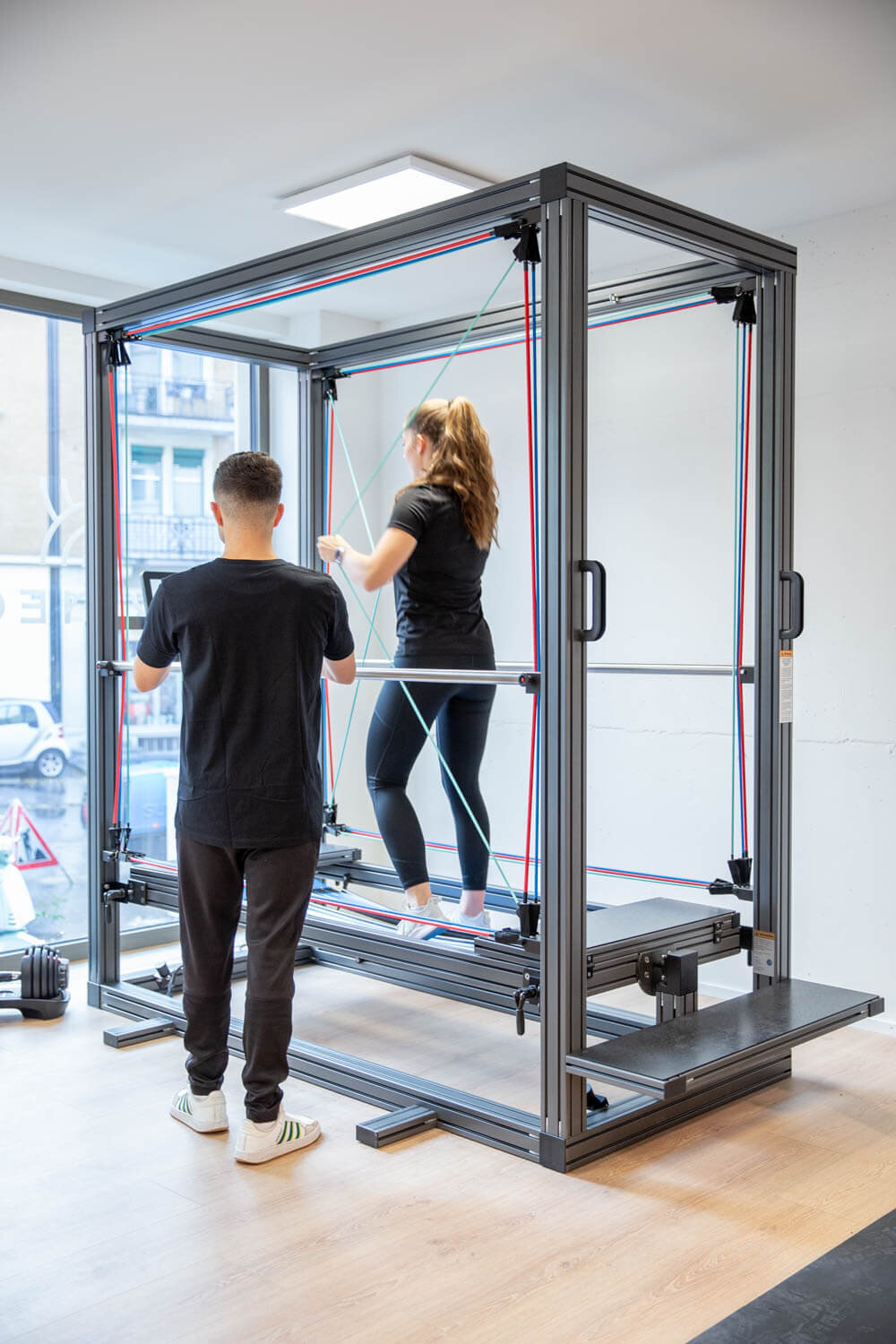
- Sensopro training for balance, reaction and coordination under time pressure
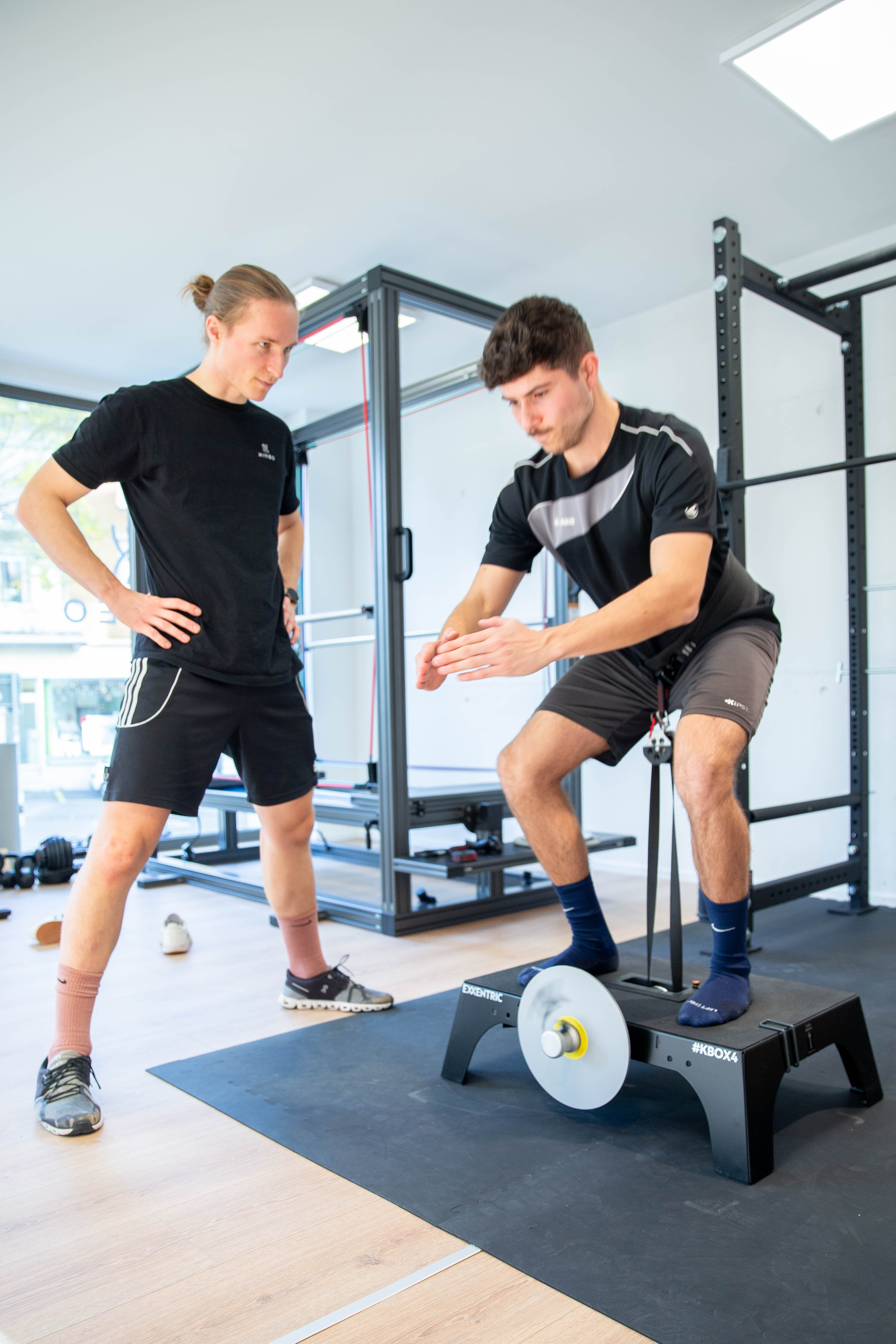
- Power training for jumping and sprinting
- Sport-specific training with the movements of your sport
- Currex 5D running analysis to spot protective movement patterns in your running
- Lactate threshold test to redefine your training zones after the break
Typical mistakes
- Returning based on feel rather than criteria
- Only treating the injury instead of building strength and athleticism
- Increasing the load too quickly after returning
Example: back to running step by step
This is what a return after a leg or foot injury can look like. Each stage should work two to three times without symptoms before you move on to the next:
- 30 minutes of brisk walking without pain
- 20 single-leg hops per side without pain
- Alternating walking and running, for example 1 minute running, 1 minute walking, 10 rounds
- 20 minutes of easy running in one go
- Increase volume slowly, only then pace and changes of direction
Pain up to 3 out of 10 that has gone by the next morning is usually fine. If it gets worse, go back one stage.
Endurance after a break: your old values no longer apply
After just a few weeks without training, endurance performance drops measurably. This affects your maximum oxygen uptake as well as the thresholds you base your training on. If you carry on with your old heart rate zones and your old pace after an injury, you often train too hard.
- Start easy: the first weeks almost exclusively in the easy range, where you can still speak in full sentences
- Measure again: a lactate threshold test after your return gives you current training zones instead of old assumptions
- Intensity last: intervals and race pace only come back once volume and strength are in place again
Protective patterns often go unnoticed
After a leg injury, many people keep offloading the affected side for a long time without noticing. In a running analysis, this shows up, for example, as a shorter ground contact time or a different stride length on the injured side. Such side-to-side differences are a good indication of whether the leg can really take full load again, and they can be trained specifically.
From our practice
The sentence we hear most often: «It doesn't hurt any more, so I'm fit.» That is exactly when the tests often still show a clear strength difference compared with the healthy side. If you close this gap before going all in, you are much less likely to relapse.
From your first appointment to your comeback
At Kineo Escher Wyss, Hardturmstrasse 18, we support your whole return under one roof: treatment, athletic training, power training and sport-specific training on the supervised training floor. If needed, we also test your endurance at the Kineo Performance Lab in Seefeld.
Frequently asked questions
How long does the return to sport take?
That depends on the injury and the sport. After a strain it is often weeks, after cruciate ligament surgery usually nine months or more. Meeting the criteria matters more than time.
Can I train while it still hurts a bit?
Mild, well-controlled symptoms are often fine. Together we set which pain limit makes sense for you.
Do I need tests if I feel good?
Yes, especially then. Feel is often misleading, particularly for strength and jumping ability compared side to side.
Does health insurance cover physiotherapy?
Yes. With a doctor's prescription, your basic health insurance covers the cost. Kineo is recognised by all Swiss health insurers.
You might also like
- Cruciate ligament tear: rehabilitation and return to sport
- Sore muscles, strain or muscle fibre tear?
- Sports physiotherapy in Zürich
Book an appointment
Want to return to sport safely after your injury? Book your appointment at Kineo Escher Wyss.