
By Martino Crivelli, physiotherapist and co-founder of Kineo, Kineo Escher Wyss
Pain in the muscle: what is behind it?
After a hard workout, a sprint or a match, a muscle hurts. The question is: can you carry on training, or do you need a break and treatment? Telling the difference between sore muscles (DOMS), a muscle strain and a torn muscle fibre helps you react correctly.
Sore muscles (DOMS)
- Starts only hours after the exertion, usually the next day
- Peaks after about 24 to 72 hours
- Diffuse, pulling pain in the whole muscle, often on both sides
- Typical after unaccustomed or braking movements such as running downhill or lunges
- Light movement feels good, and it is gone after a few days
Muscle strain
- Sudden, cramp-like pain during exertion
- The muscle feels hard and tense
- Carrying on is possible to a limited extent, but painful
- No visible dent, rarely a bruise
Torn muscle fibre
- Sudden, stabbing pain, often like a stab of a knife or a whiplash
- You have to stop immediately, loading is hardly possible
- Pinpoint tenderness, sometimes a palpable dent
- Bruising after a few hours or days
What you should do straight away
- If you suspect a strain or tear, stop immediately. Carrying on makes the injury bigger.
- Rest, cool and compress lightly in the first hours
- Elevate if you can
- Don't stretch and don't massage in the acute phase
- If you have severe pain, a large bruise or loss of strength, have it checked by a doctor
Why rehab makes the difference
Muscle injuries, especially at the back of the thigh and in the calf, have a high rate of recurrence. The most common reason is returning too early without targeted strength building. A structured rehab with early, dosed loading clearly lowers this risk.
1. Assessment: what we examine in your first session
- Telling them apart: Sore muscles hurt diffusely and on both sides 24 to 72 hours after unaccustomed exertion. A strain or torn fibre begins with a sudden, clearly localised pain during exertion.
- Palpation: Where exactly is the pain, and how long is the painful zone? Can a dent be felt?
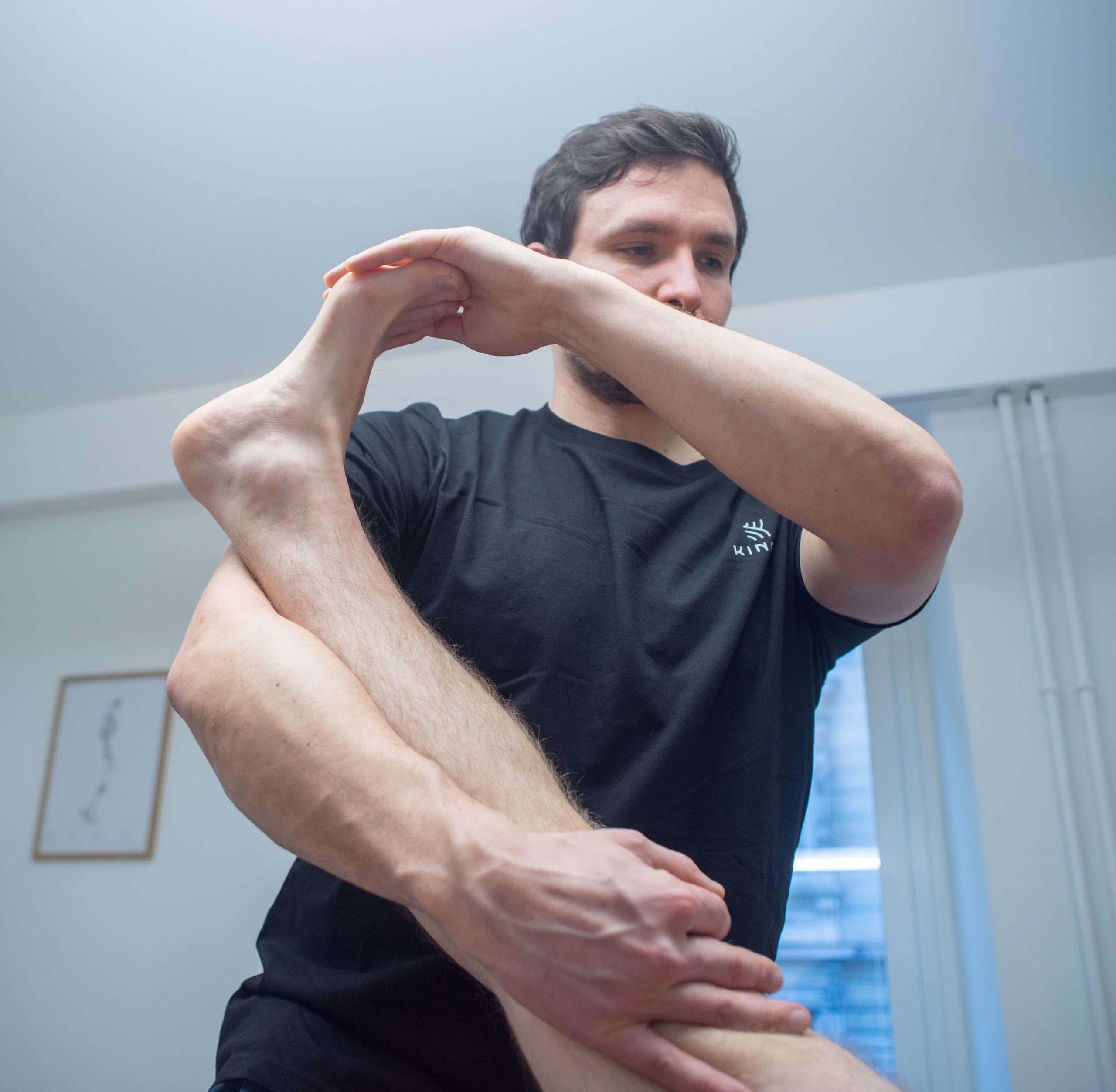
- Strength and stretch compared with the other side: At the back of the thigh, for example, with the passive straight leg raise and the Active Knee Extension test. How many degrees are missing compared with the healthy side?
- Pain on contraction: Strength against resistance at different angles shows how severe the injury is.
- Imaging if needed: If we suspect a larger tear or tendon involvement, we arrange a medical check-up with ultrasound or MRI. This changes the length of rehab.
2. Treatment in phases
- Days 0–3: protect, don't immobilise. Compression, elevation and walking within a low-pain range. No massage directly on the tear and no strong stretching.
- From day 2–5: activate early. Isometric exercises, that is, tensing without movement, at several angles. Studies show that starting to load early speeds up the return.
- Weeks 1–3: strength at length. Eccentric exercises, where the muscle lengthens under load. For the back of the thigh we use, for example, exercises based on the Askling protocol, later also Nordic curls.
- Building up running: Progressive runs at roughly 50, 70 and 90 percent of top speed. The full sprint comes last.
- Clearance: Strength close to the healthy side, pain-free stretch in fast movement and a pain-free sprint at top speed.
3. Kineo services we use
- Sports physiotherapy: diagnosis, rehab plan and checking the clearance criteria
- Cold therapy with Game Ready: cold and compression combined in the first days
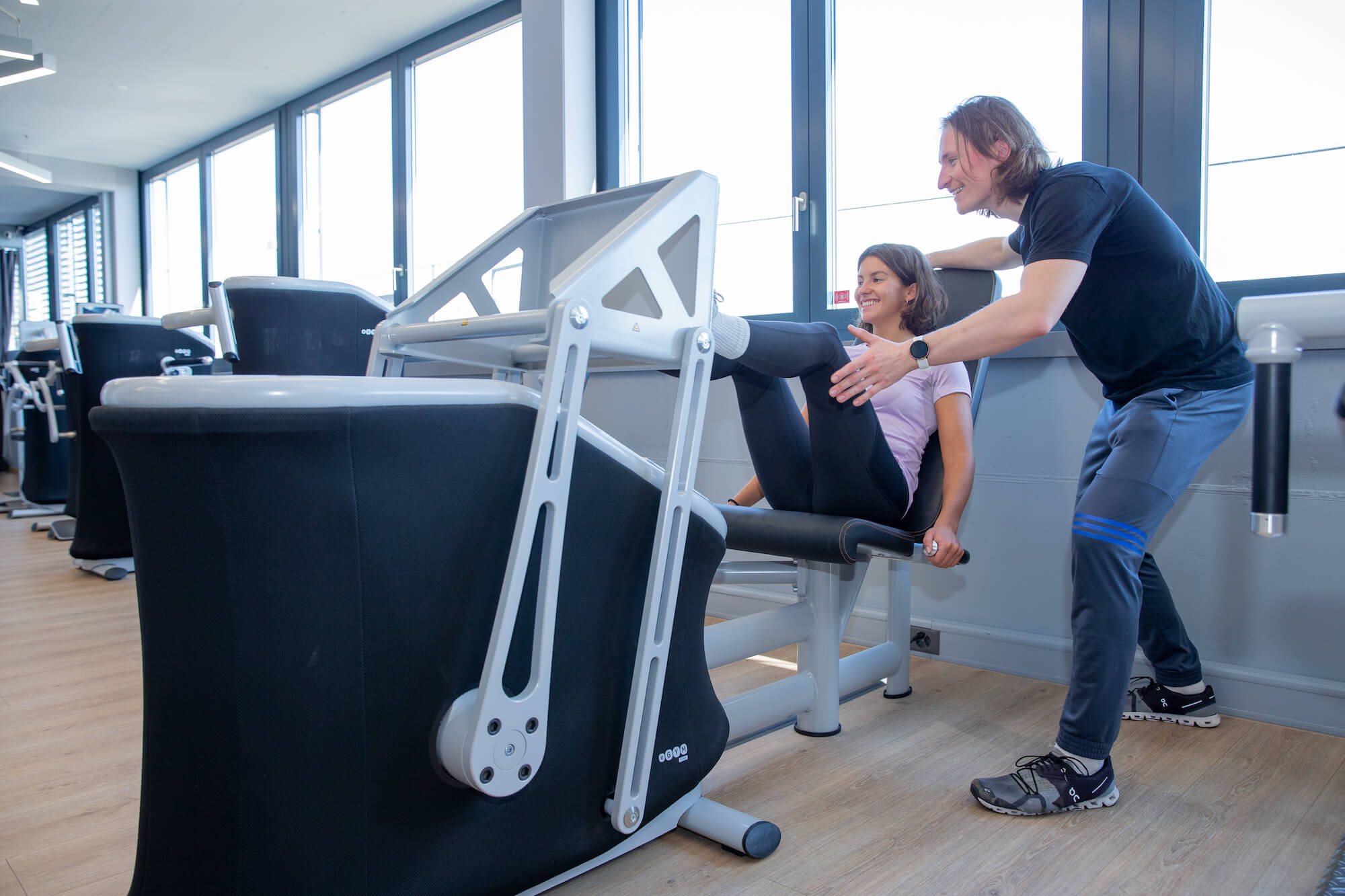
- Medical training therapy for building strength under guidance
- Explosive strength training for sprinting and jumping in the final phase
- Mobilising massage for the surrounding tissue, as soon as the fresh injury allows it
At a glance
- Onset: Sore muscles only the next day, strain and torn fibre immediately during exertion.
- Pain: Sore muscles diffuse, strain cramp-like, torn fibre stabbing and pinpoint.
- Carrying on: With sore muscles, gently yes; with a strain or torn fibre, no.
- Duration: Sore muscles a few days, a strain usually one to three weeks, a torn fibre often several weeks.
Myth: lactate causes sore muscles
This persists stubbornly, but it is not true. Lactate is produced during intense exertion and is cleared again within about an hour after training. Sore muscles only come the next day. They are caused by fine micro-injuries in the muscle, especially with braking, so-called eccentric movements such as running downhill, lunges or lowering a weight. At the Kineo Performance Lab we measure lactate to determine training zones, not because it harms the muscle.
Why sprinters injure the back of the thigh
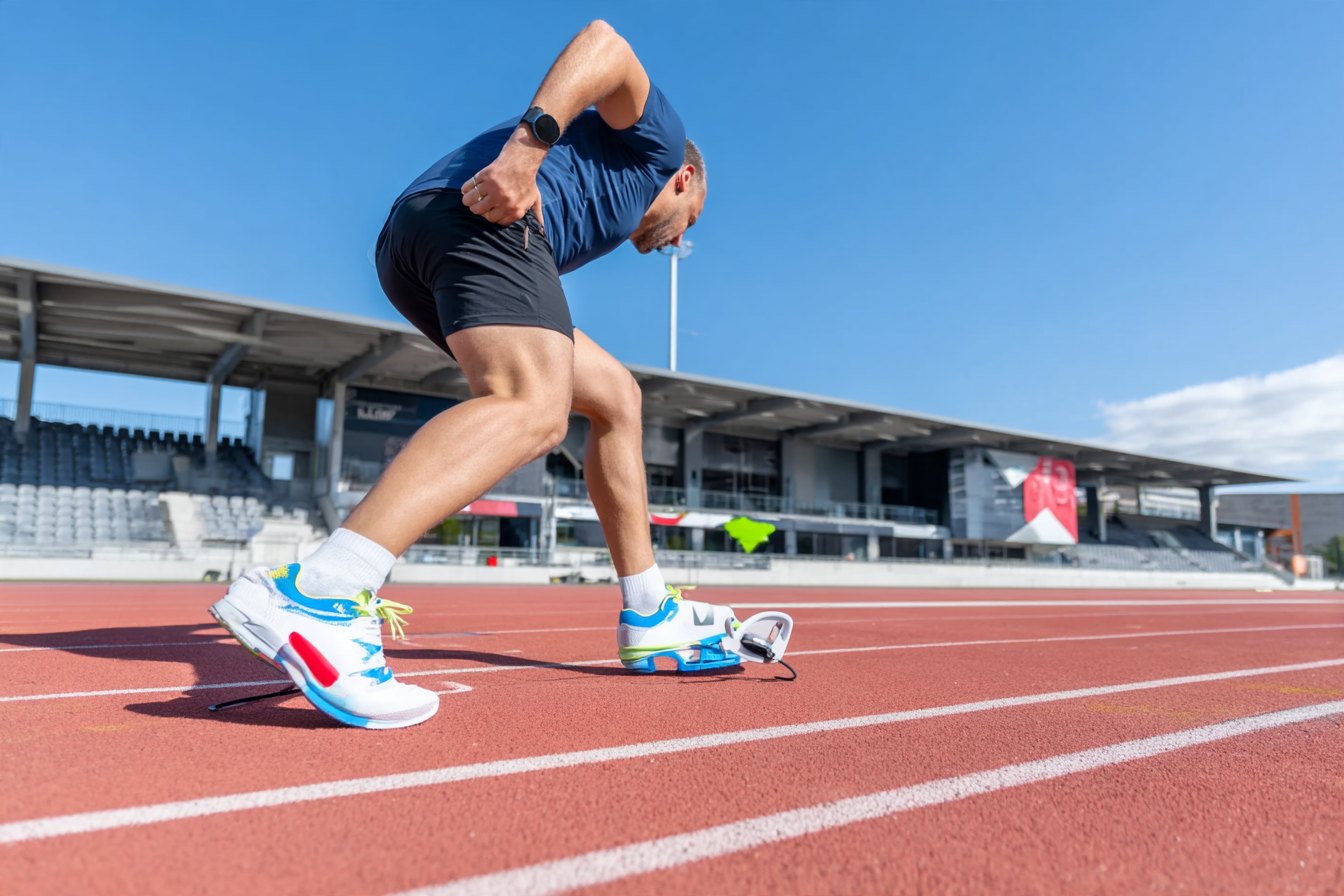
When running fast, the leg swings forward, and just before the foot lands the back of the thigh has to brake it. In this phase the muscle is long and heavily loaded. That explains why strains often happen during a sprint, and frequently towards the end of a match, when fatigue rises.
- Nordic hamstring curls: Kneeling with your feet fixed, slowly lower your upper body forward. In studies, this exercise roughly halved injuries at the back of the thigh
- Train sprinting: If you run fast regularly, you get the muscle used to this load
- Mind fatigue: Do strength and sprint training not only when rested, but also once at the end of a session
From our practice
Many people stretch a fresh strain hard or have it massaged straight away because the muscle feels hard. In the first days this tends to do harm. If you start early with dosed loading and don't sprint too quickly, you are usually back faster and more safely.
From the acute phase to the first sprint
At Kineo Escher Wyss at Hardturmstrasse 18, we support you through all the phases: in the initial phase with cold therapy with Game Ready, then with dosed strength and sprint build-up on the supervised training floor in the same building.
Frequently asked questions
How long does a torn muscle fibre take to heal?
Depending on its size, usually two to six weeks, longer for bigger tears. What matters is the step-by-step rebuilding.
Does stretching help with a strain?
Not in the first days. Later, gentle mobility work makes sense, but strength training is more important.
When do I need an ultrasound or an MRI?
With marked loss of strength, a large bruise, a palpable dent, or if it is not better after two weeks.
Does health insurance cover physiotherapy?
Yes. With a doctor's prescription, your basic health insurance covers the cost. Kineo is recognised by all Swiss health insurers.
You might also like
Book an appointment
Sudden pain in a muscle during sport? Book your appointment at Kineo Escher Wyss.