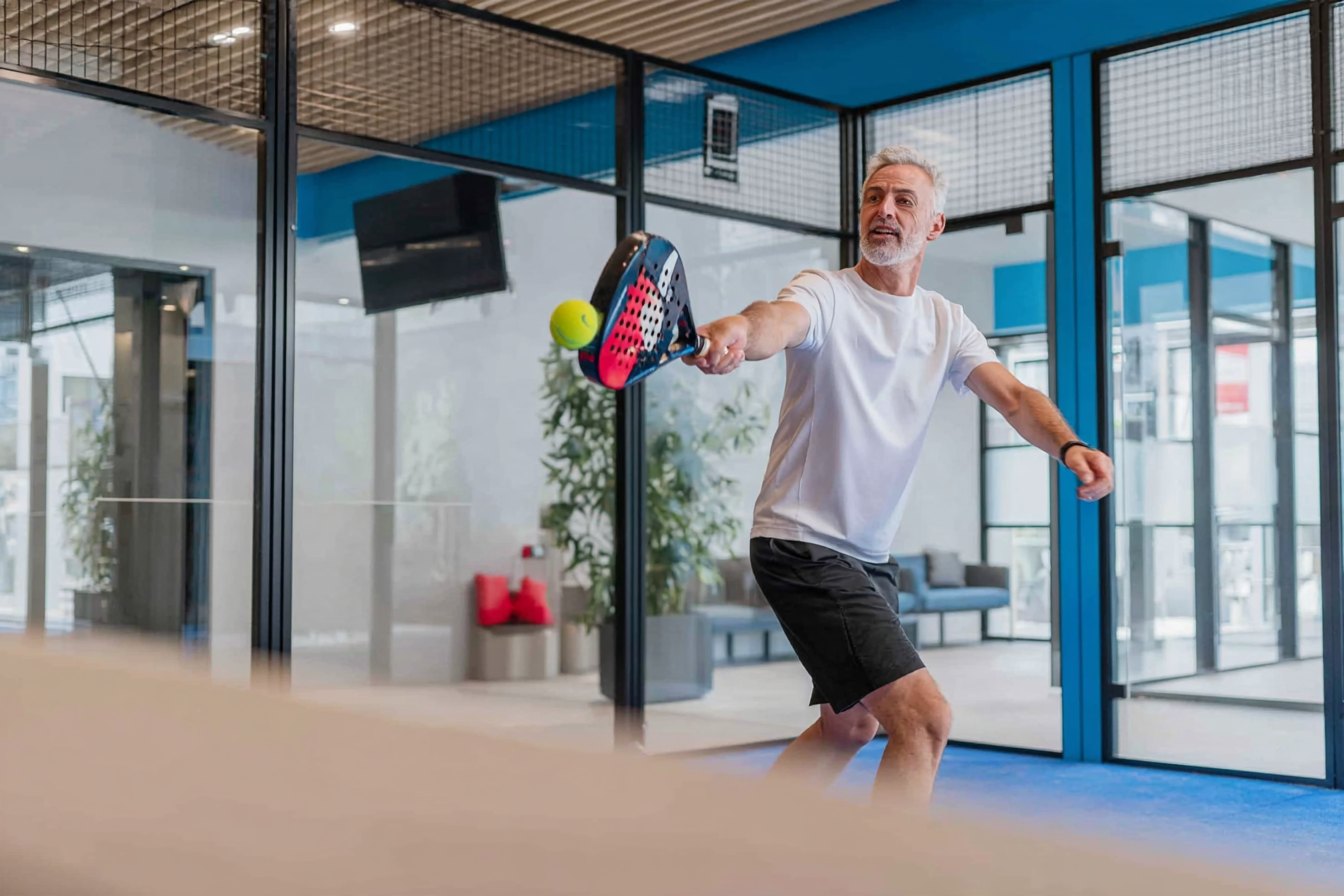

The difference between a muscle strain and a torn muscle fibre
In most cases, a muscle strain is caused by an unusual movement or overstretching of the muscle. Individual muscle fibres are overloaded and so-called micro-tears occur in the muscle tissue. The muscle remains basically intact, but is functionally restricted and painful.
A torn muscle fibre is considerably more serious. Here, individual or several muscle fibres actually tear. This structural damage is often accompanied by bleeding into the surrounding tissue, which can show up as a bruise or swelling.
Which symptoms occur?
Muscle strain
Typical signs of a muscle strain are:
- cramp-like or pulling pain
- pain that increases with further loading
- pain on pressure and on stretching
- muscle hardening or increased tension
- mild to moderate restriction of movement
Loading is often still possible, but becomes uncomfortable and increasingly painful.
Torn muscle fibre
A torn muscle fibre usually presents much more acutely:
- sudden, shooting, stabbing pain
- you have to stop loading immediately
- often visible swelling or bruising
- possible dent or "bump" in the muscle
- marked loss of strength up to loss of function
With a complete tear, the muscle can no longer be used actively.
What are the hamstrings and why are they injured so often?
The hamstrings are the muscles at the back of the thigh and consist of three muscles:
- Biceps femoris
- Semitendinosus
- Semimembranosus
These muscles connect the hip and the knee and have two central tasks:
- hip extension
- knee flexion
It is precisely this dual function that makes them particularly prone to injury, especially in explosive sports such as sprinting, football or athletics.
Types of hamstring injuries
Basically, two mechanisms are distinguished:
Sprinting-type injuries
- occur when sprinting or accelerating quickly
- make up about 75% of all hamstring injuries
- usually heal faster
Stretching-type injuries
- occur with strong stretching movements (e.g. sliding tackle, lunge)
- are often more severe and need longer healing times
What you can do yourself for a muscle strain or torn muscle fibre
If it happens, a sudden pain in the back of the thigh while running, sprinting or jumping, you should react correctly to support healing as well as possible.
Acute phase: act correctly straight away (PRICE rule)
Straight after the injury, the following applies:
- P: Protect: stop sport immediately, no loading
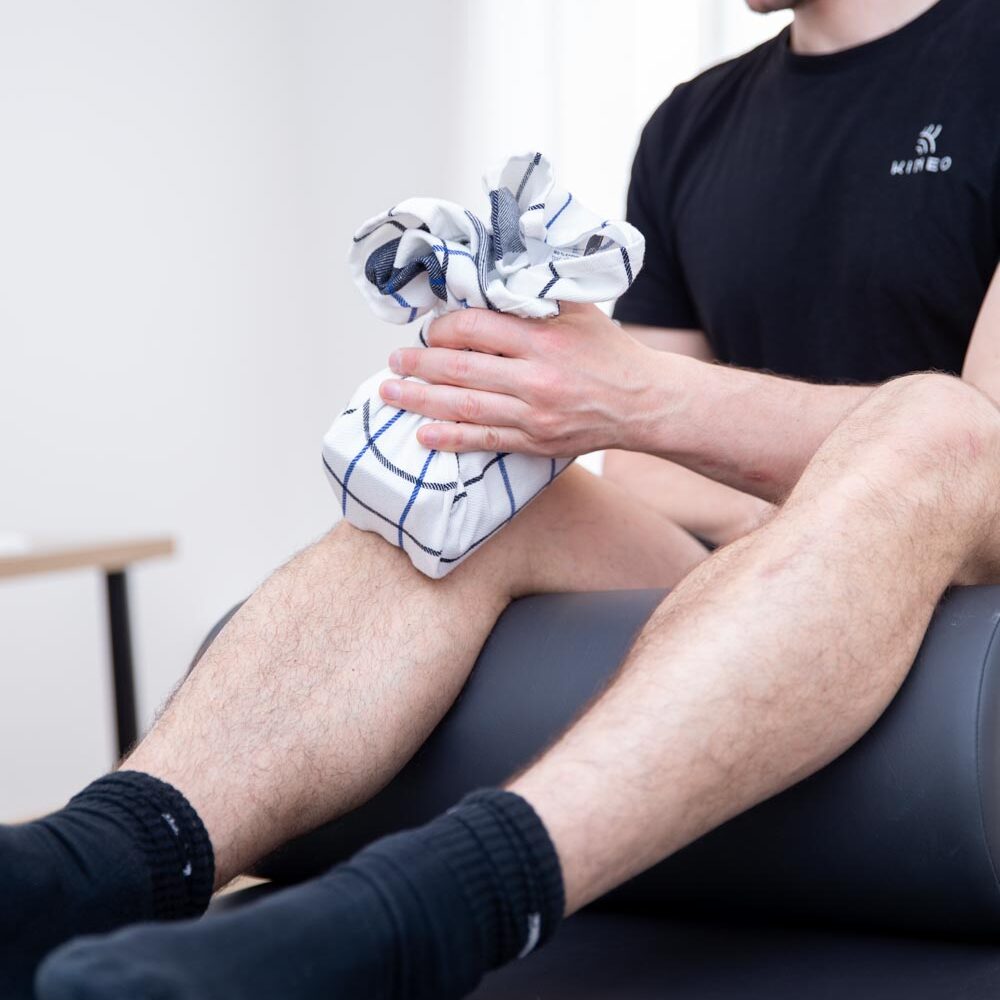
- I: Ice: cool for 10–15 minutes (with a cloth between the skin and the cold pack)
- C: Compression: a light compression bandage against swelling
- E: Elevation: raise the leg to take the load off
Important: no stretching in the first days, as this can make the injury worse.
Aids in the acute phase
The following can be used for support:
- Cold packs or a frozen pack of peas
- Peppermint oil, menthol or camphor for cooling effects
- Arnica ointment (anti-inflammatory and decongestant)
Important: do not apply arnica to broken skin, and stop using it immediately if you get a skin reaction.
The course of healing: the 3 phases of muscle regeneration
Healing typically takes place in three phases:
- Phase 1: reduce the inflammatory reaction
- Phase 2: build new muscle cells
- Phase 3: restore load capacity and strength
The healing time depends on the severity:
- Muscle strain: about 1–3 weeks
- Torn muscle fibre: up to 6–12 weeks or longer
What you should do during healing
Early phase
- isometric tension without movement
- pain-free activation of the muscles
- no stretching to the pain threshold
Build-up phase
- slowly increase strength exercises
- train trunk and hip stability
- controlled cycling or cross trainer possible
Late phase
- slow return to running training
- no sprints or hill runs at first
- progressive increase in load
Preventing hamstring injuries
Hamstring injuries often arise from:
- muscular imbalances (agonist/antagonist imbalance)
- inadequate warm-up
- a lack of eccentric strength training
- one-sided loading
Important for prevention:
Warm-up
- 5–10 minutes of easy jogging
- dynamic stretching
- Running drills (leg raises, arm circles, windmills etc.)
Eccentric strength training
- Nordic hamstring curl
- Glute bridge / hip thrust
- Single-leg deadlift
Using stretching correctly
- before training: dynamic
- after training: static (30–60 seconds)
How KINEO helps with hamstring injuries
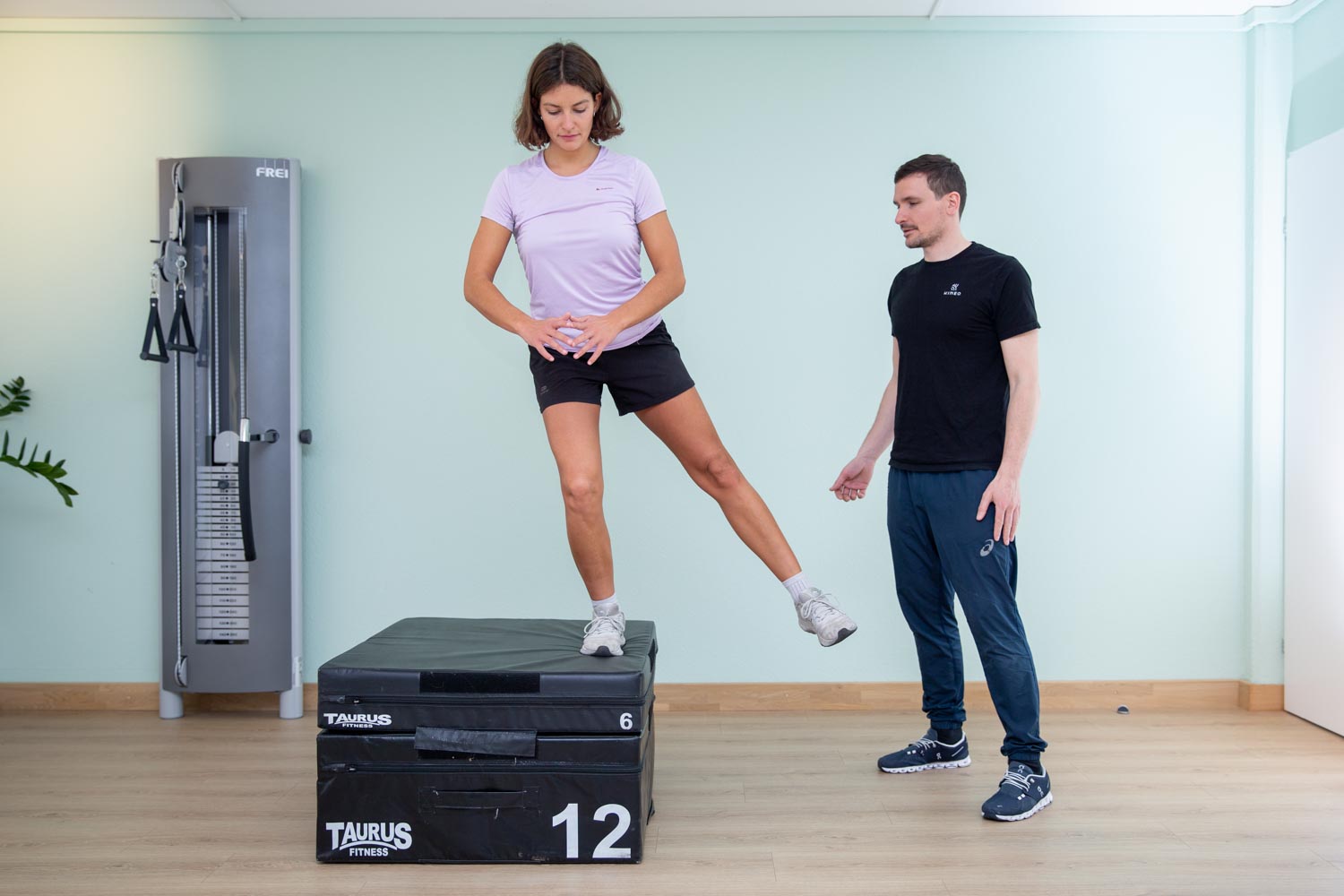
At KINEO we accompany you through all phases of rehabilitation: structured, evidence-based and individually adapted.
Acute phase
- Relaxing the muscles
- Trigger point therapy
- Lymphatic drainage for swelling
- Pain reduction and offloading
Early phase
- isometric activation
- transition to concentric training
- pain-free cycling
- stabilisation of trunk and pelvis
Build-up phase
- eccentric strength training
- progressive running load
- coordination and control
Prevention
- individual training programme
- running analysis to clarify the cause at the Kineo Runners Lab
- optimising load management
Book your appointment today!

FAQ: muscle strain & torn muscle fibre
1. How can I tell whether it is a strain or a tear?
A strain causes more pulling, increasing pain. A torn fibre is sudden, stabbing and often leads to stopping training straight away.
2. Should I stretch with a muscle injury?
No. In the acute phase, stretching can make the injury worse. Start only later, in a dosed and controlled way.
3. When can I do sport again?
With a strain, often after a few days to weeks. With a torn muscle fibre, several weeks to months depending on severity.
4. Why are the hamstrings so often affected?
Because they are under high eccentric load during sprinting and braking movements and have to control the hip and knee at the same time.
5. How can I avoid recurrences?
Through targeted eccentric training, a good warm-up, stable trunk muscles and clean load management.