
By Clara Benning, physiotherapist at Kineo Escher Wyss
Why slow training makes you faster at HYROX
HYROX looks like a contest of strength and intensity: sled push, burpee broad jumps, wall balls. In reality, though, it is above all an endurance race. Eight times 1 kilometre of running, with eight stations in between. For most participants it takes well over an hour.
Many people still train almost only hard: short workouts, high heart rate, lots of lactate. That feels effective, but it leaves out an important foundation. Zone 2 training builds exactly this foundation and makes you steadier over the long distance.
What is Zone 2?
Zone 2 describes an easy to moderate endurance intensity just below the first threshold, the point at which lactate in the blood starts to rise. In this range, your body can still supply energy well with oxygen, including from fat. You can speak in full sentences, but you breathe noticeably deeper than at rest.
How exactly the zones are divided differs from model to model. What matters in practice is this: Zone 2 is individual. At the same heart rate, one person can be cruising along while another is already at the threshold.
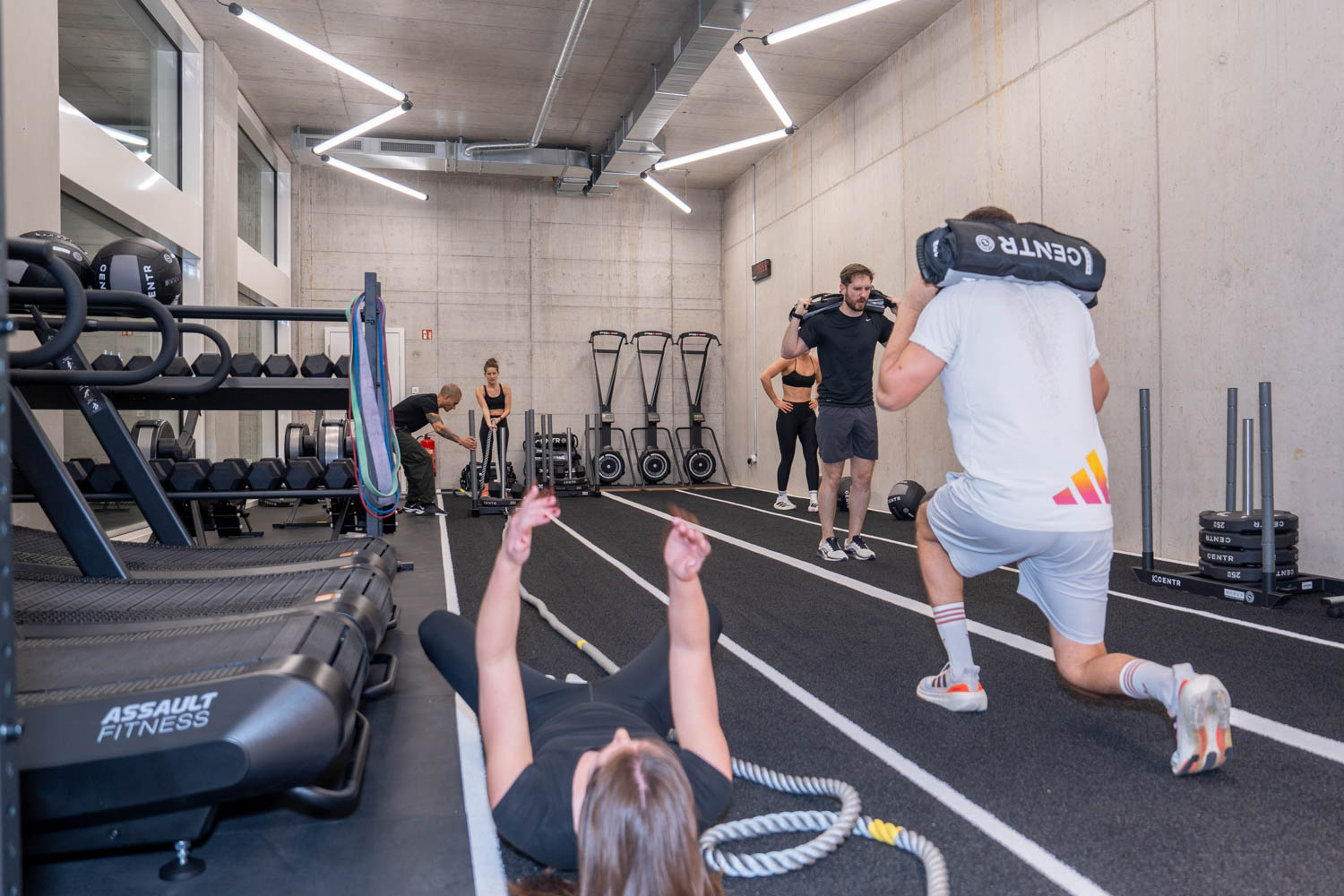
Why Zone 2 matters for HYROX
- A better aerobic base: Regular easy endurance training improves your muscles' ability to use oxygen. You benefit from this on all eight running sections.
- Faster recovery between stations: With a good foundation, your heart rate comes down faster after the sled push, and you run the next kilometre more consistently.
- More volume with less risk: Easy training puts less strain on tendons and joints than constant hard sessions. This way you can train more without overloading yourself.
- Better pacing control: If you know your easy intensity, you do not start the race too fast.
Many endurance athletes spend most of their training at low intensity and only a smaller part really hard. This principle transfers well to HYROX.
How to find your Zone 2
- Talk test: You can talk in full sentences, but not sing. If only a short sentence is possible, you are going too fast.
- Nasal breathing: If you can breathe easily through your nose, you are usually in the right range.
- Heart rate: Percentages of your maximum heart rate give a rough guide, but are often inaccurate, because maximum heart rate is rarely measured and varies greatly between individuals.
- Performance diagnostics: A lab measurement is the most accurate. With a lactate step test or spiroergometry, we determine your thresholds and derive heart rate and pace ranges from them.
Zone 2 training in practice
- Duration: Sessions of about 40–90 minutes. Shorter sessions are better than none, longer ones bring more.
- Frequency: Two to three Zone 2 sessions a week alongside strength and interval training
- Mix your equipment: Running, bike, rowing machine or SkiErg. Some of it should be running, because a large part of the HYROX race is running. The bike and rowing machine, on the other hand, spare your legs at high volume.
- Discipline: The most common trap is going too fast. Running slower or walking uphill is allowed.
Example week for HYROX beginners
- Monday: full-body strength training
- Tuesday: 45 minutes of Zone 2 running
- Wednesday: intervals, for example 6 x 1 km at race pace with breaks
- Thursday: 40–60 minutes of Zone 2 on the bike or rowing machine
- Friday: rest day or mobility
- Saturday: HYROX simulation or station training
- Sunday: 60–75 minutes of Zone 2, a mix of running and rowing
How we support your HYROX training at Kineo
Whether you are planning your first HYROX or want to improve your time, we combine performance diagnostics, sports physiotherapy and training so that you train in a targeted way and without overload.
1. Our check before you start
- Performance diagnostics: Lactate step test or spiroergometry at the Kineo Performance Lab to determine your zones
- Training history: current volume, split between easy and hard, earlier injuries
- Load tolerance when running: calf and Achilles tendon strength, single-leg squat, hip strength
- Movement quality at the stations: hip hinge, squat, lunge and overhead movement
2. How we build your training
- Base phase (about 4–6 weeks): More Zone 2 volume, strength training twice a week, few intervals
- Build phase: Zone 2 stays, plus threshold and interval training and running after stations
- Competition phase: Race-specific simulations, slightly reduced volume, Zone 2 for recovery
- Monitoring: A repeat test in the lab after a few months shows whether your thresholds have shifted
3. Kineo services we use
- Lactate step test to determine your Zone 2 and your thresholds precisely
- High-intensity interval training as a targeted complement to the easy foundation
- Sports physiotherapy for overuse complaints, for example at the Achilles tendon, knee or back
- Medical training therapy for strength and load tolerance, so that the volume is well tolerated
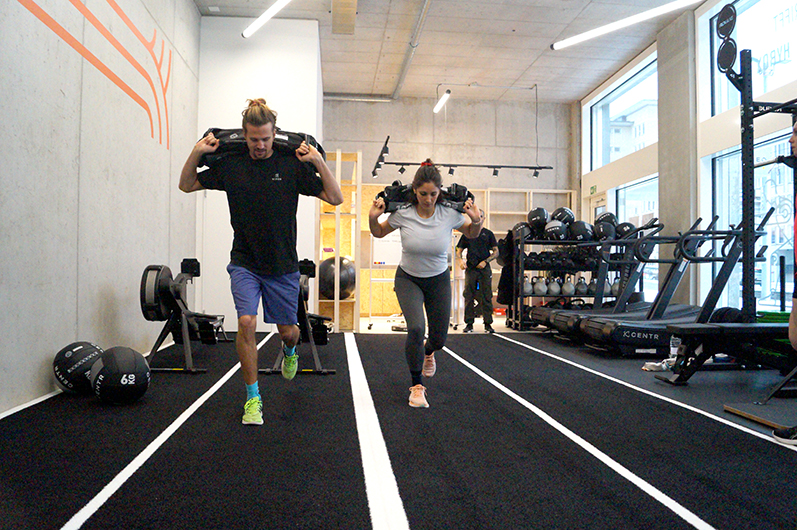
From our practice
At their first lactate step test, many HYROX athletes realise that their runs, which feel easy, are in fact much too fast. They train almost everything in the middle range: too hard for the foundation, too easy for real intervals. If you really keep your easy sessions easy, you usually have more energy for the hard ones and recover better.
HYROX and sports physio at Kineo Escher Wyss
At Kineo Escher Wyss at Hardturmstrasse 18, Kineo HYROX trains downstairs and the sports physiotherapy is upstairs. This way, training, technique and treatment can be closely linked. For performance diagnostics, you go to the Kineo Performance Lab in Seefeld. There, a lactate step test costs CHF 200 and spiroergometry costs CHF 270. You can find out more about the Escher Wyss location on the location page.
Frequently asked questions
Isn't Zone 2 too easy to do any good?
No. The adaptations come from regular volume over weeks and months. Zone 2 complements the hard sessions, it does not replace them.
Is a heart rate watch enough to determine my Zone 2?
As a rough guide, yes, combined with the talk test. For precise values, performance diagnostics such as a lactate step test make sense.
Can I do Zone 2 on the rowing machine or SkiErg too?
Yes. Your heart rate can differ slightly depending on the equipment. Some of your Zone 2 sessions should still be running.
How long does a physio appointment last?
An appointment lasts 30 minutes. In your first session we establish the cause of your complaints and start straight away with treatment and exercises.
You might also like
- Lactate test: what it measures and who benefits
- HYROX: typical injuries and how to avoid them
- Rowing and SkiErg: protecting your back
Book an appointment
Do you want to build your HYROX training in a targeted way? Book your appointment at Kineo Escher Wyss.