By Diego Rojas, physiotherapist at Kineo Seefeld
Shorter steps, less load?
Cadence, also called step rate, is the number of steps you take per minute. It is one of the few adjustments to your running style that you can change without much effort. And it has a noticeable effect: a slightly higher cadence can ease the load on your knee and hip, and it helps many runners who overstride.
Many runners have heard of "180 steps per minute". But that number is not a rule for everyone. In this article you will find out when it makes sense to raise your cadence, how to measure it and how to change it step by step.
Why cadence matters
At the same pace, a higher cadence automatically means shorter steps. This has several effects:
- Less overstriding: Your foot lands closer under your body instead of far in front of it. This way you brake less with every step.
- Less load per step: Studies show that even a moderate increase in cadence can reduce the load on the knee and hip.
- Less up and down: Your centre of mass moves up and down less, and your running style often becomes calmer.
- More knee and hip bend on landing: Your leg absorbs the landing better.
Cadence depends heavily on pace, height and leg length. Tall runners often have a lower cadence than short ones, and at a fast pace it rises automatically. That is why we always compare your cadence with your own starting value, not with a fixed number.

Who benefits from a higher cadence
- Runners with knee pain, for example runner's knee (pain behind or around the kneecap) or iliotibial band syndrome (pain on the outside of the knee)
- Overstriders, whose foot lands clearly in front of the body with an almost straight knee
- Runners with shin splints or hip problems, where a long stride increases the load
- Runners returning after an injury who want to reduce the load per step
Not everyone benefits equally: if you already have a high cadence, you do not need to raise it further. With problems in the calf or Achilles tendon, increase especially carefully, because shorter steps can easily shift the load towards the lower leg.
How to measure your cadence
- With a watch: Many GPS watches show cadence directly. Look at the average of your easy runs, not of intervals.
- By hand: On an easy run, count for 30 seconds how often your right foot touches the ground. Multiply by four and you have your steps per minute.
- Measure several times: Measure on two or three different runs at the same easy pace and take the average.
What you can do yourself: the 6-week plan
Raise your cadence in small steps, by 5 to at most 10 percent above your starting value. If you run at 160 steps per minute, for example, your first target is about 168.
- Weeks 1–2: In two easy runs per week, run 4–6 segments of 1 minute at the target cadence, with 2–3 minutes at normal cadence in between. A metronome on your phone or music with a matching beat helps.
- Weeks 3–4: Lengthen the segments to 3–5 minutes, 3–4 repetitions per run
- Weeks 5–6: Whole easy runs at the new cadence. Check without the metronome whether it has held.
- Afterwards: If the new cadence feels natural, you can tackle another small increase if needed.
Make sure your pace stays the same. You are not meant to get faster, just to take shorter, quicker steps.
Exercises that support you
- Skipping drills: Short, quick steps with a slight knee lift on the spot or over 15–20 metres, 3–4 rounds before your run
- Skipping rope: 3 x 30–60 seconds, relaxed and light on the forefoot. It trains quick, springy ground contacts.
- Calf raises: Single-leg, 3 x 12–15 repetitions, two to three times a week. Strong calves cope better with the changed load.
- Lateral hip strength: Side plank or side leg raise, 3 x 10–15 repetitions, for a stable pelvis on landing
How we work at Kineo
If you want to change your cadence because of pain, we first take a close look. A change in cadence is then one building block, not a cure-all.
1. Our check before you start
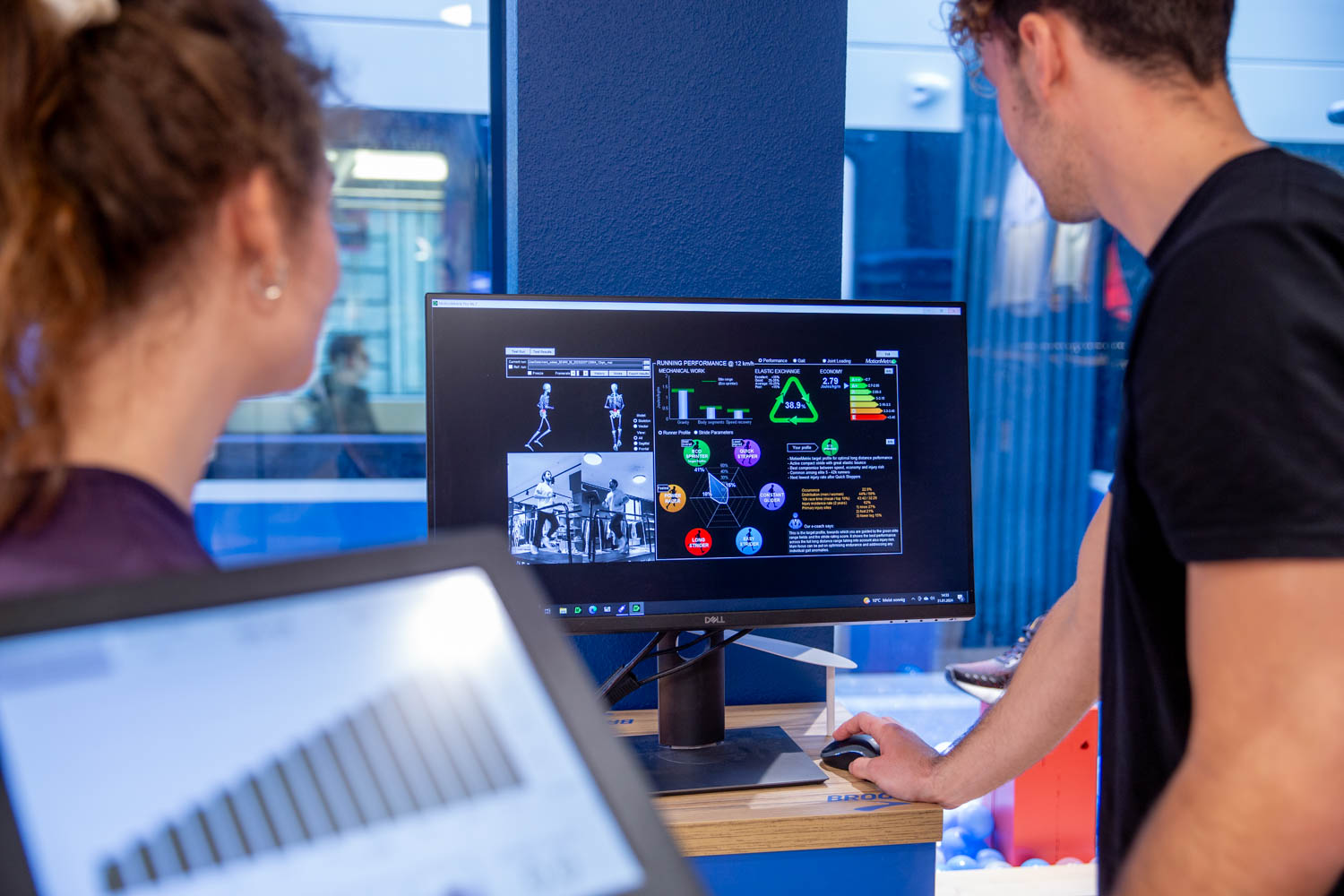
- Running analysis on the treadmill: Foot strike, overstriding, knee axis, pelvis and current cadence on video
- Strength: Single-leg squat, single-leg calf raise to fatigue, lateral hip strength
- Stability: Single-leg stand and Y-Balance Test compared with the other side
- Mobility: Ankle in the knee-to-wall test and hip extension
- Training history: Volume, increases and shoes over the last few weeks
2. How we build up your training
- Weeks 1–2: adjust the load and first cadence segments in an easy run
- Weeks 3–6: consolidate cadence following the plan above, complemented by strength exercises for calf and hip, two to three times a week
- Weeks 6–8: check: A new running analysis to see whether cadence and foot strike have changed
- Afterwards: increase volume when the run and the following day are pain-free
3. Kineo services we use
- Currex 5D running analysis for measuring cadence and foot strike before and after training
- Runners Physio if knee, shin or hip pain is the reason for the change
- Medical training therapy for calf, hip and trunk
- Explosive strength training for short, springy ground contacts
From our practice
Many runners are surprised how unfamiliar even a small increase in cadence feels. In the first runs it feels hectic, almost like pitter-pattering. After a few weeks, though, many report that their running feels lighter and calmer and that their knees give them less trouble.
Improve your running style at Kineo Seefeld
At Kineo Seefeld at Seefeldstrasse 83, Feldeggstrasse stop with trams 2 and 4, you will find everything for runners in one building: on the ground floor the Kineo Runners Lab with running shoes and Currex 5D running analysis, on the first floor physiotherapy with Runners Physio, and in the building the Kineo Performance Lab for performance diagnostics. More on the Seefeld location page.
Frequently asked questions
Do I have to run 180 steps per minute?
No. The number comes from observations of elite runners at race pace. For recreational runners, an increase of 5 to 10 percent over your own starting value makes more sense.
Will a higher cadence make me faster?
Not automatically. The aim is above all a more efficient and gentler running style. Your pace stays the same at first while you practise.
How long does it take until the new cadence feels natural?
Usually a few weeks of regular practice. Allow at least four to six weeks.
Does health insurance cover physiotherapy?
With a doctor's prescription, your basic health insurance covers the cost. Kineo is recognised by all Swiss health insurers.
You might also like
- Running analysis: what it shows and who it helps
- Runner's knee (patellofemoral pain syndrome)
- Strength training for runners: the most important exercises
Book an appointment
Do you want to change your cadence in a targeted way, or do you have pain when running? Book your appointment at Kineo Seefeld.