By Clara Benning, physiotherapist at Kineo Escher Wyss
Building muscle after 40: it's worth it
At 40, you may notice that quite a few things are changing. Recovery after training takes longer, small niggles pile up, and despite jogging or riding your bike you feel less strong than you used to. Perhaps you wonder whether starting strength training is still worthwhile now.
The answer is clearly yes. Muscles respond to training at any age. If you train strength regularly after 40, you lay the foundation for still being independent, mobile and resilient at 70.
What happens to your muscles after 40
Without targeted training, muscle mass slowly decreases from middle adulthood, and faster later on. This age-related loss of muscle is called sarcopenia. Even more clearly than strength, explosive power declines, meaning the ability to develop force quickly. This is exactly what you need to keep your balance after a stumble or to manage a sprint for the tram.
On top of that come hormonal changes, often less movement in everyday life and a lower protein intake. Strength training counteracts these factors. It also strengthens bones, tendons and joints and has positive effects on blood sugar, blood pressure and body weight.
The most important training principles
- Frequency: Two to three strength sessions per week. The WHO recommends muscle-strengthening activity for adults on at least two days per week.
- Whole body: Five to seven exercises per session for legs, hips, back, chest and trunk.
- Intensity: 2 to 4 sets of 6 to 15 repetitions. At the end of a set, about one to three clean repetitions should still be possible.
- Progression: Increase weight or repetitions step by step as soon as the targets go well. No progression, no growth.
- Build in explosive power: Perform the upward movement briskly and the lowering in a controlled way. Later also light jumps or medicine ball throws.
- Recovery: About 48 hours of rest between hard sessions for the same muscle group. Sleep is part of training.
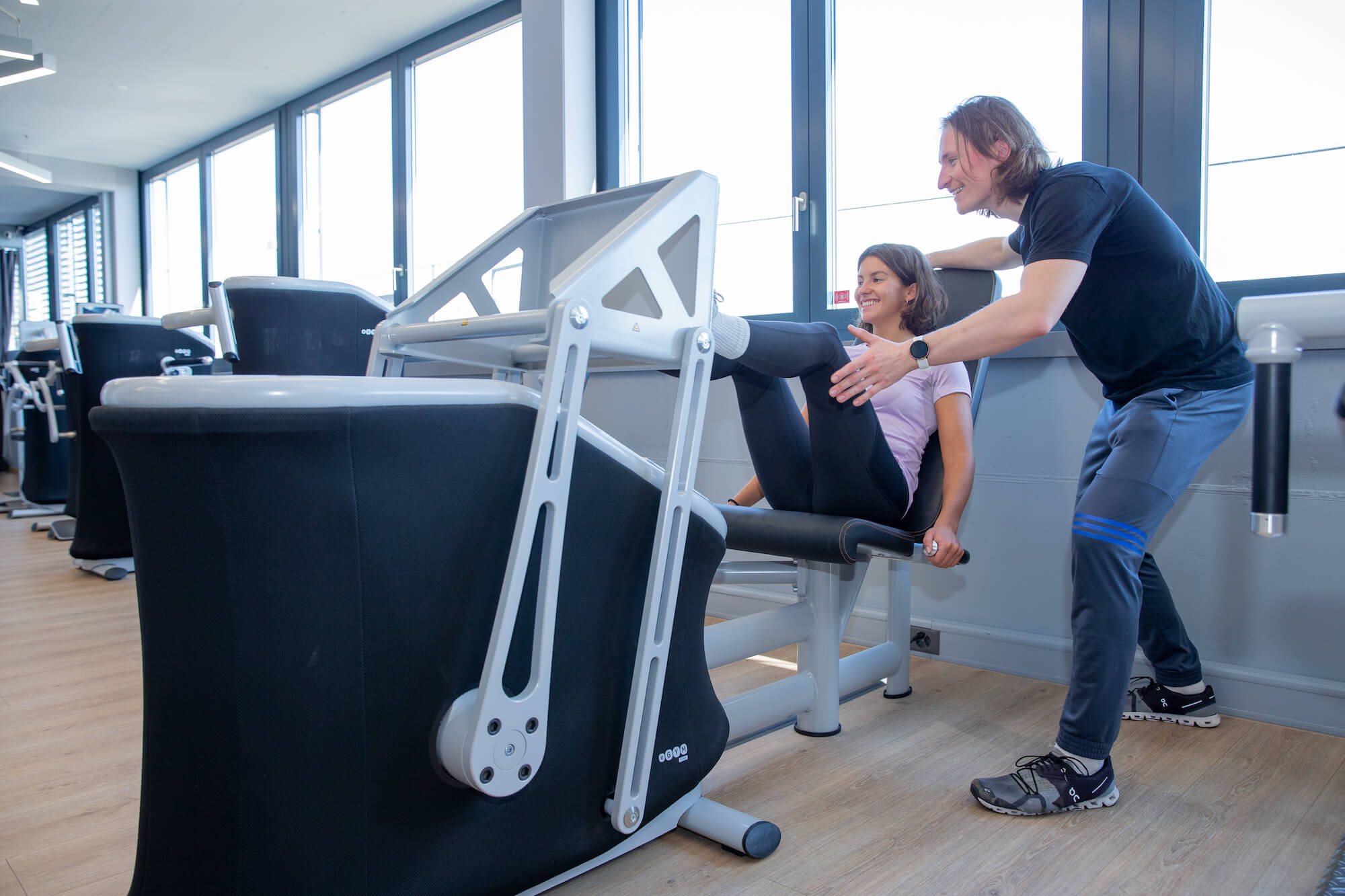
An example for your whole-body training
- Goblet squat: Dumbbell or kettlebell in front of your chest, squat. 3 x 8 to 12.
- Romanian deadlift: With slightly bent knees, push your hips back and guide the dumbbells along your thighs to just below the knees. 3 x 8 to 10.
- Row on the cable machine or one-arm with a dumbbell: 3 x 10 to 12.
- Push-up on the bench or on the floor, depending on your strength. 3 x 6 to 12.
- Reverse lunge: 2 x 8 per side.
- Farmer's walk: Carry two heavy dumbbells, 3 x 30 metres. Trains grip, trunk and posture.
- Side plank: 2 x 20 to 30 seconds per side.
45 minutes is enough to start with. After four to six weeks, you can extend the programme or split it into two different sessions.
Nutrition: protein and consistency
With increasing age, muscles need a stronger stimulus from protein in order to grow. For active adults who want to build muscle, about 1.2 to 1.6 g of protein per kilogram of body weight per day is often recommended. Spread the amount over three to four meals, for example with dairy products, eggs, legumes, fish or meat. If you have kidney disease, discuss the amount of protein with your doctor.
How we start your strength training at Kineo
Especially if you have not trained for a long time or already have symptoms, a guided start is worthwhile.
1. Our check before you start
- History: earlier injuries, current pain, medication and training experience
- Movement screening: squat, hip hinge, overhead movement and push-up
- 30-second sit-to-stand test: how many times you can stand up from a chair in 30 seconds, a simple measure of leg strength
- Grip strength compared between sides as an indicator of general strength
- Single-leg stance with eyes open and closed for balance
2. How we build up your training
- Weeks 1–4: technique and getting used to it. Two sessions per week, moderate weights, clean execution of the basic exercises.
- Weeks 5–12: build-up. Two to three sessions, increase weight step by step, 3 sets per exercise.
- From week 12: explosive power and variety. Explosive variations, light jumps, medicine ball throws and new exercises.
- Long term: independent training with regular check-ups, so that the plan grows with you.
3. Kineo services we use
- Medical training therapy for a safe start, especially with symptoms or after injuries
- Sports physiotherapy, when pain in the knee, shoulder or back is holding your training back
- Explosive strength training, to develop force production in a targeted way
- Digital home programme for sessions at home or when travelling
Important: If you have chest pain, shortness of breath or dizziness when exerting yourself, a known heart condition or poorly controlled blood pressure, have a doctor check what is right for you before you start training.

From our practice
Many people who start strength training with us over 40 have respect for heavy weights and stay with very light exercises for a long time. As soon as they notice that their body responds well to gradually increasing loads, their confidence grows. Often back or knee pain that previously kept them from training also fades along the way.
Strength training at Kineo Escher Wyss
At Kineo Escher Wyss at Hardturmstrasse 18, you train on a supervised training area, directly connected to sports physiotherapy. If you are looking for more variety and community after the build-up, you will find Kineo HYROX in the same building, with group and personal training.
Frequently asked questions
Isn't it too late for building muscle at 40 or 50?
No. Muscles respond to strength training at any age, including 70 and beyond. Building up takes a little longer, but is just as worthwhile.
Does heavy training harm my joints?
With good technique and gradual progression, generally not. Strength training strengthens tendons and bones and can even ease joint problems.
How long does an appointment last?
An appointment lasts 30 minutes. In the first appointment, we do the check and start straight away with your first exercises.
You might also like
- Strength training during menopause
- Plyometrics: getting started with jump training safely
- Deadlifting without back pain
Book an appointment
Do you want to get stronger after 40? Book your appointment at Kineo Escher Wyss and start with a plan that suits you.