By Lucrecia Guerra, physiotherapist at Kineo Escher Wyss
Deadlifting and the lower back
The deadlift is one of the best exercises for your back, glutes and legs. Even so, it has a bad reputation: many people know someone who “wrecked their back deadlifting”. Perhaps you yourself feel a pulling in your lower back after training, or noticed a sharp pain after a heavy set.
Deadlifting is no more dangerous than other strength exercises. Pain usually arises when load, technique and capacity do not match. Here you can find out what matters and how to return safely to deadlifting with back pain.
Why your back can hurt when deadlifting
- Progressing too fast: Strength grows quickly, but the load tolerance of tissue grows more slowly. If you add clearly more weight every week, you will overload your back sooner or later.
- Technique under fatigue: The last repetitions of a hard set, or deadlifts at the end of a circuit, are riskier than fresh, controlled repetitions.
- Too little hip: If the hips do not move back, the movement comes from the back instead of from the hips and legs.
- Bar away from the body: The further the bar is from your legs, the greater the lever on the lumbar spine.
- Sleep, stress and overall load: Back pain does not depend on mechanics alone. Little sleep and a lot of stress lower your load tolerance.
Myth: your back must never round
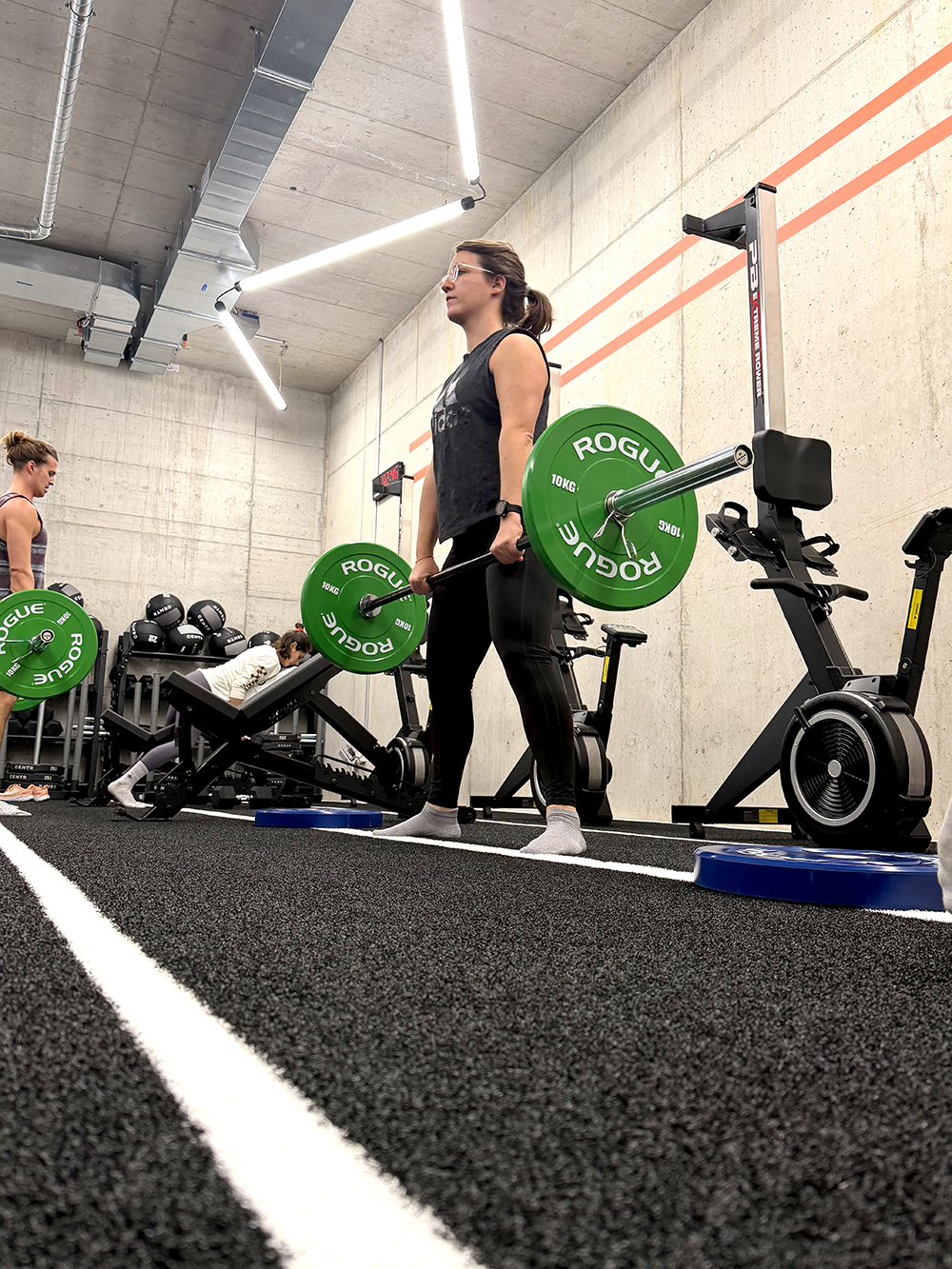
A completely straight back under every load is hardly possible. In many lifters, the lumbar spine flexes slightly even when it looks straight from outside. The spine is built to bend, and it adapts to load. What matters is that you control the position and that the load fits your training level.
With heavy weights, a stable, as neutral as possible starting position still makes sense. You should avoid strong, uncontrolled rounding under high load, especially when fatigued.
Typical complaints
- Muscular overload: dull, on both sides of the spine, better with movement. Usually clearly better after a few days.
- Lumbago: sudden, stabbing pain, movement severely restricted. It feels threatening but is usually harmless and improves within days to a few weeks.
- Pain radiating into the leg: Pain, tingling or numbness in the leg can point to an irritated nerve root, for example in a herniated disc.
See a doctor if you have: increasing loss of strength in the leg, fever, unintentional weight loss, night pain unrelated to movement, or pain after a fall. Numbness in the buttock or genital area, or problems passing urine or stool, are an emergency.
Technique checklist
- Stance: Feet about hip-width apart, bar over the middle of the foot
- Build tension: Brace your core and take the slack out of the bar slightly before it leaves the floor
- Push, don't yank: Imagine pushing the floor away with your legs
- Close to the body: The bar slides along your shins and thighs
- At the top: Extend hips and knees, don't lean back into a hollow back
- Lowering: Hips back first, then bend the knees
What you can do yourself
- Stay active: Bed rest does not help with back pain. Walking, easy cycling and light mobilisation usually do you good.
- A variation instead of a break: Choose a variation that feels good, such as the trap bar, deadlifts from blocks or Romanian deadlifts with light weight.
- Reduce the load, keep the technique: Train with clearly less weight for one to two weeks, then increase gradually.
- No fear: Acute back pain is very common and usually harmless. If you protect your back heavily out of fear, you often stay restricted for longer.
How we treat back pain after deadlifting at Kineo
First we distinguish between muscular overload, lumbago and nerve involvement. Then we make your back resilient again, and that means with deadlifts, not without them.
1. Assessment: what we examine in your first session
- Movement testing of the lumbar spine: Bending forward, backward and sideways and rotation, and which direction eases your symptoms
- Neurological check: Straight leg raise (Lasègue test) and slump test, plus reflexes, strength and sensation in the legs
- Hip: Flexion and rotation compared side to side, stretching ability of the hamstrings
- Core endurance: Biering-Sørensen test and side plank hold
- Hip hinge test: A dowel lies along the spine, touching the back of the head, thoracic spine and sacrum. It shows whether you bend from the hip.
- Technique analysis: Video of your deadlift with light weight
2. Treatment in phases
- Phase 1, weeks 1–2: Calm things down and move. Pain-relieving direction of movement, walking, manual treatment. Hip hinge with a dowel and glute bridge, 3 x 10–12.
- Phase 2, weeks 2–5: Build core and hips. Romanian deadlifts with dumbbells, hip thrust, side plank and bird dog, 3 x 8–12, two to three times a week.
- Phase 3, from week 4: Deadlifting returns. Trap bar or deadlifts from blocks, 3–4 x 5–6 with 2–3 repetitions in reserve, increasing the weight gradually.
- Phase 4: Full movement. Deadlifts from the floor, weekly increases in small steps.
- Guideline: Mild discomfort up to about 3 out of 10 is fine if it has settled by the next day.
3. Kineo services we use
- Sports physiotherapy: assessment, technique analysis and build-up to full load
- Manual therapy for restricted mobility in the lumbar spine, pelvis or hip
- Trigger point treatment for tight back and gluteal muscles
- Medical training therapy for a structured return to strength training
- Digital home programme, so that you do your exercises correctly between appointments too
Variations for returning to lifting
- Kettlebell deadlift: Kettlebell between your feet, short range of motion, 3 x 10.
- Romanian deadlift: Start at the top, lower the bar to just below the knees, 3 x 8–10.
- Trap bar deadlift: The load sits closer to your centre of gravity, which many find more comfortable for the back. 3–4 x 5–8.
- Deadlift from blocks: The bar starts just below knee height. Shorter range of motion, less forward lean. 3–4 x 5.
From our practice
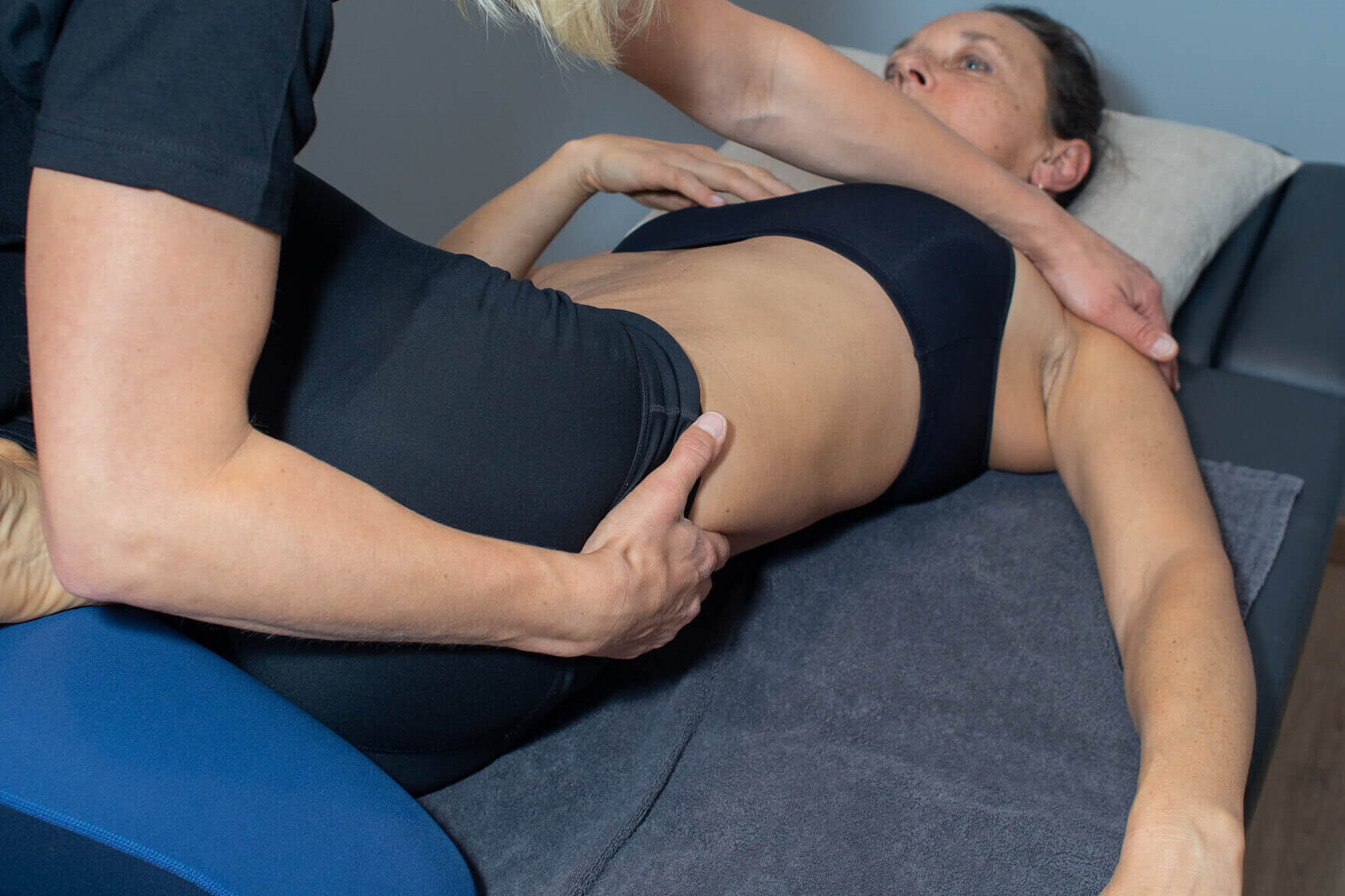
Many people who come to us with back pain after deadlifting are afraid of ever doing the exercise again. In most cases, though, the back has been overloaded, not injured. Often a quick increase in weight or deadlifting while very fatigued was the trigger. With a suitable variation and a clear plan, most people return to deadlifting, often with better technique than before.
Supervised strength training: Kineo Escher Wyss
At Kineo Escher Wyss at Hardturmstrasse 18, right on Escher-Wyss-Platz, we combine sports physiotherapy and a supervised training floor on two levels. You do your return to deadlifting on site under guidance. Kineo HYROX is in the same building. You can find more about the location on the page Kineo Escher Wyss.
Frequently asked questions
Should I never lift heavy again after back pain?
No. A strong back is usually more resilient. What matters is a gradual rebuild with a suitable variation and load.
Does a lifting belt help?
It can improve the feeling of stability in heavy sets, but it replaces neither technique nor core strength. For light and medium weights, you do not need it.
Does health insurance cover physiotherapy?
Yes. With a doctor's prescription, your basic health insurance covers the cost. Kineo is recognised by all Swiss health insurers.
You might also like
- Lumbago or herniated disc?
- Low back pain: pain in the lower back
- Sled push and sled pull: technique and your back
Book an appointment
Is your back holding back your deadlift? Book your appointment at Kineo Escher Wyss.