
LOW BACK PAIN: PAIN IN THE LOWER BACK
SYMPTOMS, SIGNS & CAUSES OF LOW BACK PAIN
WHAT IS LOW BACK PAIN?
Low back pain (LBP) or lumbar syndrome means pain in the lower back, that is, the lumbar spine.
The lumbar spine forms the lower section of the spine and consists of five vertebrae (L1–L5). Between the vertebrae are intervertebral discs, which act like small buffers and absorb load.
On the right and left, the lumbar spine is firmly connected to the pelvis. It is stabilised by:
- ligaments and tendons
- the deep back and abdominal muscles
- the lateral trunk muscles
The lumbar spine carries a large part of our body weight, both standing and sitting. This is why this area is under particular strain in everyday life and sport, and is also prone to overload.
SYMPTOMS OF LOW BACK PAIN
More than 50% of people experience pain in the lower back at least once in their lives.
Typical signs are:
- pulling or pressing pain in the lower back
- pain with exertion, lifting or sitting for a long time
- radiation into the buttocks, pelvis or hip
- increased muscle tension in the back
Back pain is classified by duration as:
- acute: < 6 weeks
- subacute: 6–12 weeks
- chronic: > 12 weeks
Important: pain in the lower back does not mean a structurally serious condition in most cases, but it can be very distressing.
CAUSES OF PAIN IN THE LOWER BACK
The lower back is a highly loaded system that has to adapt to many demands. Changes in the tissue therefore often arise from repeated or sustained load, not necessarily from a single trigger.
Common causes are:
- unfavourable movement patterns when lifting and carrying
- weak trunk, gluteal or hip muscles
- muscle tension and protective tension
- age-related, natural wear of the vertebrae and discs
In many cases, low back pain is multifactorial, meaning it is caused by several factors at once (e.g. stress, lack of exercise, load, sleep).
LOWER BACK PAIN DURING MENSTRUATION
In women, pain in the lower back can occur cyclically, especially before or during menstruation.
During the period, the muscles of the uterus contract to shed the lining. These contractions can:
- cause pain in the lower abdomen
- radiate into the lower back
- trigger a pulling feeling in the pelvic area
If this affects you, a relief position such as the 90-90 leg-raised position (see below) can give short-term relief.
LOW BACK PAIN: WHAT TO DO ABOUT PAIN IN THE LOWER BACK
Back pain often arises without a clear injury, frequently in connection with everyday movements. Factors such as:
- stress
- inactivity
- lack of sleep
- ongoing muscle tension
can make the nervous system more sensitive to load.
The good news: in most cases, back pain can be influenced well and improves with active treatment.
A HEALTHY BACK IN EVERYDAY LIFE
Three areas of daily life have a big influence on your back:
- sitting
- standing
- sleeping
This is where loads often arise unnoticed and can make symptoms worse.
SITTING CORRECTLY, BUT DYNAMICALLY
"Sit up straight!" is easier said than done, especially over a longer time.
More important than a "perfect posture" is dynamic sitting:
- change position regularly
- lean back and relax now and then
- actively sit up tall or stand up in between
The discs benefit particularly from varying load, because this helps them take up fluid better.
An ergonomic workstation is central here (see also: ergonomic workstation when working from home).
DYNAMIC STANDING
Standing for a long time can also strain the back, especially without movement.
A healthy standing position:
- feet hip-width apart and stable
- knees slightly bent
- pelvis neutral (no hollow back)
- spine in its natural S-shape
For more dynamics:
- shift your weight
- walk slightly on the spot
- change position regularly
LYING CORRECTLY & SLEEPING WELL
During sleep, the discs and tissues recover. The right sleeping position can make a big difference.
Back sleepers:
- a rather firm mattress
- a flat pillow for a neutral cervical spine
Side sleepers:
- a mattress with zones (the shoulder can sink in)
- a pillow that fills the gap between head and mattress
Front sleepers:
- a rather firm mattress
- if possible no pillow or a very flat one
The aim is always a spine position that is as neutral as possible.
EXERCISE & SPORT FOR BACK PAIN
Exercise is one of the most important factors in treating low back pain.
Recommended are:
- cycling
- swimming
- walking
- yoga
- Pilates
- hiking
These sports are gentle on the joints and at the same time promote strength, mobility and circulation.
Less suitable for acute complaints are:
- jogging
- heavy strength training with high loads
- sports with a lot of jumping or fast changes of direction (e.g. tennis, basketball, volleyball)
👉 Important: yes to exercise, but adapted and guided by your symptoms.
WHAT HELPS WITH ACUTE PAIN
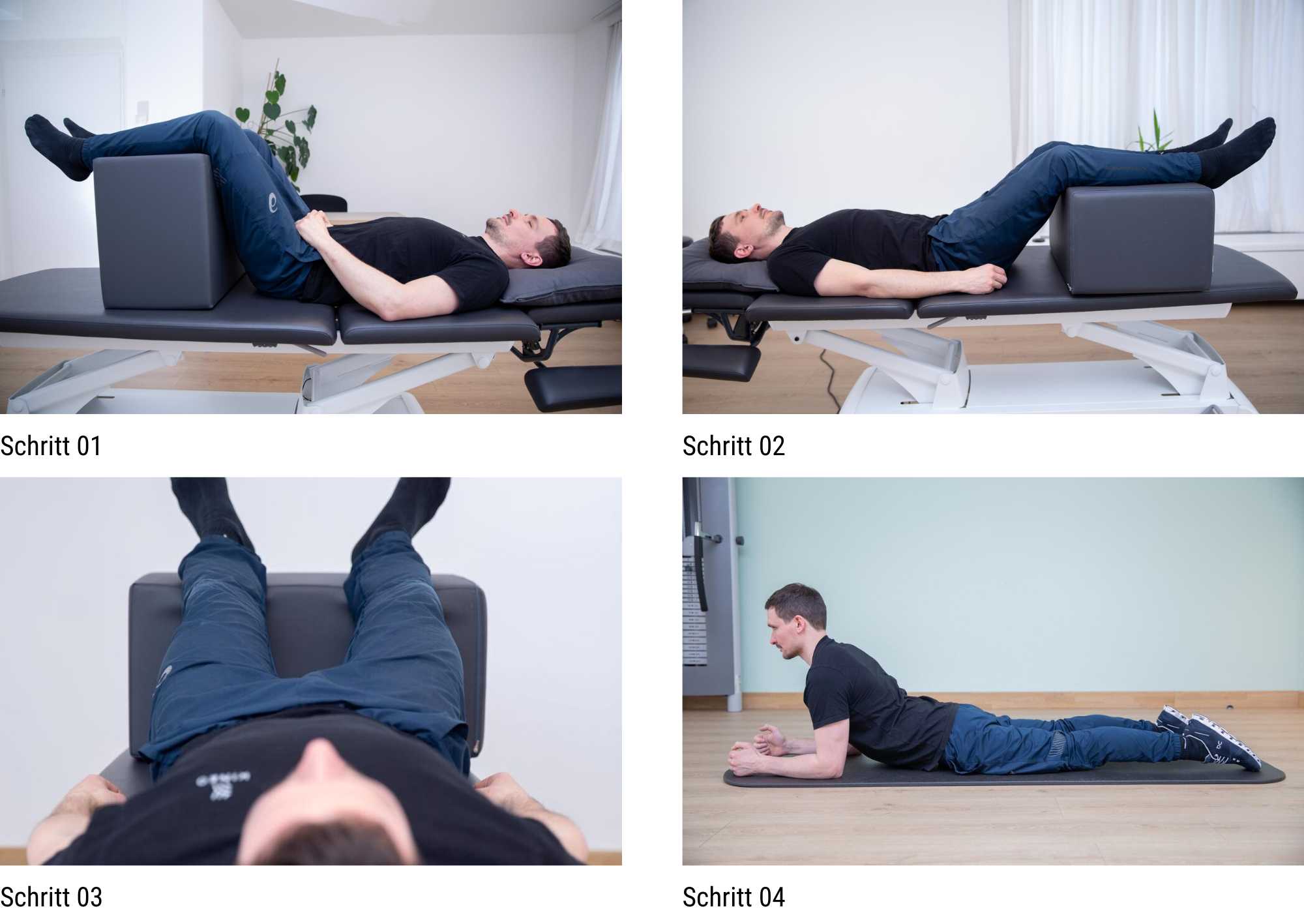
90-90 LEG-RAISED POSITION
The 90-90 leg-raised position can take load off the lower back and is often used in acute phases.
It helps to reduce pressure on the lumbar spine and can also relax the hip muscles.
Instructions:
- Lie on your back on a mat or the floor
- Legs on a stool or sofa (about 90° at hip and knee)
- If comfortable: slowly increase the distance to the stool
- Gradually straighten your legs further over a few days
- Optional: lie fully on your back with your legs straight
- If well tolerated: gentle lying on your front to mobilise the lumbar spine (without a hollow back)
HEAT THERAPY
Heat can help to reduce muscle tension and ease pain.
Suitable:
- hot water bottle
- heat pad
- heat patch
- warm bath
Effect:
- better blood circulation
- reduced muscle tension
- subjective pain relief
HOW KINEO CAN HELP WITH LOW BACK PAIN
Back pain often comes back, so sustainable, active treatment is crucial.
At KINEO we guide you in a structured way through all phases of rehabilitation.
PHYSIOTHERAPY FOR BACK PAIN
In the acute phase, the focus is on pain relief.
We use evidence-based approaches such as:
- manual therapy to mobilise joints and tissue
- fascial techniques to reduce tension
- trigger point treatment and dry needling
- neurodynamic techniques to improve nerve mobility
The aim is to make movement safe again and easier to tolerate.
ACTIVE REHABILITATION
We start active exercises early:
- activating the trunk muscles
- mobilising the lumbar spine
- improving body control
The focus is on:
- building strength
- stability
- coordination
- increasing load in everyday life and sport
You receive an individual exercise programme for home.
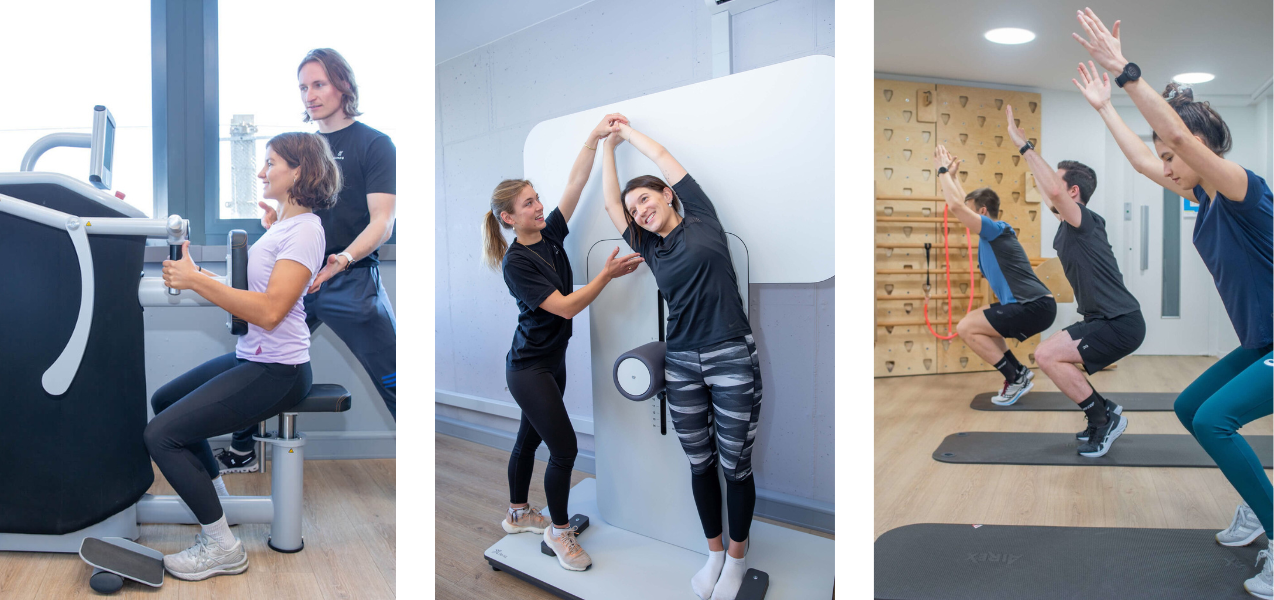
MEDICAL TRAINING THERAPY (MTT)
In our MTT you can continue to build up in a targeted way:
- Egym machines for isolated muscle building
- functional training (e.g. Senso Pro Trainer)
The aim is a resilient, stable and pain-free back in everyday life.
PREVENTION & LONG-TERM HEALTH
So that back pain doesn't come back, we work together on:
- movement strategies for everyday life
- ergonomic adjustments
- long-term training
Continuous loading within the right range is the key to lasting improvement.
FAQ: LOW BACK PAIN
How long does low back pain last?
Acute back pain often improves within days to a few weeks. Chronic cases take more time and active treatment.
Should I rest with back pain?
No, complete rest usually doesn't make sense. Controlled movement is generally better.
When should I see a doctor?
With severe, increasing pain, paralysis, fever or bladder/bowel problems.
Which sports are good for back pain?
Swimming, cycling, yoga, walking and Pilates are usually well suited.
Does heat help with back pain?
Yes, heat can reduce muscle tension and ease pain in the short term.