By Lucrecia Guerra, physiotherapist at Kineo Escher Wyss
Menopause: why strength training is especially important now
During menopause, a lot changes at the same time. Sleep becomes more restless, joints feel stiffer, weight is distributed differently, and despite the same training, strength seems to fade. Many women wonder which kind of exercise really helps now.
Strength training is one of the most effective things you can do for your body in this phase of life. It protects muscles and bones, supports your metabolism and makes you more resilient in everyday life. And it is never too late to start.
What happens in the body
With the transition into menopause, oestrogen levels fall markedly. Among other things, oestrogen has a protective effect on bones, muscles and tendons. The consequences:
- Bone density: In the years around menopause, bone density falls faster than before. In the long term, this raises the risk of osteoporosis and broken bones.
- Muscle mass and strength: Age-related muscle loss can speed up, especially without strength training.
- Joints and tendons: Many women notice more joint pain or tendon problems, for example in the shoulder or Achilles tendon.
- Metabolism and body composition: Fat is more often stored around the belly, and insulin sensitivity can decrease.
- Pelvic floor: The tissue changes, and urine leakage when coughing, jumping or lifting can increase.
What strength training can do
Muscles and bones adapt to the load you give them. For bones to respond, noticeable stimuli are needed: weights that are heavy enough and, if tolerated, short impact loads such as hopping. Gentle gymnastics alone is usually not enough for this. At the same time, strength training improves muscle strength, balance and with it protection against falls. Many women also report better sleep and more energy.
What sensible training looks like
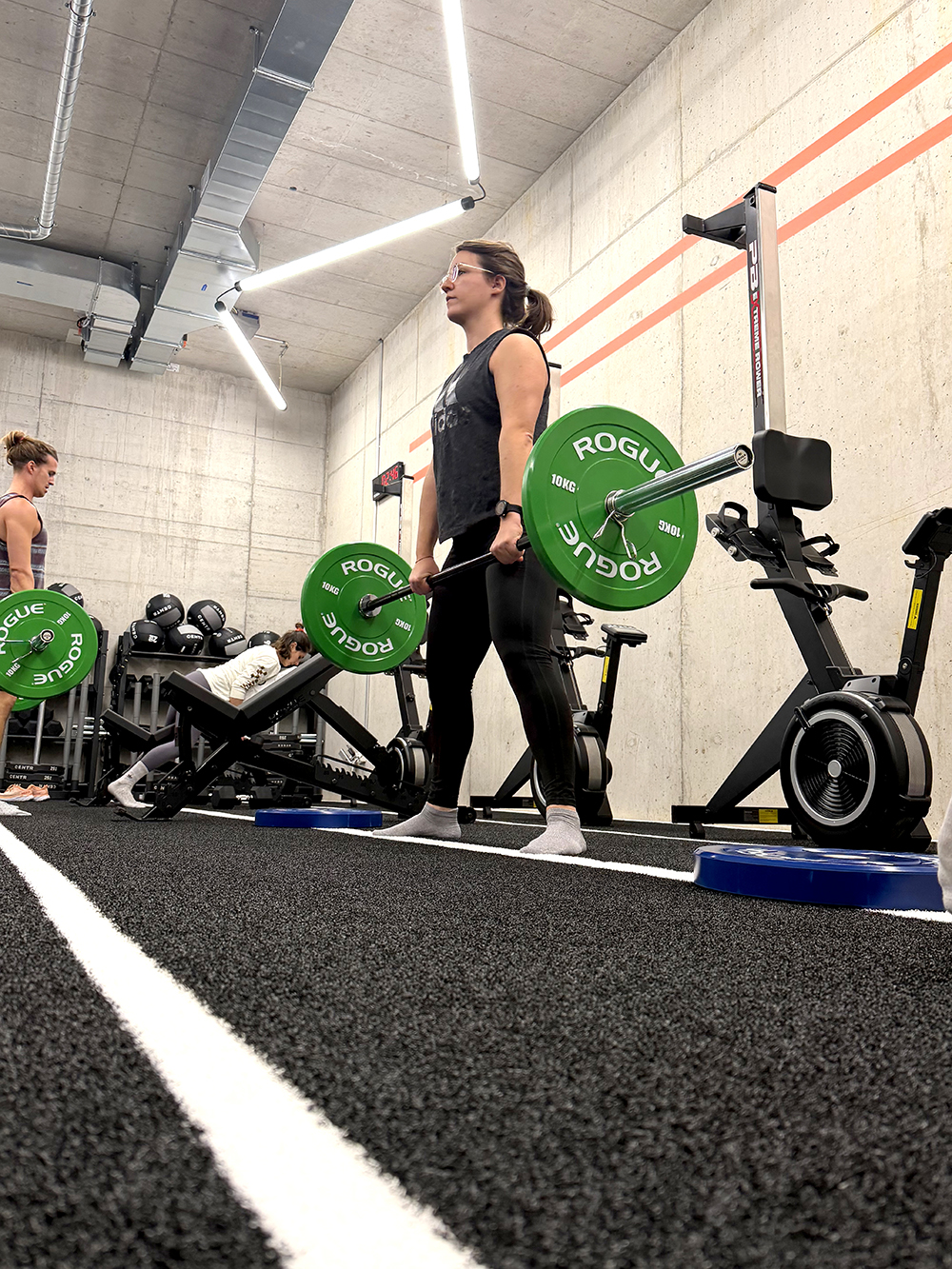
- Two to three strength sessions per week with whole-body exercises.
- Prefer basic exercises: squat, deadlift, lunges, rows, pressing and carrying. They load many muscles and the spine in a natural way.
- Heavy enough: After building technique, rather 5 to 10 repetitions with weights that are challenging at the end of the set. Light dumbbells with many repetitions give bones too little stimulus.
- Build in impact loading in a measured way: Heel drops (rise onto your toes and drop firmly onto your heels), skipping rope or small jumps, if your joints and pelvic floor allow it.
- Train balance: single-leg stance, walking along a line, exercises on an unstable surface.
- Strengthen the thoracic spine: Exercises for the back extensors, for example rows and exercises lying on your front, support an upright posture.
Don't forget the pelvic floor
If you leak urine when jumping, lifting or coughing, it is common, but no reason to give up training. A pelvic floor that is trained in a targeted way can be integrated into strength training. We show you how to use it consciously when lifting and how to increase the load step by step. If needed, we complement the training with targeted pelvic floor physiotherapy.
How we start your strength training at Kineo
We meet you where you are, whether with a lot of training experience or none at all.
1. Our check before you start
- History: any known bone density measurement, earlier fractures, joint problems, medication
- Strength: 30-second sit-to-stand test, grip strength and basic exercises with a light load
- Balance: single-leg stance and gait pattern
- Posture and thoracic spine: alignment and mobility
- Pelvic floor: targeted questions about urine leakage or a feeling of pressure when exerting yourself
2. How we build up your training
- Weeks 1–4: technique. Basic exercises with moderate weights, twice a week, pelvic floor activation when lifting.
- Weeks 5–12: increase strength. Raise the weights, 3 x 5 to 8 repetitions on the main exercises, add balance work.
- From week 12: impact loading. Heel drops and small jumps, if tolerated, as well as explosive strength exercises.
- Long term: independent training with regular review.
3. Kineo services we use
- Medical training therapy for guided build-up, especially with low bone density
- Pelvic floor (women only), when urine leakage or a feeling of pressure limits your training
- Explosive strength training for reaction ability and protection against falls
- Sports physiotherapy for joint or tendon problems that hold your training back
Important: If you have known osteoporosis, have already had a vertebral fracture or sudden, severe back pain after a minor load, have this checked by a doctor. Training is usually still possible and worthwhile in that case, but we adjust the choice of exercises accordingly.
From our practice
Many women come with the idea that in menopause they mainly have to be careful. When they notice how well their body responds to heavier weights, their attitude to training often changes fundamentally. Strength is suddenly experienced not as a duty, but as a strength of their own.
Strength training at Kineo Escher Wyss
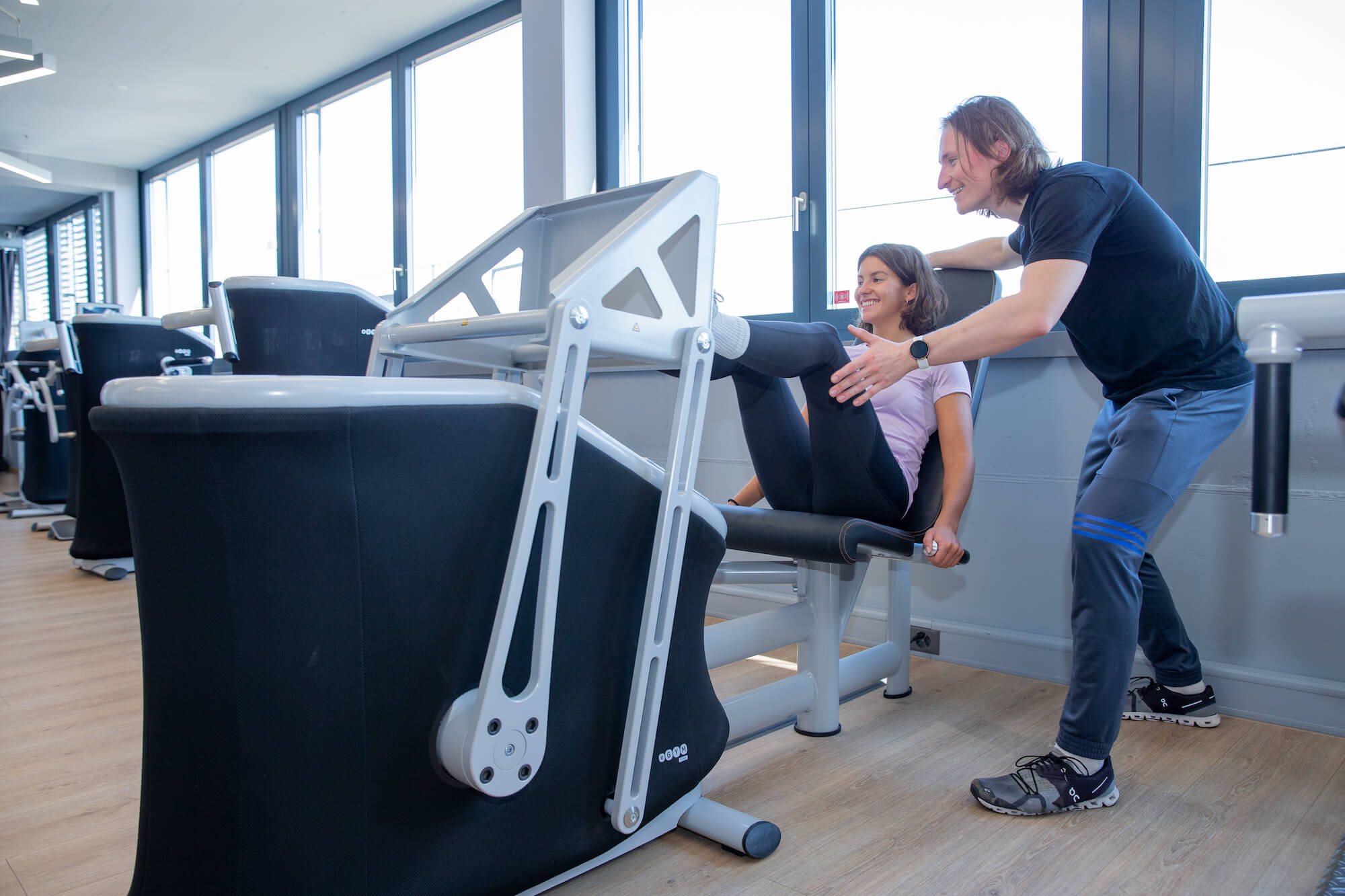
At Kineo Escher Wyss at Hardturmstrasse 18, we combine physiotherapy and supervised training under one roof. You learn the basic exercises with us on the training area and increase the weights with guidance. If you then want to carry on training in a group, you will find Kineo HYROX in the same building.
Frequently asked questions
Is heavy lifting dangerous with osteoporosis?
Not in principle. With good guidance, strength training makes sense even with low bone density. We choose exercises and weights to match your findings and avoid strong trunk flexion under load at the beginning.
Is yoga or Pilates enough?
Both are good for flexibility and body awareness. For bones and muscle mass, though, you also need training with noticeably heavy weights.
Does health insurance cover physiotherapy?
Yes. With a doctor's prescription, your basic health insurance covers the cost. Kineo is recognised by all Swiss health insurers.
You might also like
Book an appointment
Do you want to stay strong during menopause? Book your appointment at Kineo Escher Wyss and start with a plan that suits you.