By Martino Crivelli, physiotherapist and co-founder of Kineo, Kineo Escher Wyss
Jump training: more explosiveness, but correctly dosed
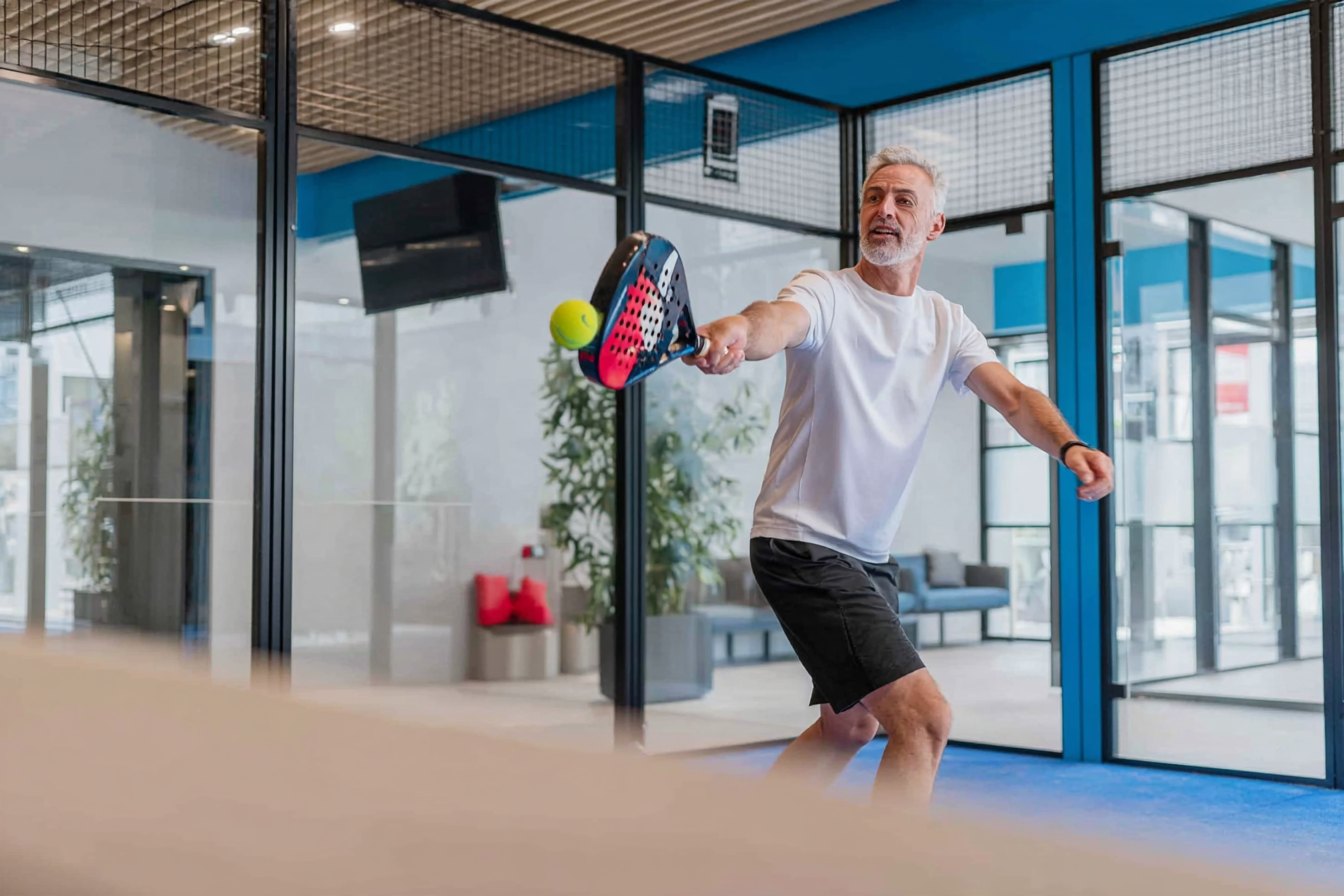
Box jumps, bounds, skipping rope: jump training looks dynamic and noticeably moves you forward, whether in football, running, tennis or HYROX. But many people start too fast and too high. The result is irritated Achilles or patellar tendons, sore shins or a rolled ankle.
With the right prerequisites and smart progression, plyometrics is safe and very effective. Here you’ll find out how to get started, what matters when landing and how many jumps you need at the beginning.
What plyometrics is and why it works
In plyometric exercises, a muscle is briefly stretched and immediately afterwards powerfully shortened. This sequence is called the stretch-shortening cycle. Tendons store energy like a spring and release it again at take-off. Training improves this mechanism: you get faster, jump higher and run more economically.
There are two types:
- Slow plyometrics: longer ground contact, deeper knee bend, for example in the countermovement jump or box jump.
- Fast plyometrics: very short ground contact, stiff joints, for example in pogo jumps, skipping or sprints.
Prerequisites: are you ready?
The often-quoted rule that you need to be able to squat one and a half times your body weight is too strict for getting started. These points are more important:
- You can perform a squat with clean technique and stable leg alignment.
- You can do a single-leg squat to a bench in a controlled way, without your knee clearly collapsing inwards.
- You can do a good number of single-leg heel raises without pain in your Achilles tendon.
- You currently have no tendon complaints at the knee or heel, or they are well under control.
Warning sign: pain at a clearly defined spot on the bone, for example on the shin or midfoot, that increases with every load can indicate a stress reaction. In that case, stop jump training and have it checked by a doctor.
Learn to land first
Jump training doesn’t start with the take-off but with the landing. The force on landing is usually greater than at take-off. Pay attention to:
- Land quietly, rolling through the forefoot
- Knees point over the feet and don’t collapse inwards
- Bend hips and knees, with your bottom going back
- Stay stable for a moment before the next jump
Your starting progression
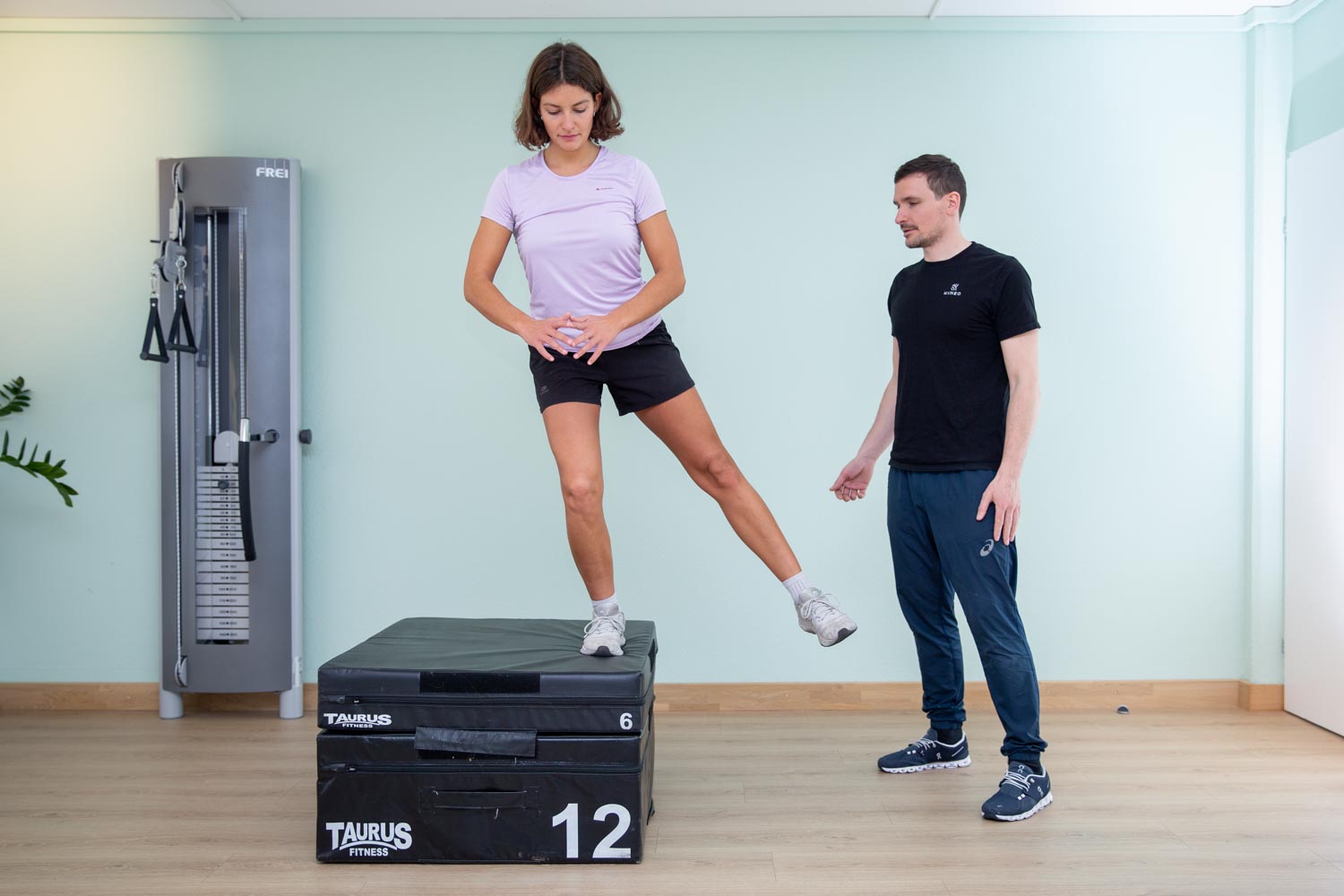
- Drop landing: step down from a low box and land stably. 3 x 5.
- Box jump: jump onto a box, land on top and step down. Landing on top reduces the impact force. 3 x 5.
- Pogo jumps: small, quick jumps from the ankles with straight knees. 3 x 15.
- Standing long jump: jump forwards with an arm swing, land stably. 3 x 4.
- Lateral bounds: jump sideways from one leg to the other, hold briefly. 3 x 4 per side.
- Single-leg hops: first on the spot, later forwards and sideways. 3 x 5 per leg.
Count the ground contacts. To start with, 40 to 80 per session is often enough, two sessions a week with at least 48 hours in between. Do the jumps at the start of your workout, when you’re fresh. Quality comes before quantity. Depth jumps (drop jumps), where you drop off a box and immediately jump again, only come in after a few weeks of clean basics.
How we build your jump training at Kineo
Especially after an injury or with tendon complaints, a structured build-up with clear criteria pays off.
1. Our check before the start
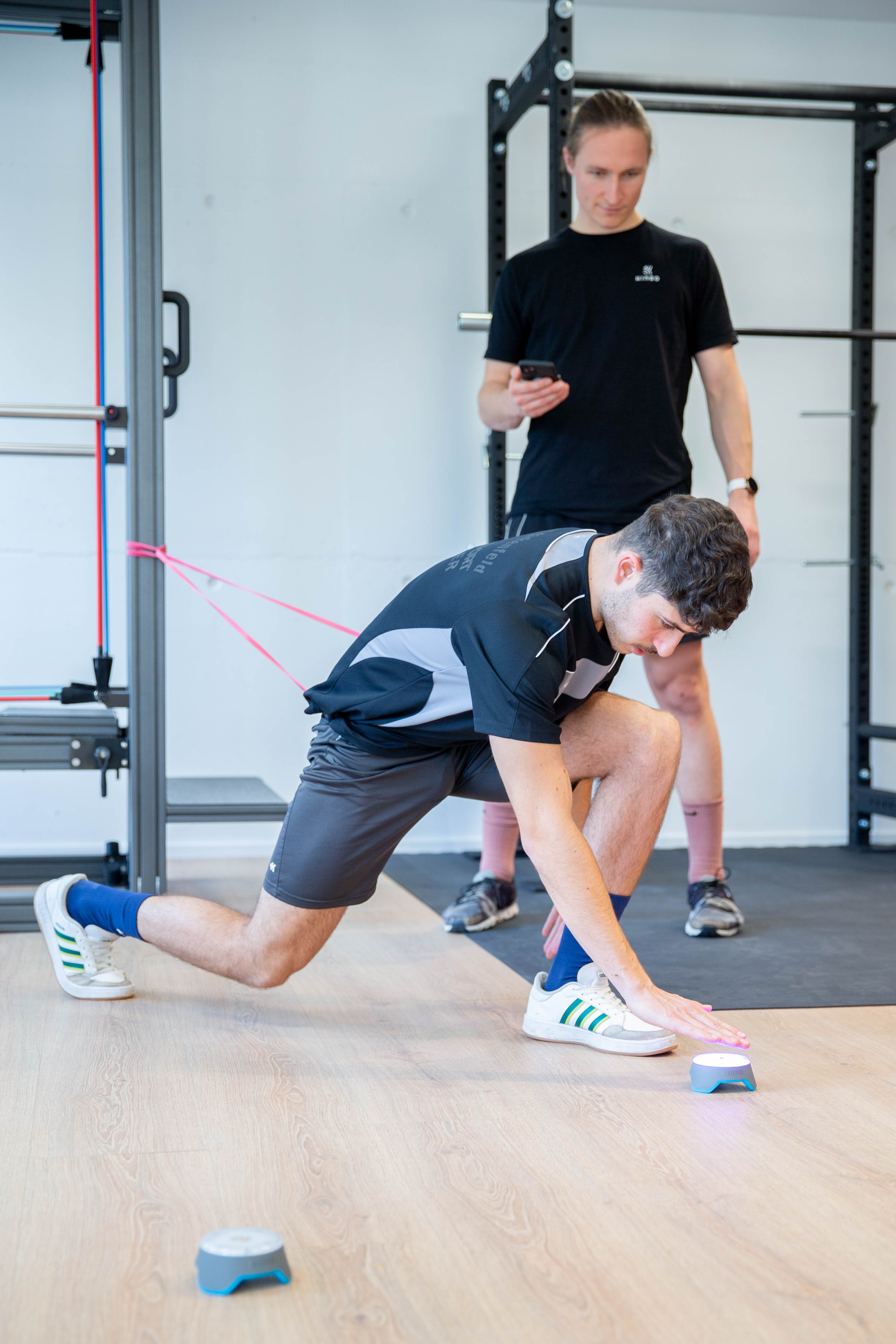
- Landing analysis: we film drop landings and countermovement jumps and look at leg alignment and symmetry
- Single-leg squat and Y-Balance Test for control and balance
- Hop tests: single-leg hop for distance and triple single-leg hop compared side to side
- Calf strength: single-leg heel raises to fatigue
- Tendon status: palpation and load tests of the Achilles and patellar tendons
2. How we build your training
- Weeks 1–2: landing and strength. Drop landings, box jumps and strength training for legs and calves.
- Weeks 3–6: two-legged jumps. Pogo jumps, standing long jump, countermovement jumps, 40 to 80 ground contacts per session.
- Weeks 6–10: single-leg and lateral. Lateral bounds, single-leg hops, changes of direction.
- From week 10: reactive and sport-specific. Drop jumps, jump series and movements from your sport.
3. Kineo services we use
- Power training for the targeted development of jumping power and reactivity
- Sports physiotherapy for tendon complaints or after injuries
- Sport-specific training to transfer jumps and changes of direction to your sport
From our practice
We often see athletes who start jump training with high boxes and lots of repetitions and come to us after a few weeks with irritated tendons. Those who learn to land first and count their ground contacts usually progress faster, because their training can continue without interruption.
Jump training at Kineo Escher Wyss
At Kineo Escher Wyss at Hardturmstrasse 18, you train on the supervised training floor, directly connected to sports physiotherapy. This is ideal for HYROX athletes: at Kineo HYROX in the same building, burpee broad jumps and wall balls are a fixed part of training, and we prepare your tendons for them in a targeted way.
Frequently asked questions
Is jump training bad for your joints?
No, if it is dosed correctly. Jump training strengthens tendons and bones. Problems usually come from too much, too soon.
Can I jump with patellar tendon pain?
Often yes, with adjusted volume and accompanying strength training. Pain should stay low during the exercise and not increase the next day.
How long does an appointment last?
An appointment lasts 30 minutes. In the first session, we do the check and start straight away with your first exercises.
You might also like
Book an appointment
Want to become more explosive without getting injured? Book your appointment at Kineo Escher Wyss and start your jump training with a plan.