By Barbara Victorio, physiotherapist at Kineo Wipkingen
When your fingers fall asleep at night
You wake up and your hand is tingling. Your thumb, index and middle finger feel numb. You shake your hand out and after a few minutes everything is back to normal. During the day the tingling shows up when you ride your bike, talk on the phone or work with the mouse for a long time. This is a typical picture of carpal tunnel syndrome.
Carpal tunnel syndrome is the most common nerve entrapment in the arm. The good news: in mild and moderate cases it can often be influenced well without surgery. What matters is that you know the warning signs that call for a medical check-up.
What happens in the carpal tunnel
The carpal tunnel is a narrow channel on the inner side of the wrist. The floor is formed by the carpal bones, the roof by a tight band, the flexor retinaculum. Nine finger flexor tendons and the median nerve run through this tunnel. The median nerve supplies sensation to the thumb, index finger, middle finger and half of the ring finger, and it controls part of the thumb muscles.
If the tunnel becomes narrower or the pressure rises, the nerve first reacts with tingling and numbness. If the pressure lasts, it can also lose strength. The pressure in the tunnel is highest when the wrist is strongly bent, which is why sleeping positions with a curled-up hand often trigger the night-time symptoms.
Causes and risk factors
- Repeated wrist movements with force, for example when gripping, screwing or working with vibrating tools
- Long periods with a bent wrist, for example when sleeping, reading on your phone or cycling with a lot of weight on your hands
- Hormonal changes during pregnancy and the menopause, often due to water retention
- General conditions such as diabetes, an underactive thyroid or rheumatoid arthritis
- After-effects of injuries, for example after a fracture of the radius close to the wrist
Often several factors come together.
Typical symptoms
- Tingling, pins and needles or numbness in the thumb, index and middle finger; the little finger is usually not affected
- Symptoms mainly at night and in the morning; shaking out your hand brings relief
- Clumsiness: buttons or small objects become harder to handle
- In advanced cases: a visibly flatter ball of the thumb and less strength when moving the thumb away from the hand
When you should see a doctor
Have your symptoms checked by a doctor if the numbness is constant, the ball of your thumb becomes weaker or thinner, both hands are affected at the same time, or additional symptoms appear, such as unsteadiness when walking, neck pain that radiates, or altered sensation in other parts of the body. A nerve conduction study, which measures the speed at which the nerve conducts signals, shows how badly the nerve is affected. It helps to decide whether to treat conservatively or operate.
What you can do yourself
- Keep your wrist straight at night: A night splint that holds the wrist in a neutral position is one of the best-studied measures. Get advice on this from a doctor or a specialist centre.
- Change positions: Avoid long periods with a strongly bent wrist, hold your phone higher, and change your hand position regularly on the bike.
- Use less force when gripping: Use tools with thicker handles and don't grip tightly all the time.
- Movement instead of rest: Gentle nerve and tendon gliding keeps the structures in the tunnel mobile.
Exercises for the nerve and tendons
These exercises should feel comfortable. A slight pull is fine. Increased tingling that lasts after the exercise is a sign that you are going too far.
- Tendon gliding: Starting from an open hand, move through five positions one after the other: straight fingers, hook fist, full fist, tabletop position with straight fingers, straight fist. Hold each position for 3 seconds, 5 rounds, two to three times a day.
- Nerve gliding for the median nerve (slider): Hold your arm out to the side at shoulder height, palm facing up. Extend your wrist backwards and tilt your head to the same side at the same time, then bend your wrist and tilt your head to the opposite side. 10 slow repetitions, twice a day.
- Strengthen the ball of the thumb: Move your thumb away from your index finger against a light rubber band. 2 x 12 repetitions, as soon as your symptoms have settled.
How we treat carpal tunnel syndrome at Kineo
The focus is on a clear assessment of how badly the nerve is affected, and on treatment that lowers the pressure in the tunnel and makes the nerve mobile again.
1. Assessment: what we examine in your first session
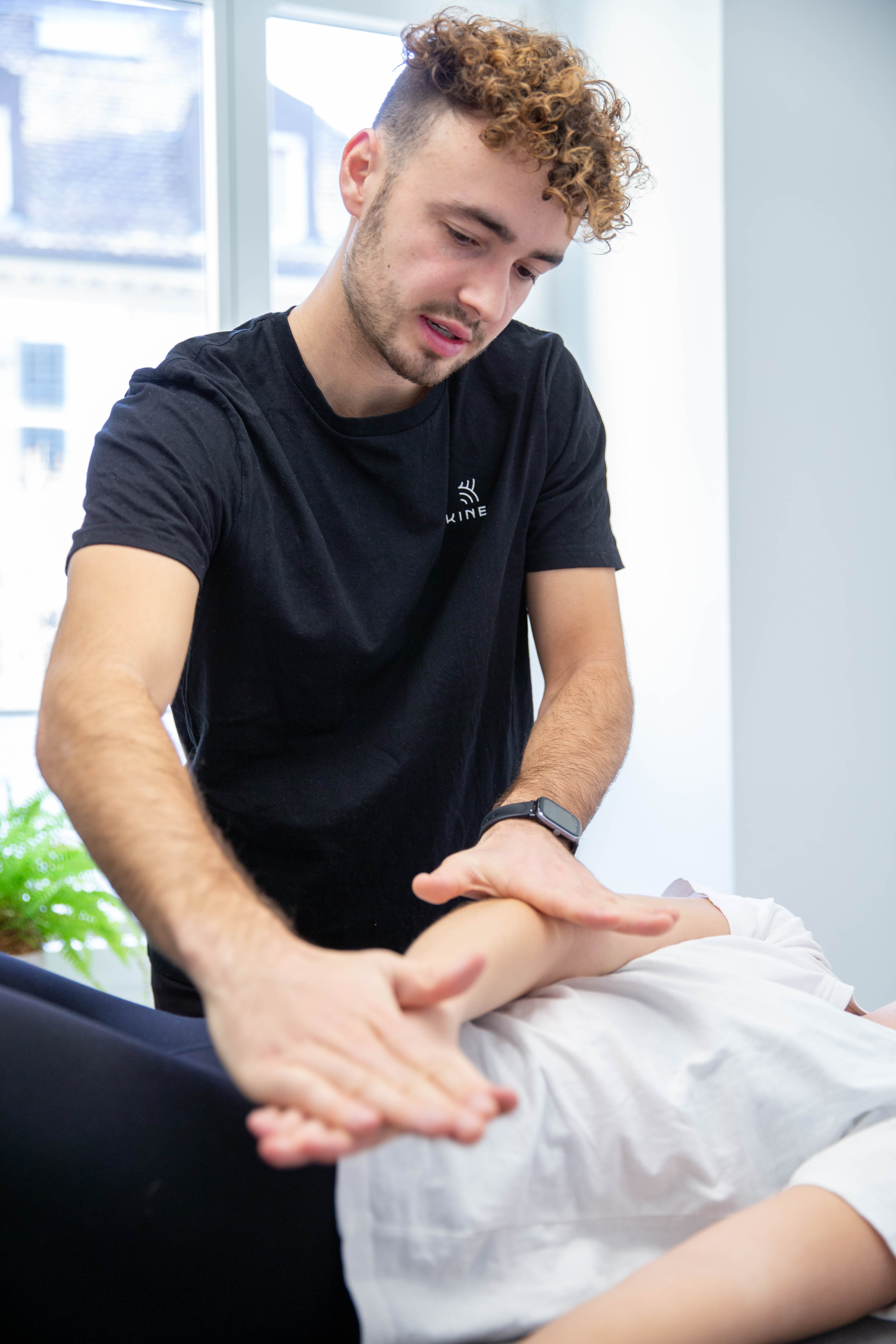
- Provocation tests: Phalen's test (holding the wrist bent), Tinel's sign (tapping over the tunnel) and the carpal compression test according to Durkan
- Sensation and strength: Sensation in the fingertips, two-point discrimination and the strength of the thumb abductor compared with the other side
- Neurodynamics: With the Upper Limb Neurodynamic Test 1, we check how well the median nerve glides along the whole arm
- Cervical spine and shoulder: A pinched nerve in the neck can cause similar symptoms. We rule this out with movement and reflex tests.
- Everyday life and load: Sleeping position, work, sport and any accompanying conditions
2. Treatment in phases
- Phase 1, weeks 1–2: relieve. Adjust your night-time position, reduce strain in everyday life, tendon and nerve gliding twice a day.
- Phase 2, weeks 2–6: restore mobility. Mobilisation of the carpal bones and soft tissue treatment of the forearm, nerve gliding through a greater range of movement.
- Phase 3, from week 4: build load capacity. Grip strength, thumb strength and strength of the forearm muscles with gradually increasing dosage, 2–3 sets of 10–15 repetitions.
- Check progress: If the night-time tingling does not improve after several weeks or your strength declines, we discuss the next steps with your doctor.
3. Kineo services we use
- General physiotherapy: assessment, education and adjusting your everyday load
- Neurodynamics to specifically improve how well the median nerve glides
- Manual therapy for the carpal bones, elbow and cervical spine
- Digital home programme so you can do your exercises correctly and regularly at home
Surgery or physiotherapy?
For mild and moderate forms, a conservative trial with a splint, exercises and physiotherapy is usually the first step. A cortisone injection from your doctor can relieve the symptoms further. Surgery, in which the band over the tunnel is divided, is recommended if the nerve is clearly damaged, the numbness is constant or the ball of the thumb is getting weaker. Physiotherapy also helps after surgery to rebuild mobility and strength.

From our practice
Many people only come once they have been waking up at night for months. Often it is enough to change your sleeping position and do the exercises consistently, and your nights become calmer again. For some people the neck plays a part too: the tingling only disappears completely once we treat the cervical spine as well.
Physiotherapy in Wipkingen
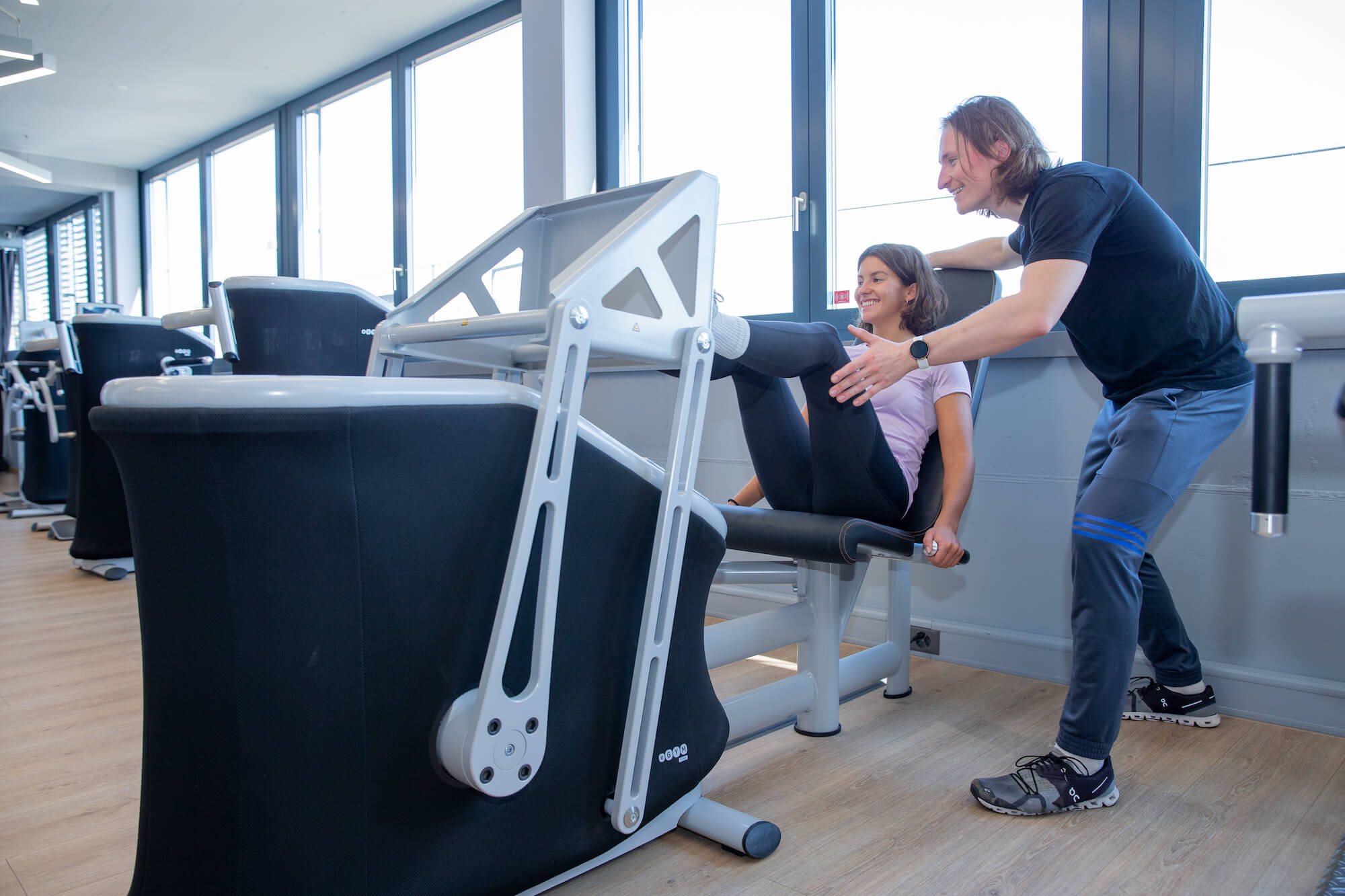
At Kineo Wipkingen at Röschibachstrasse 79, right at Röschibachplatz, we treat problems in the hand, arm, shoulder and neck. On the training floor with strength machines, you then build grip and forearm strength under guidance. You can find out more about the location on the Kineo Wipkingen page.
Frequently asked questions
Does carpal tunnel syndrome go away on its own?
Sometimes, for example when it developed during pregnancy. If the symptoms last for weeks, treatment is worthwhile so that the nerve does not suffer lasting damage.
Is it carpal tunnel syndrome if my little finger tingles?
Probably not. The little finger is supplied by the ulnar nerve. If it tingles, we take a closer look at the elbow and the neck.
Does health insurance cover physiotherapy?
Yes. With a doctor's prescription, your basic health insurance covers the cost. Kineo is recognised by all Swiss health insurers.
You might also like
- Mouse arm: tendon irritation in the forearm
- Osteoarthritis of the thumb saddle joint (rhizarthrosis)
- Your ergonomic workstation at home
Book an appointment
Are your fingers tingling at night? Book your appointment at Kineo Wipkingen and we will find out what is irritating the nerve.