By Martino Crivelli, physiotherapist and co-founder of Kineo, Kineo Escher Wyss
Your first HYROX in twelve weeks
You've signed up for your first HYROX and the date is set. Eight kilometres of running, eight stations in between, and the question: how do I prepare without overdoing it? Many people start highly motivated, train too much and too hard in the first few weeks, and then struggle with their Achilles tendon, knee or back.
For most people who already exercise regularly, twelve weeks is a good timeframe. The plan below is a framework for beginners with a basic level of fitness: if you can run easily for 30 minutes without stopping and you're familiar with strength training, you can start right away.
The format in brief
HYROX consists of eight 1-kilometre runs. After each kilometre comes a station:
- SkiErg, 1000 metres
- Sled push, 50 metres
- Sled pull, 50 metres
- Burpee broad jumps, 80 metres
- Rowing, 1000 metres
- Farmers carry, 200 metres
- Sandbag lunges, 100 metres
- Wall balls, 100 repetitions
The weights depend on the division. For their first race, most people choose the Open division. A large part of the time is running, and with pre-fatigued legs. This is known as "compromised running". That is exactly what the plan targets.
Three principles for your preparation
- Running is the foundation: If you only train the stations, you underestimate the eight kilometres. Regular, mostly easy running brings the most.
- Strength protects: Strong legs, trunk and shoulders make the stations easier and make your body more resilient to overuse.
- Increase gradually: Tendons and bones adapt more slowly than the heart and muscles. Increase your volume step by step and plan an easier week every three to four weeks.

The building blocks of your training week
- Easy run: 30–50 minutes at conversational pace
- Intervals: for example 4–6 x 1 kilometre at target race pace with a 2-minute walking break
- Strength training: squat, deadlift, lunges, rowing, pressing and trunk work, 3–4 sets x 6–10 repetitions
- HYROX session: running and stations combined, for example 4 x (1 kilometre run + one station)
Three to four sessions a week are enough for a first race. At least one full rest day is part of it.
How we support you through your preparation at Kineo
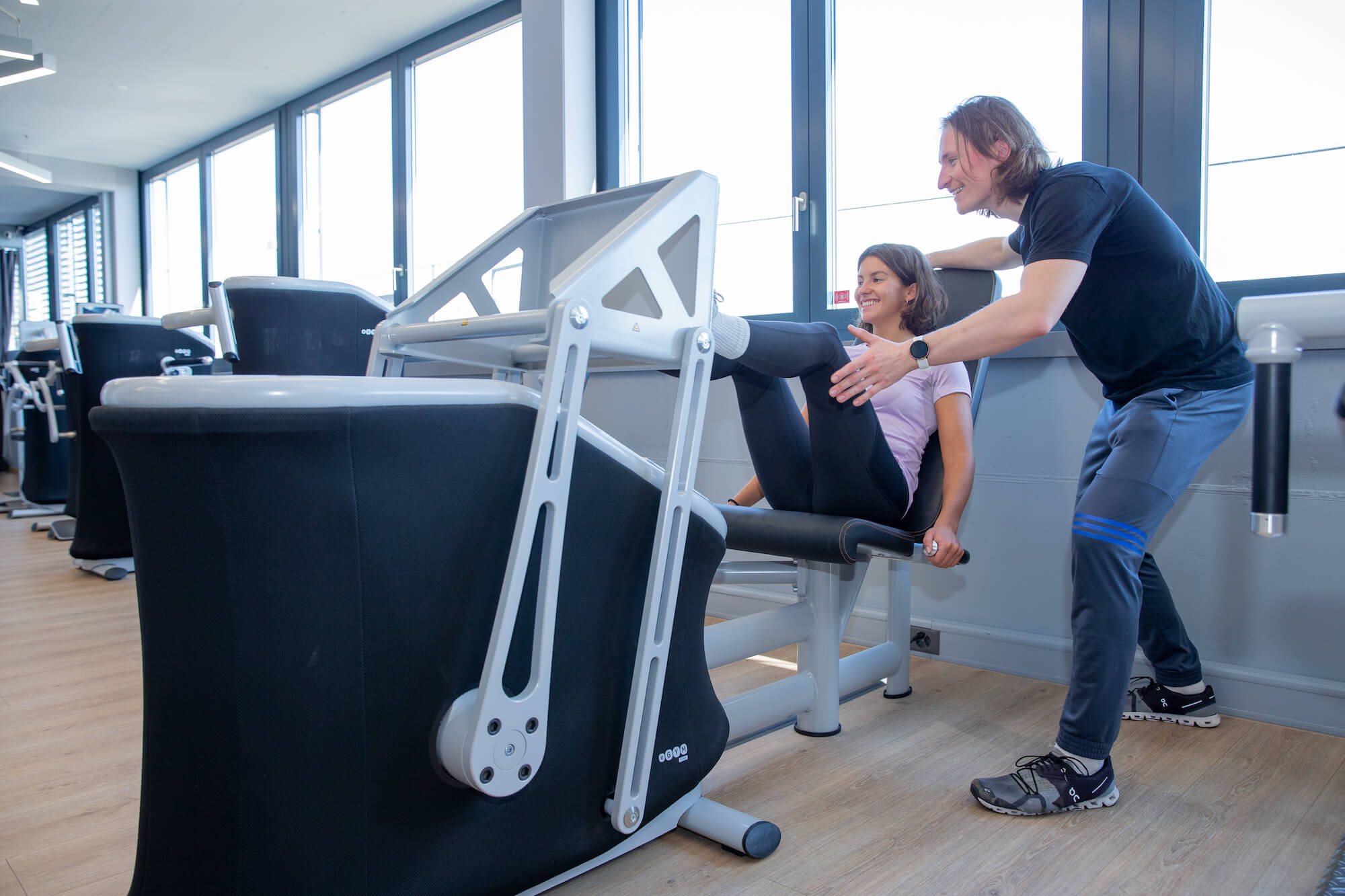
Whether you start without any complaints or bring an old injury with you: a check at the beginning shows where you stand and what to pay attention to in training.
1. Our check before the start
- History: previous injuries, current complaints and your training volume over the last few months
- Strength endurance: single-leg calf raises to fatigue, side plank hold and single-leg squat compared side to side
- Mobility: knee-to-wall test, hip extension in the Thomas test, overhead arm raise and thoracic spine
- Technique: squat, hip hinge, lunge and wall ball
- Stability: Y-Balance Test for single-leg control
2. How we build your training
- Weeks 1–4, base: Increase running volume gradually, lots of easy pace. Two strength sessions with basic exercises. Get to know the stations technically with light weights. Week 4 a little easier.
- Weeks 5–8, build-up: Intervals at race pace, heavier strength training. Compromised running: run 1 kilometre straight after a station. Stations at race weight over partial distances.
- Weeks 9–11, race-specific: a half simulation with four runs and four stations, and a longer simulation about two to three weeks before the race. Test pacing, eating and drinking.
- Week 12, tapering: Reduce volume significantly, short, fast stimuli, plenty of sleep. No new exercises and no new shoes.
- If you have complaints: react early. A few days of adjustment are better than weeks off.
3. Kineo services we use
- Sports physiotherapy: check before the start and quick help with complaints during your preparation
- Lactate step test at the Kineo Performance Lab Seefeld, to set your running pace and heart rate zones individually
- High-intensity interval training for switching between running and stations
- Sport-specific training with technique for the sled, wall balls and lunges
- Medical training therapy, if you start with an old injury
Sample week in the build-up phase
- Monday: Lower body and trunk strength: squat 4 x 6, Romanian deadlift 3 x 8, walking lunges 3 x 10 per side, side plank 3 x 30 seconds
- Tuesday: Intervals, 5 x 1 kilometre at race pace, 2-minute walking break
- Wednesday: Rest or easy bike ride
- Thursday: Upper body strength: rowing, pressing, farmers carry 4 x 50 metres
- Friday: Rest
- Saturday: HYROX session, 4 x (1 kilometre run + station), for example SkiErg 500 metres, sled push 25 metres, 25 wall balls, sandbag lunges 25 metres
- Sunday: easy run, 40–50 minutes
That's five sessions. If you only have three to four, leave out Thursday and add the farmers carry to Monday. Consistency counts for more than the perfect week.
Typical mistakes at your first HYROX
- Starting too fast: The first kilometre feels easy. If you run too fast here, you pay for it on the sled and lunges.
- Something new on race day: Test shoes, gloves or food in training beforehand.
- Ignoring pain: The Achilles tendon, knee and lower back often make themselves known early. If you react in the first few days, you lose hardly any training time.
- No tapering: In the last week you won't get any fitter, but you can get tired.
Chest pain, unusual breathlessness or dizziness during exertion should be checked by a doctor. If you have a cardiovascular condition or other pre-existing conditions, discuss your preparation with your doctor beforehand.

From our practice
Many people who sign up for their first HYROX come from strength training and have few running kilometres in their legs. They then increase their running too quickly, and the Achilles tendon or shin starts to complain. Runners, on the other hand, often underestimate the stations. If you know your own weak point early and adapt the plan accordingly, you usually make it to the start line without interruption.
Physio and HYROX in the same building: Kineo Escher Wyss
At Kineo Escher Wyss on Hardturmstrasse 18, right at Escher-Wyss-Platz, you'll find sports physiotherapy and Kineo HYROX under one roof: HYROX downstairs, physiotherapy upstairs. In group and personal training at Kineo HYROX, you train the stations under guidance. For performance diagnostics we work with the Kineo Performance Lab in Seefeld. You can find all the information about the location on the Kineo Escher Wyss page.
Frequently asked questions
Is twelve weeks enough for a first HYROX?
For most people with a basic level of fitness, yes. If you start without any running experience, plan more time for building up your running, otherwise the risk of overuse injuries increases.
Do I need to have practised all the stations beforehand?
Yes, at least each station several times. Sled push, sled pull and wall balls in particular feel much harder when you haven't practised them.
How long does an appointment last?
An appointment lasts 30 minutes. In the first session we clarify the cause and start straight away with treatment and exercises.
Does health insurance cover physiotherapy?
Yes. With a doctor's prescription, your basic health insurance covers the cost. Kineo is recognised by all Swiss health insurers.
You might also like
- HYROX: typical injuries and how to avoid them
- HYROX Doubles and Relay: preparing together
- Lactate test: what it measures and who it helps
Book an appointment
Are you starting your preparation for your first HYROX? Book your check at Kineo Escher Wyss.