By Sereina Urech, physiotherapist and Head of Operations, Kineo Seefeld
Understanding jaw, head and face as one unit
You have jaw pain, along with headaches and a tense neck. Perhaps there is also pressure in your ear, a burning feeling in your face or dizziness. Each specialist looks at their own area, but nobody puts the pieces of the puzzle together. This is exactly where the CRAFTA concept comes in.
CRAFTA stands for "Cranio Facial Therapy Academy". It is a physiotherapy concept for examining and treating the head, face and jaw region. It became known mainly through the physiotherapist Harry von Piekartz, who helped develop the concept. Physiotherapists train in it through several course levels.
The basic idea: everything in the head region is connected
The jaw, skull, face and upper neck lie close together and are supplied by shared nerves. Problems in one area often affect the others. CRAFTA therefore looks at several regions at the same time:
- Cranio-mandibular region: the temporomandibular joint, the chewing muscles and the bite. This includes CMD, jaw clicking, lockjaw and teeth grinding.
- Cranio-cervical region: the upper neck vertebrae and head joints. They influence headaches and the position of the jaw.
- Cranio-facial region: the skull and facial bones, their mobility and the surrounding soft tissues
- Cranial nerves: nerves such as the trigeminal nerve or the facial nerve can become mechanically sensitive. Their mobility and irritability can be tested and treated in a targeted way (neurodynamics).
- Pain processing: With long-standing problems, the way the nervous system processes pain also plays a role. The concept deliberately includes it.
Who is CRAFTA treatment suitable for?
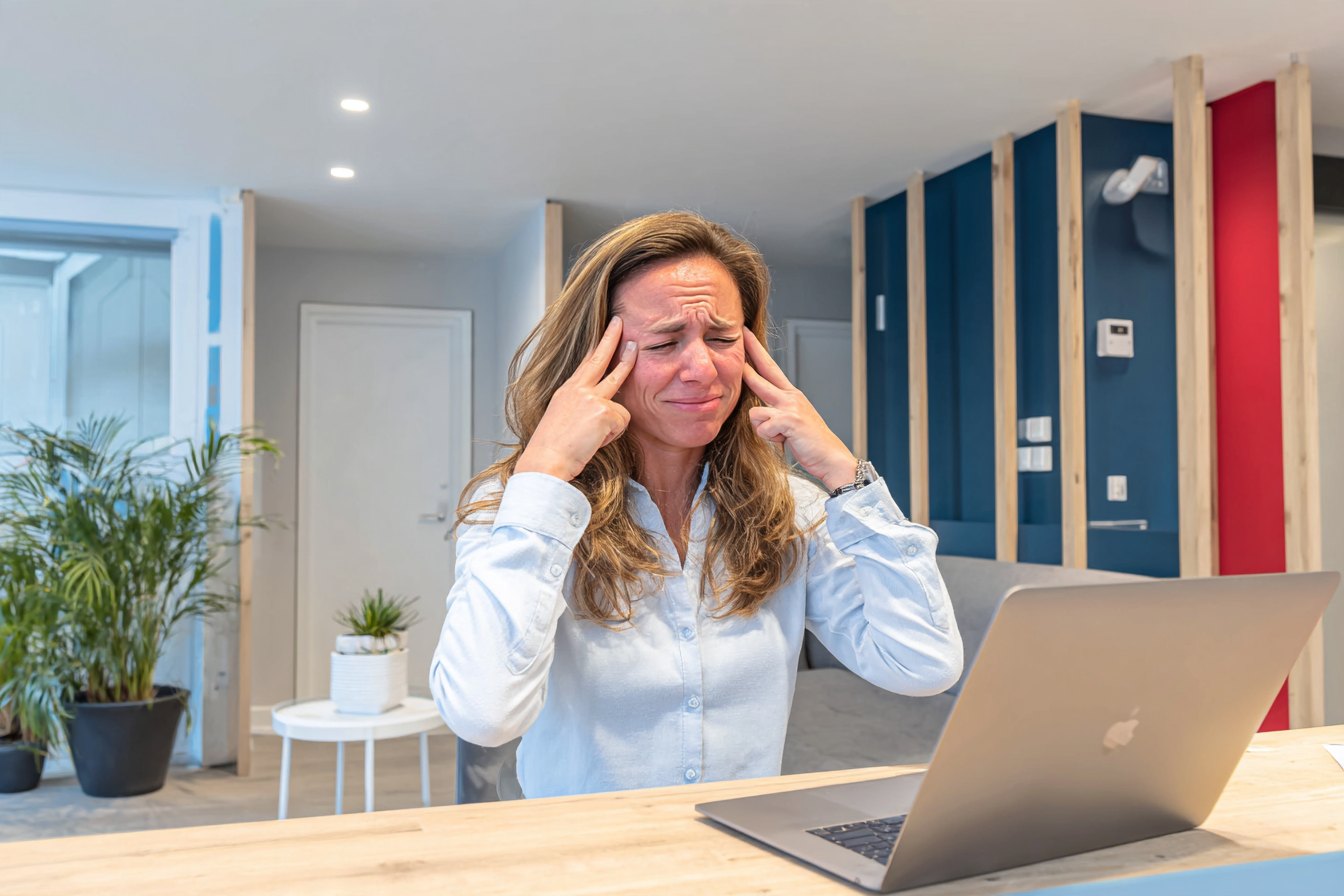
- Jaw pain, jaw clicking or restricted mouth opening (CMD)
- Teeth grinding and clenching with muscle pain
- Headaches that are influenced by the neck or jaw
- Facial pain, once serious causes have been ruled out by a doctor
- Ear pressure or tinnitus that changes with jaw or head movements
- Dizziness that originates in the neck, after medical clarification
- Problems in the head and jaw region after whiplash
- Alongside orthodontic or jaw surgery treatments
What CRAFTA does differently
- Thorough examination: Instead of looking only at the painful spot, we systematically examine the jaw, neck, face and nerves. This shows us which region plays the main role.
- Clinical reasoning: We form hypotheses and test them as treatment progresses. If a finding improves after treatment, that confirms the approach.
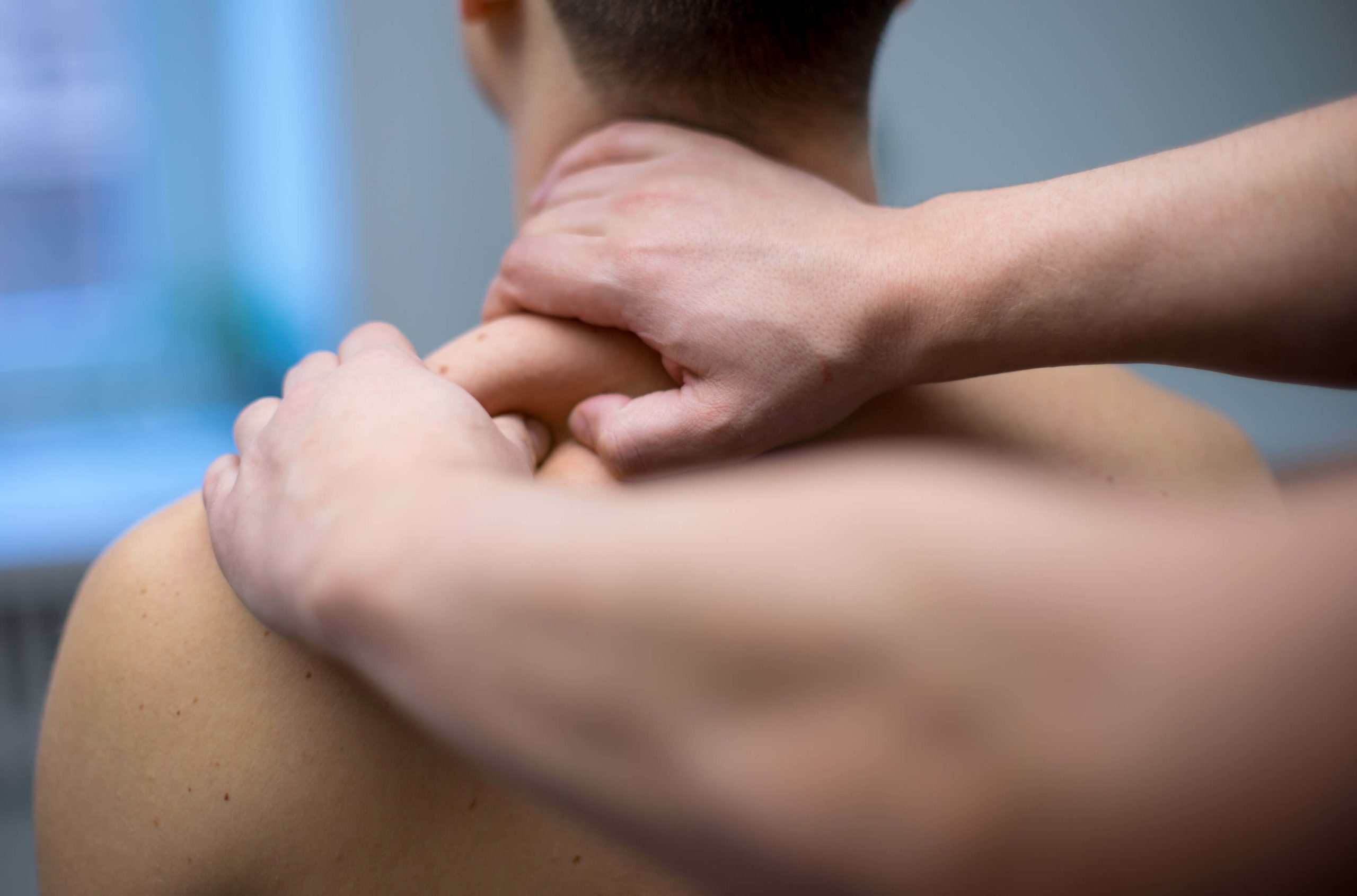
- Combination of techniques: Manual joint techniques, soft tissue treatment, neurodynamics and active exercises are combined to suit your findings.
- An active role for you: Exercises, the resting position of the jaw and changes in behaviour in everyday life are a fixed part of the therapy.
- Collaboration: Dentists, orthodontists, ENT doctors and neurologists are important partners. CRAFTA sees physiotherapy as part of an interdisciplinary team.
What you can do yourself
- Resting position: Lips lightly closed, teeth apart, tip of the tongue on the palate behind the front teeth. Take this position consciously several times a day.
- Chin nods: Sitting, make small nodding movements as if you were making a double chin. 2 x 10 repetitions. This activates the deep neck flexors.
- Controlled jaw opening: Tongue on the palate, open your mouth slowly without the jaw drifting to the side. Practise in front of a mirror, 2 x 10 repetitions.
- Spot stressful moments: Notice when you clench or pull your shoulders up. A short breath out and releasing your teeth interrupts the pattern.
How we work with the CRAFTA concept at Kineo
At Kineo Seefeld, the CRAFTA concept is the basis of our jaw and head treatments. This is what a typical process looks like.
1. Assessment: what we examine in your first session
- Jaw: mouth opening in millimetres, path of opening, sideways and forward movements, joint sounds and palpation of the chewing muscles
- Upper neck: mobility of the head joints, for example with the flexion-rotation test, and strength of the deep neck flexors in the cranio-cervical flexion test
- Cranial nerves: neurodynamic tests, for example for the trigeminal nerve, if you have facial pain or abnormal sensations
- Face and skull: mobility and sensitivity of the soft tissues of the face and skull
- Questionnaire and conversation: course of the pain, sleep, stress, clenching and grinding, and your goals
2. Treatment in phases
- Phase 1, weeks 1–2: treat the main source. We start with the region that turns out to be the most important in the assessment, and check after each treatment whether the tests improve.
- Phase 2, weeks 3–6: address the connections. We add the neighbouring regions, for example the neck in the case of jaw pain. Your home programme includes 3–4 exercises, 10 minutes a day.
- Phase 3, from week 6: self-management. Fewer appointments, more personal responsibility. We discuss how you can react early if symptoms return.
3. Kineo services we use
- CMD jaw therapy as the core of treatment for the temporomandibular joint and chewing muscles
- Manual therapy for the temporomandibular joint and upper cervical spine
- Neurodynamics, when cranial nerves or neck nerves are mechanically sensitive
- Trigger point treatment for chewing and neck muscles with radiating pain
- Physiotherapy for dizziness, when the neck is involved in dizziness symptoms
Limits of the concept
CRAFTA is a structured way of examining and treating problems in the head region, but it is not a miracle method. Not all head or facial pain has a mechanical cause. If you have new, severe or unusual headaches, one-sided facial paralysis, vision or speech disturbances or fever, you need medical clarification first. Shooting, electric-shock-like facial pain should also be checked by a doctor before we treat.
From our practice
Many of our patients have already tried a bite splint, massages or painkillers without lasting improvement. The examination often shows that the neck or a sensitive nerve plays a bigger role than expected. When we treat these areas too, the symptoms often start to move.
CRAFTA in Zürich Seefeld
At Kineo Seefeld at Seefeldstrasse 83, stop Feldeggstrasse with trams 2 and 4, the jaw and CMD treatment based on the CRAFTA concept is a focus. If you also run alongside jaw problems, you will find the Runners Lab and the Performance Lab in the same building. All details are on the Seefeld location page.
Frequently asked questions
What does CRAFTA mean?
CRAFTA stands for "Cranio Facial Therapy Academy". It is a concept for physiotherapy in the area of the jaw, head, face and upper neck.
Is CRAFTA a special kind of massage?
No. CRAFTA is an examination and treatment concept. It combines manual techniques, neurodynamics, exercises and advice, depending on your findings.
How long does an appointment last?
An appointment lasts 30 minutes. In the first session we clarify the cause and start straight away with treatment and exercises.
Does health insurance cover physiotherapy?
With a doctor's prescription, your basic health insurance covers the cost. Kineo is recognised by all Swiss health insurers.
You might also like
- Headaches and neck pain from the jaw
- CMD, tinnitus and ear pressure
- CMD (cranio-mandibular dysfunction)
Book an appointment
Would you like your jaw, head and neck examined together? Book your appointment at Kineo Seefeld.