By Noah Stierli, physiotherapist at Kineo Seefeld
When your headache comes from your jaw
Do you keep getting headaches, is your neck rock hard, and do massages only help for a short time? Then it's worth taking a look at your jaw. The temporomandibular joint, chewing muscles, cervical spine and head form a closely linked system. A problem in the jaw, which specialists call CMD (cranio-mandibular dysfunction), can therefore show up somewhere quite different.
How are the jaw, neck and head connected?
- Muscles: The chewing muscles at the temple and cheek work closely with the neck muscles. If one side is tense, the other reacts.
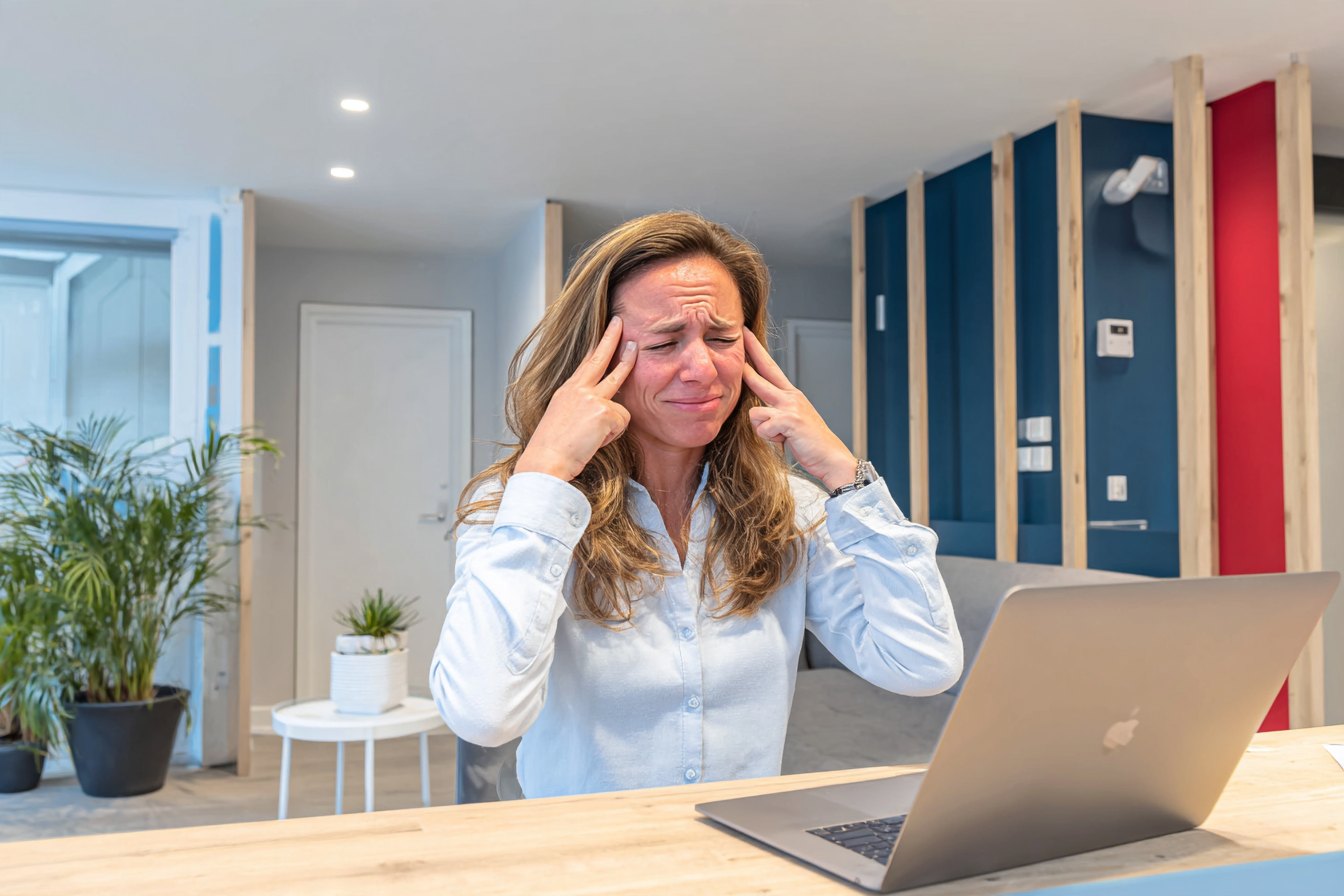
- Posture: With a forward head posture, for example at a laptop, the position of the lower jaw changes.
- Nerves: Pain signals from the jaw, face and upper neck are closely wired together in the brainstem. That is why pain is often felt in a different place.
Signs that the jaw is involved
- Headaches at the temples or forehead, often in the morning
- Teeth grinding or jaw clenching
- Clicking or grinding in the jaw joint
- Pain when chewing or opening wide
- Ear pressure or ear pain with no findings at the ENT doctor
- Neck pain that quickly comes back after treatment
Important: new, very severe or unusual headaches should always be checked by a doctor first.
What you can do yourself
- Jaw in the resting position: lips together, teeth slightly apart
- Screen at eye level, get up regularly
- Gently loosen the chewing muscle at the cheek with circular movements
- Reduce stress consciously, for example with exercise
How we treat it
We examine the jaw, cervical spine and posture together. The symptoms rarely have just one cause. Our approach follows the CRAFTA concept, a physiotherapy specialist concept for the jaw, head and face.
1. Assessment: what we examine in your first session
- Measuring mouth opening: We measure the opening between the incisal edges in millimetres. Normal is around 40 to 50 mm. Less points to a block in the joint or to tense chewing muscles.
- Watching the path of opening: Does the lower jaw deviate to the side when opening and return to the middle, or does it stay to the side? The pattern shows whether the articular disc or the muscles are more likely to be involved.
- Assigning sounds: If it clicks at different points on opening and closing, that suggests a displaced articular disc that springs back. Grinding points more towards changes in the joint surfaces.
- Palpating the chewing muscles: Masseter, temporalis and, from the inside, the lateral pterygoid muscle. We check which points trigger your familiar pain.
- Testing the cervical spine: With the flexion-rotation test we check the mobility of the upper neck vertebrae, with the craniocervical flexion test the endurance of the deep neck flexors.
- Asking about habits: Clenching during the day, grinding at night, sleep, stress and headache patterns are part of the assessment.
- Ruling out warning signs: New, very severe or unusual headaches, visual disturbances or neurological deficits are clarified by a doctor before we treat.
2. Treatment in phases
- Phase 1: Relieve and understand (weeks 1–2). You learn the resting position of the jaw: tongue relaxed against the palate, lips closed, teeth not touching. Self-massage and a short headache diary are added.
- Phase 2: Targeted treatment (from week 1). We mobilise the jaw joint and upper cervical spine and treat the chewing and neck muscles. To monitor progress, we measure mouth opening and the number of headache days.
- Phase 3: Control and endurance (from week 3). With exercises for guided jaw opening and for the deep neck flexors, the system learns to work without overtension.
- Phase 4: Preventing relapse. Recognising and interrupting clenching in everyday life, adjusting your posture at the workplace and, if necessary, a splint in consultation with your dentist.
3. Kineo services we use
- CMD jaw therapy: mobilisation and gentle traction of the jaw joint, treatment of the chewing muscles, including from the inside of the mouth
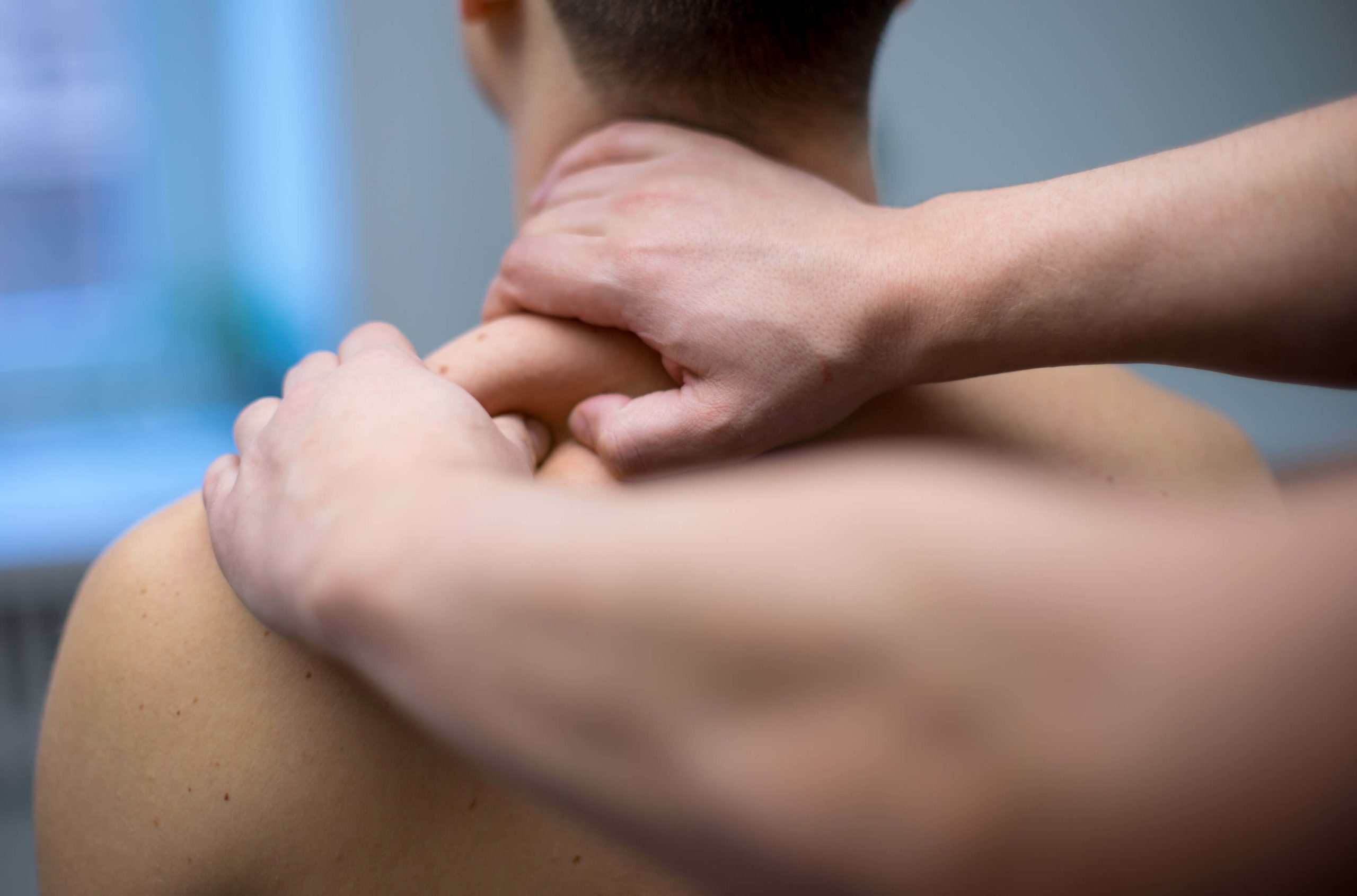
- Manual therapy of the upper cervical spine. Especially with headaches from the neck, it is often the most important lever.
- Trigger point treatment at the masseter, temporalis, neck and upper trapezius, whose pain typically radiates into the temple and forehead
- Dry needling for stubbornly tense chewing muscles, for example the masseter
- Medical massage for the neck, shoulders and jaw muscles
- Craniosacral therapy: Gentle hand techniques on the skull, neck and jaw that help many people lower their baseline tension
We work closely with dentists and orthodontists when the bite or a splint plays a role.
Tip: a short headache diary
For two weeks, note when the headaches occur, where they are and what you did beforehand. In the morning after waking up, after long days at the screen or after stressful phases? This helps us find the cause faster.
Training against headaches and neck pain
Massage and treatment release tension, but to stop the symptoms coming back, you need training. Studies show that regular strength and endurance training can reduce the frequency of tension headaches and neck pain.
- Strength for neck and shoulders: Rowing, shoulder blade exercises and exercises for the deep neck muscles two to three times a week
- Endurance: Regular easy endurance training such as brisk walking, cycling or jogging lowers baseline tension and helps with stress
- Short breaks at work: Get up every 30 to 45 minutes, roll your shoulders, release your jaw
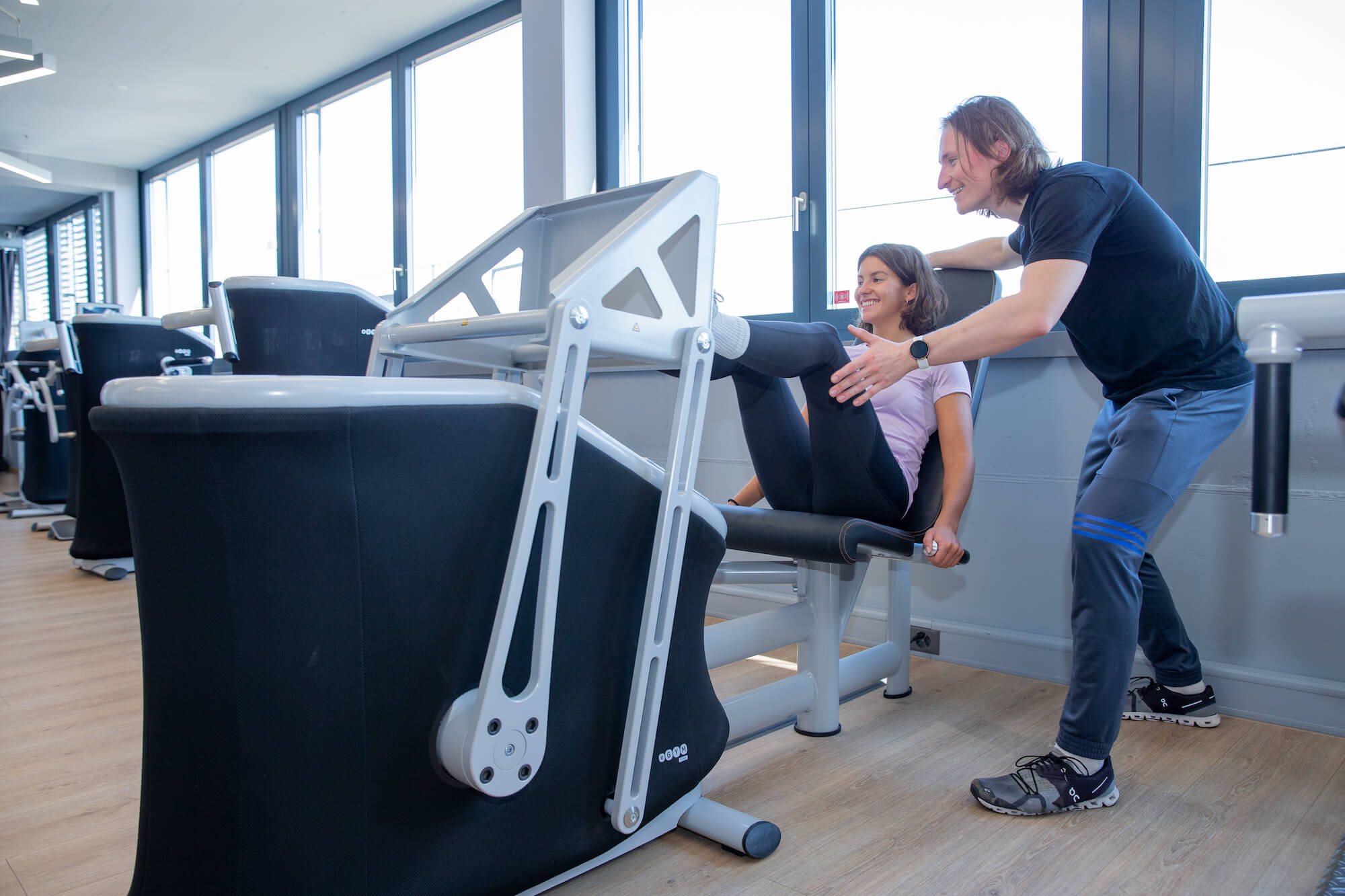
Dosage is what matters: better regular and moderate than rare and intense. In the Back Fit class or on the machines at Kineo Fitness in Thalwil, you can carry on training with guidance after physiotherapy.

From our practice
We see the most common mistake again and again: many people treat only the neck for years, or take painkillers, and wait too long before someone looks at the jaw. When we treat both together, headaches often improve much faster.
Treating jaw, neck and head together
At Kineo Seefeld at Seefeldstrasse 83, jaw therapy is a focus area. We treat the jaw and cervical spine together, because the symptoms influence each other. The practice is at the Feldeggstrasse stop, trams 2 and 4.
At other locations too: Seefeld is our jaw therapy focus. But you can also find physiotherapists specialised in jaw therapy in Wipkingen, at Stauffacher, in Escher Wyss, in Thalwil and in Zollikon. That way you can get treatment close to where you are.
Frequently asked questions
How do I know whether my headache comes from my jaw?
Typical signs are pain at the temples, tense chewing muscles and symptoms in the morning. An examination brings clarity.
Does physiotherapy also help with migraine?
Migraine is a neurological condition. Physiotherapy can help alongside other treatment if the neck or jaw are also involved.
Do I need a prescription?
For billing through health insurance you need a doctor's prescription. Ask your GP.
How long does an appointment last?
A physiotherapy appointment at Kineo lasts 30 minutes. In the first session we clarify the cause and start straight away with treatment and first exercises.
You might also like
Book an appointment
Recurring headaches or neck pain? Book your appointment at Kineo Seefeld.