Home
Locations
Wipkingen
Seefeld
Escher Wyss
Stauffacher
Thalwil
Zollikon
Services
Blog
About us
Jobs
Language
DE
EN
FR
IT
Book your appointment
category
neurology
Suchst du etwas bestimmtes?
Thank you! Your submission has been received!
Oops! Something went wrong while submitting the form.
Polyneuropathy: causes, symptoms and treatment
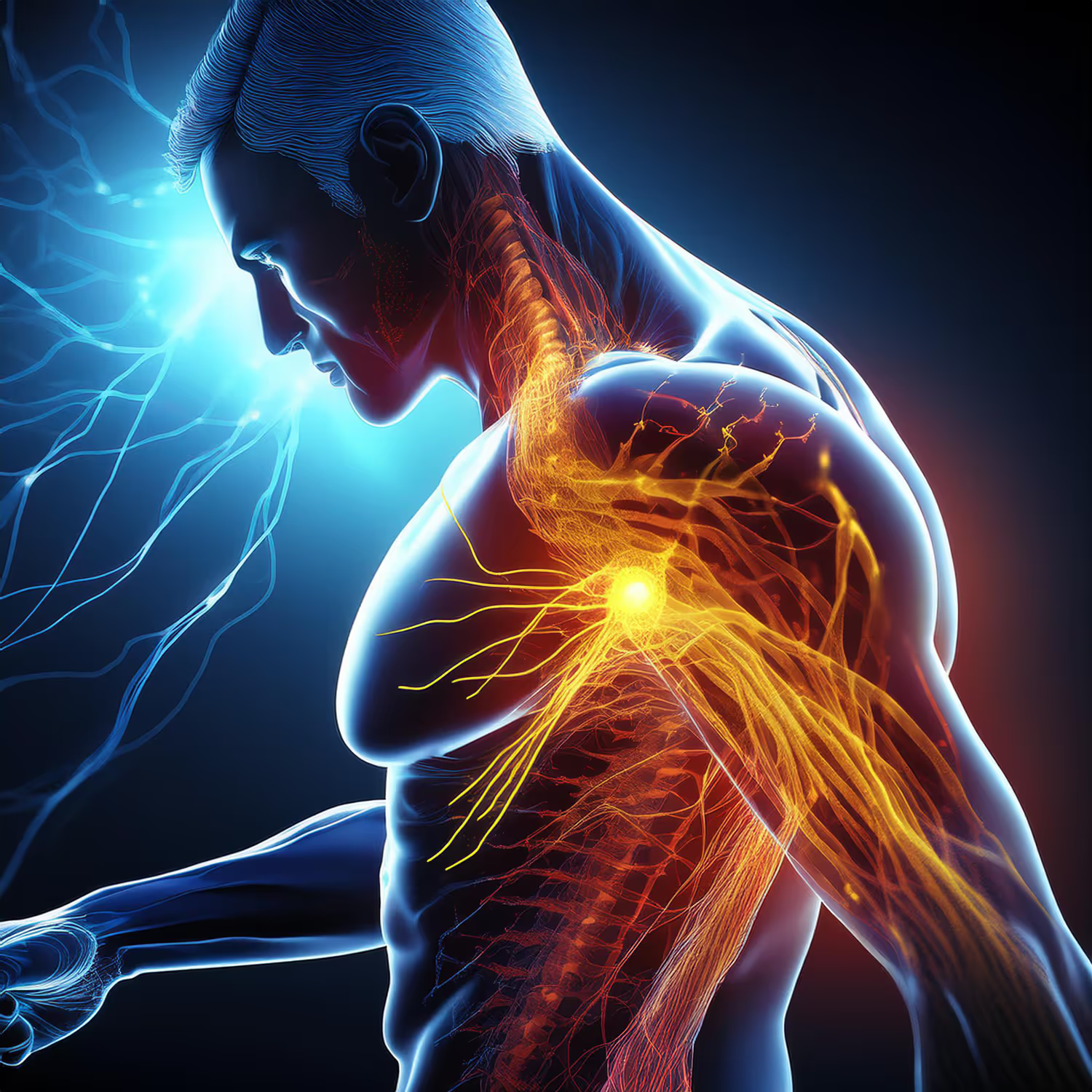
Polyneuropathy is a condition that affects several peripheral nerves. These nerves carry signals between the brain, the spinal cord and the rest of the body. In polyneuropathy these signals are disrupted, which can lead to symptoms such as numbness, tingling, muscle weakness and pain.
Central pain conditions
Central pain conditions are chronic pain syndromes caused by damage to or dysfunction of the central nervous system (brain and spinal cord). Unlike peripheral pain, they have no direct trigger in the body's tissues but arise from altered pain processing in the nervous system.
Dizziness and balance disorders: causes, symptoms and therapy
Dizziness and balance disorders are common complaints that show up as a feeling of unsteadiness, spinning vertigo or a sense of swaying. These disorders can significantly affect quality of life and require targeted diagnosis and treatment.
Traumatic brain injury
A traumatic brain injury (TBI) is an injury to the head that affects the brain. It can result from a blow, a fall or an accident and often leads to temporary or permanent neurological impairments. The severity ranges from mild concussions to severe brain injuries with long-term consequences.
Peripheral neuropathy
Peripheral neuropathy is a condition that can limit the lives of those affected considerably. Numbness, stabbing pain and muscle weakness are only some of the distressing symptoms. But there is hope: physiotherapy can play a decisive role in treatment and clearly improve quality of life.
Guillain-Barré Syndrome: When the Immune System Attacks Your Own Nerves
Guillain-Barré syndrome (GBS) is a rare but potentially serious neurological disease in which your own immune system attacks the peripheral nerves. This faulty immune reaction causes inflammation that damages the protective myelin sheath of the nerves and thereby impairs the transmission of nerve signals.
Dystonia: When the Body Goes Its Own Way
Epilepsy: how physiotherapy can support you
Epilepsy is a neurological condition that affects about 1% of the world's population and can occur at any age. The characteristic feature of this condition is repeated, unpredictable epileptic seizures, triggered by sudden, excessive electrical activity of nerve cells in the brain.
Autonomic nervous system disorders: how physiotherapy can help you
Your autonomic nervous system (ANS) works around the clock in the background and regulates vital functions such as heartbeat, breathing, blood pressure and digestion, without you having to think about it. It is your body's own autopilot, making sure all your internal organs work smoothly.
Ataxia: when movement coordination is disrupted
The cause of this coordination disorder lies in damage to the parts of the nervous system responsible for movement control, in particular the cerebellum and its connections.
Tension headaches
Tension headaches are among the most common types of headache of all and can affect people of any age. Unlike migraine, they show up as a dull, pressing pain that wraps around your head like a tight band.
Neurodegenerative diseases
Neurodegenerative diseases are chronic and progressive diseases of the nervous system, characterised by the loss of nerve cells and their function.
Multiple sclerosis
Multiple sclerosis (MS) is a chronic, progressive disease that affects the central nervous system (CNS), which makes it a neurological condition.
Stroke
A stroke is a sudden disturbance of brain function that leads to severe impairment of certain body functions.
What to Do About Migraine?
Migraine is a complex neurological condition marked by severe, recurring headaches and several phases. Those affected often suffer from chronic migraine attacks, meaning episodes that recur over a period of time.
more categories
No items found.