
Traumatic brain injury (TBI): symptoms, causes and rehabilitation
A traumatic brain injury (TBI) is an injury to the head in which the brain is impaired by external force. Causes can be falls, road accidents, sports injuries or blows to the head.
The consequences of a traumatic brain injury can vary in severity. They range from a mild concussion to severe brain injuries with long-term neurological impairments.
For those affected and their families, a TBI often comes suddenly, a moment that changes life. Besides physical limitations, there is often uncertainty, fear and many questions about the future.
Early medical treatment and targeted rehabilitation are crucial for improving function and raising quality of life.
Causes and risk factors for traumatic brain injury
The most common causes of a traumatic brain injury are:
- Road accidents
- Falls, especially in older people
- Sports injuries (e.g. contact sports)
- Workplace accidents in high-risk occupations
- Violence through blows or impacts to the head
Children and older people have an increased risk of falls and therefore also of traumatic brain injury.
In principle, a TBI can happen to anyone, regardless of fitness or state of health.
Symptoms of traumatic brain injury
The symptoms of a traumatic brain injury depend strongly on the severity of the injury.
Mild traumatic brain injury (concussion)
- Headaches
- Dizziness
- Problems concentrating
- Confusion
- Memory gaps
Moderate traumatic brain injury
- prolonged unconsciousness
- nausea and vomiting
- severe headaches
- visual or speech disturbances
Severe traumatic brain injury
- persistent unconsciousness
- seizures
- paralysis
- severe neurological deficits
Even after a mild traumatic brain injury, longer-lasting symptoms can occur, for example:
- problems concentrating
- sensory overload
- severe exhaustion
These symptoms are real and neurologically explainable, even if they are not visible from the outside.
Diagnosis of traumatic brain injury
The diagnosis of a traumatic brain injury is made through several medical examinations.
These include:
- Clinical examination to assess consciousness, reflexes and motor function
- Imaging (CT or MRI) to detect bleeding or structural damage
- Neurological tests to assess memory, attention and cognitive functions
A precise diagnosis forms the basis for an individual rehabilitation plan.
Acute treatment of traumatic brain injury
In the acute phase, medical stabilisation comes first.
Typical measures are:
- securing the airway and circulation
- treating raised intracranial pressure
- close monitoring of neurological functions
After stabilisation, neurological rehabilitation begins as early as possible.
Rehabilitation after a traumatic brain injury
Rehabilitation after a traumatic brain injury is an important part of treatment.
The aim is to restore lost functions and improve independence in everyday life.
Early rehabilitation
Rehabilitation often begins in hospital.
Typical forms of therapy are:
- Physiotherapy to improve mobility and muscle control
- Occupational therapy to regain everyday skills
- Speech and language therapy to treat speech and swallowing disorders
Early activation supports the neuroplasticity of the brain, that is, the ability of the nervous system to form new connections.
Long-term rehabilitation
In the later rehabilitation phase, the focus is on independence and quality of life.
Possible treatment approaches are:
- Neuromuscular training to improve strength and coordination
- Balance and gait training
- Cognitive training for attention and memory
- Psychological support for emotional strain
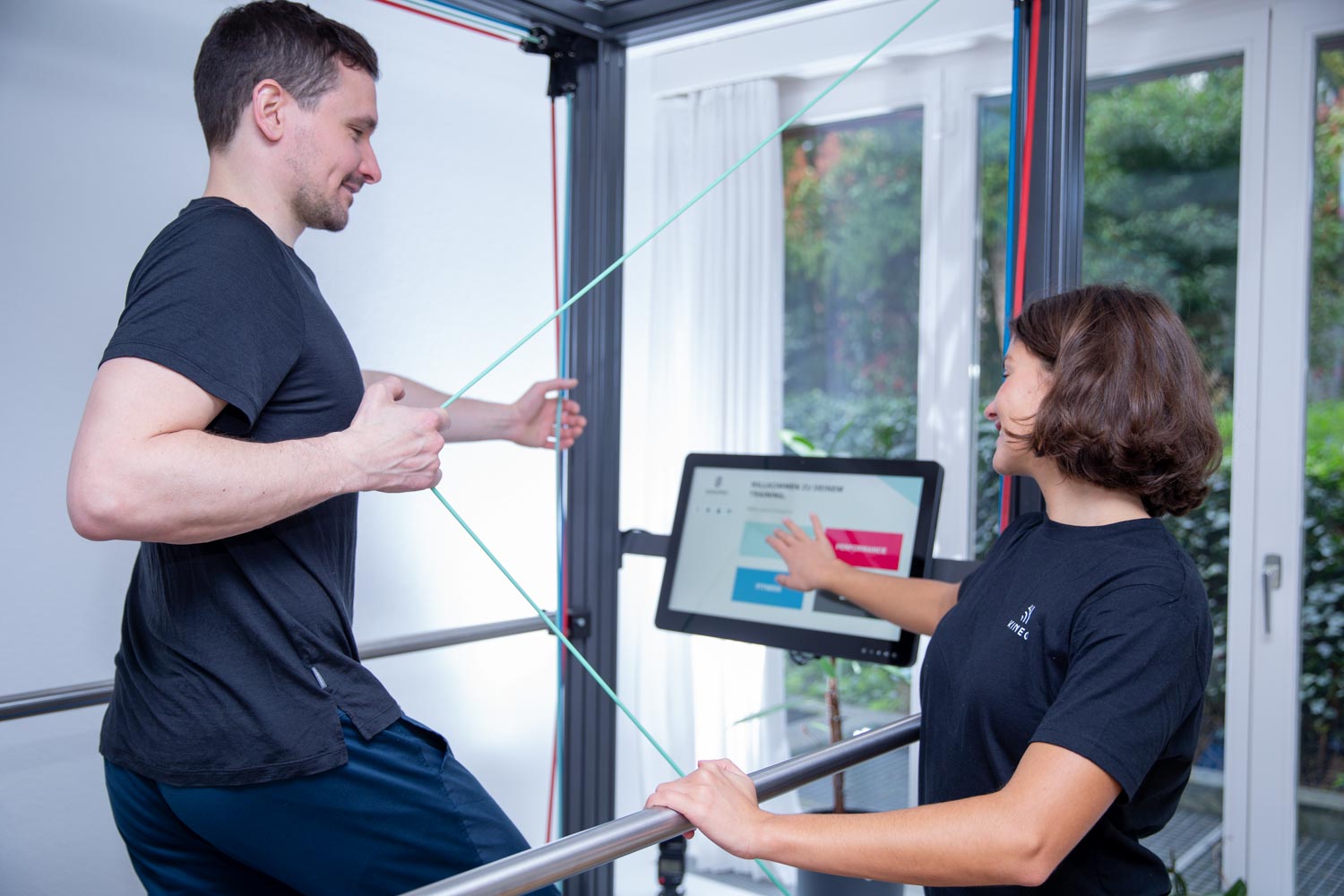
- Device-assisted training for functional rehabilitation
Rehabilitation is an individual and long-term process in which progress is made step by step.
Physiotherapy and rehabilitation for TBI in Zürich, Thalwil and Zollikon
At KINEO Physiotherapy, we support patients after a traumatic brain injury in Zürich, Thalwil and Zollikon with a structured and evidence-based rehabilitation approach.
Our therapy includes, among other things:
- functional strength training
- sensorimotor and coordination training
- gait and balance training
- therapy goals geared to everyday life
Our goal is to rebuild resilience, coordination and independence step by step.
It is not only about mobility, but about giving back safety, orientation and trust in your own body.
Life after a traumatic brain injury
Life after a traumatic brain injury can be challenging. With the right support, however, progress and adaptation are possible.
Helpful measures are:
- individual aids or adaptations to the home
- exchange in support groups
- regular medical and therapeutic follow-up care
- consistent rehabilitation and movement therapy
A traumatic brain injury does not mean standstill. With early and structured rehabilitation, many abilities can be improved and quality of life regained.
Our aim at KINEO Physiotherapy is to give orientation, make progress measurable and accompany people on their way back to an active life.
Frequently asked questions about traumatic brain injury
What is a traumatic brain injury?
A traumatic brain injury is an injury to the brain caused by external force, for example through a fall, accident or blow to the head.
How long does rehabilitation after a traumatic brain injury take?
The duration of rehabilitation depends on the severity of the injury. It can take a few weeks to several months or longer.
Can physiotherapy help after a traumatic brain injury?
Yes. Physiotherapy helps to improve strength, coordination, balance and mobility and to rebuild independence in everyday life.
Which symptoms can occur after a traumatic brain injury?
Typical symptoms are headaches, dizziness, problems concentrating, tiredness, balance disorders and neurological deficits.