

Dizziness and balance disorders: causes, symptoms and treatment with physiotherapy
Dizziness and balance disorders are among the most common complaints in neurology and orthopaedics. People often describe feeling unsteady when walking, a spinning sensation or a feeling of swaying.
Many patients also report a feeling of losing control, as if their own body no longer responds reliably. Often especially distressing is the fear of falling or losing their bearings.
The good news: in many cases, dizziness is very treatable. With targeted diagnostics and physiotherapy treatment, balance, confidence and quality of life can often be improved significantly.
Causes of dizziness
The causes of dizziness and balance disorders can vary. Basically, a distinction is made between peripheral and central vertigo.
Peripheral vertigo
Peripheral vertigo is caused by disorders of the balance organ in the inner ear (vestibular system).
The most common causes include:
- Benign paroxysmal positional vertigo (BPPV): attacks of vertigo triggered by certain head movements
- Ménière’s disease: an inner ear disease with vertigo, tinnitus and hearing loss
- Vestibular neuritis: inflammation of the balance nerve
Central vertigo
Central vertigo is caused by disorders in the brain, particularly in the cerebellum or brainstem.
Possible causes are:
- Migraine with vertigo symptoms
- Stroke or circulatory disorders in the balance centre
- Neurological diseases such as multiple sclerosis
Precisely differentiating the cause is crucial, as it determines the treatment.
Symptoms of dizziness and balance disorders
The symptoms of dizziness can vary depending on the cause.
Common complaints are:
Rotational vertigo
The feeling that your surroundings are spinning or moving.
Swaying dizziness
An unsteady feeling when standing or walking, similar to being on a rocking surface.
Positional vertigo
Short, intense attacks of vertigo with certain head movements.
Accompanying symptoms
- Nausea or vomiting
- Ringing in the ears (tinnitus)
- Hearing loss
- Unsteadiness when walking
Many people also develop avoidance behaviour: they move their head less, avoid quick movements or reduce their activity.
In the long term, however, this protective behaviour can cause the balance system to deteriorate further.
Diagnosing dizziness

The diagnosis of dizziness and balance disorders is based on a combination of different examinations.
Typical diagnostic steps are:
- Medical history: a precise description of the complaints
- Physical examination: testing balance, eye movements and reflexes
- Imaging: MRI or CT if a central cause is suspected
- Hearing and balance tests: audiometry and vestibular function testing
Precise diagnostics are crucial for targeted and successful treatment.

Treatment of dizziness and balance disorders
Treatment depends on the cause of the complaints and often combines several therapeutic approaches.
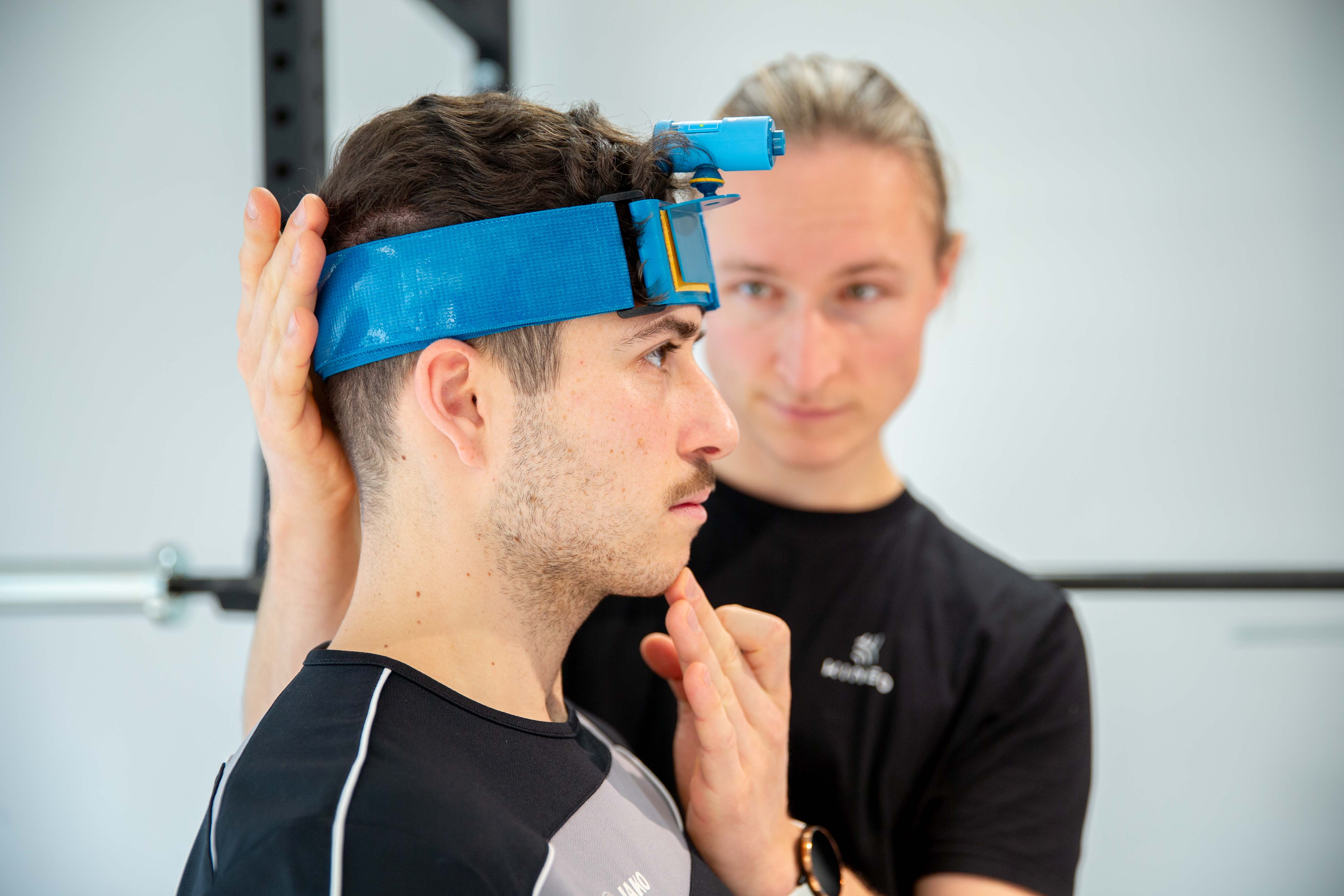
Physiotherapy for dizziness and balance disorders
Physiotherapy is a central, evidence-based treatment method for dizziness.
The aim is to train the balance system in a targeted way and improve the nervous system’s ability to adapt.
At KINEO Physiotherapie, we rely on active, individually tailored therapy.
Physiotherapy measures include:
- Vestibular training to help the balance system adapt
- Repositioning manoeuvres for benign positional vertigo (BPPV)
- Balance training to improve stability
- Coordination training for more confidence in everyday life
Our approach is based on one important principle:
The balance system needs targeted stimuli in order to adapt. Constantly protecting yourself can make the complaints worse in the long term.
Through repeated, individually dosed movements, the nervous system learns to process balance stimuli better.
Medication and supportive therapy
In addition to physiotherapy, medication can also be useful.
This includes:
- Antivertiginous drugs (e.g. dimenhydrinate) for short-term symptom relief
- circulation-promoting medication for certain central causes
- psychological support when anxiety or stress make the symptoms worse
Medication can relieve symptoms, but lasting improvement often comes from active therapy and movement.
Physiotherapy for dizziness in Zürich, Thalwil and Zollikon
At KINEO Physiotherapie, we treat patients with dizziness and balance disorders in Zürich, Thalwil and Zollikon.
Our focus is on:
- improving balance
- reducing the risk of falls
- restoring confidence in everyday life
- targeted vestibular training
With a structured, evidence-based approach, we help patients reduce dizziness and regain trust in their own body.

Living with dizziness: tips for everyday life
A few measures can also help you cope better with dizziness in everyday life.
Important recommendations are:
- regular movement and training
- enough sleep and stress reduction
- identifying your individual triggers
- a safe home environment to prevent falls
- relaxation techniques to regulate the nervous system
Dizziness doesn’t mean you have to stay limited for good.
With a clear structure, targeted training and professional support, you can regain your confidence step by step.
Our goal at KINEO Physiotherapie is to reduce anxiety, provide orientation and actively guide patients back into movement.
Frequently asked questions about dizziness and balance disorders
Can physiotherapy help with dizziness?
Yes. Physiotherapy can help train the balance system, reduce dizziness and prevent falls. Vestibular training is particularly effective.
Which exercises help with dizziness?
The most important exercises include vestibular training, balance exercises, coordination training and gait training.
Is movement useful when you have dizziness?
Yes. Appropriate movement helps the nervous system process balance stimuli better and can lead to a clear improvement in the long term.
When should you see a doctor about dizziness?
If you have sudden severe dizziness, neurological symptoms or persistent complaints, you should have it checked by a doctor.