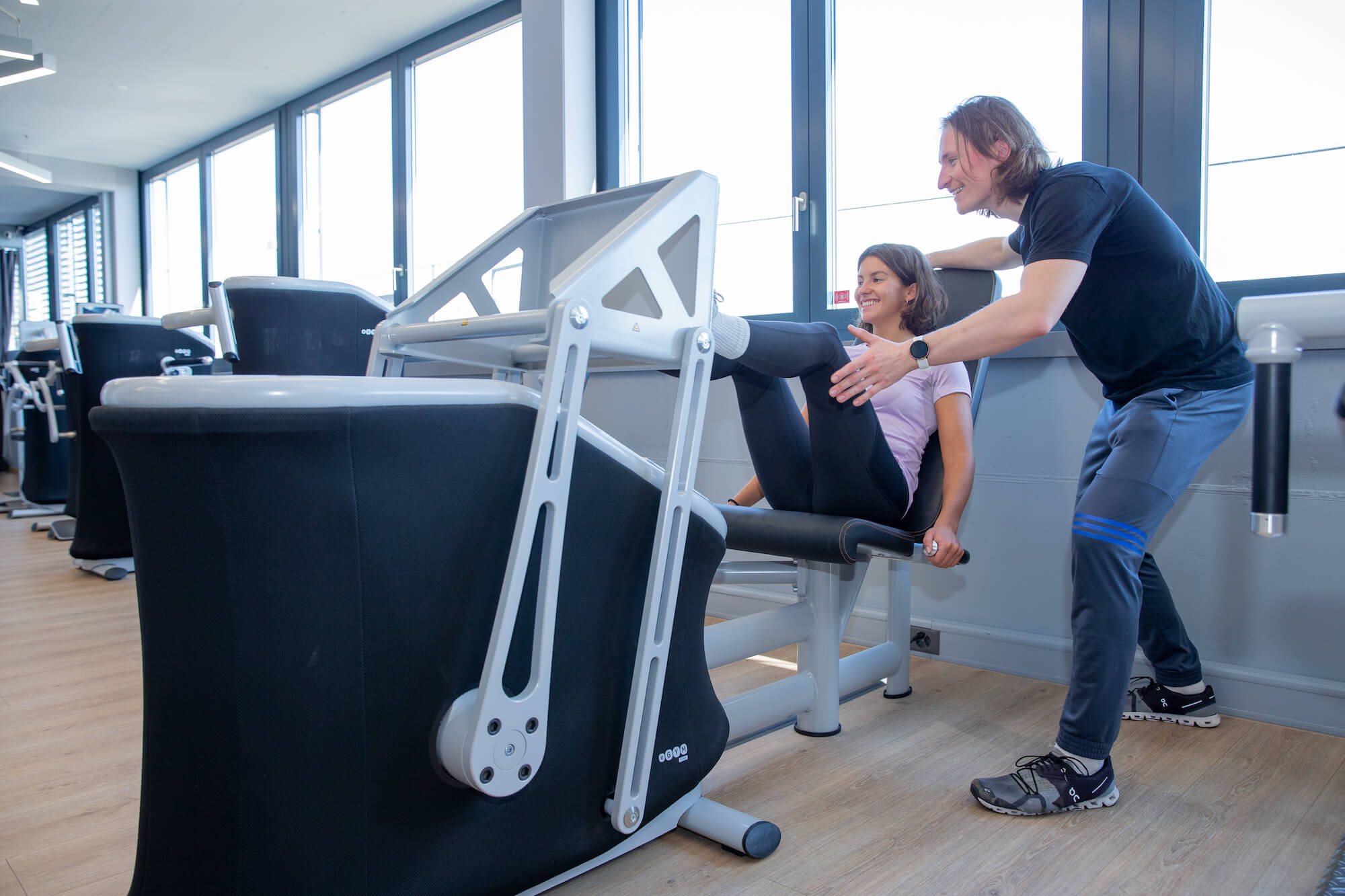
By Diego Rojas, physiotherapist at Kineo Seefeld
Burning in the forefoot, as if there were a stone in your shoe
It often starts harmlessly: when running or in tight shoes, it feels as if your sock has folded up under your toes. Later a burning or electric-shock-like pain is added, radiating into two toes. Shoe off, massage your foot, and it gets better. Until the next time.
This pattern is often caused by a Morton's neuroma. The good news: in many cases the symptoms can be clearly eased with suitable shoes, load management and targeted physiotherapy.
What is a Morton's neuroma?
Fine nerves run to the toes between the heads of the metatarsal bones. If one of these nerves is repeatedly pressed and irritated, the tissue around it thickens. This is called a Morton's neuroma. Despite the name, it is not a tumour, but a benign thickening caused by irritation.
The neuroma most often lies between the 3rd and 4th toes, less often between the 2nd and 3rd toes. Women are affected more often, probably also because of narrower shoes and higher heels.
Typical symptoms
- Burning, stabbing or electric-shock-like pain in the forefoot that radiates into two neighbouring toes
- Numbness or tingling between these toes
- A feeling of a stone or a fold in your sock
- Relief when you take your shoe off and massage your forefoot
- Worse in tight shoes, with heels, when running fast or uphill
Causes and risk factors
- Narrow toe box: The metatarsal heads are squeezed together and trap the nerve.
- Heels: They shift weight onto the forefoot.
- A lot of forefoot loading: Fast running, sprints, dancing or sports performed on the forefoot.
- Foot shape: A splayfoot or a hallux valgus (misalignment of the big toe) increases pressure in the forefoot.
- Laces tied too tightly in the front part of the shoe.

What else it could be
Not every forefoot pain is a Morton's neuroma. We rule out these diagnoses:
- Metatarsalgia: overload of the metatarsal heads. The tender spot lies directly under the head, not between them.
- Stress fracture of a metatarsal bone: pinpoint bone pain on the top of the foot, often with swelling, after an increase in training.
- Plantar plate injury: an overload of the joint capsule under the base of the toe, usually the 2nd toe. The toe can drift over time.
- Nerve irritation from the back or a nerve entrapment at the inner ankle (tarsal tunnel syndrome)
- Polyneuropathy: numbness in both feet, often sock-shaped, without a clear pressure point
See a doctor if you have numbness in both feet that is spreading, loss of strength in the foot or toes, pain at rest and at night, redness with warmth or fever, and wounds on the foot if you have diabetes. If the diagnosis is unclear, an ultrasound or MRI can show the neuroma.
What you can do yourself
- Room for the toes: Shoes with a wide toe box in which you can spread your toes
- Adjust your lacing: Skip the bottom eyelets or lace loosely, and get your hold over the instep
- Reduce heels, especially in everyday life
- Metatarsal pad: A small pad directly behind the metatarsal heads can spread them slightly apart and relieve the nerve. The exact position is crucial, so have it fitted.
- Manage the load: Temporarily reduce pace and hills, with biking or swimming as an alternative
How we treat a Morton's neuroma at Kineo
First we confirm the diagnosis and find out what is irritating the nerve. Then we offload in a targeted way and build the load back up.
1. Assessment: what we examine in your first session
- Palpation: Is the tender spot between the heads or directly under them?
- Mulder's test: We squeeze the midfoot together from the sides and press into the gap from below. A click with typical pain points to a neuroma.
- Sensation: feeling in the toes, comparing both sides
- Toe base joints: stability in the drawer test, to rule out a plantar plate injury
- Nerve pathway: If we suspect it, we check the back and leg, for example with the slump test
- Shoes and running style: shoe check, lacing and roll-off pattern
2. Treatment in phases
- Phase 1: offload (weeks 1–2). Adjust shoes, lacing and metatarsal pad, reduce irritating loads, keep up your endurance with alternative training.
- Phase 2: mobilise and strengthen (weeks 2–6). Mobilisation of the metatarsal bones, foot muscle training such as the "short foot" (actively shortening the arch of the foot), 3 x 10 x 5 seconds, plus toe spreading and calf strength, 3 x 12–15.
- Phase 3: build up running (from weeks 4–8). Start flat and relaxed with run-walk intervals, with pace and hills last.
- If there is no improvement: If little changes after several weeks of consistent treatment, we discuss further options with your doctor, such as an injection. Surgery is rarely necessary.
3. Kineo services we use
- Runners Physio, when the neuroma is slowing you down when running
- Manual therapy to mobilise the midfoot and toe base joints
- Neurodynamics, to test and improve the mobility of the nerve along the leg
- Currex 5D running analysis for roll-off pattern and shoe choice
The right shoe for a Morton's neuroma
When buying shoes, look for a toe box that doesn't press, even after an hour of running when your feet swell a little. A sole curved upwards at the front (rocker) can relieve the forefoot, because the toe base joints don't have to bend as far. Very soft, narrow racing shoes, on the other hand, are often unhelpful. Try shoes on in the afternoon and walk a few steps, rather than just standing.
From our practice
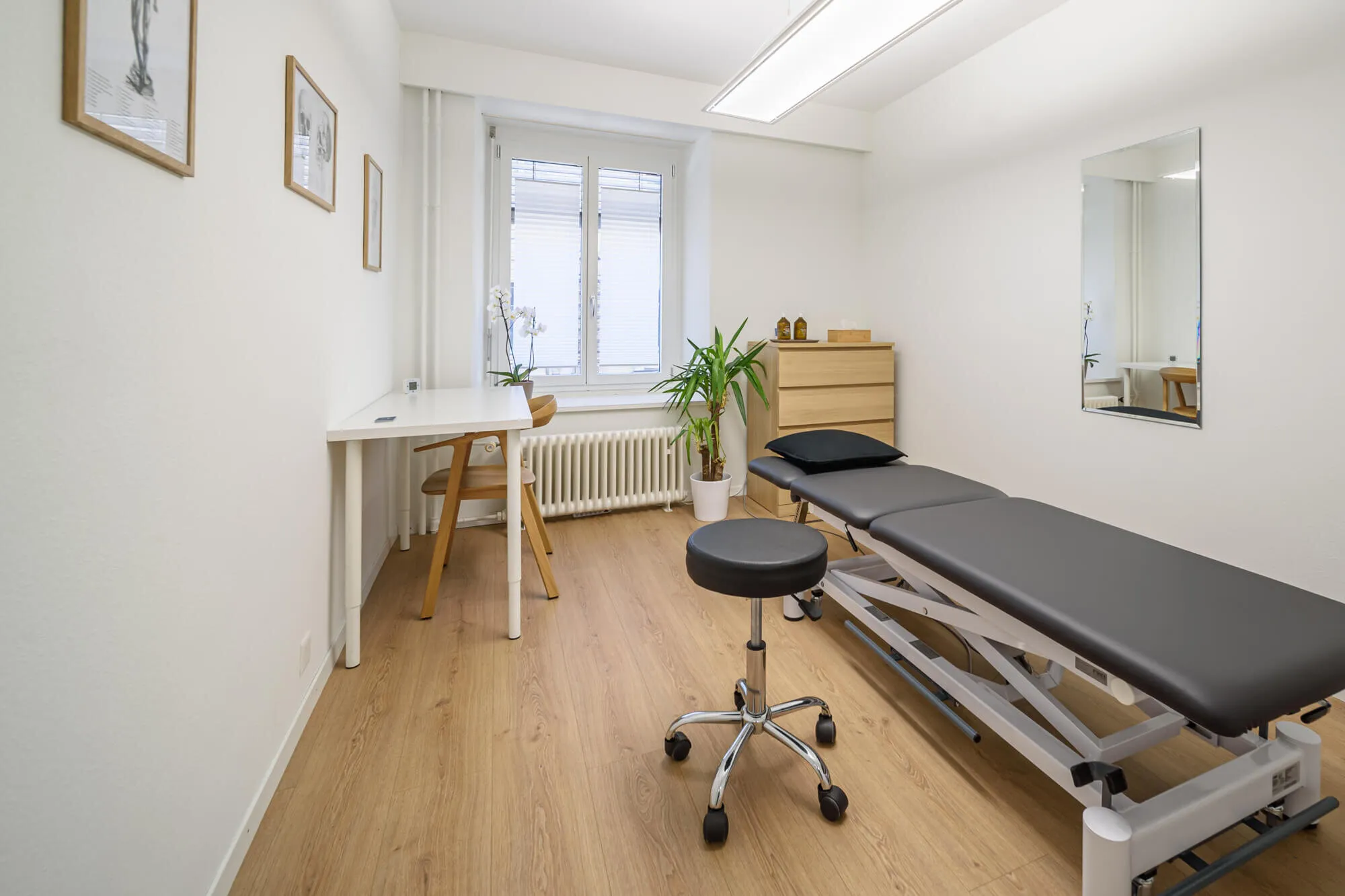
Many people affected have already tried several insoles, but keep running in shoes that are too narrow at the front or laced very tightly. Giving the forefoot room first often does more than buying another insole. When shoes, lacing and load are right, the nerve often settles down clearly.
Getting foot problems checked at Kineo Seefeld
At Kineo Seefeld at Seefeldstrasse 83 (stop Feldeggstrasse, trams 2 and 4), running is a focus. On the ground floor you will find the Kineo Runners Lab with running shoes and Currex 5D running analysis, and on the 1st floor the physiotherapy with Runners Physio. This way we look at your foot, shoe and running style in the same place.
Frequently asked questions
Does a Morton's neuroma go away?
The thickening often remains, but the symptoms can clearly decrease or disappear completely when the pressure on the nerve falls.
Can I keep running?
Usually yes, adapted. Shorter, flat and relaxed runs in suitable shoes are often possible. You temporarily reduce pace and hills.
Does a Morton's neuroma need surgery?
Rarely. Shoes, offloading and physiotherapy come first. Only if that is not enough do you discuss further steps with your doctor.
Does health insurance cover physiotherapy?
Yes. With a doctor's prescription, your basic health insurance covers the cost. Kineo is recognised by all Swiss health insurers.
You might also like
- Finding the right running shoe
- Hallux rigidus: a stiff big toe when running
- Polyneuropathy: causes, symptoms and therapy
Book an appointment
Is burning in your forefoot slowing you down when running? Book your appointment at Kineo Seefeld.