By Andrina Kümin, physiotherapist at Kineo Seefeld
When your big toe blocks as you push off
When running uphill, sprinting or even just on the stairs, the base joint of your big toe hurts. The toe can hardly be bent upwards any more, you can feel a bump on top of the joint, and it presses in your shoe. Often you don't even notice that you have long been rolling off differently than before.
This is typical of hallux rigidus. Running is often still possible, as long as your shoe, running technique and training suit the joint.
What is hallux rigidus?
Hallux rigidus is osteoarthritis in the base joint of the big toe. The cartilage wears down and bony growths (osteophytes) form on top of the joint. These mainly block the upward movement of the toe. The earlier stage with a mild restriction is called hallux limitus.
Don't confuse it with hallux valgus (a bunion). There, the big toe points at an angle towards the other toes. In hallux rigidus, the toe is usually straight, but stiff.
Why the big toe matters so much for running
When you push off, the big toe bends upwards. This tightens the plantar fascia, the band of tissue under the sole of the foot, and the arch of the foot becomes a stable lever. Specialists call this the windlass mechanism, after the cable winch.
If this movement is missing, the body looks for ways around it:
- You roll off over the outer edge of the foot
- The foot turns outwards as you push off
- The heel lifts off earlier, and your steps get shorter
This can overload other structures: the outer metatarsal heads, the calf and Achilles tendon, sometimes also the knee or hip.
Typical symptoms and causes
- Pain in the big toe base joint when pushing off, uphill and when sprinting
- A palpable bump on top of the joint that presses in the shoe
- Stiffness and occasional swelling
- Callus on the side of the big toe or under the outer toes
Causes are usually a combination of predisposition, foot shape, previous injuries such as hyperextension of the big toe ("turf toe") and years of loading.
Shoes: the biggest lever
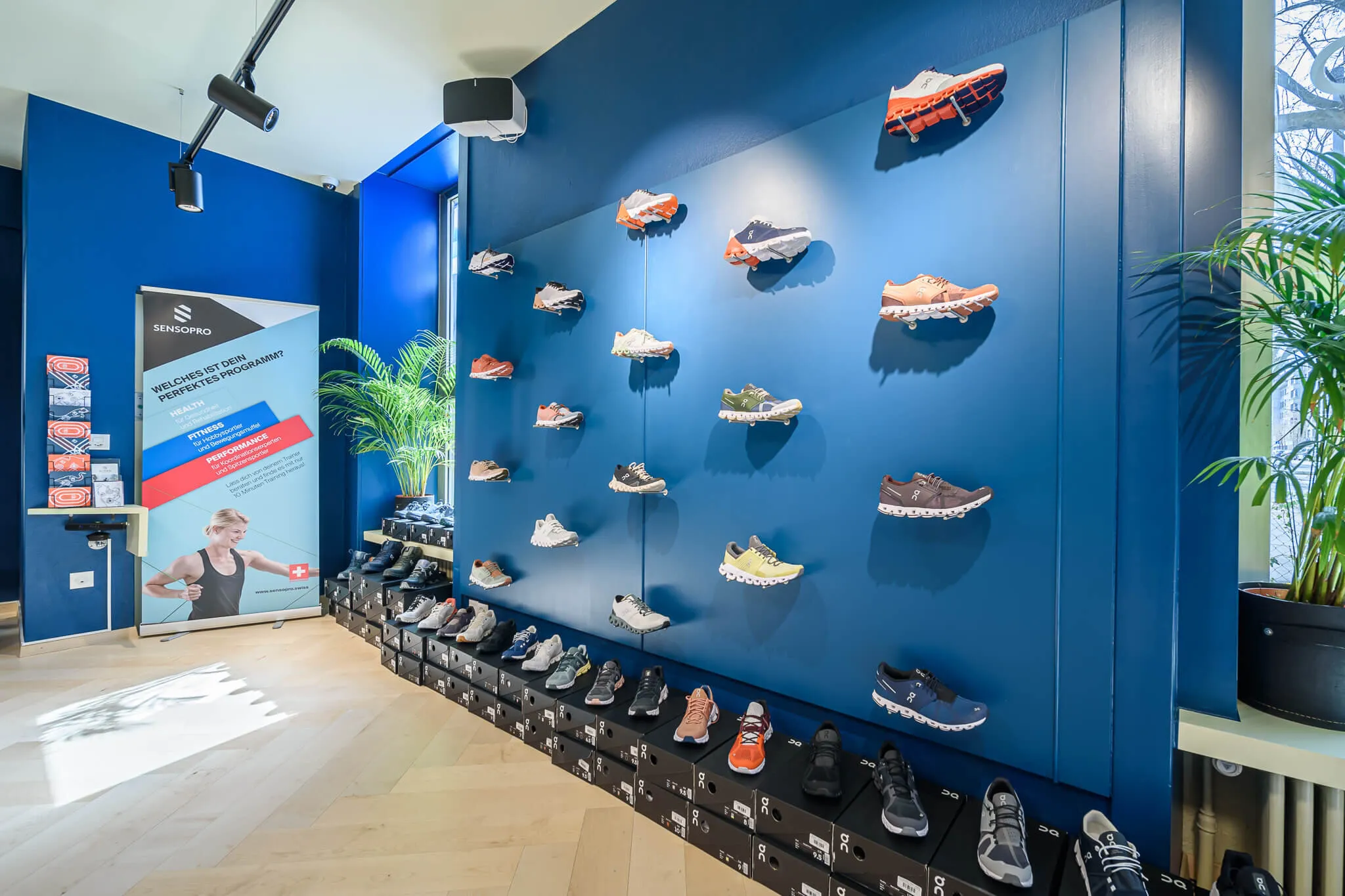
- Stiff sole or rocker: A sole that curves up at the front and is not very flexible reduces how far the big toe has to bend as you roll off.
- Plate in the sole: A stiff plate, as found in carbon shoes, can also take the strain off the big toe for some runners. Try this out gradually.
- Enough height at the front: The toe box must not press on the bump.
- Insole with reinforcement: An insole with a stiff extension under the big toe can immobilise the joint. Have it fitted by an orthopaedic technician.
- Rather unfavourable: Very flexible minimalist shoes that bend the joint to the maximum with every step.
Exercises you can do yourself
- Mobilise the big toe: Gently move the toe up and down with your hand, 2 x 1 minute, in the low-pain range
- Press the big toe into the floor: Press the big toe down and lift the other toes, then the other way round, 3 x 10, hold for 5 seconds each
- Short foot: Actively raise the arch of the foot without clawing your toes, 3 x 10, hold for 5 seconds each
- Heel raises: Only as high as the joint allows with little pain, 3 x 12–15
- Ankle: Knee-to-wall mobilisation, 2 x 10 per side
Mild pain up to about 3 out of 10 during the exercise is fine, as long as it settles by the next day.
How we treat hallux rigidus at Kineo
We don't just treat the toe, but look at how your whole leg copes with the restriction when running.
1. Assessment: what we examine in your first session
- Mobility: Measuring the big toe upwards and downwards, compared side to side
- Palpation: Bony growths, joint space and tenderness
- Windlass test: While you stand, we lift the big toe and see whether the arch of the foot rises
- Ankle and calf: Knee-to-wall test and single-leg heel raises to fatigue
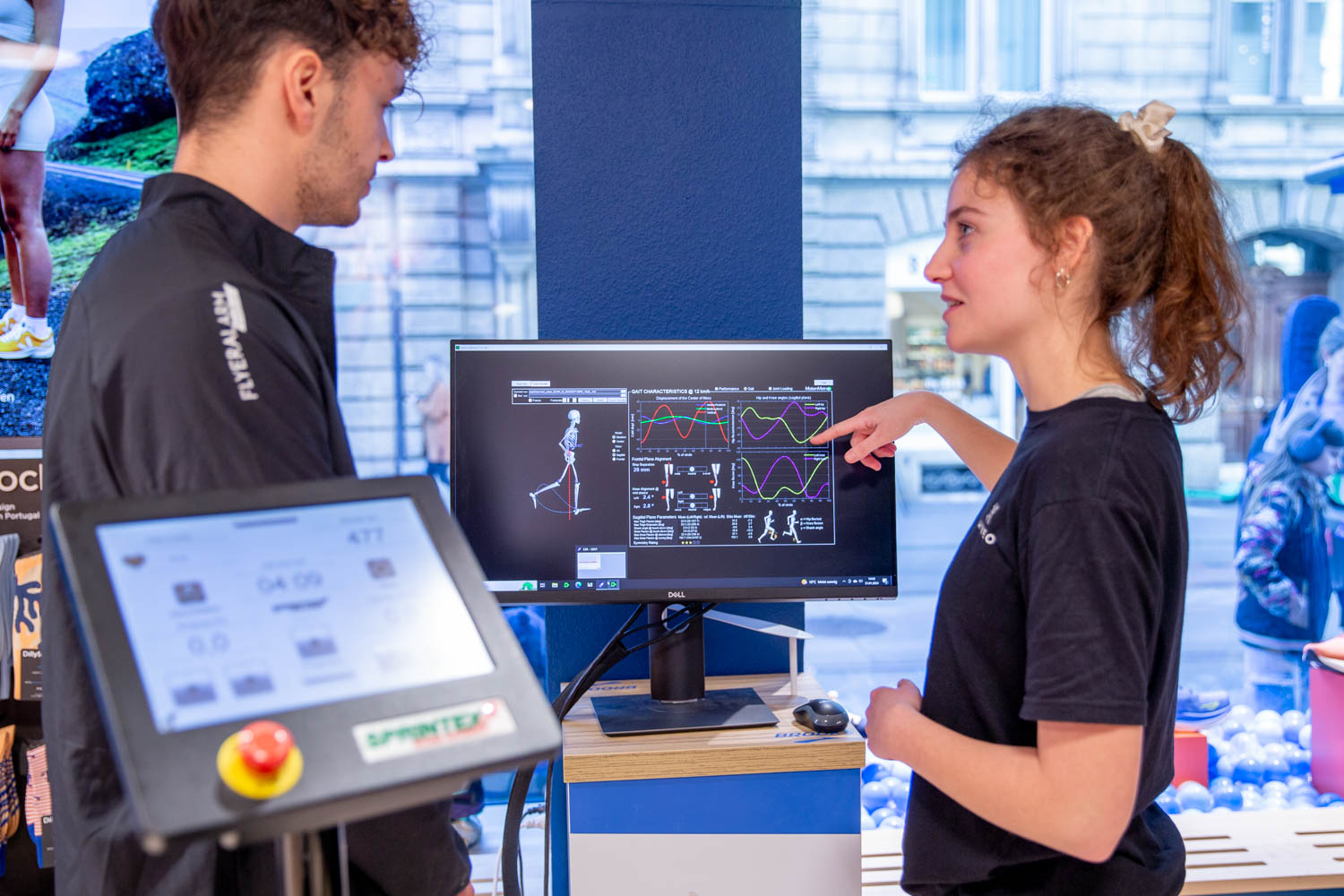
- Gait and running analysis: Roll-off behaviour and compensation patterns
- Shoe check: Sole stiffness, toe box and insoles
The extent of the osteoarthritis is shown by an X-ray, which your doctor arranges.
2. Treatment in phases
- Phase 1: calm the irritation (weeks 1–2). Adjust your choice of shoe, reduce uphill running and sprints, low-pain mobilisation.
- Phase 2: mobility and strength (weeks 2–8). Manual mobilisation of the big toe joint, strength for the foot and calf 2–3 times a week.
- Phase 3: adapt your running. A suitable shoe, slightly shorter steps and training of the hip and calf, so that push-off relies less on the big toe.
- In the long term: Mobilise and strengthen regularly. If that isn't enough, you discuss options with an orthopaedic specialist, such as an injection, removal of the bony growths or fusion of the joint.
3. Kineo services we use
- Runners Physio, when your big toe is slowing you down when running
- Manual therapy to mobilise the big toe base joint and the midfoot
- Currex 5D running analysis, to check compensation patterns and shoe choice
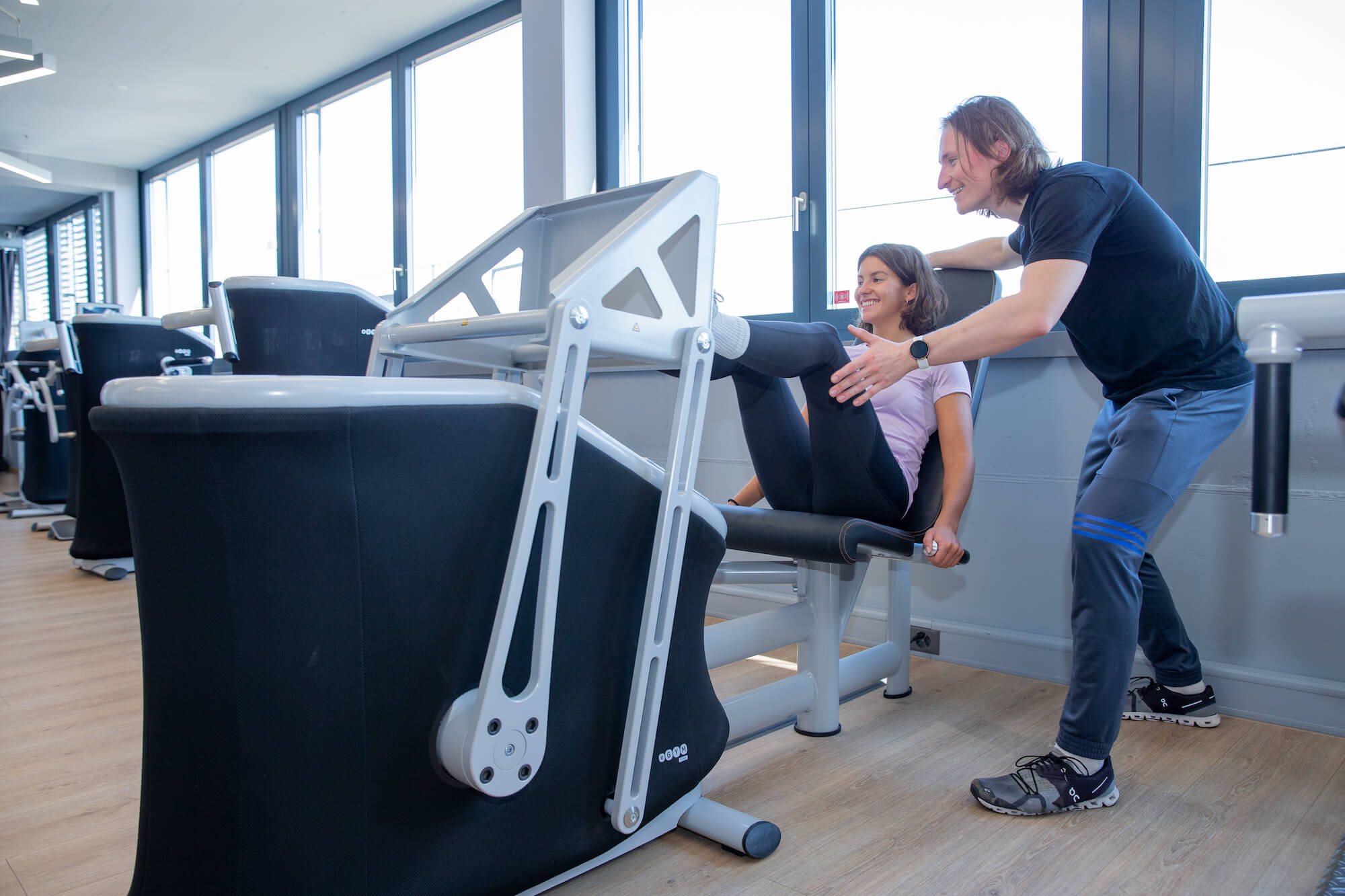
- Medical training therapy for strength in the foot, calf and hip
From our practice
Many runners don't come to us because of the big toe, but because of pain on the outside of the foot, in the calf or at the knee. Only during the examination does the stiff big toe show itself as the starting point. When we adapt the shoe and push-off, the other complaints often settle too.
Foot, shoe and running style at Kineo Seefeld
At Kineo Seefeld on Seefeldstrasse 83 (stop Feldeggstrasse, trams 2 and 4), the focus is on running. On the ground floor you'll find the Kineo Runners Lab with running shoes and Currex 5D running analysis, and on the first floor we treat you with Runners Physio. Especially with hallux rigidus, where the shoe makes such a difference, this is an advantage.
Frequently asked questions
Can I keep running with hallux rigidus?
Often yes. With a suitable shoe, adapted training and targeted exercises, many people keep running. Hill sprints and very flexible shoes are usually more difficult.
Does hallux rigidus always get worse?
Osteoarthritis varies a great deal. The symptoms don't depend only on the X-ray and can often be kept well under control for a long time.
Does stretching the big toe help?
Gentle mobilisation in the low-pain range can help. Forceful overstretching tends to irritate the joint.
How long does an appointment last?
An appointment lasts 30 minutes. In the first session we clarify the cause of your complaints and start straight away with treatment and exercises.
You might also like
- Carbon shoes: performance and injury risk
- Forefoot pain and Morton's neuroma
- Plantar fasciitis: pain under the heel
Book an appointment
Is a stiff big toe slowing you down when running? Book your appointment at Kineo Seefeld.