By Andrina Kümin, physiotherapist at Kineo Seefeld
Faster thanks to carbon? What the shoes can really do
At almost every city run today, shoes with a thick sole and a carbon plate are standing on the start line. Many runners wonder: Will it do anything for me, even if I'm not running for the win? And can I hurt myself with them?
The short answer: carbon shoes can make running more economical. But they also change how the foot, calf and Achilles tendon work. If you use them wisely and get used to them slowly, you benefit. If you do every run in them from one day to the next, you risk problems.
What is in a carbon shoe?
“Carbon shoe” is actually an imprecise term. The effect comes from several components working together:
- Foam: very light, highly resilient foam in the midsole. It returns more energy at toe-off than classic foams.
- Plate: a stiff carbon plate in the sole. It stiffens the shoe as you roll over the ball of the foot.
- Rocker geometry: the sole curves up strongly at the front. The foot “rolls” forwards instead of bending over the toes.
- High sole: a lot of foam under the heel and forefoot. This is why World Athletics has limited sole thickness for road races.
According to current knowledge, it is not the plate alone that makes the difference, but the combination of foam, plate and shape. That is why there are now also training shoes with a similar construction but a somewhat more stable sole.
What do carbon shoes really bring?
Laboratory studies show that modern racing shoes can improve running economy. This means you need slightly less energy at the same pace. But the effect is very individual. Some runners benefit clearly, others hardly at all. The shoes are built for high speeds. In an easy steady run, the advantage is therefore usually smaller.
Many runners also report that their legs feel fresher towards the end of a long race. That is plausible, but above all a subjective experience. One thing is clear: a carbon shoe does not replace training. At best, it gets a little more out of the form you have worked for.
Where are the risks?
- Load shifts: The stiff plate reduces movement in the toe joints. Part of the work moves towards the ankle, calf and Achilles tendon. If you are sensitive there, you often notice it first.
- Bones in the midfoot: In the medical literature there are case reports of stress reactions in the navicular bone (os naviculare) and in the metatarsal bones in runners who trained a lot in carbon shoes. A causal link has not been proven. For us, it is still a reason to make the switch carefully.
- Less stability: High, soft soles are less stable from side to side. On bends, cobblestones, downhill and on trails, the risk of rolling your ankle goes up.
- More speed, more load: If you suddenly run all your sessions faster in the new shoe, you increase your total load. This is often the real problem, not the shoe itself.
Runners with Achilles tendon problems, a previous stress fracture or unstable ankles should be particularly careful.
Warning signs: when you should take a break
- Pinpoint bone pain on the top of the foot or on the inner side of the midfoot that gets worse when hopping
- Pain that also occurs at rest or at night
- Swelling on the top of the foot or ankle
- An Achilles tendon that gets stiffer and more painful in the morning from week to week
In that case, stop running training and have the problem checked by a doctor. A stress fracture is often not visible on an X-ray at first. An MRI is often needed.
How to get used to carbon shoes
- Start short: Begin with 1–2 short uses per week, for example 4–6 strides or part of a speed session.
- Speed training: Over 4–6 weeks, you run individual key sessions at race pace in the carbon shoe.
- Long run last: Before a half marathon or marathon, you test one long run with sections at race pace. That way you know how your calves and feet react to the distance.
- Easy stays normal: You keep doing easy steady runs in your usual training shoe. Rotating several pairs of shoes spreads the load.
- Strengthen your calves: Single-leg heel raises with the knee straight and with the knee bent, 3 x 12–15 repetitions each, 2–3 times a week.
After each step, listen to your body the next morning: how do your Achilles tendon, calf and top of the foot feel? If everything stays calm, you can progress.
How we advise and treat you at Kineo
Whether you already have symptoms or want to switch safely before a race: we look at how your body copes with the shoe.
1. Assessment: what we examine in your first session
- Training history: mileage, pace, since when and for what you use the carbon shoe
- Calf strength: single-leg heel raises to fatigue, compared between sides
- Mobility: big toe and ankle, for example with the knee-to-wall test
- Stability: single-leg stance and Y-Balance Test, in which you stand on one leg and reach as far as possible in three directions
- Palpation: Achilles tendon, navicular bone and metatarsal bones for tenderness
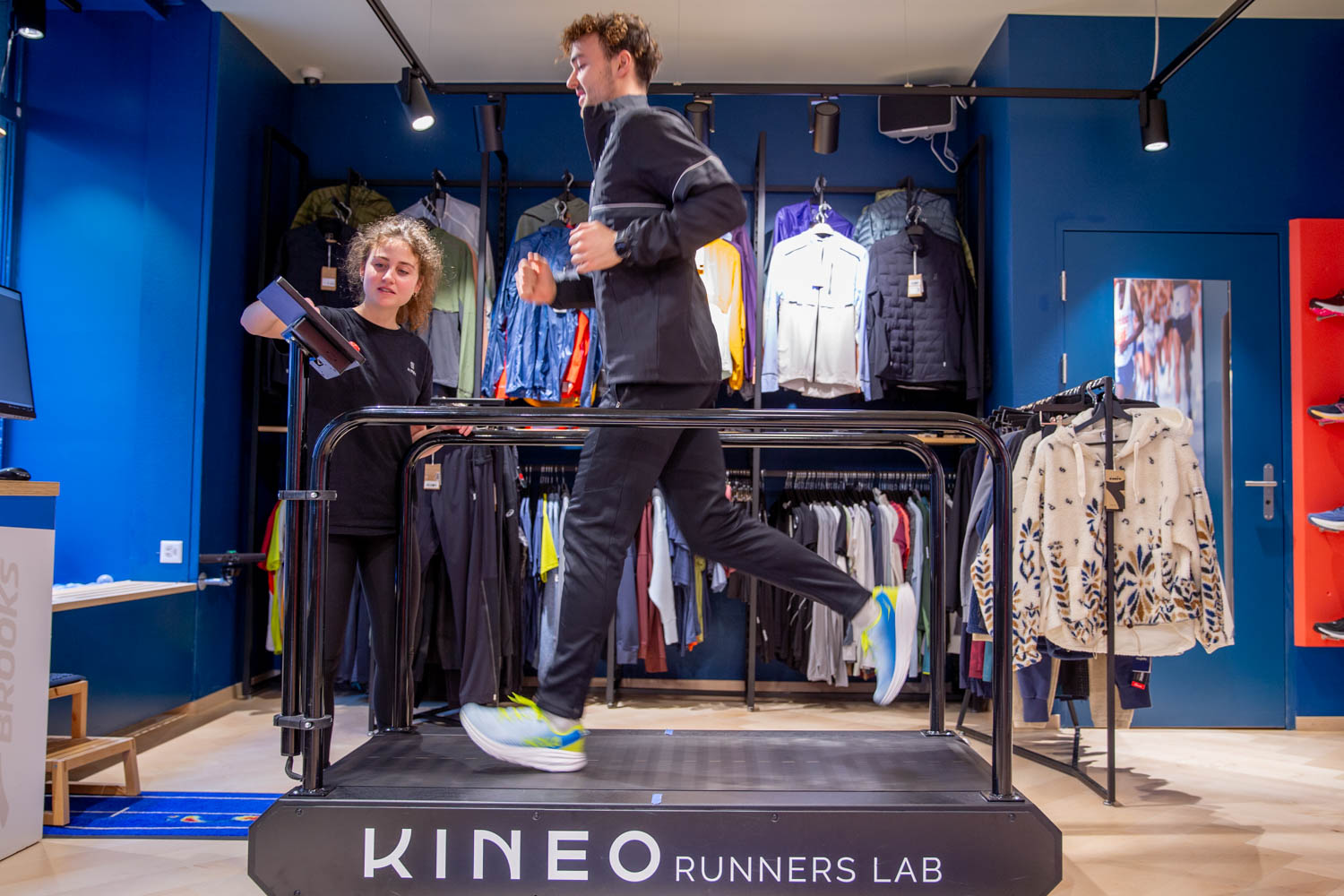
- Running analysis: training shoe and carbon shoe compared directly on the treadmill
2. Treatment in phases
- Phase 1: calm things down (weeks 1–2). If you have symptoms, we leave the carbon shoe out for the time being and adjust mileage and pace. Isometric heel raises, 5 x 30–45 seconds holding.
- Phase 2: build strength (weeks 2–6). Heavy heel raises with added weight, 3 x 8–12, plus foot muscles and hip, 2–3 times a week.
- Phase 3: reintroduction. Carbon shoe following the step-by-step plan above, checking your reaction the next day.
- Phase 4: race. The racing shoe has been tested in several key sessions, and you have a clear plan for the last weeks.
3. Kineo services we use
- Runners Physio: physiotherapy with a focus on running injuries and load management
- Currex 5D running analysis, to see how your running style changes in the carbon shoe
- Medical training therapy for calf, foot and hip
- Shockwave therapy as a complement for stubborn Achilles tendon problems, after clarification
From our practice
A typical situation is a few weeks before a spring race: a new carbon shoe, a good feeling, and suddenly every run is done in them. Shortly after, the Achilles tendon or the top of the foot starts to hurt. Usually it is enough to limit the shoe to the key sessions and to strengthen the calf in a targeted way. Race preparation is then often not at risk at all.
Running shoes, analysis and physio under one roof
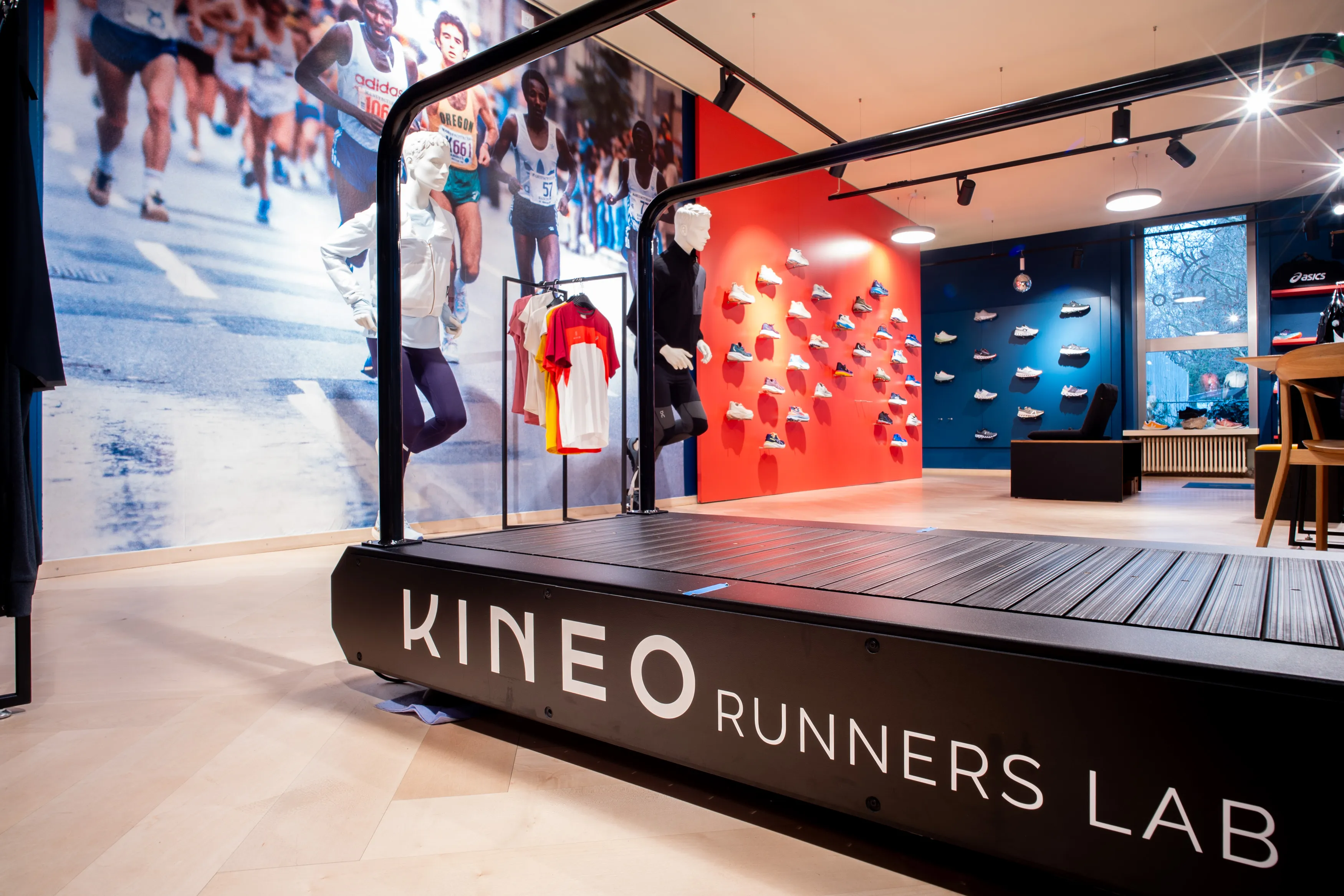
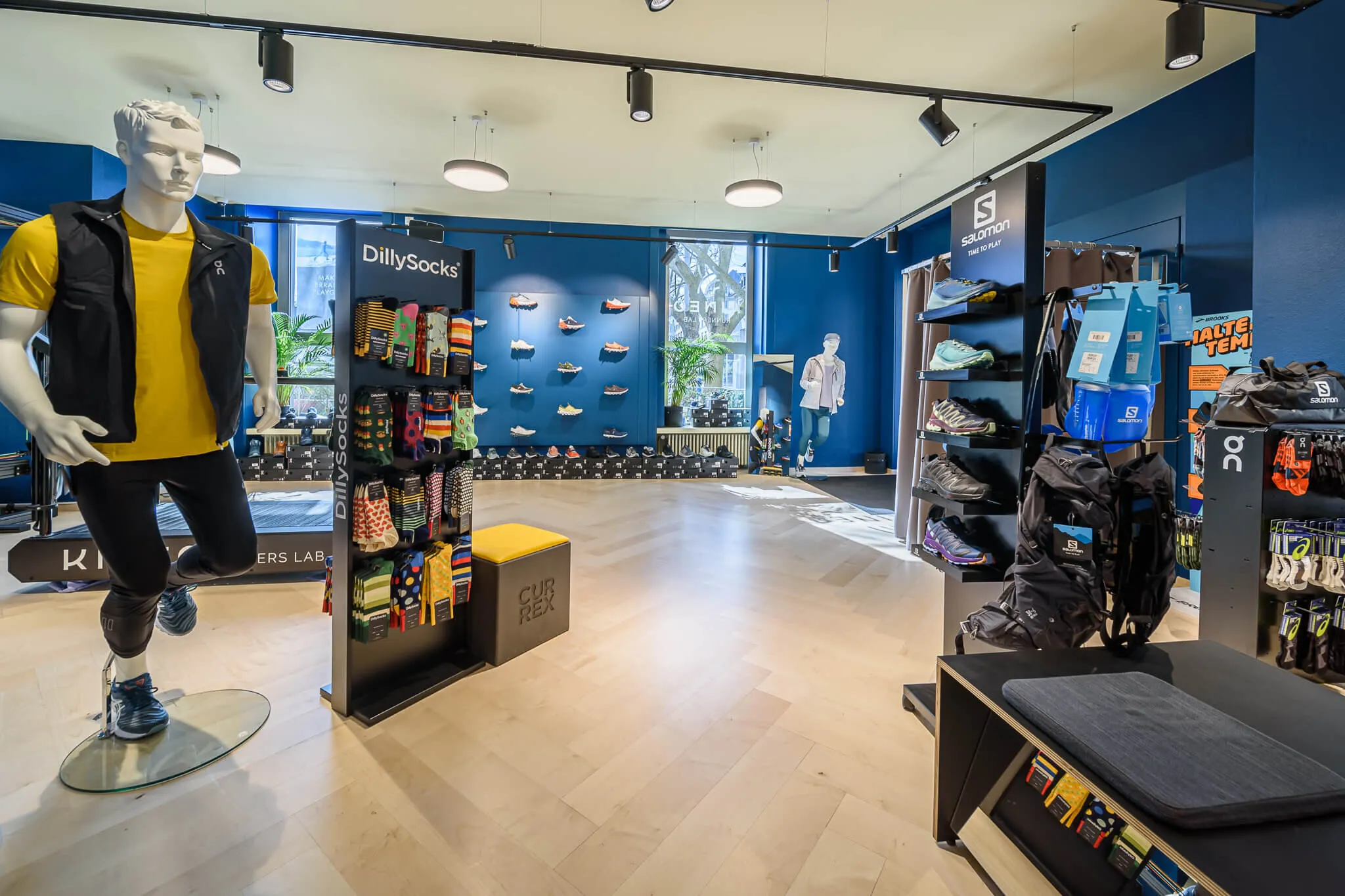
At Kineo Seefeld at Seefeldstrasse 83 (Feldeggstrasse stop, trams 2 and 4), on the ground floor you will find the Kineo Runners Lab with running shoes and Currex 5D running analysis. On the first floor, we treat you in physiotherapy with Runners Physio. That way we can look at shoe, running style and symptoms together. You can find more about running analysis at the Runners Lab on the Runners Lab website.
Frequently asked questions
Are carbon shoes worth it for beginners?
Usually not as a first shoe. For easy runs they bring little, and getting used to them takes time. They become worthwhile mainly for races and fast sessions.
Can I do all my runs in carbon shoes?
We advise against it. Easy runs in your usual training shoe and rotating several pairs of shoes spread the load better.
Do carbon shoes last less long?
The very light foams often wear out faster than classic training shoes. That is also why many runners use them specifically for races and a few key sessions.
Does health insurance cover physiotherapy?
Yes. With a doctor's prescription, your basic health insurance covers the cost. Kineo is recognised by all Swiss health insurers.
You might also like
Book an appointment
Do you want to switch to carbon shoes safely, or do you already have symptoms? Book your appointment at Kineo Seefeld.