
By Lucrecia Guerra, physiotherapist at Kineo Escher Wyss
Therapy is over. What now?
The pain is gone, physiotherapy is finished, and you feel good again. This is exactly where the mistake often happens: training tails off, everyday life takes over, and a few months later the old problems are back. This applies to the knee after an injury just as much as to the back or the shoulder.
At the end of physiotherapy you are pain-free and fit for everyday life, but often not yet as resilient as before the injury or as your sport demands. The transition to structured training, for example personal training, closes this gap.
Physiotherapy and personal training: what is the difference?
- Physiotherapy clarifies the cause of your symptoms, treats injuries and builds up your load capacity step by step. It works with assessment, treatment and targeted exercises.
- Personal training picks up where therapy ends. It develops strength, endurance and athleticism further, with a longer-term training plan and regular coaching.
- The transition is the tricky part. It needs clear criteria, a good handover and training that takes into account what was learnt in therapy.
Why being pain-free is not the end
Pain usually eases faster than tissue and muscles become fully resilient again. Tendons and muscles need months to adapt to higher loads. After an injury, a strength difference between the sides often remains too, which you don't notice in everyday life.
In many sports, a previous injury is considered one of the strongest risk factors for another injury. Part of this can be influenced with consistent training. That is why it is worth staying on track after therapy.
When are you ready to switch?
- In everyday life you have no symptoms or only minimal ones
- You do the exercises from therapy cleanly and with no reaction the next day
- Strength and mobility are largely balanced compared with the other side, or clearly on a good path
- You know which signals to watch for and what to do if symptoms return
- You have a goal: back to sport, a competition, more strength in everyday life
How we shape the transition at Kineo
The move from therapy to training should not be a break. We end therapy with clear values and give you what matters for your further training.
1. Our final check
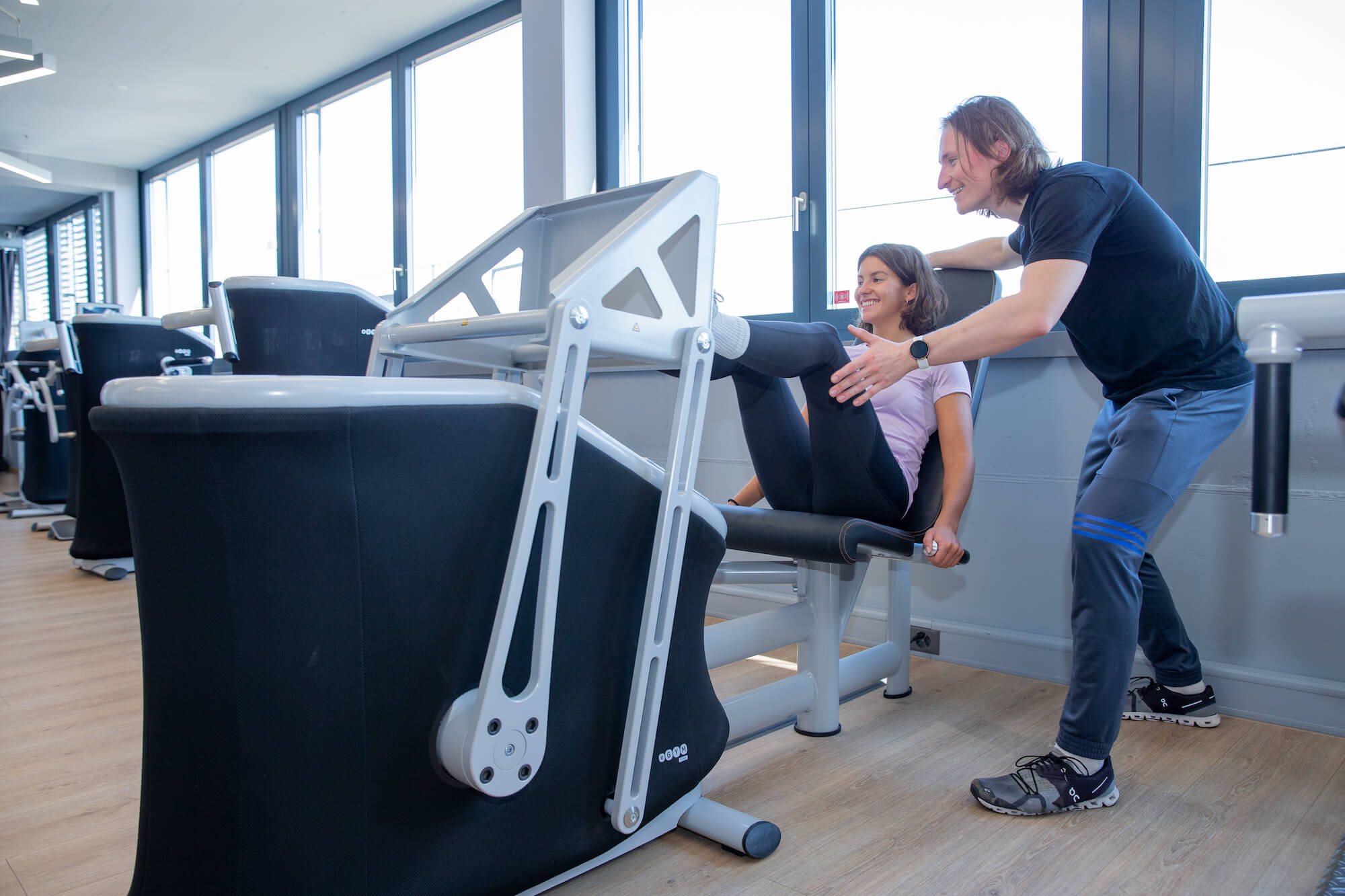
- Strength measurement compared with the other side: for example leg press, knee extension or shoulder rotation, depending on the injury
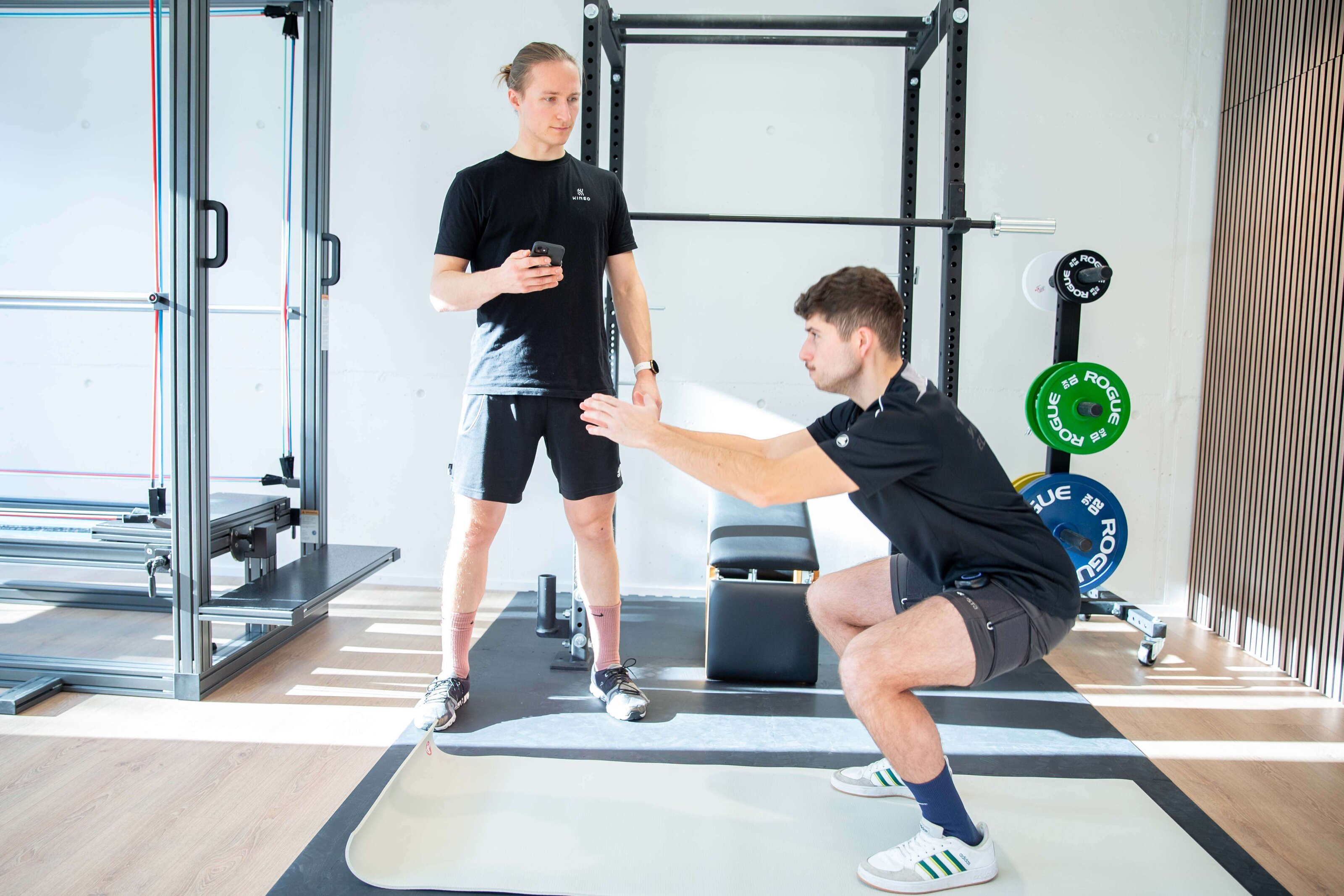
- Functional tests: single-leg squat, Y-Balance Test, hop tests after knee or ankle injuries
- Movement quality: squat, hip hinge and plank exercises under load
- Response to load: How does the affected structure react to higher intensity and the next day?
- Your goals: Sport, competition, everyday life. From these we derive the priorities for your training.
2. How we build up your training
- Transition phase (about 2–4 weeks): Gradually turn therapy exercises into full-body training, 2–3 sessions per week
- Build-up phase: Basic exercises such as squat, deadlift, pressing and pulling with increasing load, 3–4 x 6–10 repetitions
- Performance phase: Explosive strength, jumps, intervals and sport-specific content depending on your goal
- Maintenance: At least two strength sessions a week in the long term too, with regular check-ins
3. Kineo services we use
- Sports physiotherapy: final check, test values and recommendations for further training
- Medical training therapy as a bridge between treatment and independent training
- Sport-specific training if you want to return to a particular sport
- Explosive strength training for jumps, acceleration and explosive movements
- High-intensity interval training to rebuild your endurance in a targeted way
What makes good training after an injury
Good training after therapy is not cautious, but well dosed. Three principles are central:
- Progressive loading: Tissue adapts when it is challenged a little more step by step. Increase weight, repetitions or pace in small steps, not everything at once.
- Pain as a guide: Mild discomfort during training is often fine if it settles by the next day. If it increases from week to week, you adjust the load.
- Keep an eye on weak points: The exercises for the injured region stay in the programme, even if they are unspectacular. For example calf raises after an Achilles tendon injury or rotation exercises for the shoulder.
Communication matters too: your coach should know what happened in therapy and what test values you had. A good handover prevents you from starting from zero again.
From our practice
We often see patients who stop training after successful therapy because the symptoms are gone. When they come back months later, the same strength is usually missing as the first time. Those who switch straight into structured training, on the other hand, keep building their load capacity and are more likely to stay symptom-free.
Therapy and training under one roof: Kineo Escher Wyss
At Kineo Escher Wyss at Hardturmstrasse 18, everything is in the same building: upstairs sports physiotherapy with a supervised training floor, downstairs Kineo HYROX with group and personal training. The path from therapy to training is therefore short. More about the location on the Kineo Escher Wyss page. If you prefer to train in Thalwil or Zollikon, you will find Kineo Fitness there.
Frequently asked questions
Do I really need to keep training after physiotherapy?
If you want to stay symptom-free in the long term or return to sport, yes. Therapy lays the foundation, and training keeps building your load capacity.
Can I start personal training while I am still in therapy?
That can sometimes make sense, for example for the upper body with a knee injury. Discuss it with your physiotherapist so that therapy and training complement each other.
What happens if the symptoms come back during training?
Mild, brief reactions are normal. If the symptoms last longer or increase, it is worth having them assessed by a physiotherapist again.
Does health insurance cover physiotherapy?
Yes. With a doctor's prescription, your basic health insurance covers the cost. Kineo is recognised by all Swiss health insurers.
You might also like
Book an appointment
Do you want to keep training in a targeted way after therapy? Book your appointment at Kineo Escher Wyss.