By Eva Danko, physiotherapist at Kineo Wipkingen
You have a prescription. What now?
Your doctor has prescribed physiotherapy, and you are holding a form in your hand. Many people then ask themselves: Where do I sign up? What do I bring? What happens in the first session, and who pays for all of it?
In this article, we explain step by step how physiotherapy with a doctor's prescription works, what to look out for and how to get as much as possible out of your sessions.
What a prescription is
The doctor's prescription is a form with which your doctor orders physiotherapy. Among other things, it states the diagnosis or symptoms, the number of sessions and sometimes notes on treatment, such as "strengthening" or "mobilisation after surgery". The prescription is the basis for your basic health insurance covering the costs.
As a rule, up to nine sessions are provided per prescription. The first treatment should begin within five weeks of issue. So do not wait too long before booking. If more sessions are needed, your doctor can issue a follow-up prescription. This is based on how the therapy has gone so far.
Step by step to your first session
- Book an appointment: Online through our appointment booking. Tell us what the prescription was issued for, and we will plan a suitable specialist.
- Have your documents ready: Prescription, insurance card and, if available, reports from X-ray, MRI or surgery.
- Comfortable clothing: Clothes you can move in and in which we can examine the affected area. For knee or hip problems, shorts are practical; for back and shoulder, a top or T-shirt.
- Make a few notes beforehand: How long have you had symptoms? What makes them better or worse? Which medication do you take? What would you like to be able to do again?
- Arrive on time: An appointment lasts 30 minutes. The more time we have for examination and treatment, the better.

Physiotherapy without a prescription?
You can also come to us without a doctor's prescription. In that case, you pay for the treatment yourself. Whether a supplementary insurance covers part of it is best clarified directly with your health insurer. For some complaints, a medical check-up makes sense anyway, for example after an accident, with severe pain at night, fever, signs of paralysis, numbness in the genital area or problems passing urine. In these cases, your first port of call should be a doctor.
How we work at Kineo
The prescription tells us where the problem lies. How we treat it, we decide after our own physiotherapy examination.
1. Assessment: what happens in your first session
- Conversation: course of the problem, triggers, load in everyday life, work and sport, your goals
- Checking warning signs: Are there indications that call for further medical assessment?
- Movement and mobility: How does the affected area move, where does the pain begin?
- Strength and resilience: for example squat, single-leg stance or strength against resistance, compared side to side
- Targeted tests depending on the area, such as nerve tests for radiating pain or stability tests on the knee
- Measurable baseline values such as mobility in degrees or repetitions, so that we can track progress
2. Treatment in phases
- Sessions 1–2: Understanding and relief. We explain what is behind your symptoms, treat in a targeted way and give you two to three exercises with clear dosage.
- Sessions 3–6: Building up. Exercises become more demanding, treatment on the couch usually decreases and active training increases.
- Sessions 7–9: Becoming independent. We review the baseline values, adapt your programme and discuss how you continue training on your own.
- If needed: Consultation with your doctor and a follow-up prescription if the goal has not yet been reached.
3. Kineo services we use
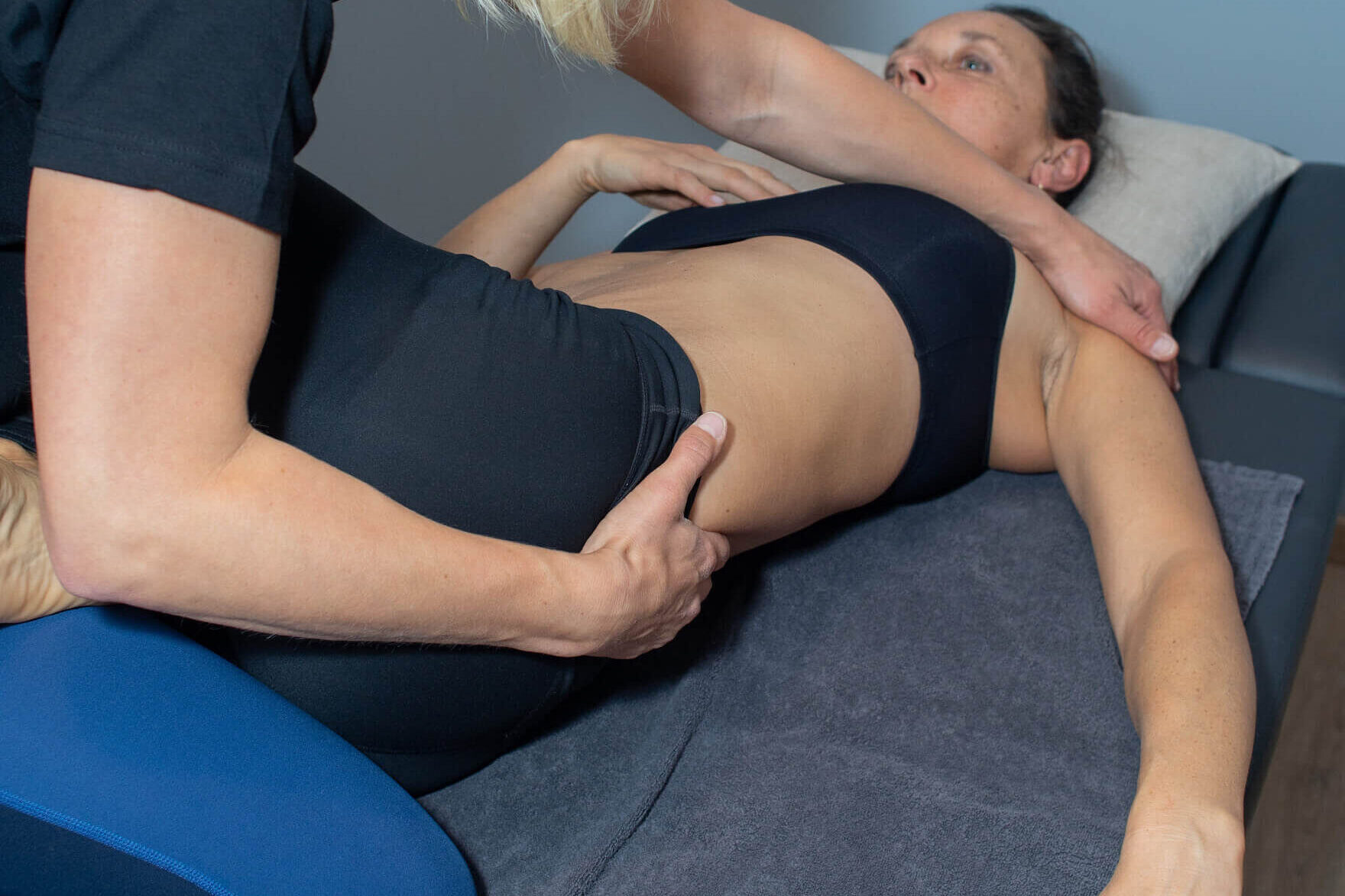
- General physiotherapy: examination, treatment and exercise programme for most prescriptions
- Manual therapy when joints are stiff or painfully restricted
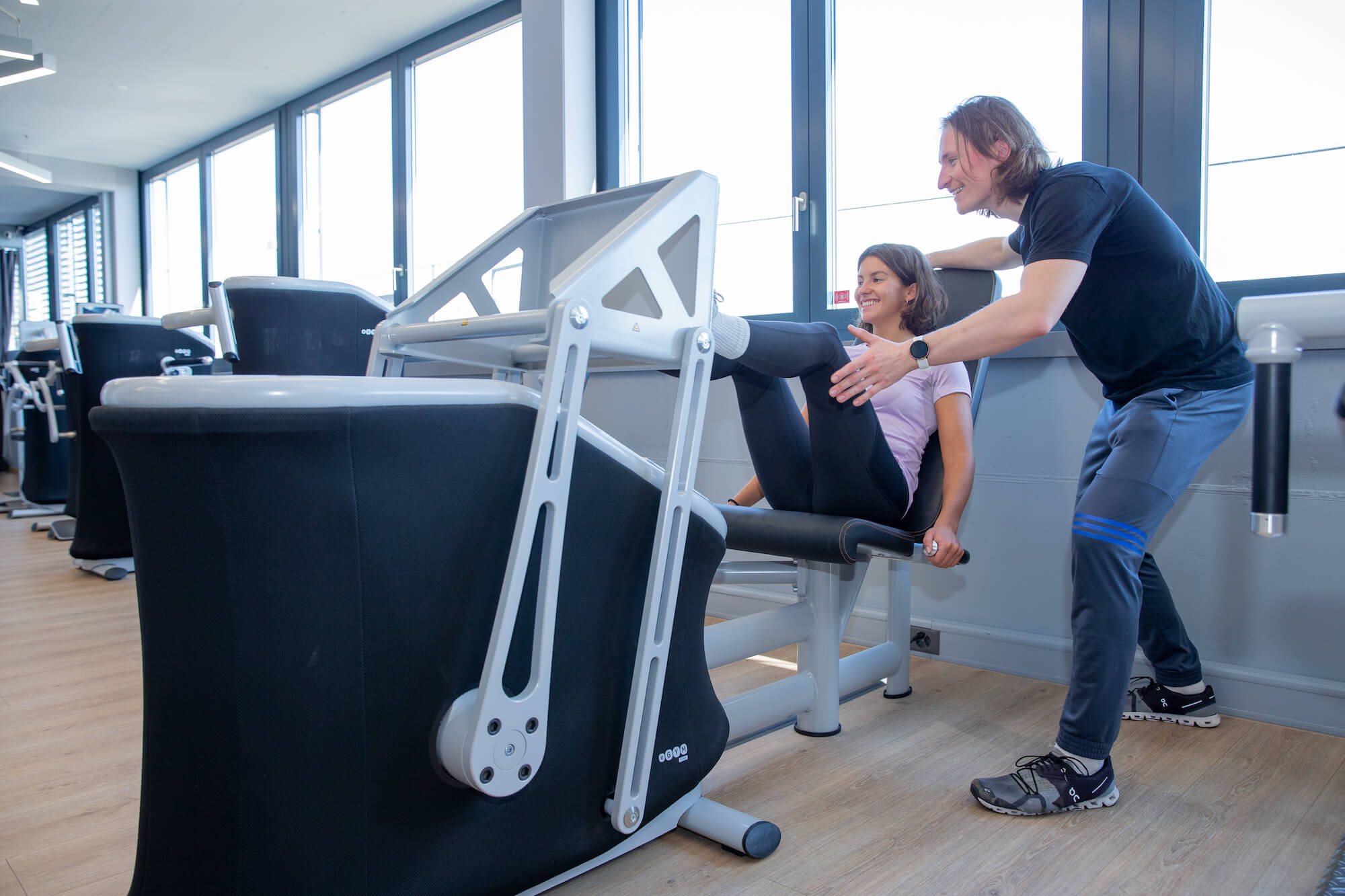
- Medical training therapy for the targeted building of strength and resilience
- Trigger point treatment for painful muscle knots
- Digital home programme, so that you do your exercises at home with guidance
How to get the most out of nine sessions
Nine appointments of 30 minutes are not a lot of time. Most of the change happens between appointments. These points make the difference:
- Do your exercises regularly: Better 10 minutes every day than an hour once a week.
- Give feedback: Tell us how you responded to the last session and the exercises. This helps us adjust the dosage.
- Ask questions: If you do not know why you are doing an exercise, ask. If you understand the purpose, you are more likely to stick with it.
- Space your appointments sensibly: Often once or twice a week at the start, later with larger gaps. That leaves sessions in reserve to review progress.
- Include everyday life: Workplace, commute, sport. Small adjustments there often work better than one additional exercise.

From our practice
Patients often arrive expecting to be treated mainly on the couch. Hands-on treatment has its place, especially at the start. But the most lasting progress we usually see is in those who do their exercises consistently at home and understand how to manage their load themselves.
Physiotherapy at Kineo Wipkingen
You will find Kineo Wipkingen at Röschibachstrasse 79 in 8037 Zürich, on Röschibachplatz. Besides general physiotherapy with a focus on shoulder and back, there is a training floor here with strength machines, a rack and a bike ergometer, as well as the Sensopro coordination trainer. Shockwave therapy and dry needling are also available on site. You can find all the information on the Wipkingen location page.
Frequently asked questions
Does health insurance cover physiotherapy?
Yes. With a doctor's prescription, your basic health insurance covers the cost. Kineo is recognised by all Swiss health insurers.
How many sessions does a prescription include?
As a rule, up to nine. If that is not enough, your doctor can issue a further prescription.
What should I bring to my first session?
The doctor's prescription, your insurance card, if available reports from X-ray, MRI or surgery, and comfortable clothing.
How long does an appointment take?
An appointment lasts 30 minutes. In your first session, we clarify the cause of your symptoms and start straight away with treatment and first exercises.
You might also like
- Sports physiotherapy in Zürich: what makes it different?
- Low back pain: pain in the lower back
- Getting back into exercise after a long illness
Book an appointment
Do you have a prescription for physiotherapy? Book your first appointment at Kineo Wipkingen and bring the prescription with you.