By Lucrecia Guerra, physiotherapist at Kineo Escher Wyss
When your elbow stops playing along in training
When you row, it burns on the outside of the elbow; on pull-ups, on the inside; and when you lift a coffee cup, your arm reminds you that yesterday was back day. In strength training, elbow pain usually develops gradually. For a long time you can still manage, then at some point every pulling exercise becomes a test of patience.
The good news: in most cases, an overload of the tendons is behind it, and it responds well to targeted training. What matters is to find out which tendon is affected and which exercises are overloading it right now.
Where does it hurt?
- Outside (lateral epicondylopathy, “tennis elbow”): The tendons of the wrist and finger extensors are overloaded at the outer bony prominence. Typical with rows, deadlifts, hammer curls and anything that demands a lot of grip strength with the back of the hand facing up.
- Inside (medial epicondylopathy, “golfer's elbow”): The flexors of the wrist and fingers are affected. Common with pull-ups, barbell curls, kettlebell exercises and climbing.
- Back (triceps tendon): Pain over the tip of the elbow, often from a lot of skull crushers, dips or close-grip bench press.
- Front (distal biceps tendon): Deep pain in the crook of the elbow, worse with curls and when turning the forearm outwards.
For context: the term “epicondylitis” is widespread, but a classic inflammation is usually not found in the tendon. That is why people today prefer to speak of epicondylopathy, meaning an overuse reaction of the tendon.
Why strength training overloads the elbow
Tendons adapt more slowly than muscles. If you add a lot of weight or many new pulling exercises in a short time, you build strength faster than the tendons at the elbow can keep up. Typical patterns:
- A new programme with clearly more pull-ups, rows or curls
- High grip load without lifting aids, for example with heavy deadlifts or farmer's walks
- Always the same grip position, for example only an overhand grip on the barbell
- Extra load in everyday life: long hours on mouse and keyboard, moving house, gardening or tennis at the weekend
Warning signs: A sudden pop in the crook of the elbow, followed by weakness when bending and turning and a biceps muscle belly that has slipped upwards, can point to a rupture of the distal biceps tendon. This should be checked by a doctor quickly. Tingling in the ring and little finger, clear swelling, fever or an accident also belong with a doctor.
What you can do yourself
- Adjust the load, don't stop: Temporarily reduce or replace the most painful exercise, and carry on with the rest of your training.
- Vary your grip: A neutral grip (palms facing each other) on the pull-up bar or row handle takes load off the elbow for many people. The EZ bar instead of the straight barbell is often more comfortable for curls.
- Use lifting aids: Straps for heavy deadlifts and rows lower the grip load until the tendon can tolerate more again.
- Pain traffic light: Up to about 3 out of 10 during the exercise is fine if the pain is not stronger the next day.
- No injection as a shortcut: Corticosteroid injections relieve pain in the short term, but in the long term they usually do not do better than active training.
How we treat elbow pain at Kineo
First we clarify which structure is affected, and then we rebuild the tendon in a way that lets you keep training as far as possible.
1. Assessment: what we examine in your first session
- Training analysis: which exercises, which grips, what progression in the last few weeks
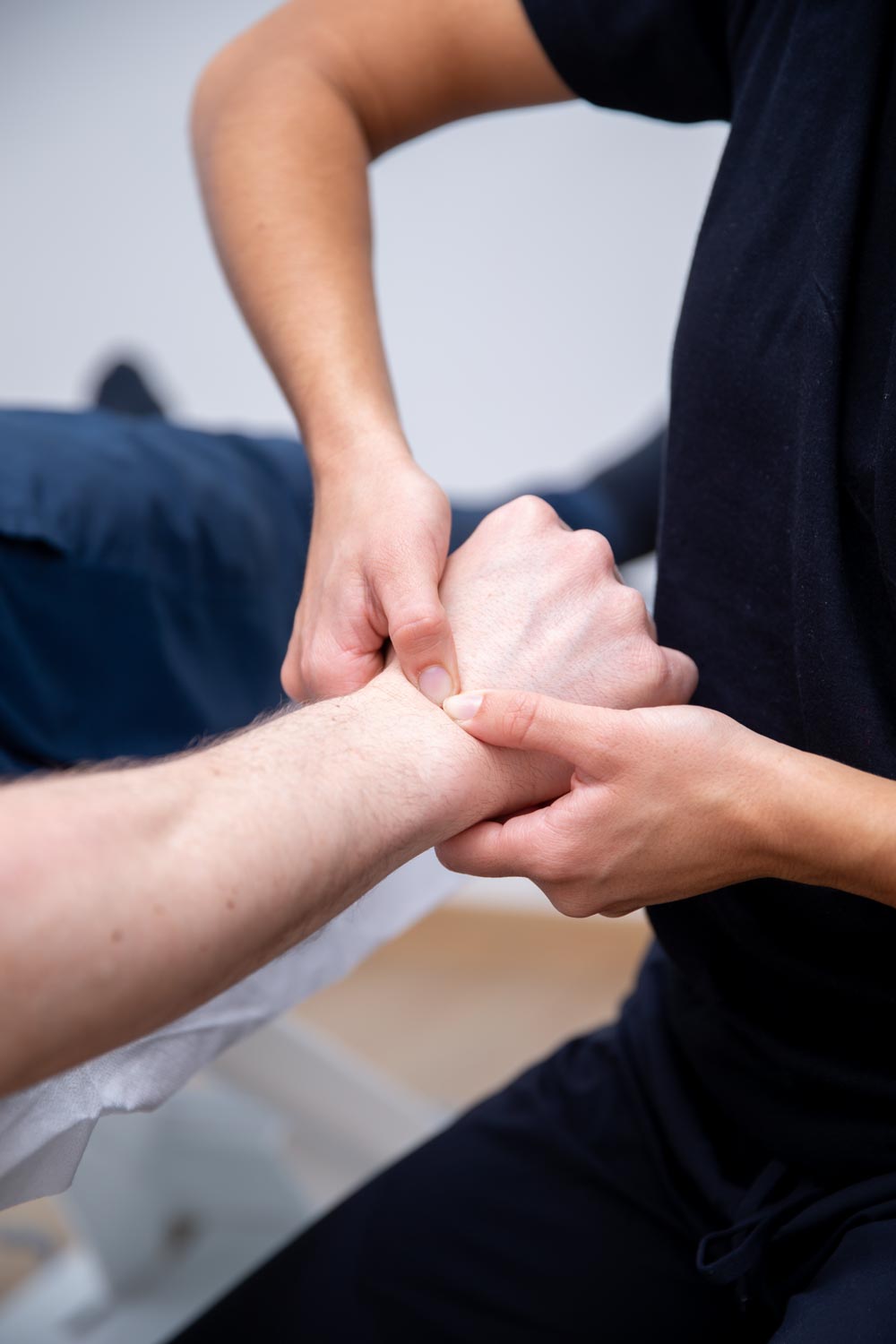
- Provocation tests: Cozen test and Maudsley test (wrist and middle finger extension against resistance) for the outside; flexion and inward rotation against resistance for the inside
- Pain-free grip strength: We measure how firmly you can grip before the pain comes. This is a good value for tracking progress.
- Biceps and triceps tendon: palpation, resistance tests and the hook test, so that a rupture of the distal biceps tendon is not missed
- Nerves and neck: ulnar nerve in the ulnar groove at the elbow and the cervical spine, because nerves can also cause pain at the elbow
2. Treatment in phases
- Phase 1, weeks 1–2: calm the pain. Isometric exercises for the affected muscles, 5 x 30 to 45 seconds, once or twice a day. Adjust your training plan.
- Phase 2, weeks 2–8: load the tendon. Slow strength training with a dumbbell or Flexbar, 3 x 10 to 15, with a deliberately slow lowering phase, every second day.
- Phase 3: back to full training. Pull-ups, rows and curls with increasing load, first with a neutral grip, then with your usual variations.
- Maintenance: Forearm training stays in your programme once a week.
3. Kineo services we use
- Sports physiotherapy: clarifying the cause, adjusting your training plan and managing load
- Manual therapy, for example mobilisation with movement at the elbow, which immediately reduces grip pain for many people
- Trigger point treatment and dry needling for tense forearm muscles, as a complement to training
- Shockwave therapy for stubborn symptoms that have lasted for months, combined with strength training
Three exercises for the forearm
- Eccentric wrist extension (outside): Forearm resting on your thigh, back of the hand up. Lift a dumbbell with the other hand and lower it with the affected side over three to four seconds. 3 x 15.
- Wrist flexion (inside): Same position with the palm facing up, raise and lower slowly. 3 x 15.
- Pronation and supination: Hold a dumbbell at one end only, like a hammer, and slowly turn the forearm inwards and outwards. 3 x 12 in each direction.
Increase the weight when the last repetitions feel easy and the pain does not increase the next day.
From our practice
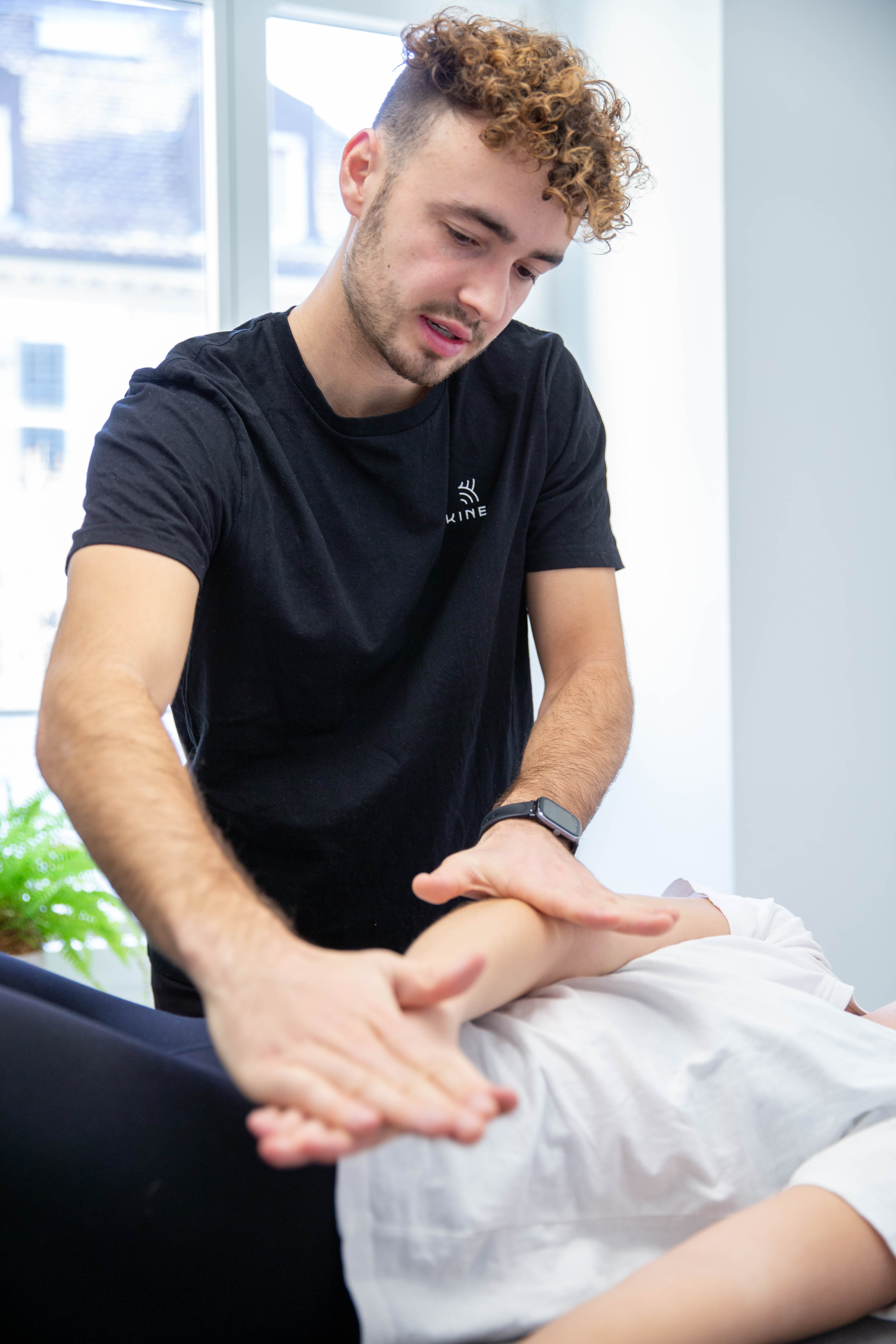
Many people who train come only when they have already been training for weeks with an elbow strap and painkillers. Often a small change, such as a different grip or less pulling volume, combined with targeted forearm exercises, is enough to make things noticeably calmer. Patience is still needed: tendons respond slowly, but reliably, to training.
Supervised training at Kineo Escher Wyss
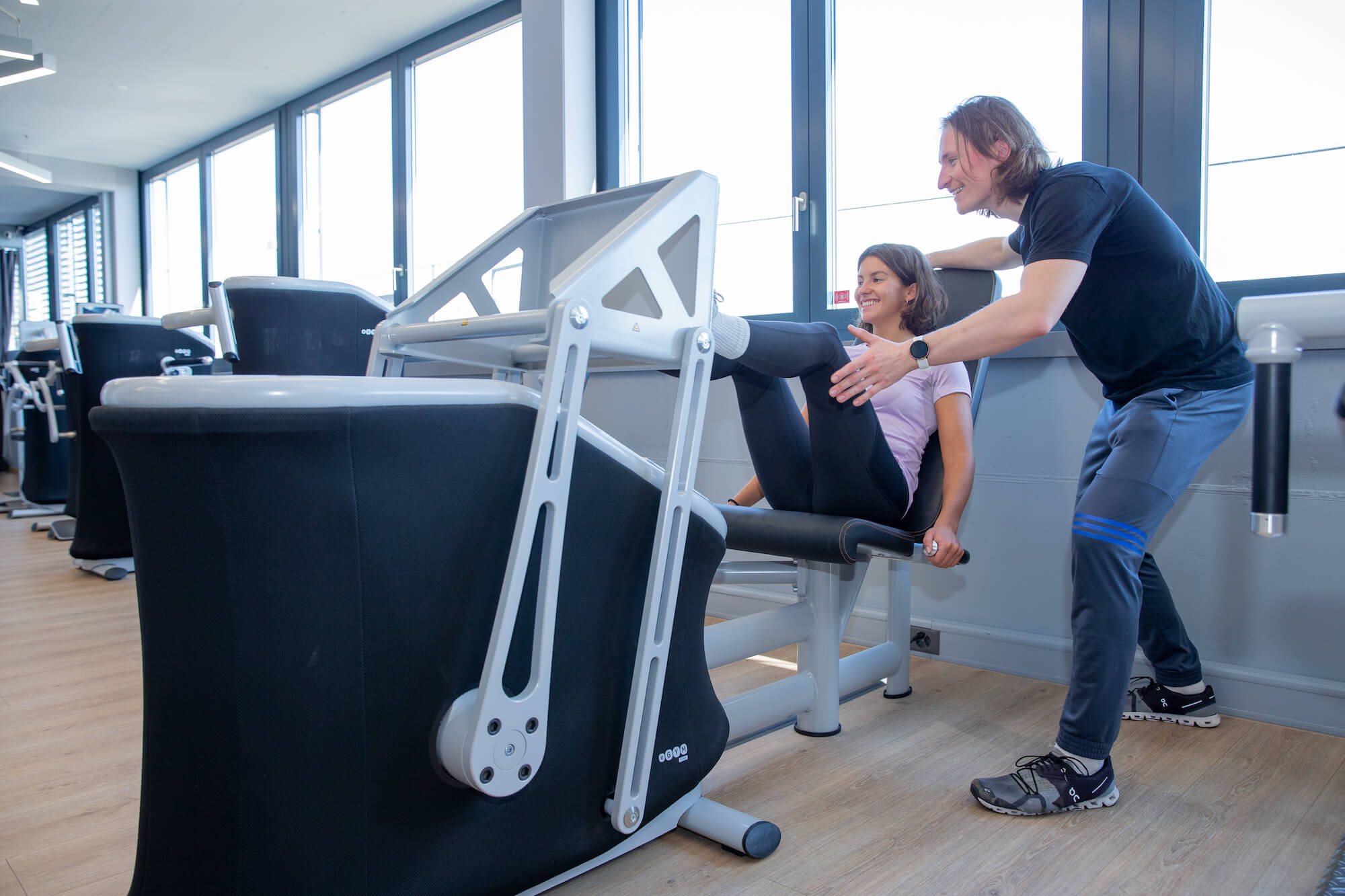
At Kineo Escher Wyss at Hardturmstrasse 18, treatment and training go together. On the supervised training area, we test with you straight away which grip and exercise variations your elbow tolerates well right now. Shockwave and dry needling are available on site if they are needed. And if you train at Kineo HYROX in the same building, you can take up sled pull or farmer's carry again step by step.
Frequently asked questions
Should I wear an elbow strap?
An epicondylitis strap can temporarily ease pain when gripping. But it does not replace rebuilding the tendon.
How long does tennis elbow last?
Without targeted load management, the symptoms can last for many months. With consistent training, it often improves noticeably within a few weeks, and the tendon is usually fully healed after a few months.
How long does an appointment last?
An appointment lasts 30 minutes. In the first appointment, we clarify the cause and start straight away with treatment and exercises.
You might also like
- Tennis elbow and golfer's elbow
- Biceps tendon irritation
- Shoulder pressing in the gym with impingement
Book an appointment
Does your elbow hurt with every pull? Book your appointment at Kineo Escher Wyss and we will adjust your training together.