
Biceps tendon irritation
An overview of biceps tendon irritation
What is biceps tendon irritation?
Biceps tendinopathy is a painful irritation of the tendon that connects the biceps muscle to the shoulder. In most cases the long head of the biceps tendon is affected. It runs through the front of the shoulder, over the head of the humerus, and is exposed to high mechanical loads there.
Important to know: in most cases this is not a classic inflammation, but an overload reaction of the tendon tissue with reduced load capacity (tendinopathy). If this overload continues, structural changes of the tendon can develop (tendinosis).
The biceps tendon is often not the sole cause, but part of a bigger shoulder problem.

Causes and risk factors
Biceps tendon irritation rarely arises in isolation. Usually the cause is an overload of the shoulder mechanics.
Common triggers are:
- Repeated overhead movements
- Work above shoulder height (trades, assembly, painting)
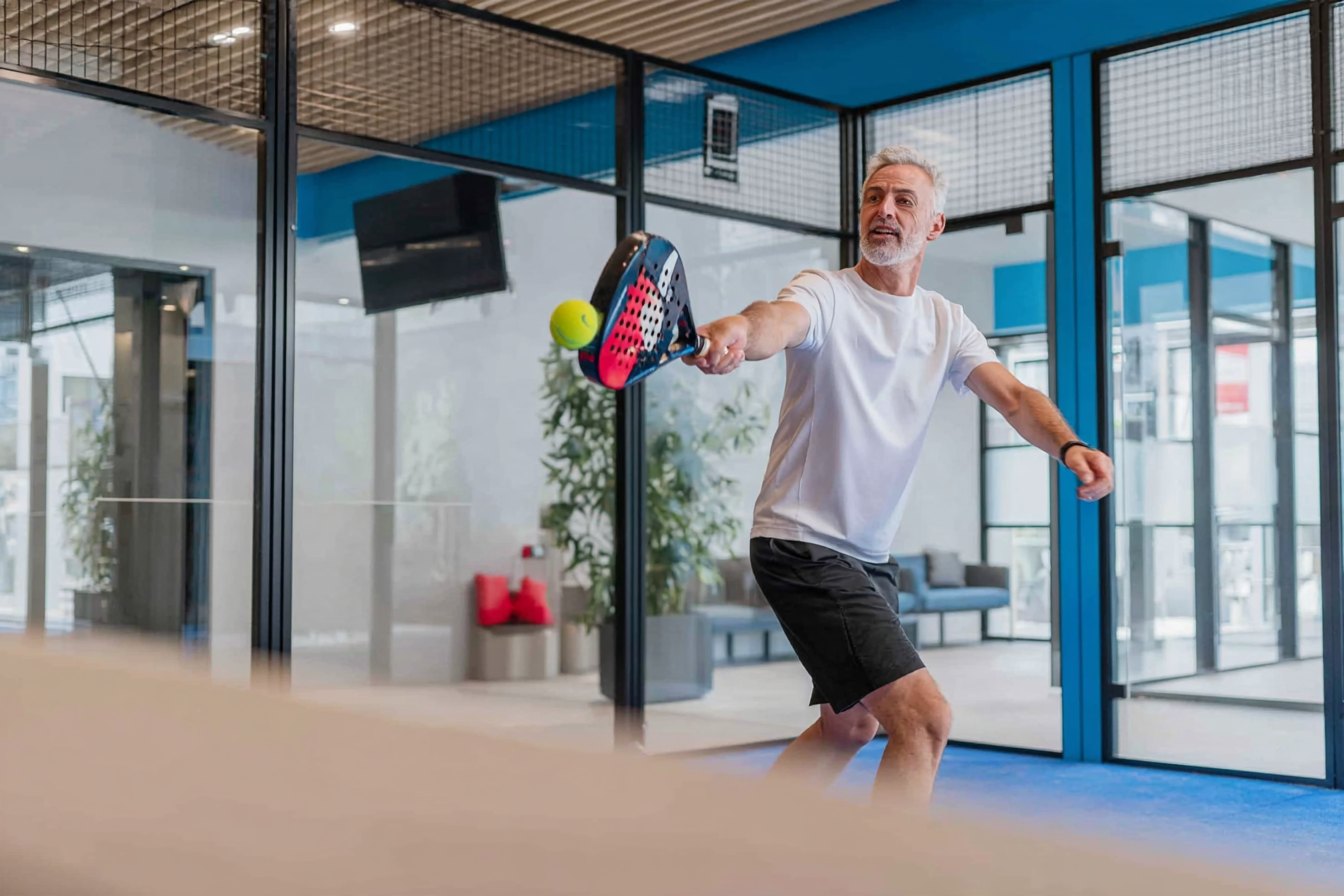
- Throwing and racket sports (handball, tennis, badminton, baseball)
- Swimming and strength training with high shoulder load
- Long periods working at a desk with the shoulders pulled forward
Biomechanical factors play a decisive role:
- Muscle imbalances in the rotator cuff
- Shoulder instability
- Impingement syndrome
- Restricted mobility of the thoracic spine
Rotator cuff problems also often lead to the biceps tendon being overloaded as compensation.
With increasing age, the adaptability of tendon tissue also decreases.
Symptoms and typical course
The symptoms usually develop gradually.
Typical signs are:
- Pain at the front of the shoulder
- Tenderness in the groove at the head of the humerus (bicipital groove)
- Pain when raising the arm forward or overhead
- Pain with rotating movements of the forearm
- Night pain when lying on the affected side
- A feeling of rubbing or snapping in the shoulder
- Loss of strength when bending and rotating the forearm
Many people say:
"I actually have shoulder pain, but it pulls deep in at the front."
In an advanced stage the tendon can become unstable. In rare cases partial tears or a complete rupture can occur ("Popeye muscle").
What can you do yourself?
Immediate measures for acute symptoms
- Reduce overhead loading
- Don't immobilise the arm, but move it without pain
- Cool for 15–20 minutes, several times a day
- In the short term, anti-inflammatory medication can help (check with a doctor)
Gentle mobilisation and stretching
Biceps stretch
Straighten your arm, turn your palm upwards, and move your arm slightly backwards.
Hold for 20–30 seconds, 3 times a day.
Pendulum exercises
Stand bent forward, let your arm hang loosely and make small circles.
Wall climbing
Slowly "walk" up the wall with your fingers, only up to the pain threshold.
Strengthening the shoulder (crucial!)
As soon as the pain eases:
Isometric exercises
Bend your arm and press against your hand or a wall, without movement.
10 repetitions of 5–10 seconds.
External rotation with a resistance band
Elbow at your side, turn your forearm outwards.
Light biceps curls with a resistance band
Slowly and with control.
Important: the focus is more on shoulder stability than on the biceps.
Optimise posture and ergonomics
- Change position often
- Screen at eye level
- Mouse and keyboard close to your body
- Headset instead of holding the phone between shoulder and ear
- Breaks during overhead work
When should you seek professional help?
- Pain lasting longer than 2 weeks
- Increasing loss of strength
- Night pain
- Snapping or rubbing sounds in the shoulder
- Sudden stabbing pain with a visible change in the muscle
What does KINEO Physiotherapie do for a biceps tendon problem?
Thorough analysis of the cause across the whole shoulder
We look not only at the tendon, but at the entire shoulder mechanics:
- Shoulder joint mobility
- Rotator cuff
- Posture and movement patterns
- Tests such as the Speed's test and Yergason's test
- Influence of the thoracic spine and neck
This way we treat the cause, not just the painful spot.
Manual therapy and targeted techniques
- Joint mobilisation to improve gliding
- Specific tendon mobilisation
- Myofascial techniques for the chest, shoulder and neck muscles
- Releasing muscular tension that loads the tendon

Evidence-based physical measures (as needed)
- Shockwave therapy for chronic cases
- Dry needling for myofascial trigger points
- Kinesio taping to unload the tendon

Individual rehabilitation programme
The focus is on structured load progression:
- Posture and movement exercises
- Isometric training
- Strengthening the rotator cuff
- Functional exercises for everyday life, work and sport
Goal: the shoulder works in a coordinated way again, so that the biceps tendon is unloaded.

Advice, ergonomics and prevention
- Workstation analysis
- Technique training for sport and work
- Preventive exercise programme for home
- Guidance on dosing your load correctly
FAQ on biceps tendon irritation
Is this an inflammation?
Usually not. It is mostly an overload reaction of the tendon.
Why does it hurt at the front of the shoulder?
That is where the long head of the biceps tendon runs in a bony groove.
Should I rest my arm?
Relative rest, yes. Complete immobilisation, no.
Why doesn't biceps training alone help?
Because the cause almost always lies in the shoulder mechanics.
How long does healing take?
With targeted therapy, usually 6–12 weeks.
Can the tendon rupture?
Rarely, but it is possible with advanced degeneration.
Book an appointment at KINEO Physiotherapie now
Pain at the front of the shoulder is often stubborn, but very treatable once the cause is correctly identified.
With a combination of analysis, manual therapy and targeted training, we bring your shoulder back into healthy interplay, so that the biceps tendon is unloaded for good.
Book your appointment online now and make an active start towards pain-free shoulder movement.