By Diego Rojas, physiotherapist at Kineo Seefeld
Heel, midfoot or forefoot: which running style is right?
Hardly any topic is discussed as passionately among runners as foot strike. Some swear by forefoot running because it is supposedly more natural. Others have been landing on their heel for years and run without symptoms. And anyone starting out wonders whether they need to change their running style.
The honest answer: there is no single right foot strike. What matters more is where your foot lands in relation to your body, how often you put it down and which structures are sensitive in you.
The three ways of striking the ground
- Rearfoot or heel running: The heel touches the ground first. Most recreational runners run like this, especially at an easy pace.
- Midfoot running: Heel and ball of the foot land almost at the same time.
- Forefoot running: The ball of the foot lands first, and the heel lowers afterwards. Typical in sprints and at fast paces, in barefoot running and, for some runners, in steady running too.
Many runners change their foot strike depending on pace, surface and fatigue. Uphill almost everyone lands further forward, downhill more on the heel.
What the research says
A foot strike that protects against injuries in general has not been shown. What is clear, though, is that the foot strike shifts the load.
- In heel running, more load is absorbed through the knee and the front of the thigh. If you have kneecap pain, you can sometimes benefit from an adjustment.
- In forefoot running, the calf, Achilles tendon and foot work more. With a hasty change, Achilles tendon problems, calf problems and overload in the midfoot are typical.
If you run without problems, you should therefore not change your foot strike without a reason. At best, a change swaps one loading pattern for another.

The real problem: strides that are too long
More important than the question of heel or forefoot is where your foot lands. If it lands far in front of your body with an almost straight knee, we speak of "overstriding". Each step then brakes more, and the knee and hip have to absorb more impact. That is independent of whether the heel or the ball of the foot touches the ground first.
The simplest lever is your cadence, meaning the number of steps per minute. If you raise it by about 5–10 per cent at the same pace, the steps automatically become shorter, the foot lands closer under your body and the load on the knee and hip falls. Often the foot strike then shifts slightly towards the midfoot all by itself.
What you can do yourself
- Film yourself from the side: A short video on your phone shows where your foot lands in relation to your hip.
- Measure your cadence: Many sports watches show it. Note your value at an easy pace.
- Increase in small steps: For example with a metronome on your phone that ticks about 5 per cent above your value. Start with 2–3 sections of 2–3 minutes per run.
- Strengthen your calves: Single-leg calf raises, 3 x 15 per side, two to three times a week. This is the basis if you later want to land further forward.
- Add running drills: Ankle work, skipping and strides promote an active, springy foot strike.
How we work at Kineo
Whether an adjustment makes sense depends on your symptoms, your body and your goals. That is why we don't just look at the foot.
1. Assessment: what we examine in your first session
- Symptoms and history: Where have you had problems in recent years: knee, Achilles tendon, shin or foot
- Running pattern: Foot strike, distance from foot to centre of mass, knee bend at landing and cadence on the treadmill
- Calf strength: Single-leg calf raises to fatigue, compared side to side
- Ankle: Upward mobility with the knee-to-wall test
- Shoe: Heel-to-toe drop, meaning the height difference between heel and forefoot, cushioning and wear
2. How we build up the adjustment
- Weeks 1–2: Raise cadence by about 5 per cent in short sections, start calf strength and running drills.
- Weeks 3–6: Lengthen the sections until the new cadence becomes natural in easy running.
- Only if needed, over 8–12 weeks: Adjust the foot strike in a targeted way, increasing the proportion slowly and checking calf and Achilles tendon regularly.
- Changing shoes: If you switch to a shoe with a lower drop, you use it only for short runs at first.
3. Kineo services we use
- Currex 5D running analysis in the Runners Lab, to see foot strike, stride length and cadence objectively
- Runners Physio, if symptoms are the reason for the adjustment
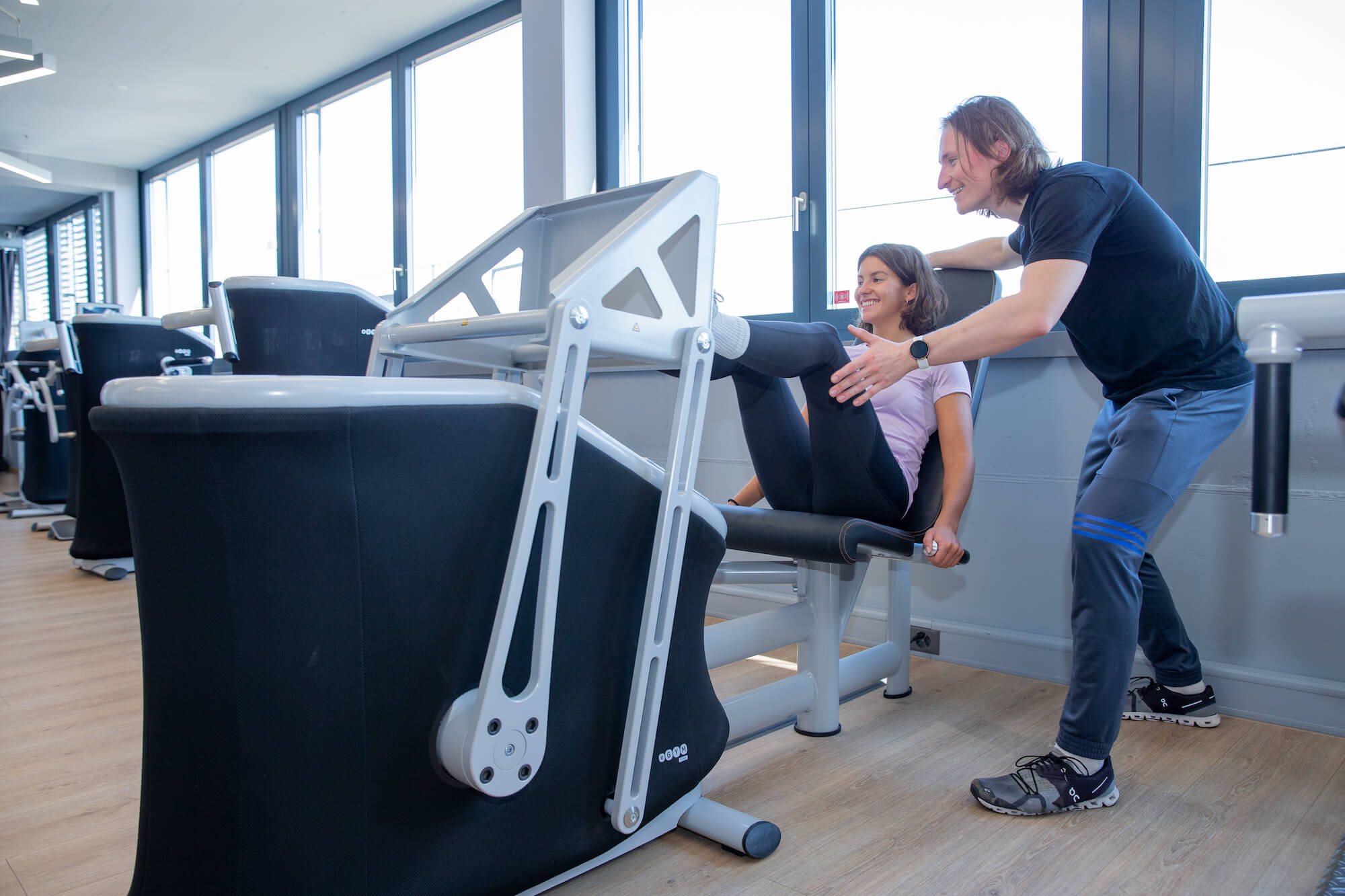
- Medical training therapy for calf, foot and hip strength
- Sport-specific training with running drills and jumping exercises for a springy running style
Warning signs during a change
Mild muscle soreness in the calves is normal in the first few weeks. Listen to your body if the Achilles tendon is stiff and painful in the morning, a spot on the midfoot hurts under pressure or the pain comes earlier with every run. A pinpoint bone pain in the foot or shin can point to a stress reaction and should be checked by a doctor.
From our practice
Again and again we see runners with Achilles tendon or calf problems who switched to forefoot running overnight after a video or a tip from the running group. Often a moderate increase in cadence already solves the original problem, without the foot strike having to be changed deliberately.
Running analysis and Runners Physio in Seefeld
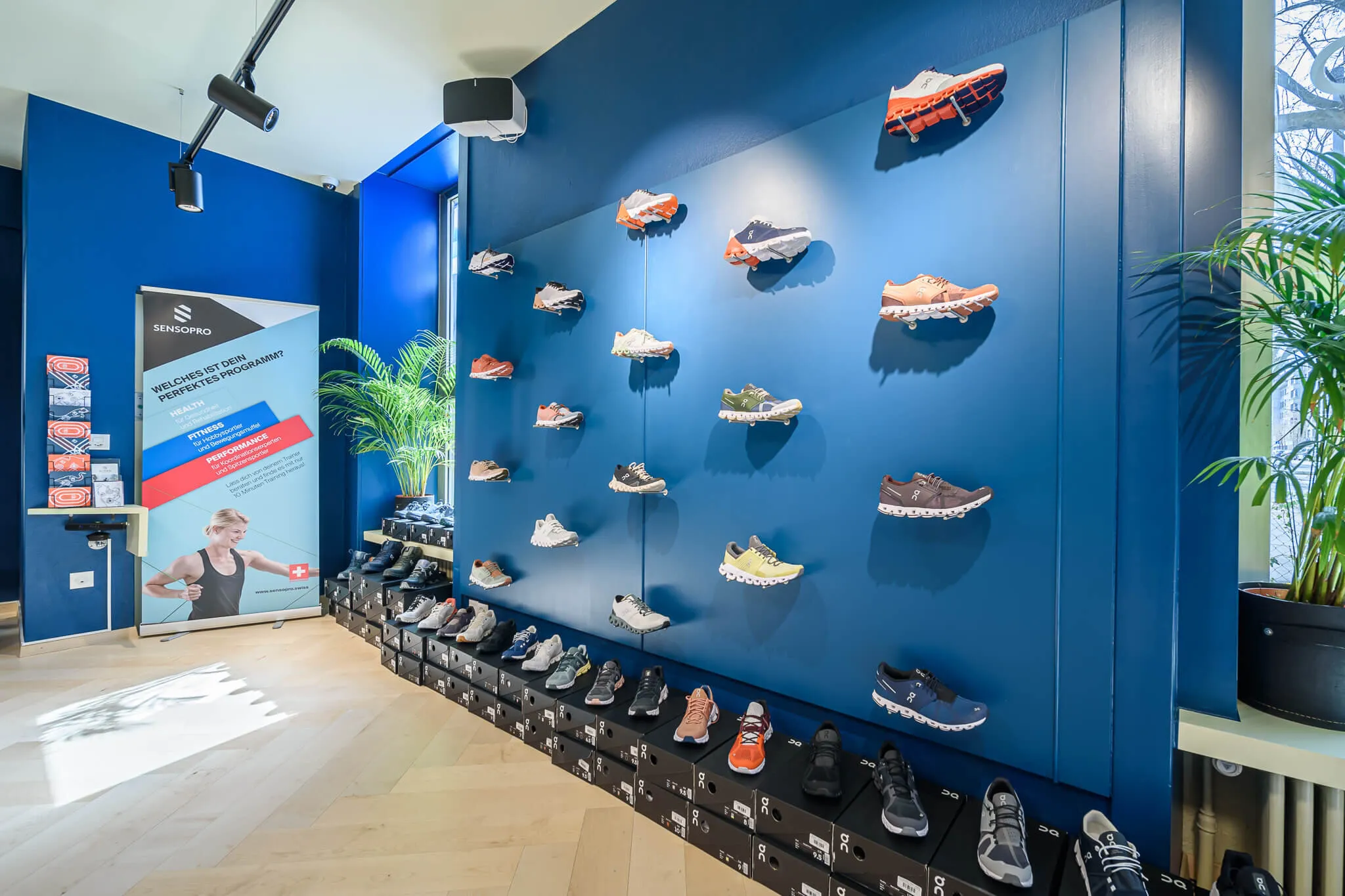
At Kineo Seefeld at Seefeldstrasse 83, Feldeggstrasse stop with trams 2 and 4, running is a focus area. On the ground floor, the Kineo Runners Lab analyses your running style with the Currex 5D running analysis and advises you on choosing shoes. On the first floor you will find physiotherapy with Runners Physio.
Frequently asked questions
Is heel running unhealthy?
No. Most recreational runners land on the heel and run without symptoms. A foot placed far in front of the body with a straight knee is more problematic.
Should I switch to forefoot running?
Only with good reason, for example with certain kinds of knee pain, and then gradually over several weeks. If you run without problems, you don't need to change your foot strike.
What is the ideal cadence?
There is no fixed ideal number; it depends on height, pace and running style. What matters more is whether you benefit from a moderate increase compared with your current value.
How long does an appointment last?
A physio appointment at Kineo lasts 30 minutes. In the first session we clarify the cause and start straight away with treatment and exercises.
You might also like
- Finding the right running shoe: what matters
- Runner's knee (patellofemoral pain syndrome)
- Achilles tendon pain
Book an appointment
Want to know whether your running style suits you? Book your appointment at Kineo Seefeld.