By Pablo Moreno Aguilar, physiotherapist at Kineo Wipkingen
Strength isn't just for the young
Shopping bags feel heavier than they used to, you can only get up from a deep sofa with a bit of momentum, and on the stairs you prefer to hold on to the banister. Many people accept this as a normal part of getting older.
Yet strength can be trained at any age, even at 60, 70 or 80. And from 60 onwards it is especially worthwhile: strength is the basis for getting around independently and safely in daily life.
Why strength declines with age
From around the age of 30 to 40, muscle mass and strength slowly decline, and without training they decline faster with increasing age. This age-related loss of muscle is called sarcopenia. The fast-twitch muscle fibres are particularly affected, which we need, for example, to take a quick step after tripping. Less movement, longer periods of illness and too little protein in the diet speed up the loss.
The good news: muscles respond to training even in later life. If you train against resistance regularly, you can rebuild strength and muscle mass, usually noticeably within a few weeks.
What strength training brings in daily life
- Getting up more easily from a chair, from the car or from the floor
- Walking and climbing stairs more safely, with a lower risk of falling, especially in combination with balance training
- Carrying and lifting shopping, grandchildren or garden crates
- Stronger bones: Load from strength and impact training is an important stimulus for the bones
- Fewer joint problems: With knee or hip osteoarthritis, strengthening is a central part of treatment
The World Health Organization (WHO) recommends that older adults, in addition to endurance exercise, do strength training for the large muscle groups on at least two days a week, and varied physical activity with a focus on balance and strength on at least three days a week.
Six exercises for home
These exercises need hardly any equipment. Do them two to three times a week. Choose the difficulty so that the last two or three repetitions are hard but still done cleanly.
- Standing up from a chair: Arms crossed in front of your chest, stand up and slowly sit down again. 3 x 8–12. Too easy? Sit down more slowly or use a lower chair.
- Wall push-up: Hands shoulder-width apart on the wall, body in a line, chest towards the wall and back. 3 x 10–12. Later at the kitchen counter, then at the table.
- Band row: Attach the band to the door handle, pull your elbows back. 3 x 12.
- Calf raises: Hold on to the kitchen counter, rise up onto your toes and lower slowly. 3 x 12–15. Later on one leg.
- Step-ups: Step up onto a stair, with the banister. 3 x 8 per leg.
- Carrying: Carry two shopping bags with water bottles upright through the flat. 3 x 30–60 seconds.
Add balance work to this: stand on one leg while brushing your teeth, with one hand within reach of the counter.
When to see a doctor?
Strength training is safe for most older people. Talk to your doctor beforehand if you have a heart or lung condition, poorly controlled blood pressure, known osteoporosis with fractures, or have recently had an operation. Get medically assessed if you repeatedly fall for no apparent reason, feel dizzy when standing up, or get chest pain or severe breathlessness on exertion.
How we build your training at Kineo
We start with a baseline assessment and then build a training programme that fits your goals and your body.
1. Our check before the start
- 30-second chair stand test: How many times can you stand up from a chair in 30 seconds? A good measure of leg strength in daily life.
- Timed Up and Go: Stand up, walk three metres, turn around, walk back and sit down. The time says a lot about mobility and fall risk.
- Balance: Single-leg stance, tandem stance (feet one behind the other) and standing with your eyes closed
- Walking speed over a short distance
- Grip strength and leg strength compared side to side
- History: Falls, joint problems, illnesses, medication and your goals
2. How we build your training
- Weeks 1–4: technique and getting used to it. Basic exercises with light weight, 2 x 10–15, twice a week. Balance exercises in a safe environment.
- Weeks 5–12: increase strength. Increase the weight, 3 x 8–12 on machines, with kettlebells or a barbell. Two to three times a week.
- From week 12: speed and daily life. Exercises with a brisk upward movement, steps in different directions, carrying and getting up from the floor.
- In the long term: A programme you continue independently, repeating the tests at regular intervals.
3. Kineo services we use
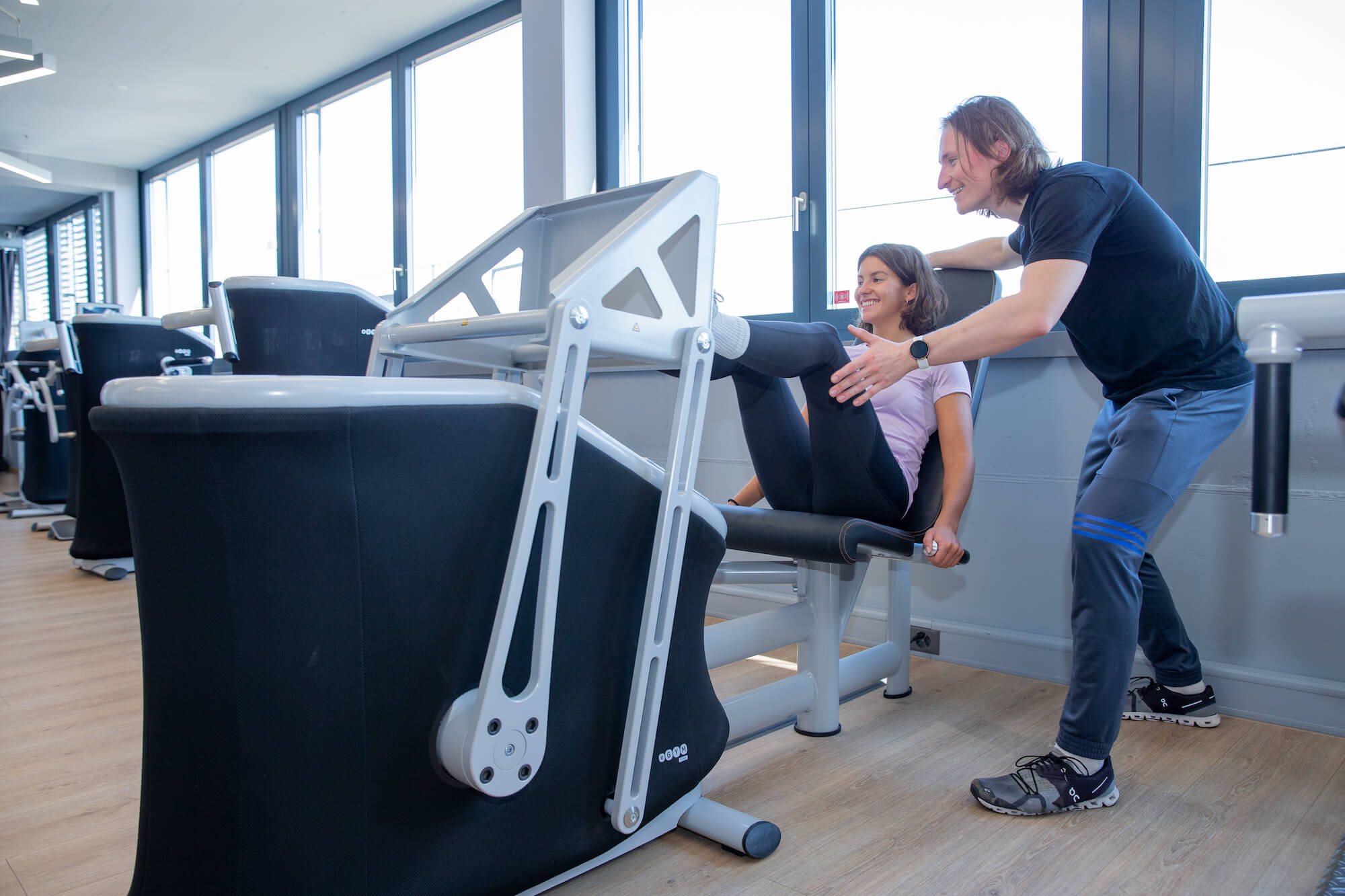
- Medical training therapy: guided strength training on machines with precise dosing
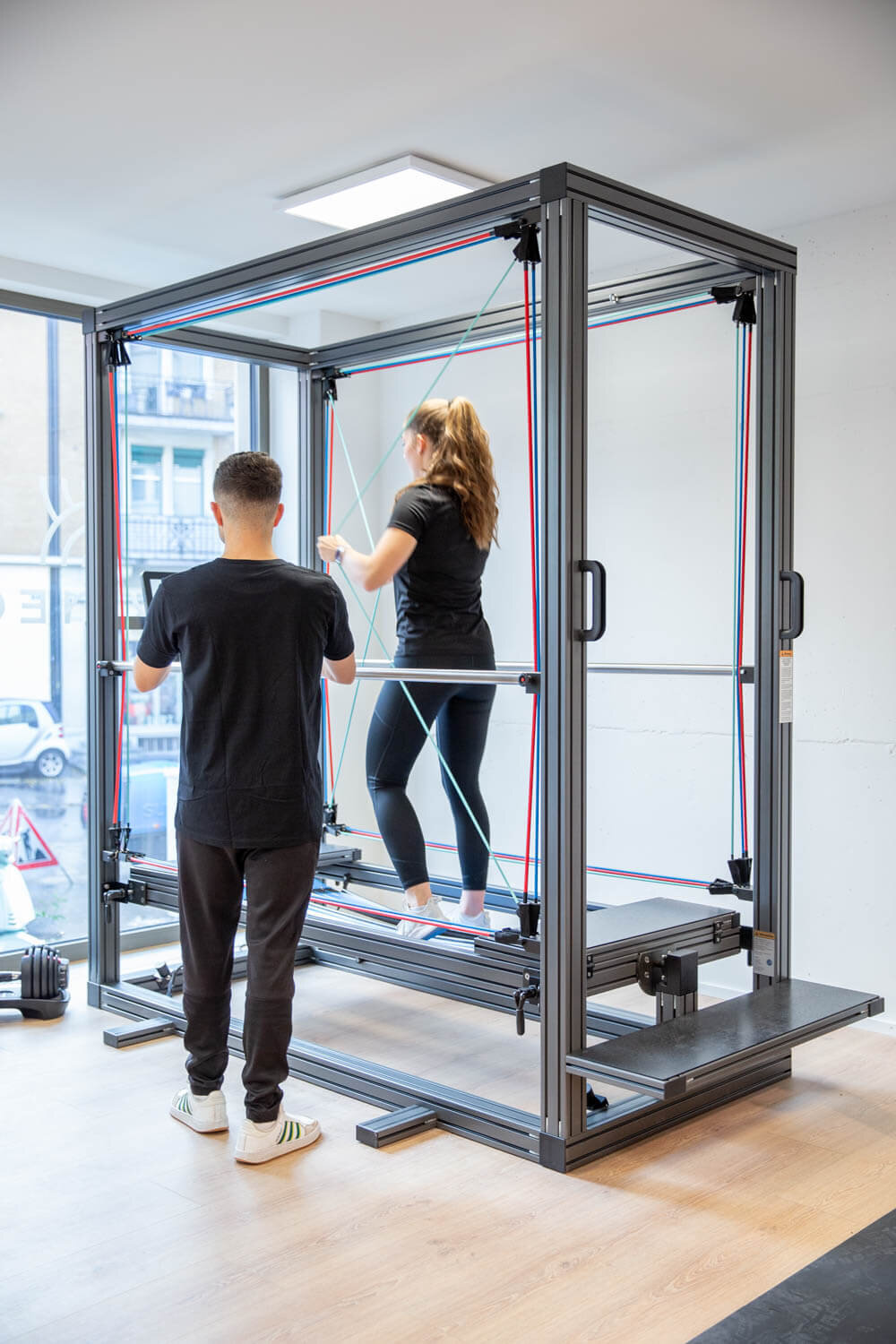
- Senso Pro training for balance, coordination and fast reactions
- General physiotherapy for joint problems that make training harder
- Physiotherapy for dizziness, when dizziness affects your safety
- Digital home programme for your exercises at home
Protein: the building material for your muscles
For strength training to work, the muscle needs enough protein. Older people often eat too little of it. Make sure every main meal includes a source of protein, such as dairy products, eggs, fish, meat, pulses or tofu. If you have a kidney condition, or if you're unsure how much you need, discuss it with your doctor or a nutrition counsellor.
From our practice
Many older patients initially only dare to use very light weights, out of concern about getting injured. When they train progressively heavier with good technique, they are often surprised themselves at how much strength returns. They often notice it first in daily life, for example when getting up or on the stairs.
Strength training at Kineo Wipkingen
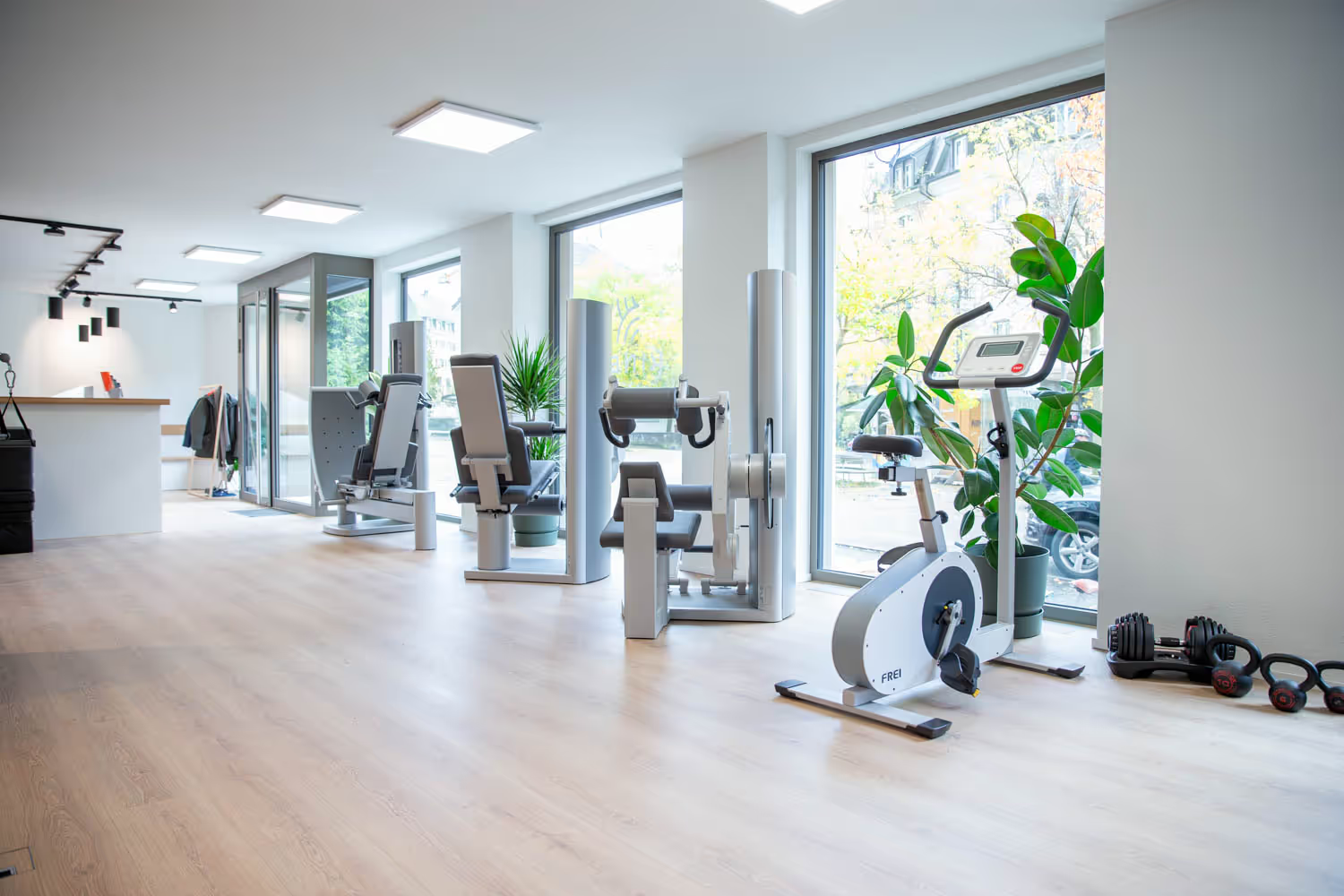
At Kineo Wipkingen on Röschibachstrasse 79 at Röschibachplatz, you train on a floor with strength machines, a rack, kettlebells, bike ergometer and the Sensopro coordination trainer, guided by our physiotherapists. You can find out more about the location on the Kineo Wipkingen page.
Frequently asked questions
Am I too old for strength training at 70?
No. Muscles respond to training at any age. What matters is an appropriate start and a gradual progression.
Can I do strength training with osteoarthritis?
Yes, strengthening is a central part of treatment for knee and hip osteoarthritis. We choose exercises and weight so that the joint can cope well with them.
How often should I train?
Strength training two to three times a week is enough for clear progress. Balance exercises and daily movement come on top of that.
Does health insurance cover physiotherapy?
Yes. With a doctor's prescription, your basic health insurance covers the cost. Kineo is recognised by all Swiss health insurers.
You might also like
Book an appointment
Do you want to get stronger and safer in daily life again? Book an appointment at Kineo Wipkingen and start with training that suits you.