By Pablo Moreno Aguilar, physiotherapist at Kineo Wipkingen
So your back doesn't "lock up" again
You bend down for a sock or lift a crate, and suddenly a stabbing pain shoots into your lower back. Straightening up is hardly possible, every movement hurts. Anyone who has had lumbago doesn't want it again.
Lumbago is painful, but usually harmless, and often improves within days to a few weeks. It does often come back, though. This is exactly where prevention comes in: there is a lot you can do to make your back more resilient and your episodes rarer or milder.
What is behind lumbago
In medical terms, lumbago means acute pain in the lower back. In most cases no single structure can be identified as the cause. This is then called non-specific back pain. Muscles, small spinal joints, ligaments or the intervertebral disc can be involved. The severe pain and the protective posture are above all a protective reaction of the body, not a sign that something is "broken".
The movement during which it happens is usually just the last straw. Often it is preceded by a phase in which the back's capacity to cope had fallen or the load had risen. For a distinction, also read our article Lumbago or slipped disc?
Typical risk factors
- Little movement in everyday life, for example sitting for a long time without a break
- Sudden extra load: moving house, gardening in spring, the first day of skiing, a new training programme
- Little strength and endurance in the trunk, buttocks and legs
- Poor sleep, stress and tiredness: They can increase pain sensitivity and lower your capacity to cope
- Earlier episodes: Anyone who has already had lumbago has a higher risk of another
Warning signs: get checked by a doctor immediately
Back pain is rarely dangerous. With these signs, however, you should get medical help straight away:
- Numbness in the genital or buttock area (saddle area), problems passing urine or stool. This is an emergency.
- Increasing paralysis or loss of strength in the leg, for example a drooping foot
- Fever, unintentional weight loss or a history of cancer
- Pain after a fall or accident, especially with known osteoporosis
- Severe pain at rest and at night that doesn't improve in any position
What you can do yourself
Prevention above all means getting your back used to load instead of sparing it. These exercises are suitable as a basis, two to three times a week:
- Hip hinge with a kettlebell: Push your hips back, keep your back long, lift the weight close to your body. 3 x 8–10. This trains exactly the bending movement during which many cases of lumbago happen.
- Glute bridge: Lying on your back, lift your pelvis and hold for 2 seconds. 3 x 12–15.
- Bird dog: From all fours, extend the opposite arm and leg without your pelvis tilting. 3 x 8 per side.
- Side plank: On forearm and knee or feet, body in a line. 3 x 20–30 seconds per side.
- Cat-cow: From all fours, slowly round and arch your back. 10 calm repetitions as a movement break in everyday life.
Endurance comes on top: brisk walking, cycling or swimming on most days of the week is good for your back. And interrupt long periods of sitting regularly, for example by getting up briefly every half hour.
How we work at Kineo
Whether you have lumbago right now or want to prevent the next one: we look at what loads your back and what makes it stronger.
1. Assessment: what we examine in your first session
- Warning sign check and questions about the course, triggers, work, sport, sleep and stress
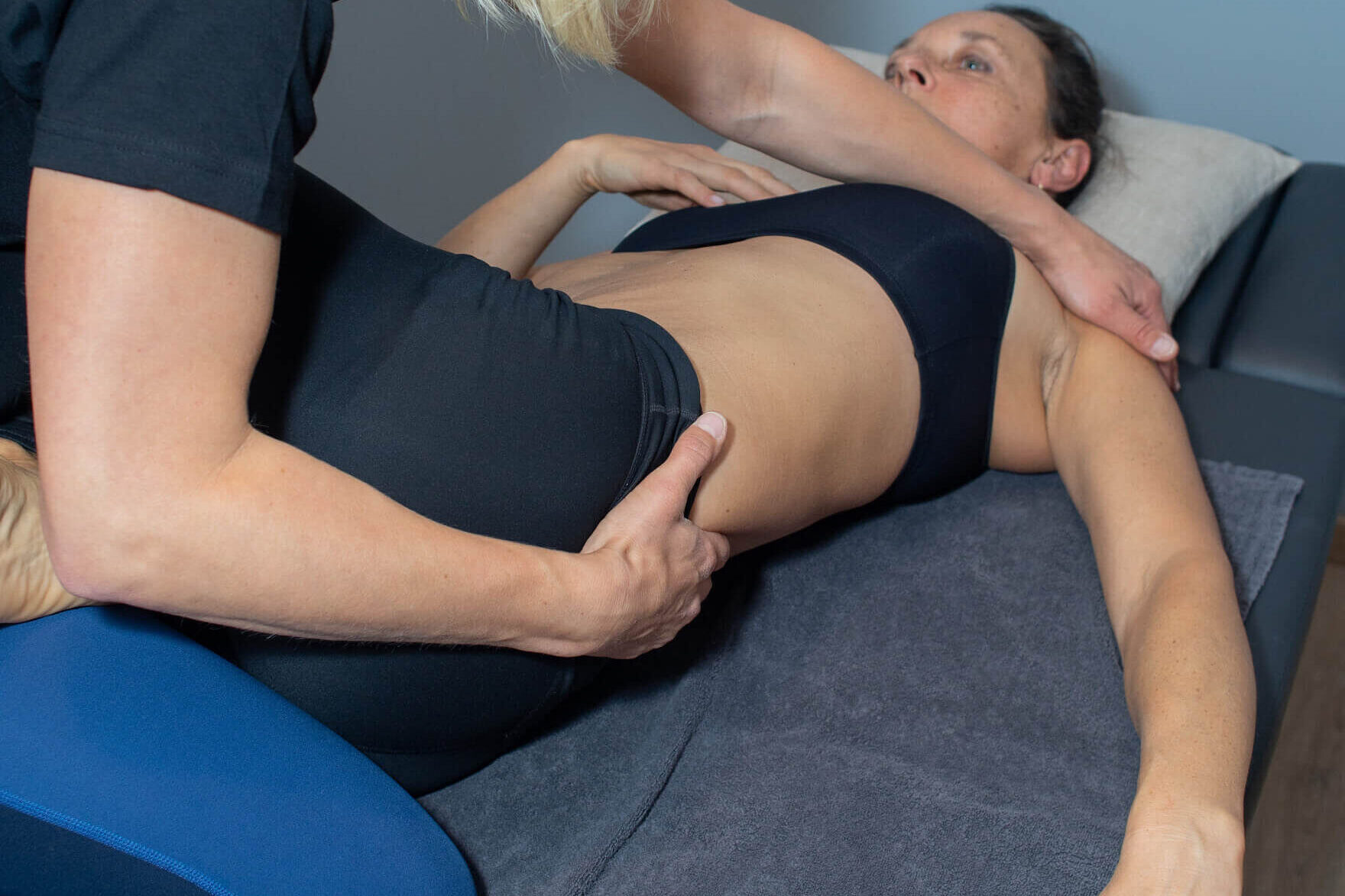
- Mobility of the lumbar spine in flexion, extension and rotation, looking at pain-free directions
- Neurological tests such as the Lasègue test (straight leg raise), reflexes and leg strength
- Hip mobility, because a stiff hip forces the back to move more when bending
- Trunk strength and endurance, for example hold times in the side plank and the back extension
- Movement patterns when bending, lifting and standing up
2. Treatment in phases
- Acute, first days: Keep moving. Bed rest tends to prolong the symptoms. Short walks, low-pain positions, gentle mobilisation. Manual therapy can improve mobility.
- Weeks 1–3: Build trust. Practise bending, twisting and lifting again in small doses, first strengthening of the trunk and buttocks.
- Weeks 3–8: Increase capacity. Kettlebell deadlifts, split squats and rowing with increasing weight, 3 x 8–12, two to three times a week.
- Long term: Strength and endurance training as a fixed habit. This is the best known prevention against recurring episodes.
3. Kineo services we use
- General physiotherapy: assessment, education and exercise programme
- Manual therapy in the acute phase to improve mobility
- Trigger point treatment and dry needling for painfully tense back muscles
- Medical training therapy for long-term strength building
- Digital home programme for your exercises at home
Myths about lifting
"Never lift with a rounded back" is one of the best-known pieces of advice. But the evidence shows that there is no single "correct" lifting technique that protects against back pain. What matters more is whether your back is prepared for the load. People who lift regularly and increase the weight slowly usually tolerate everyday loads in different postures well.
Just as persistent is the idea that lumbago means damage to the spine. Changes in the discs are also seen on MRI in many people without pain. They therefore often don't explain lumbago. Imaging is usually not necessary for typical lumbago without warning signs.

From our practice
Many patients move very cautiously for months after lumbago and avoid bending. That is understandable, but it tends to make the back more sensitive. When we train lifting again step by step, usually not only strength grows but also trust in your own back.
Back training at Kineo Wipkingen
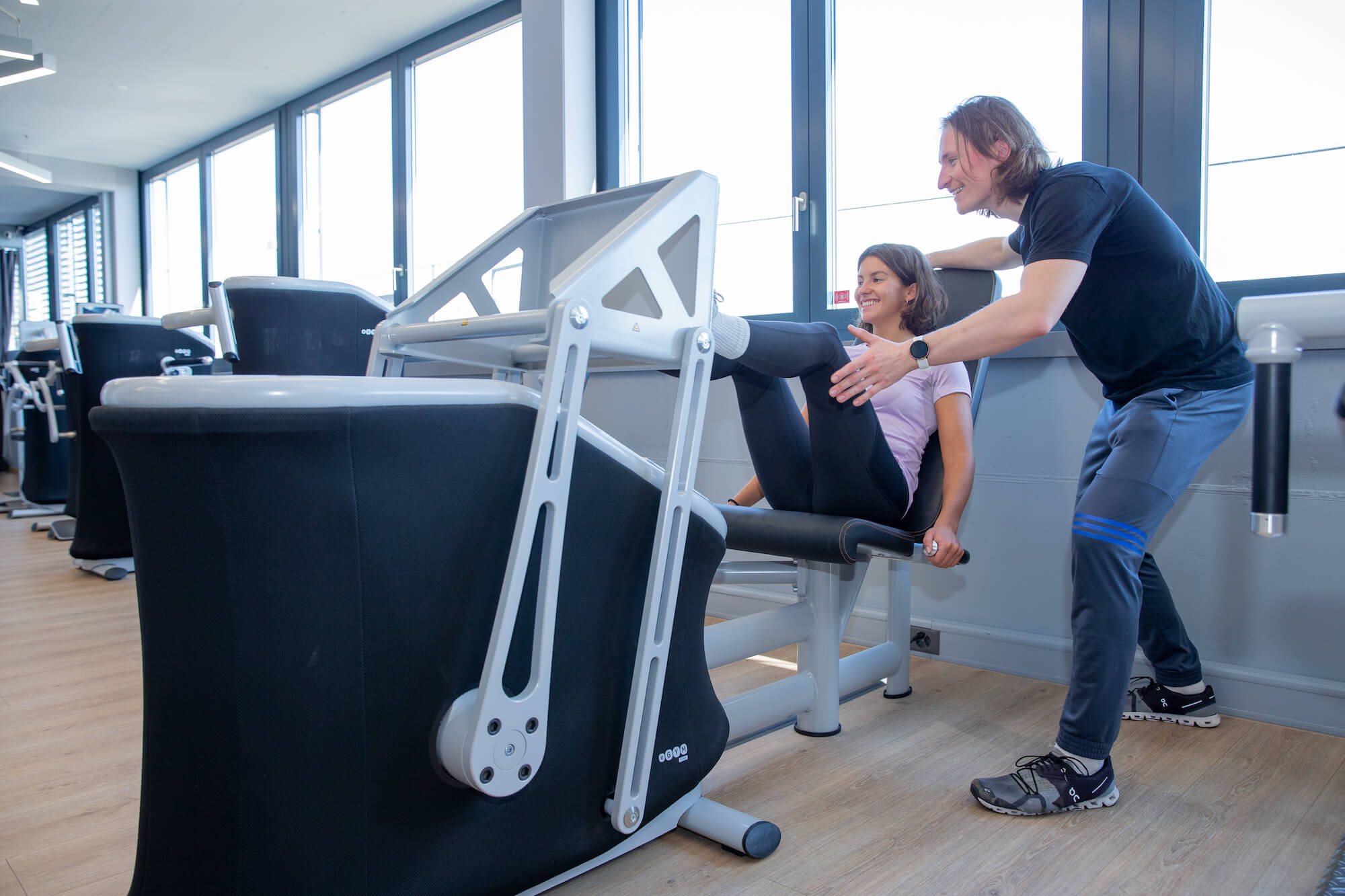
At Kineo Wipkingen at Röschibachstrasse 79 on Röschibachplatz, back treatment is one of our focus areas. On the training floor with strength machines, a rack and a bike ergometer, we practise lifting, carrying and trunk strength directly under guidance. You can find out more about the location on the Kineo Wipkingen page.
Frequently asked questions
Should I stay lying down with lumbago?
No. Keep moving as well as you can, even if it's only short walks. Longer bed rest tends to prolong the symptoms.
Heat or cold?
Many people find heat pleasant because it relaxes the muscles. Try what feels good. Both are a supporting measure, not a treatment of the cause.
Does a support belt help?
In the short term it can give a sense of security. Worn permanently, however, it doesn't replace building strength and mobility.
Does health insurance cover physiotherapy?
Yes. With a doctor's prescription, your basic health insurance covers the cost. Kineo is recognised by all Swiss health insurers.
You might also like
- Lumbago or slipped disc?
- Low back pain: pain in the lower back
- Your ergonomic workstation when working from home
Book an appointment
Want to avoid the next bout of lumbago? Book an appointment at Kineo Wipkingen and start with a back programme that suits you.