By Clara Benning, physiotherapist at Kineo Escher Wyss
A hard knot that won't let go
You feel a firm, tender spot in your neck, shoulder or buttock. When you press on it, the pain sometimes runs up into your head or down your leg. Massage helps briefly, then everything is back to how it was. Spots like this are called myofascial trigger points, and one way to treat them is dry needling.
Many people are wary of needles. Here we explain what happens during dry needling, who it can help, how it feels and when we avoid it.
What are trigger points?
A trigger point is a small, hardened area in a band of muscle that hurts when pressed. Typically it refers pain to other regions: a trigger point in the upper trapezius, for example, can cause headaches at the temple, and one in the gluteus minimus can cause pain on the outside of the leg.
Exactly how trigger points arise has not been conclusively settled in research. They are often linked to overload, long one-sided postures, stress or injuries. Important: trigger points are often part of the problem, rarely the whole of it.
What happens during dry needling
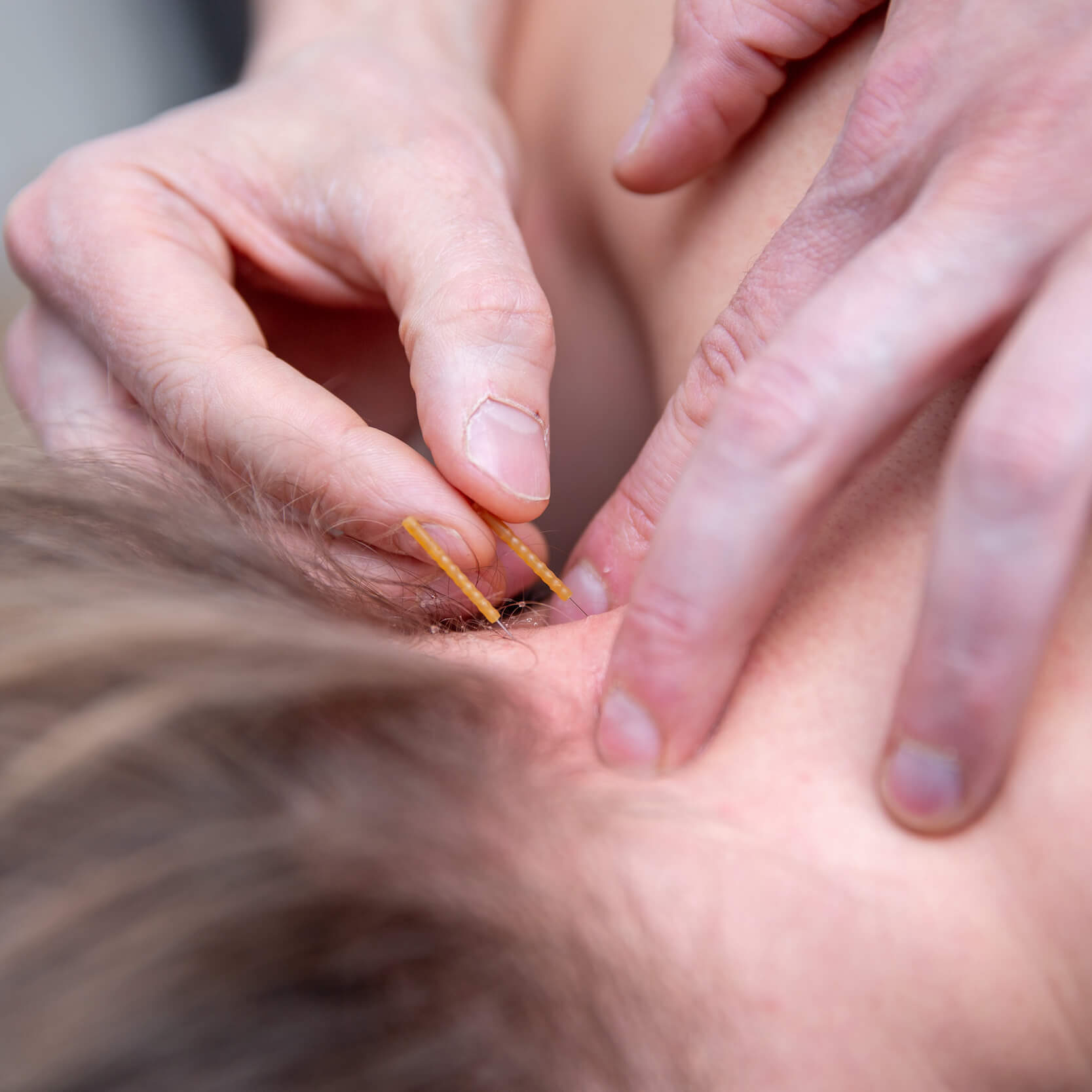
In dry needling, we insert a very fine, sterile single-use needle precisely into the trigger point. "Dry" means that no medication is injected.
- Local twitch response: When the needle hits the trigger point, the muscle often twitches briefly. This can feel like a small cramp and is a desired sign.
- Relaxation: Afterwards the muscle often feels softer and less sensitive.
- Pain modulation: The stimulus acts on pain processing in the nervous system and can reduce pain in the short term.
Research shows that dry needling can relieve myofascial pain in the short term, especially in combination with active therapy. As a stand-alone treatment it is less convincing.
Dry needling and acupuncture: the difference
The needles look similar, but the idea behind them is different. Acupuncture comes from traditional Chinese medicine and works with meridians and fixed points. Dry needling is based on Western anatomy: we treat the muscle that we found to be the source of pain in the assessment. In Switzerland, physiotherapists use dry needling after specific further training.
Which complaints dry needling can help with
- Neck pain and tension headaches with trigger points in the trapezius or in the deep neck muscles
- Shoulder pain, for example with trigger points in the rotator cuff
- Tennis elbow and golfer's elbow as a complement to strength training
- Back pain with muscular involvement
- Buttock and hip pain, for example in piriformis syndrome
- Muscular problems in athletes, for example in the calves or thighs
How the treatment feels
You usually barely feel the insertion itself. When the needle reaches the trigger point, a dull, pulling pain or the twitch can occur, often with the feeling: "That's exactly the spot." A needle usually stays in the muscle only briefly.
After the treatment, a feeling similar to sore muscles for one to two days is normal. Small bruises can occur. Light movement, warmth and normal everyday activity help with this. It is best to put off intensive training of the treated muscles until the following day.
When we avoid dry needling
- Strong fear of needles
- Blood-thinning medication or clotting disorders, depending on the situation
- Infections or skin changes at the site
- Lymphoedema in the treatment area
- Pregnancy, especially in the first months
In the area of the chest and lungs we work with particular caution and an adapted technique, because rare but serious complications are possible there. After a treatment on the chest, contact a doctor immediately if you develop shortness of breath or stabbing pain when breathing.
Warning signs: Pain with fever, night pain unrelated to movement, numbness, signs of paralysis or pain after an accident should be checked by a doctor first.
How we treat with dry needling at Kineo
At Kineo, dry needling is a tool within a treatment, not the treatment itself. First we clarify whether trigger points play an important role at all.
1. Assessment: what we examine in your first session
- Pain pattern: Where do you feel the pain, where does it radiate, what makes it worse?
- Palpation: Searching for hardened bands and trigger points that reproduce your familiar pain
- Mobility of the affected region, for example neck rotation or shoulder movement compared with the other side
- Strength and load tests of the muscle that carries the trigger point
- Neurological tests if the pain radiates into the arm or leg, to rule out nerve irritation
2. Treatment in phases
- Weeks 1–2: reduce pain. Dry needling or manual trigger point treatment at the relevant points, plus gentle movement exercises.
- Weeks 2–6: build load capacity. Strength exercises for the affected muscles, for example 3 x 10–15 repetitions, two to three times a week. Needling only when needed.
- From week 6: tackle the causes. Adjust your workstation, training and everyday life so that the trigger points don't keep coming back.
3. Kineo services we use
- Dry needling: for active trigger points that reproduce your familiar pain
- Trigger point treatment: a manual alternative without a needle
- Manual therapy: when joints such as the cervical or thoracic spine are restricted
- Medical training therapy: so the muscles become more resilient
- Digital home programme: your exercises for home

From our practice
Many patients are surprised after their first dry needling treatment how quickly a neck that has been tense for a long time loosens up. Without strengthening and changes in everyday life, however, the symptoms often return after a few weeks. The most lasting results come when the needling makes it easier to get started and the training does the rest.
Dry needling at Kineo Escher Wyss
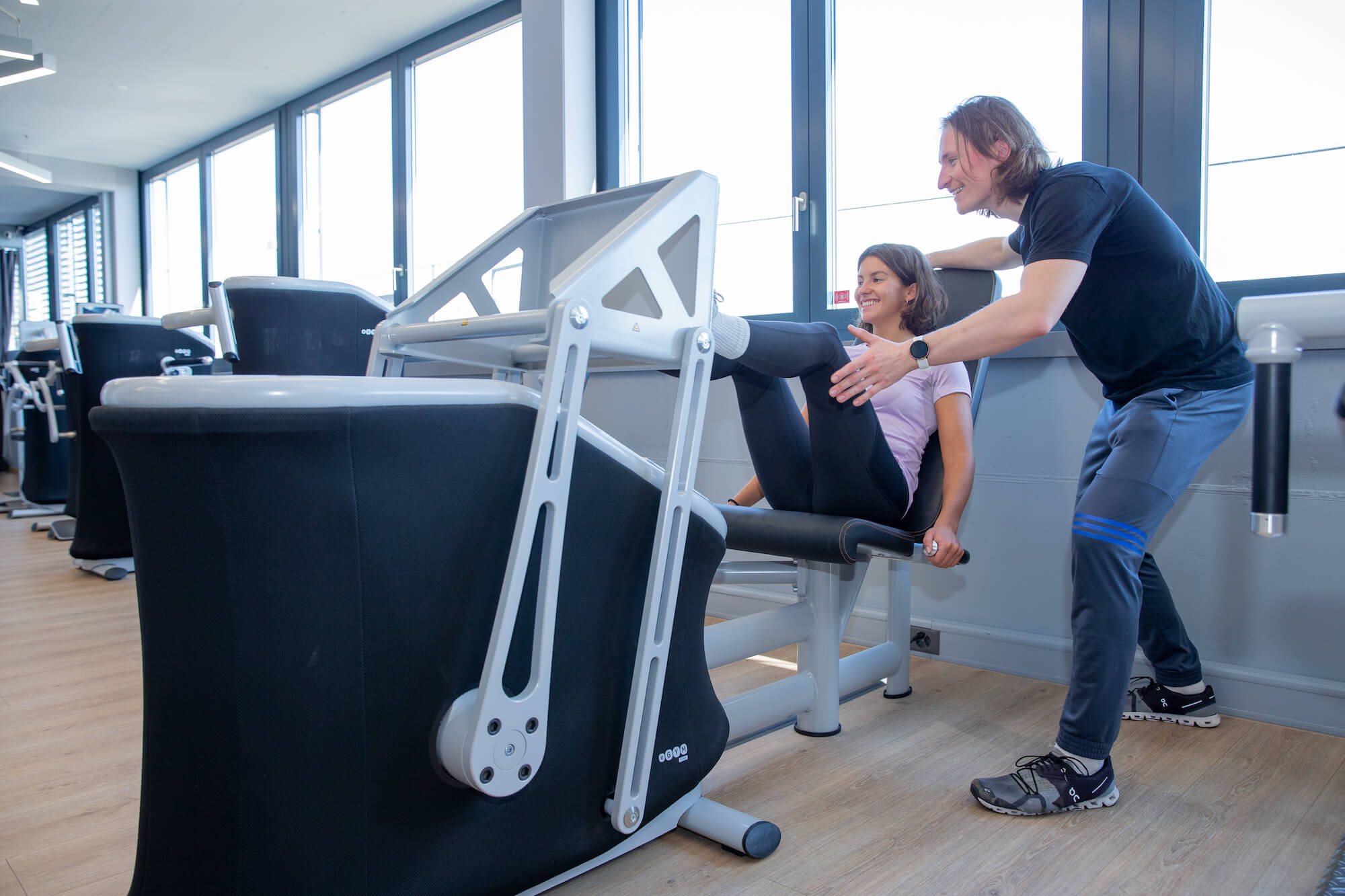
At Kineo Escher Wyss at Hardturmstrasse 18 at Escher-Wyss-Platz, we offer dry needling on site. Because sports physiotherapy and the supervised training floor are on two levels in the same building, the right training follows straight after the treatment.
Frequently asked questions
Does dry needling hurt?
The insertion barely does. The twitch in the muscle can be briefly uncomfortable. Afterwards the muscle often feels like sore muscles for one to two days.
How often is dry needling needed?
A few treatments combined with exercises are often enough. We decide this based on your progress.
Can I do sport after dry needling?
Light movement, yes. It is best to put off intensive training of the treated muscles until the next day.
How long does an appointment last?
An appointment lasts 30 minutes. In your first session we clarify the cause of your symptoms and start straight away with treatment and exercises.
You might also like
Book an appointment
A muscle knot that won't let go? Book your appointment at Kineo Escher Wyss and we will check whether dry needling can help you.