By Eva Danko, physiotherapist at Kineo Wipkingen
When looking at your phone ends up in your neck
On the tram to Wipkingen, on the sofa, in bed before falling asleep: your head is tilted forward, your shoulders roll in, your eyes are glued to the screen. At some point your neck pulls, there is a burning feeling between your shoulder blades, and in the evening you may get a dull headache as well.
The term "text neck" has become established for this set of symptoms. It is not an official diagnosis, but it describes well what many people experience: neck pain linked to long periods with the head bent forward.
What happens in the neck with text neck
The further you tilt your head forward, the more work the neck extensors and the muscles between your shoulder blades have to do to hold it. For a short time this is no problem. The cervical spine is built for movement, including tilting forward.
It becomes difficult because of duration and monotony. If the posture stays the same for a long time, the muscles tire, get less blood flow and react with tension and pain. Often there are other factors as well:
- A rounded thoracic spine: A stiff thoracic spine forces the neck to take on more movement.
- Weak deep neck flexors: These small muscles at the front of the cervical spine stabilise head position. If they are untrained, superficial muscles take over the work.
- Raised shoulders: The upper trapezius and levator scapulae are under constant tension.
- Little movement overall: If you sit a lot and do little to balance it, you are usually more sensitive.
Important: a "bad posture" alone does not automatically cause pain. There is no single correct posture. The best posture is the next one, in other words regular variety.

Typical symptoms
- Pulling or burning in the neck and between the shoulder blades
- Tight, tender muscles at the junction of neck and shoulder
- Headaches that run from the neck to the back of the head or the forehead
- Stiffness when turning your head, especially in the evening
- Improvement with movement, sport or on holiday
See a doctor if numbness, tingling or loss of strength radiates into your arms or hands, if dizziness, visual disturbances, or problems speaking or swallowing are added, if the pain began after an accident, or if very severe, unfamiliar headaches occur.
What you can do yourself
- Raise the screen: Hold your phone closer to eye level, support your elbows or put a cushion under your arms. On a laptop, an external keyboard with a raised screen helps.
- Movement breaks: Interrupt long phone or screen sessions about every 20 to 30 minutes for a few seconds: turn your head, roll your shoulders, stand up.
- Lower your eyes instead of your head: If you direct your gaze downwards more with your eyes, you have to tilt your head less.
- Balance it out: Regular sport and strength training for your back and shoulders make your neck more resilient.
Four exercises against text neck
- Chin tuck (drawing the chin back): Sit upright and draw your chin straight back, as if you were making a double chin. Hold for 5 seconds. 2 x 10 repetitions, as often as you like during the day.
- Extending the thoracic spine: Sit on a chair with your hands behind your head and extend backwards over the chair back. Alternatively, lie on your back with a foam roller across your upper back. 2 x 10 repetitions.
- Rowing with a resistance band: Attach the band at chest height, pull your elbows back and gently bring your shoulder blades together, keeping your shoulders down. 3 x 12 to 15 repetitions.
- Neck mobilisation: Slowly turn your head to the right and left and tilt it to the side, each time without pain. 1 x 10 in each direction, for example after a long phone session.
Strength training for the neck and shoulders two to three times a week is more effective in the long run than occasional stretching.
How we treat neck pain from your phone at Kineo
We look for the factors that overload your neck, ease the acute symptoms and make you more resilient with targeted training.
1. Assessment: what we examine in your first session
- Everyday life and habits: Screen time, workstation, sleeping position, sport and stress
- Mobility: Turning, tilting and extending the cervical spine, as well as mobility of the thoracic spine
- Craniocervical flexion test: How well your deep neck flexors control the head
- Palpation: Upper trapezius, levator scapulae and neck muscles for trigger points
- Nerve tests such as the Spurling test or neurodynamic tests for the arm if symptoms radiate
2. Treatment in phases
- Weeks 1 to 2: reduce pain. Manual treatment of the neck and thoracic spine, soft tissue techniques, first exercises such as chin tucks and adjustments in everyday life.
- Weeks 2 to 6: control and strength. Training of the deep neck flexors, shoulder blade muscles and thoracic spine, 2–3 sets of 10 to 15 repetitions each.
- From week 6: load capacity. Progressive strength training for the neck, shoulders and upper back, so that long screen days no longer become a problem.
3. Kineo services we use
- Manual therapy for the cervical and thoracic spine when mobility is restricted
- Trigger point treatment for a tense upper trapezius and levator scapulae
- Dry needling for stubborn trigger points that respond little to other techniques
- Medical training therapy to build strength in the neck, shoulders and upper back
- Digital home programme with your exercises for home and the office

From our practice
Many people who come with neck pain from their phone look for the perfect posture and then sit rigidly upright. Hardly anyone can keep that up for long. Usually it helps more to change position more often, build in short movement breaks and strengthen the neck and shoulders in a targeted way. Often people then notice that they can spend the same time on their phone without their neck complaining.
Neck treatment in Wipkingen
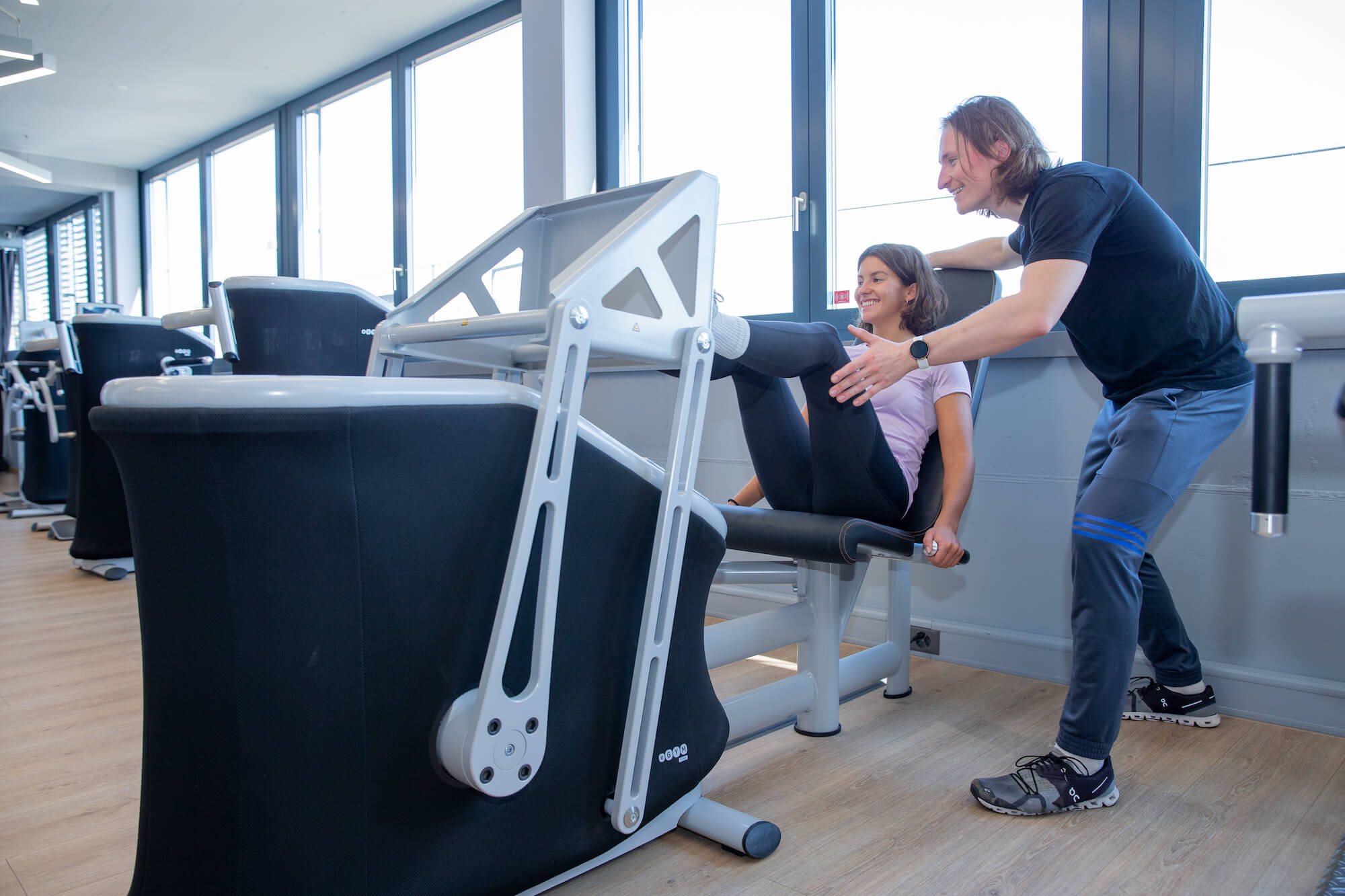
At Kineo Wipkingen at Röschibachstrasse 79 at Röschibachplatz, we treat the neck, shoulders and back with manual techniques and then support you on our training floor with strength machines and a rack. This turns treatment into training that strengthens your neck in the long term. You can find more information on the Kineo Wipkingen page.
Frequently asked questions
Does my phone damage my cervical spine?
No. The cervical spine is robust. The problem is mainly long, unchanging postures without any balance. With breaks and training, the symptoms can usually be brought well under control.
Does a posture trainer or a posture corrector help?
They can remind you of your posture in the short term, but they do not replace strength and movement. We prefer exercises that strengthen your own muscles.
How long does an appointment last?
An appointment lasts 30 minutes. In your first session we clarify the cause and start straight away with treatment and exercises.
Does health insurance cover physiotherapy?
Yes. With a doctor's prescription, your basic health insurance covers the cost. Kineo is recognised by all Swiss health insurers.
You might also like
Book an appointment
Does your neck complain after every scroll? Book your appointment at Kineo Wipkingen and together we will find out what gives you relief.