By Barbara Victorio, physiotherapist at Kineo Wipkingen
When your whole body hurts
Pain in many places that moves around and doesn't go away. On top of that tiredness, poor sleep and days when even the shopping is too much. Many people with fibromyalgia have a long road behind them before they get a diagnosis, and then often hear: "Move more." That sounds simple, but feels hard when every effort makes the pain worse.
In this article we explain why exercise is still so important in fibromyalgia and how you can find a way in that doesn't overwhelm you.
What fibromyalgia is
Fibromyalgia is a chronic pain syndrome with widespread pain in muscles and soft tissues, often combined with exhaustion, sleep disturbances and concentration problems. The diagnosis is made by a doctor after other conditions such as inflammatory rheumatism or thyroid problems have been ruled out.
It is assumed today that in fibromyalgia, pain processing in the nervous system is altered. The nervous system reacts more sensitively, and stimuli that would otherwise hardly bother you are perceived as painful. In technical terms this is called central sensitisation. Important: the pain is real, even if X-rays or blood values are normal. And it does not mean that muscles or joints are being damaged.
Why exercise works
In international treatment guidelines, for example those of the European rheumatology society EULAR, exercise therapy is among the best-supported measures for fibromyalgia. Regular, well-dosed exercise can help to:
- relieve pain and fatigue
- improve sleep
- increase physical performance in everyday life
- strengthen mood and the feeling of control over your own body
Most suitable are endurance training at low to medium intensity, for example walking, cycling or exercise in warm water, as well as gentle strength training. Many people also tolerate tai chi or yoga well.
The trap: good days, bad days
Many people affected know the pattern: on a good day, everything that has been left undone gets caught up. Then follow two or three days of severe pain and exhaustion. This up and down is called the boom-bust cycle. In the long run it often leads to doing less and less.
The way out is called pacing: you plan your activity so that it stays similar on good and bad days, and increase it in small steps. Better to walk for 10 minutes on five days than for two hours on one day.
What you can do yourself
- Find your starting point: How many minutes of walking or cycling can you manage on an average day without feeling clearly worse the next day? Start a little below that.
- Increase slowly: Every one to two weeks, a few minutes more, if the last step was tolerated well.
- Strengthen gently: Standing up from a chair, wall push-ups and rowing with a light band, 1–2 x 8–10 each, two days a week. Later increase to 3 sets.
- Gauge your effort: On a scale of 0 to 10, aim for the range 3–5. You should still be able to hold a conversation.
- Plan sleep and breaks deliberately. A regular daily rhythm helps many people.
- Symptom diary: Noting activity, sleep and pain often shows patterns you would otherwise miss.
Always have new or changed symptoms checked by a doctor, for example swollen joints, fever, unintentional weight loss or new signs of paralysis. Not every new symptom automatically belongs to fibromyalgia.
How we support you at Kineo
With fibromyalgia, the aim is not to treat individual painful spots, but to show you a way of bringing more movement back into your everyday life.
1. Assessment: what we clarify in your first session
- Conversation: Course of symptoms, sleep, everyday life, work and past experiences with exercise
- Goals: What would you like to be able to do again? For example a walk with friends or the weekly shop without a break
- Measuring capacity: for example the 6-minute walk test or how often you can stand up from a chair in 30 seconds
- Mobility and strength of the large muscle groups
- Activity pattern: Is there an up and down with overload and exhaustion?
2. Treatment in phases
- Weeks 1–4: Understand and find a baseline. We explain how pain arises, set your starting value and begin with short endurance sessions and two to three simple strength exercises.
- Weeks 4–12: Increase step by step. Duration first, then intensity. Strength exercises up to 2–3 sets of 8–12 repetitions. We plan setbacks in and adapt, rather than stopping.
- From about week 12: Becoming independent. A programme you continue on your own or in a group, with clear rules on how to adapt on bad days.
3. Kineo services we use
- General physiotherapy: education, pacing plan and exercise programme
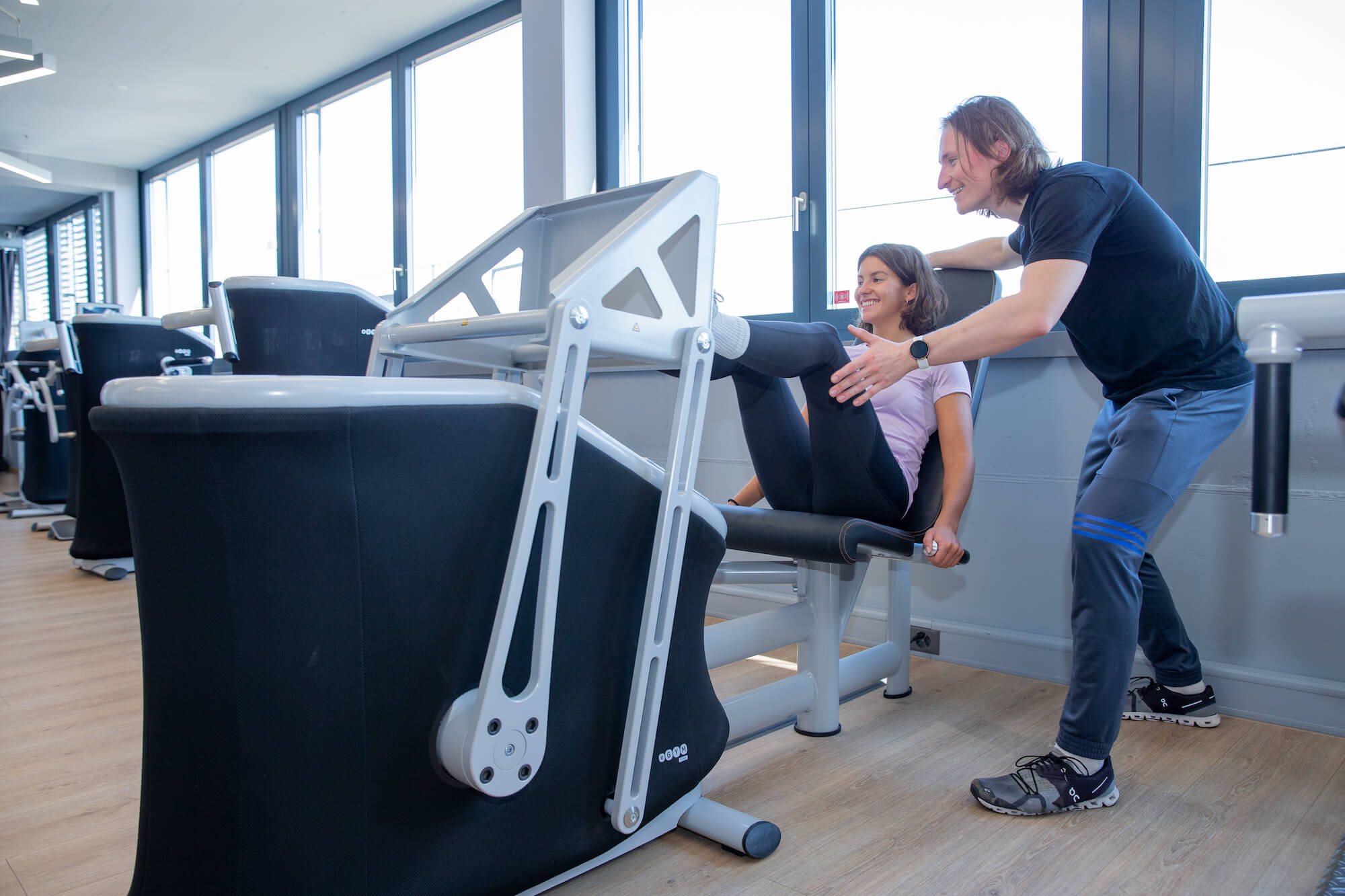
- Medical training therapy for well-dosed strength and endurance training
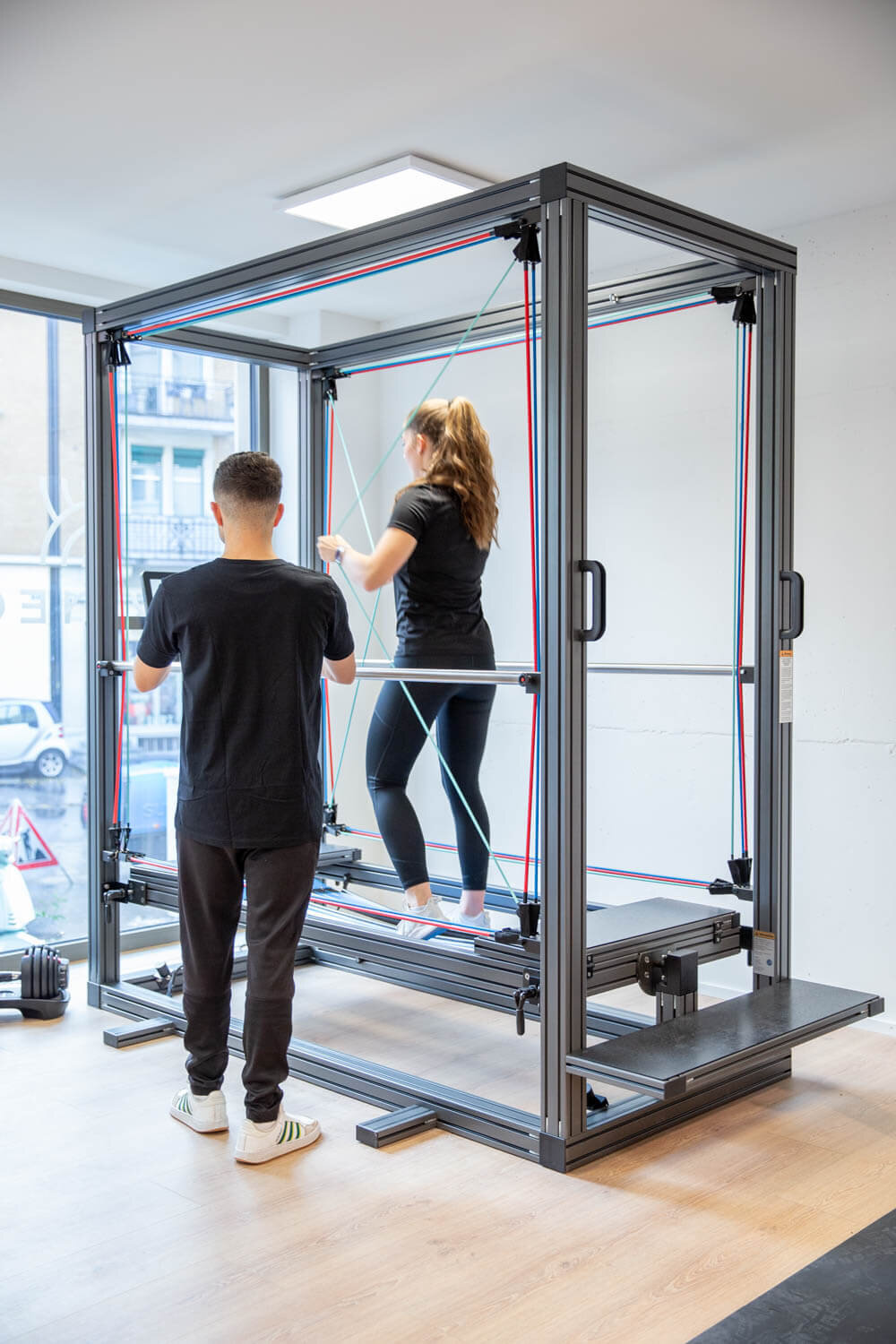
- Senso Pro training for coordination and body awareness without high load
- Classic massage as a supporting measure, if it helps you stay active
- Digital home programme with your exercises for at home
Passive treatments: helpful, but not the main thing
Many people with fibromyalgia find massage or heat soothing. That can have its place, for example to make it easier to get into movement on a difficult day. In the long run, though, what helps most is what you do yourself: regular exercise, a steady daily rhythm and the knowledge that pain in fibromyalgia does not equal damage. We see our role as accompanying you on this path.
From our practice
Many people with fibromyalgia come to us having experienced that training harmed them. Usually the start was too fast or too intense. When we begin very small and adapt the progression to how you react in the following days, many people experience for the first time that exercise does them good.
Guided training at Kineo Wipkingen
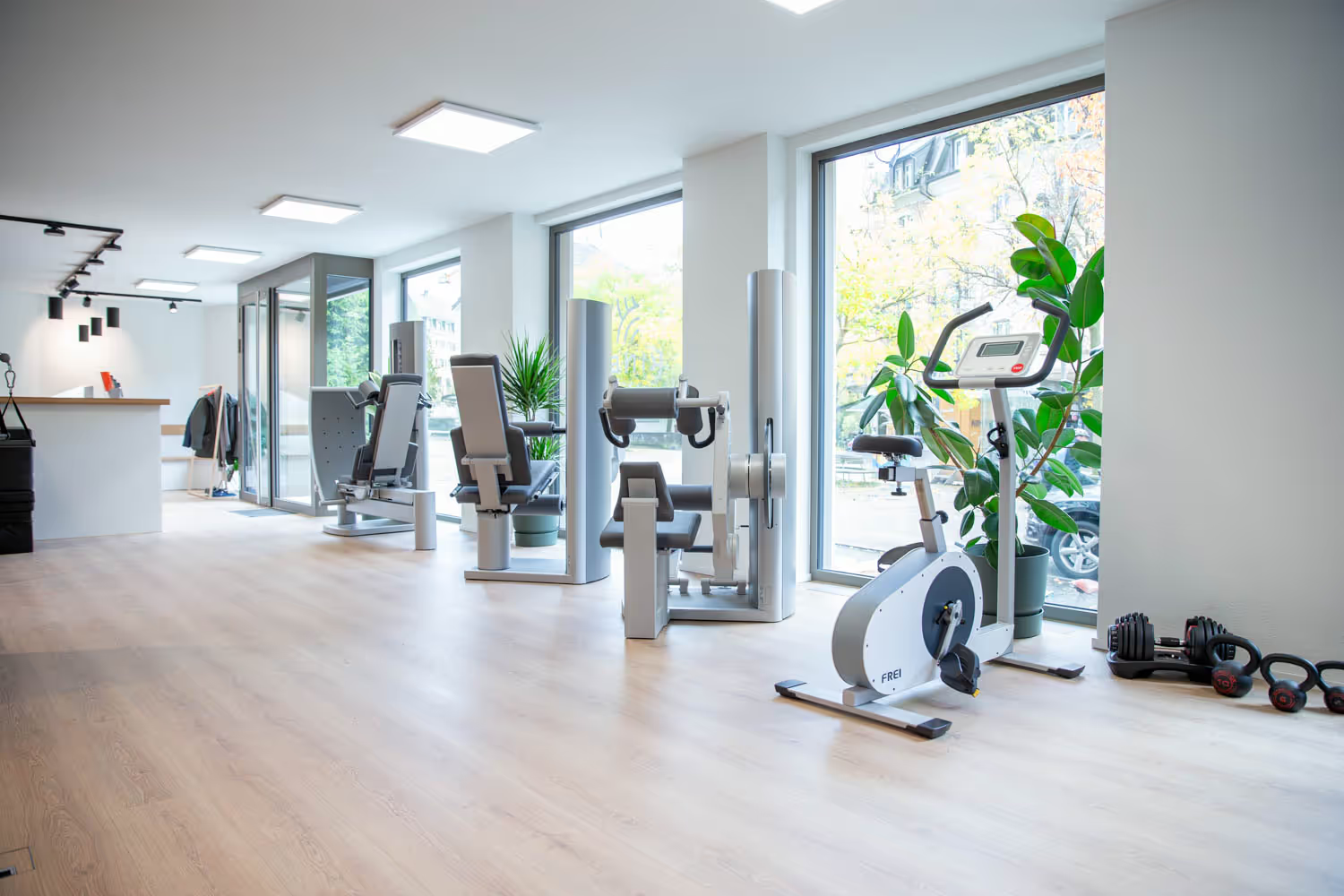
At Kineo Wipkingen at Röschibachstrasse 79 on Röschibachplatz you will find a quiet training floor with strength machines, a bike ergometer and the Sensopro coordination trainer. This lets training be dosed very finely and combined with physiotherapy. You can find out more about the location on the Kineo Wipkingen page.
Frequently asked questions
Does training harm you in fibromyalgia?
No, if it is well dosed. More pain after exercise in fibromyalgia does not usually mean damage. But it shows that the dose was a little too high.
What do I do on a bad day?
Don't stop completely, reduce. For example half of your usual time and only the easiest exercises.
How quickly will I notice an improvement?
That is very individual. It often takes a few weeks of regular exercise before sleep, energy or pain change noticeably.
Does health insurance cover physiotherapy?
Yes. With a doctor's prescription, your basic health insurance covers the cost. Kineo is recognised by all Swiss health insurers.
You might also like
Book an appointment
Would you like to become more active again with fibromyalgia? Book an appointment at Kineo Wipkingen, and together we'll find your way in.