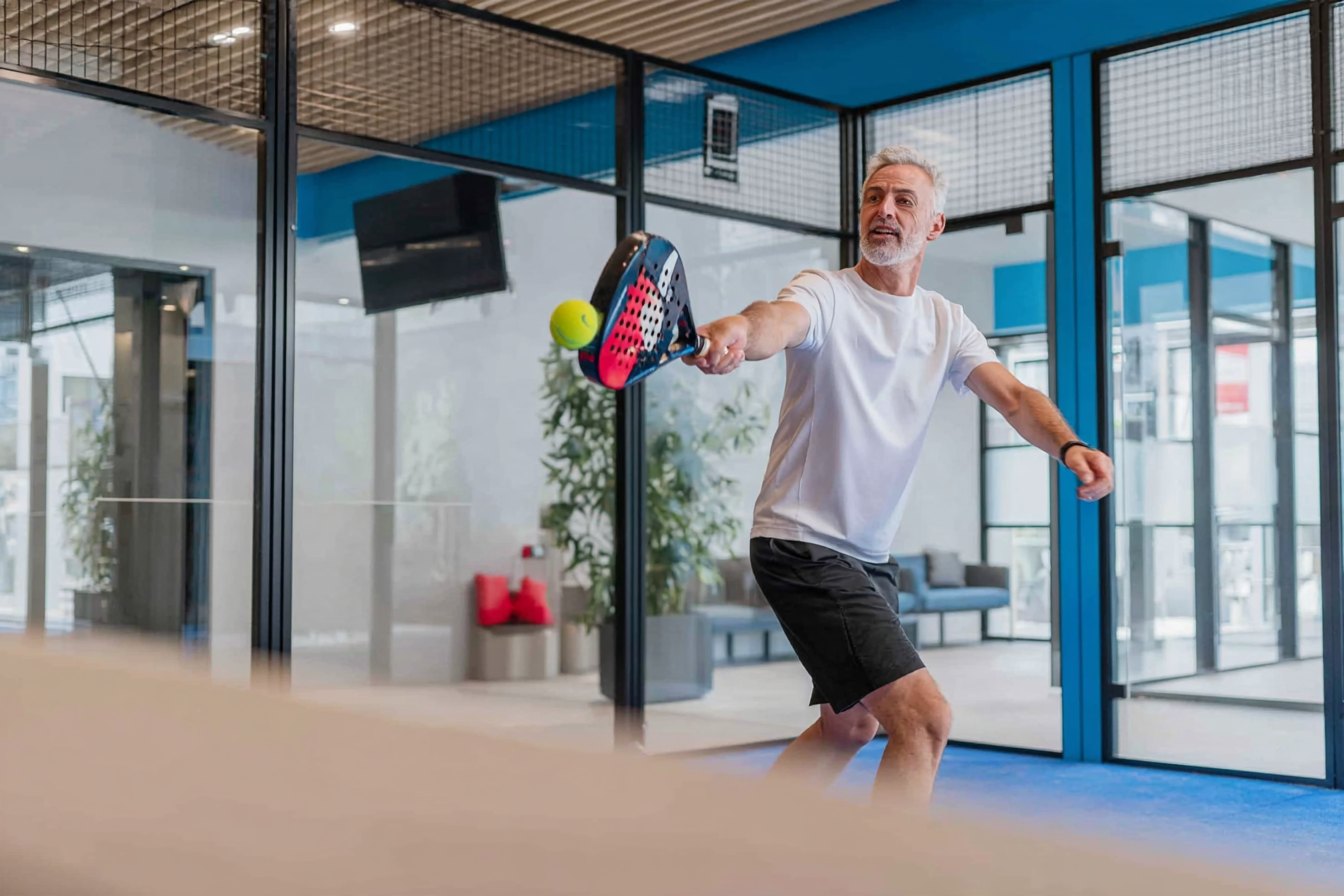

A new coaching programme at Kineo combines body and mind for maximum performance.
Mental strength meets physical health
Whether you are an ambitious recreational athlete, a casual runner or a fitness enthusiast, mental strength is often the deciding factor when it comes to reaching your sporting goals, getting fully back into training after an injury or staying active with enjoyment in the long term.
With our new programme at Kineo, we offer an innovative combination of sports psychology and physiotherapy: individual, evidence-based and practical.

Why body and mind should train together
Sports psychology research shows that mental factors such as motivation, self-confidence or stress regulation considerably influence not only performance but also healing after injuries. Studies show that athletes with mental coaching recover faster, are less likely to be injured again and train more successfully in the long term (cf. Brewer et al., 2000; Arvinen-Barrow et al., 2010).
Our innovative approach combines scientifically grounded sports psychology methods with physiotherapy know-how, for a holistic way back to performance, joy of movement and resilience.
Our goals, your progress
Our programme is aimed at all physically active people who:
- want to overcome mental blocks after injuries
- want to work in a targeted way on self-confidence, motivation or focus
- are looking for lasting tools for training and everyday life
- want to make mental strength part of their health routine
Whether you are in rehab right now or simply want more mental clarity in your training, our coaching will help you move forward.
What does the coaching look like in practice, and who am I?
A look at the process: personal, individual, effective
The mind-body strategy session (30 min.): your start to change

Before we start the coaching itself, we take time in a strategic first conversation to get to know you. This conversation is the starting point for your personal development. Together we look at:
- An overview of your current situation (injury, load, mental hurdles)
- Your experiences so far with training, therapy and setbacks
- A first analysis of your mental patterns and habits of thinking
- Clarifying your goals: what do you want to achieve in the short, medium and long term?
- What you can expect from me, and what you can't
You receive first impulses for connecting body and mind, including a small tool for your next training session or rehab appointment. Afterwards you decide in your own time whether you would like to start coaching with us.
Example sessions 1 and 2:
Session 1: Analysis and first techniques (60 min.)
- Building trust and sharpening goals: we dig deeper into what blocks or limits you mentally
- Psychoeducation: why mental factors have such a strong influence on the course of healing, explained scientifically and in plain language
- First techniques: an introduction to targeted breathing and visualisation exercises for body awareness and for uncoupling from fear of pain
Further options:
• Cognitive restructuring: Analyse first thought patterns and consciously change dysfunctional beliefs.
• Goal setting: Develop realistic, motivating and structuring goals to restore orientation and control.
• Mental self-instructions: An introduction to short, positive guiding phrases for inner control under load.
• Strengths focus: Activating resources by becoming aware of past successes and personal skills, which strengthens self-confidence and self-efficacy.
• Mental contrasting (WOOP method): A combination of wishful thinking and realistic planning to spot obstacles in your mind early and overcome them in a targeted way.
Session 2: Mental strategies in practice (60 min.)
- Cognitive restructuring: Recognise negative thought patterns and reassess them
- Exposure training: Mental and physical preparation for sport-specific load (e.g. a movement sequence on the pitch or in the gym)
- Integration: A combination of movement, perception and mental technique, a first step back towards your previous performance level
About me: mental strength meets sporting passion
I'm Patrick, a physiotherapist currently studying for a master's in sports psychology, and someone who grew up with sport. Football and tennis shaped my youth, not only physically but also mentally. I experienced early on how decisive your inner attitude is: coming back after injuries, coping with pressure or focusing in the decisive moments.
This personal experience is the foundation of my work today. My passion is the interplay of body and mind, because real performance only arises when both are in balance. In my daily work I combine modern physiotherapy with sports psychology coaching, to support people holistically on their way to more stability, self-confidence and enjoyment of performance.
Science confirms this integrative approach. Studies show that mental strategies such as visualisation, cognitive restructuring or targeted self-instruction not only improve sporting performance but also promote motivation, stress management and resilience. In the rehab process in particular, mental work has a demonstrably positive effect on the course of healing, pain perception and return to training.
For me, personal development is at the centre, as a way to grow beyond yourself, not only in sport but in life. I support people in discovering their mental strength, overcoming blocks and getting started with new clarity and motivation.

Accompanying material and home exercises
Between sessions you receive individually tailored material for your further development:
- Reflection questions and mental exercises
- Body-oriented relaxation techniques such as progressive muscle relaxation, breathing coaching or embodiment training
- Optional: individual nutrition recommendations to support cognitive performance and recovery
Typical examples: concrete and close to sport
"I don't trust my knee any more": footballer after a cruciate ligament tear
After a successful operation and physiotherapy, the uncertainty remains: is the knee really stable again? In our coaching we strengthen trust in the body, build mental confidence under load and simulate match situations mentally and physically.
"My wrist always feels fragile": tennis player after an injury
Although everything has healed structurally, the control of the stroke is missing. Together we train with mental visualisation and precise attention focusing, so that the movement becomes intuitive and secure again.
"I hold myself back": runner with Achilles tendon irritation
After a long break from running, the head often blocks more than the body. Through mental simulation of the movement sequences, focused load build-up coaching and resilience training, we bring movement and trust back into line.
What sets us apart: the holistic approach
Unlike classic sports psychology, which concentrates purely on mental processes, we deliberately combine:
Sports psychology: mental techniques, motivation work, stress management Physiotherapy: functional analysis, load training, hands-on body work
The result: a deep and at the same time practical path to stability, performance and wellbeing, tailored to your situation.
Prices and offers
Single sessions
- Introductory session (30 min.): CHF 80.00
Saver packages
- Package of 6 (60 min. each): CHF 960.00
- Package of 9 (60 min. each): CHF 1,290.00
- Package of 12 (60 min. each): CHF 1,490.00
Ready for your next step?
Book your mind-body strategy session (30 min.) now to start your change.