By Barbara Victorio, physiotherapist at Kineo Wipkingen
Suddenly you can't do anything: back pain without warning
You bend down for your shopping bag, turn over in bed or get up after a long day at the office, and suddenly pain shoots through your lower back. Straightening up is hard, putting on socks becomes a challenge, and every movement feels risky.
The good news first: acute back pain is very common and, in the vast majority of cases, harmless. It usually improves clearly within days to a few weeks. What you do in the first few days does affect how quickly you get moving again and whether the pain comes back.
What is behind acute back pain
In most people, no single, clearly damaged structure can be found. Specialists then speak of non-specific back pain. That doesn't mean the pain is imagined. Muscles, small spinal joints, ligaments and the nervous system respond together with protective tension and increased sensitivity.
- Protective muscle tension: The back muscles tense up reflexively to keep the area still. This makes you stiff and can itself hurt a lot.
- Irritated spinal joints: The small facet joints between the vertebrae often react to twisting or leaning backwards.
- Intervertebral disc: If the pain radiates into the leg below the knee, an irritated nerve root may be involved, for example because of a disc bulge.
- Contributing factors: Little sleep, stress, long periods of sitting or an unaccustomed load make the system more sensitive.
It's important to know that the intensity of the pain says little about the extent of any damage. Lumbago can be very severe and still ease off quickly.
Warning signs: when to see a doctor straight away
Serious causes behind back pain are rare. If you notice any of these signs, please see a doctor immediately, and for the first two go straight to the emergency department:
- Numbness in the genital or buttock area ("saddle area") or new problems passing urine or stool
- Increasing weakness in the leg, for example a drooping foot
- Fever, chills or a general feeling of being unwell together with the back pain
- Back pain after a fall or accident, especially if you have known osteoporosis
- A history of cancer or unintended weight loss
- Severe, constant pain that no position changes, even at rest and at night
What you can do yourself in the first few days
- Keep moving: Bed rest tends to prolong the symptoms. Get up regularly and walk for a few minutes, even if it's stiff at first. Several short walks spread across the day are ideal.
- Keep daily life as normal as possible: Keep working if you can. Change position often instead of sitting for long periods.
- Heat: Many people find a warm bath, a hot-water bottle or a heat patch soothing. It eases the protective tension.
- Relieving positions: Many people find rest lying on their back with their lower legs on a chair, or on their side with a pillow between the knees.
- Painkillers: If you need some to be able to move, discuss this with your doctor or at the pharmacy.
- Don't be afraid of movement: Mild pain when moving is normal at this stage and not a sign of damage.
Gentle exercises for the acute phase
The following exercises are meant to make you more mobile, not to train you. Move only as far as is comfortable. The pain may be slightly noticeable, but it shouldn't clearly increase.
- Knee rolls: Lie on your back with your feet flat. Slowly let both knees drop to one side and back, then to the other side. 2 x 10 repetitions, several times a day.
- Pelvic tilts: Same starting position. Gently press your lower back into the surface and release it again. 2 x 10 repetitions.
- Cat-cow on all fours: Alternately round your back and let it sag slightly, breathing calmly. 2 x 8 repetitions.
- Walking: 5 to 10 minutes at a comfortable pace, two to three times a day. A little longer each day.
How we treat acute back pain at Kineo
Our aim in the acute phase: to get you moving again quickly and confidently, while ruling out serious causes.
1. Assessment: what we examine in your first session
- Targeted questions about warning signs: We systematically check whether you need to see a doctor.
- Movement testing: Bending forwards, leaning backwards, side bending and rotating. Which direction hurts, which gives relief?
- Neurological examination: Strength, reflexes and sensation in the legs, to detect any nerve involvement.
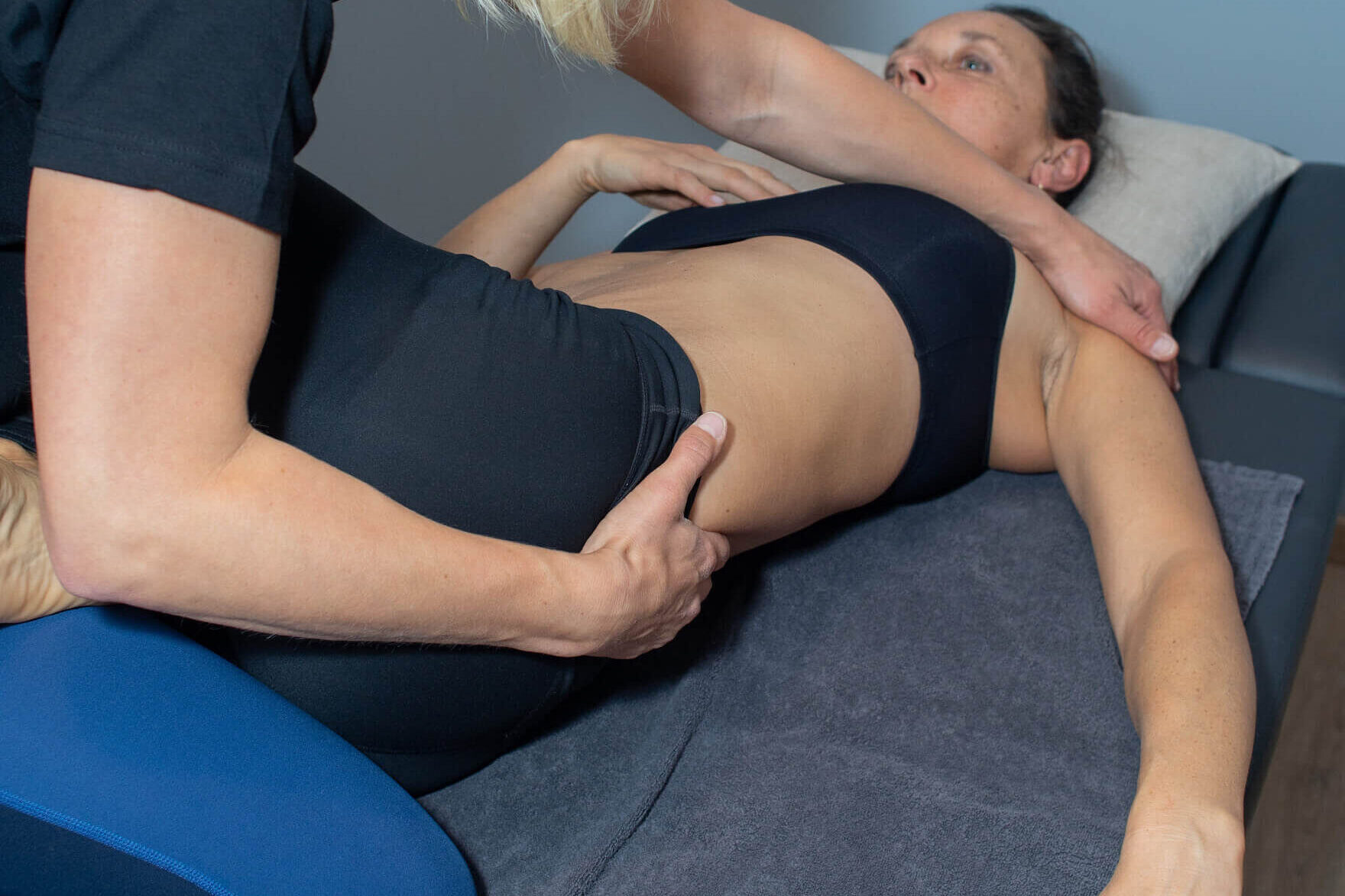
- Nerve tests: The straight leg raise test (Lasègue) and the slump test show whether a nerve is irritated.
- Palpation: Spinal joints, pelvis and muscles, to narrow down the source of the pain.
- Risk assessment: With a short questionnaire such as the STarT Back Tool, we estimate how much support you need.
2. Treatment in phases
- Days 1 to 7: ease the pain, keep moving. Manual techniques, relieving positions and two to three simple exercises for home. You understand what is going on and what you are allowed to do.
- Weeks 2 to 3: regain mobility. Bending forwards, rotating and lifting gradually return to normal. First strengthening of the trunk and hips, 2–3 sets of 10 repetitions each.
- From weeks 3 to 6: build load capacity. Squats, hip hinges and carrying weights, adapted to your daily life or sport.
- In the long term: prevent relapses. Regular strength training and movement in daily life are the best protection against further episodes.
3. Kineo services we use
- Manual therapy to mobilise the spinal joints and pelvis when movement is blocked
- Trigger point treatment for very tense back and buttock muscles
- General physiotherapy for assessment, education and the plan for the coming weeks
- Medical training therapy on our training floor, as soon as the pain allows
- Digital home programme, so you do your exercises correctly and regularly at home
Two myths about the acute back
- "I have to rest until it's gone." People who stay active usually recover faster than with bed rest.
- "Without an MRI you can't know what's going on." Without warning signs, imaging is usually not needed in the first few weeks. Many findings, such as disc bulges, are also found in people without pain.
From our practice
Many patients come in after an episode of lumbago worried that "something is broken", and so hardly move any more. Often the examination and a clear explanation are enough to take away the fear. When the first simple exercises then work, the protective tension usually eases noticeably and confidence in your own back returns.
Back treatment in Wipkingen
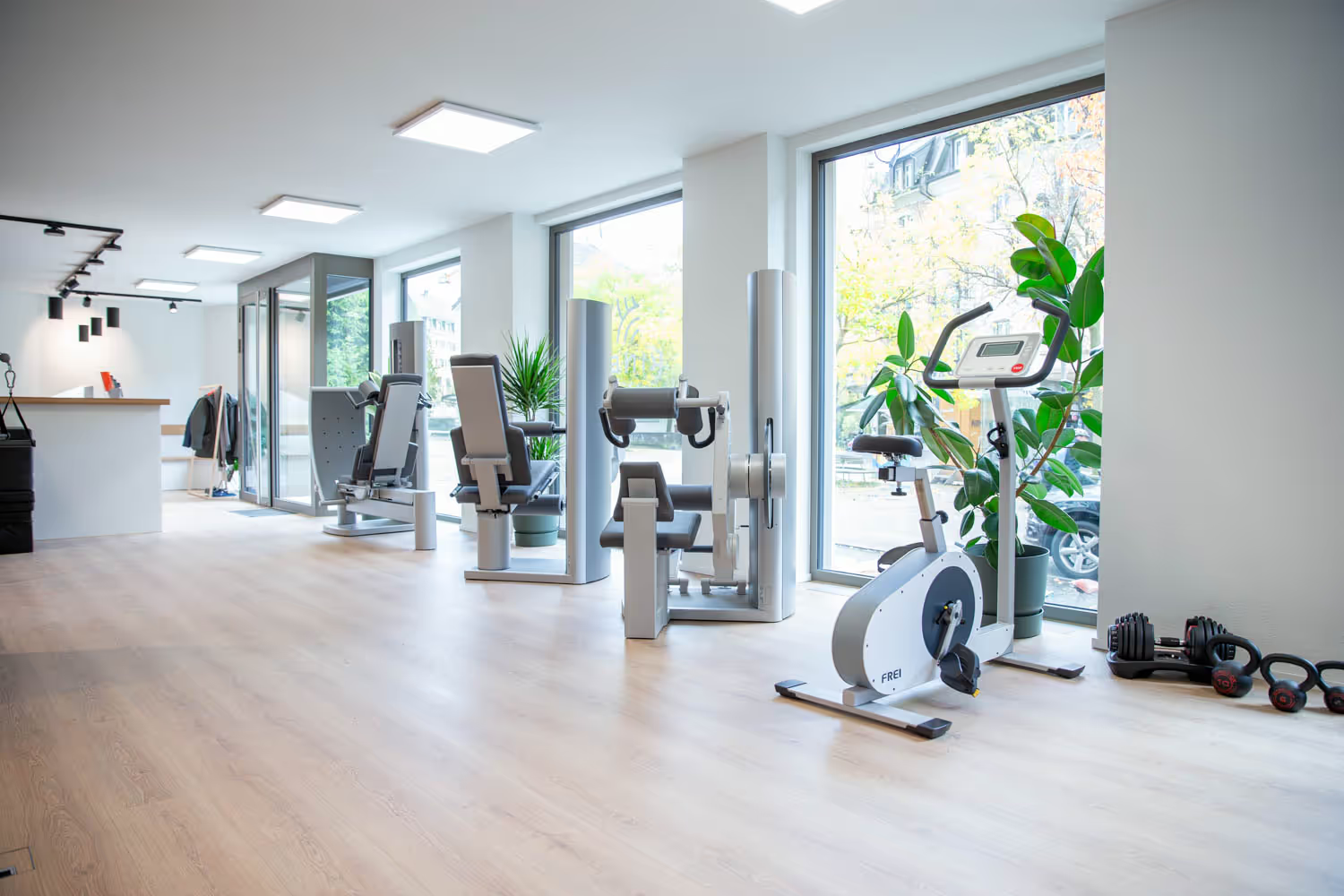
At Kineo Wipkingen on Röschibachstrasse 79, right at Röschibachplatz, back and shoulder treatments are among our specialities. On our training floor with strength machines, a rack and a bike ergometer, we guide you after the acute phase from your first careful movements through to strength training. You can find out more about the location on the Kineo Wipkingen page.
Frequently asked questions
Heat or cold for acute back pain?
For back pain without an injury, most people find heat more pleasant. It relaxes the muscles. Try what feels good for you.
Do I need an X-ray or MRI?
Usually not if there are no warning signs. Imaging makes sense if there is paralysis, numbness in the saddle area, an accident or other warning signs, or if the symptoms don't improve over several weeks.
Does health insurance cover physiotherapy?
Yes. With a doctor's prescription, your basic health insurance covers the cost. Kineo is recognised by all Swiss health insurers.
You might also like
Book an appointment
Has your back suddenly stopped you in your tracks? Book your appointment at Kineo Wipkingen and we'll get you moving again.