SCIATICA & RADICULOPATHY
WHAT IS RADICULOPATHY?
Radiculopathy occurs when a nerve root that exits directly from the spine is irritated or damaged. These nerve roots are part of the so-called peripheral nervous system and carry signals between the spinal cord and the body.
Radiculopathy can occur in any section of the spine:
- Cervical spine → cervical radiculopathy
- Thoracic spine → thoracic radiculopathy
- Lumbar spine → lumbar radiculopathy
- Sacrum → sacral radiculopathy
- Lumbar spine + sacrum → lumbosacral radiculopathy
Depending on which area is affected, the complaints can radiate into different parts of the body.
SCIATICA & SCIATIC PAIN
The most common form of radiculopathy occurs in the area of the lumbar spine and sacrum. This can lead to irritation of the sciatic nerve.
This form is called sciatica.
The sciatic nerve is the largest and thickest nerve in the body. It runs from the lower lumbar spine over the buttock along the back of the leg down to the foot, where it branches into several smaller nerves. It is mainly responsible for the sensory and motor supply of the lower limb.
When this nerve is irritated, it can cause very unpleasant, often radiating pain, sometimes all the way into the foot.
CAUSES OF SCIATICA
The cause of radiculopathy is usually irritation or compression of a nerve root in the area of the spine.
Common triggers are:
- Slipped disc or disc bulge
- Muscle tension, especially of the piriformis muscle
- Degenerative changes in the spine
- Spinal stenosis (narrowing of the spinal canal)
- Spondylolisthesis (slipped vertebra)
- Less commonly: tumours or inflammatory processes
Important: in many cases, not just one structure is responsible, but an interplay of several factors.
SYMPTOMS OF RADICULOPATHY
Typical complaints are:
- Pain radiating into the leg or buttock
- Tingling, burning or “pins and needles”
- Numbness
- Loss of strength or muscle weakness
In severe cases, the following can also occur:
- Signs of paralysis
- Problems with bladder or bowel function (emergency!)
In addition, many people report:
- Muscle tension
- Increased muscle tone
- Pain getting worse when coughing, sneezing or straining
WHAT TO DO ABOUT SCIATICA
Radiculopathy is distressing, but in most cases it can be treated well conservatively. Many complaints improve with targeted movement, relief and time.
The important thing is: complete rest is usually not helpful. Gentle, controlled movement supports healing.
WARNING SYMPTOMS: “RED FLAGS”
There are symptoms for which you should be seen by a doctor immediately:
- increasing or severe pain at night
- breathing problems or pain when breathing
- increasing signs of paralysis
- fever with no obvious cause
- bladder or bowel disorders (e.g. incontinence or urinary retention)
If any of these symptoms occur, please have them checked by a doctor immediately.
WHAT YOU CAN DO YOURSELF FOR SCIATICA
Heat for acute complaints
Much sciatic pain is accompanied by protective muscle tension. Heat can help reduce this tension.
Suitable measures:
- Heat patches from the pharmacy
- Hot water bottle
- Warm bath
Heat improves blood flow and can relax the tissue. In addition, essential oils such as lavender or rosemary can have a subjectively calming effect.
A back-friendly but active everyday life
Prolonged immobilisation is not useful in most cases.
Instead:
- regular, light movement
- changing positions during the day
- avoiding sitting for long periods
When lifting:
- bend your knees
- keep your back neutral
- use the strength of your legs and hips
When working:
- screen at eye level
- 90° angle at hips, knees and elbows
- regular breaks or standing phases
👉 Goal: movement without overload.

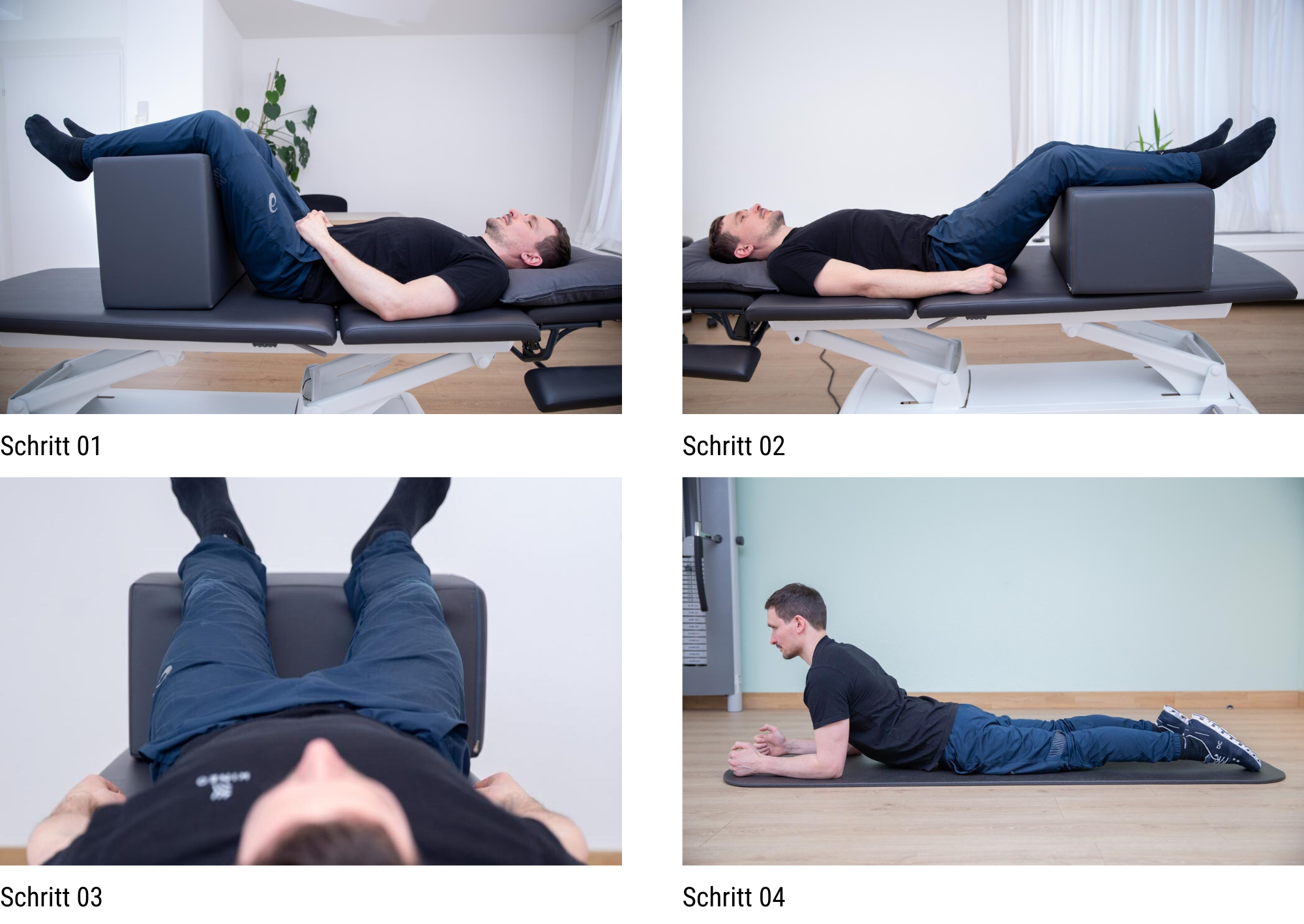
Step positioning (relief position)
Step positioning can relieve the lower back and is often used for acute lumbar complaints.
How it works:
- Lie on your back on a mat or the floor
- Rest your legs on a stool or sofa (hips and knees bent at about 90°)
- If comfortable: increase the distance to the stool slightly
- Gradually straighten your legs further over several days
- Optional: lie fully on your back with your legs straight
If it feels good, you can also lie gently on your stomach to carefully mobilise the lumbar spine (without arching your back).
Strength and movement exercises
Targeted exercises can help to:
- reduce pain
- build stability
- prevent relapses
👉 Important: don’t force exercises during phases of severe pain.
WHAT KINEO CAN DO FOR SCIATICA
If sciatica limits your everyday life, we at KINEO support you in a targeted way throughout the entire rehabilitation process.
Our goal is to bring you back into your everyday life, work and sport pain-free and functionally resilient.
Physiotherapy for sciatica
At the start, the focus is on a precise analysis of your complaints. Radicular pain can have many causes, not only in the back itself but along the entire course of the nervous system.
In treatment, we use evidence-based approaches such as:
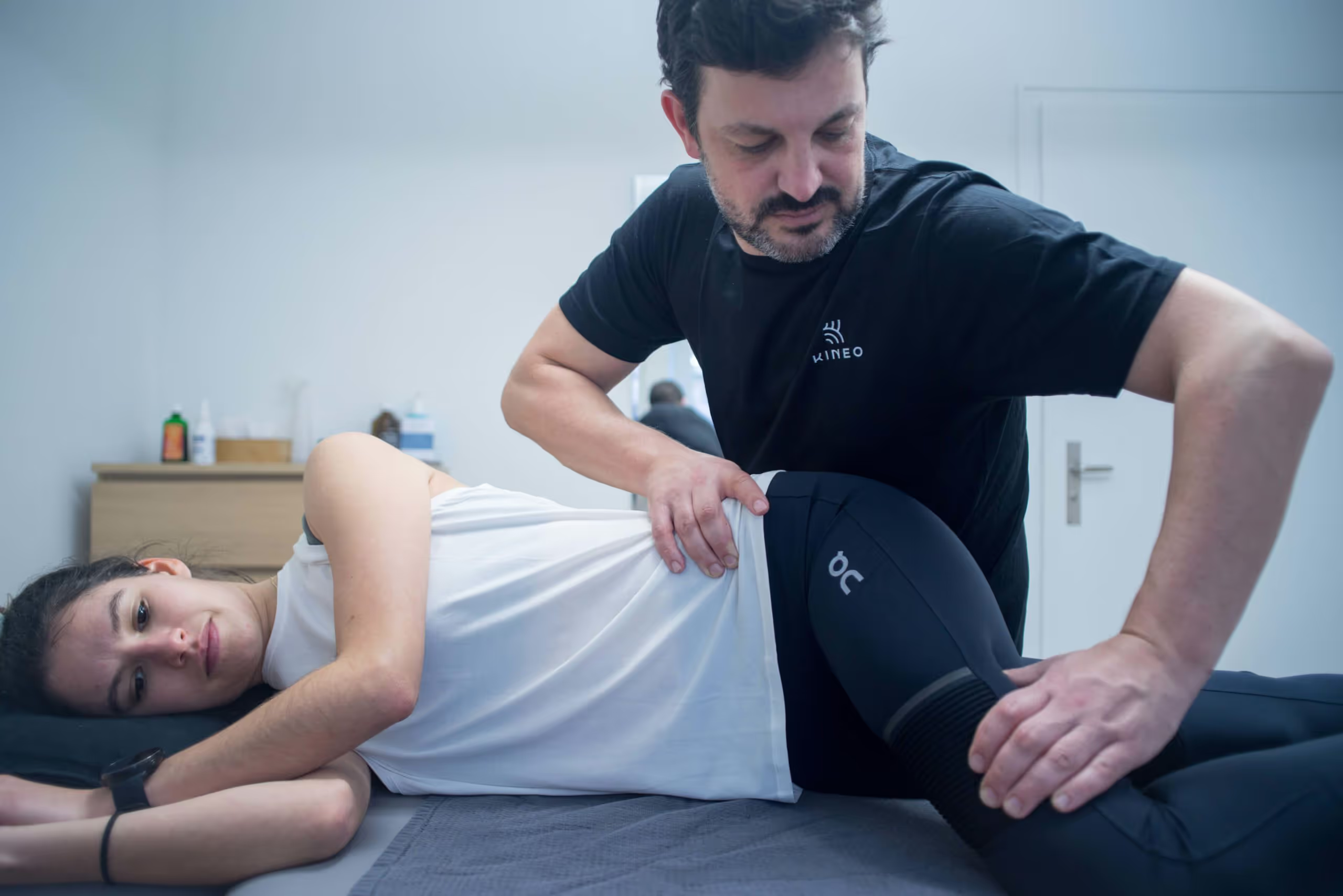
- manual therapy to mobilise joints and tissue
- neurodynamic techniques to improve nerve mobility
- active stretching and movement exercises for the muscle and fascial chains
The aim is to reduce the pressure on the nervous system and make movement less painful again.
Depending on the findings, the following can also be used:
- TENS (pain relief through nerve stimulation)
- Dry needling for myofascial trigger points

Active rehabilitation & training
Active training is a central component.
Together we work on:
- Trunk stability
- Spinal mobility
- Building up load in everyday life and sport
You receive an individually tailored exercise programme for home.
Depending on the phase, we use:
- Resistance bands
- Kettlebells
- Dumbbells
- Functional training equipment
Prevention & return to everyday life
As soon as the acute pain subsides, the focus is on:
- Preventing relapses
- Improving movement patterns
- Ergonomic organisation of everyday life
The goal is not just freedom from pain, but long-term resilience.
FAQ: SCIATICA & RADICULOPATHY
How long does sciatica last?
The duration varies greatly. Many acute complaints improve within a few days to weeks, depending on the cause and load management.
Is movement good for sciatica?
Yes. In most cases, controlled movement is better than complete rest. Too much rest can even prolong the symptoms.
When should I see a doctor?
If you have red flags such as paralysis, bladder or bowel problems, fever or severe pain at night, you should seek medical attention immediately.
Can a slipped disc cause sciatica?
Yes, a slipped disc is one of the most common causes of radicular pain in the lumbar spine.
Does heat help with sciatica?
Heat can reduce muscle tension and thereby relieve pain, especially when muscle tension is involved.