TOTAL JOINT REPLACEMENT (TJR): ARTIFICIAL HIP & KNEE JOINTS
WHAT IS A TOTAL JOINT REPLACEMENT?
A prosthesis is an artificial replacement for a body structure that takes over or supports its function.
There are two types:
- Exoprostheses → outside the body (e.g. leg or arm prostheses)
- Endoprostheses → implanted permanently in the body
An endoprosthesis is often used for joints that no longer work well enough because of wear or injury.
It most commonly affects:
- the hip joint
- the knee joint
Either only part of the joint is replaced (partial replacement) or the whole joint (total joint replacement / TJR).
In a total joint replacement (TJR), all the joint surfaces are replaced. In some cases they are also mechanically linked to restore stability and function.
KNEE REPLACEMENT (TOTAL KNEE REPLACEMENT)
WHY IS A KNEE JOINT REPLACED?
The knee is a complex joint under heavy load. It carries your body weight and is exposed to high forces in daily life and sport.
The most common reason for a total knee replacement is:
knee osteoarthritis (gonarthrosis)
Other causes can include:
- severe degenerative changes
- serious injuries (trauma)
- congenital malalignments (knock knees or bow legs) with faulty loading
In rare cases, a prosthesis is needed because the joint no longer works after an accident.
HEALING TIME AFTER A TOTAL KNEE REPLACEMENT
Rehabilitation progresses step by step and is different for everyone.
Typical time frames:
- Partial replacement: about 6 weeks until you can manage everyday activities
- Total replacement: about 3 months until you are back to normal loading
- Full adaptation of muscles & tissue: up to 12 months
Important: the artificial joint heals in quickly, but muscles, coordination and strength take much longer.
Physiotherapy plays a decisive role here.
HIP REPLACEMENT (TOTAL HIP REPLACEMENT)
HOW THE HIP JOINT WORKS
The hip joint is a ball-and-socket joint and allows movement in many directions. At the same time, it carries heavy loads and stabilises your upper body in daily life.
Because of this high load, wear and tear is common here too.
TYPES OF HIP PROSTHESIS
There are different types of prosthesis:
- Straight-stem prosthesis
- → most commonly used, very well studied
- Short-stem prosthesis
- → shorter, more modern type of implant
- Resurfacing prosthesis (surface replacement / McMinn prosthesis)
- → keeps the femoral head and neck, only caps the joint surface
Which prosthesis is chosen depends on your age, bone quality and activity level.

COMMON REASONS FOR A TOTAL HIP REPLACEMENT
The most common reason is:
hip osteoarthritis (coxarthrosis)
The joint cartilage slowly breaks down, which means:
- pain develops
- movement is restricted
- function is increasingly lost
Other causes:
- femoral neck fracture
- poor blood supply to the femoral head (necrosis)
- severe trauma
HEALING TIME AFTER A TOTAL HIP REPLACEMENT
Recovery depends strongly on:
- age
- general health
- fitness before surgery
Typical courses:
- about 6 weeks: first functional recovery of muscles & joint capsule
- 6–8 weeks: start of light activities (walking, cycling, power walking)
- 4–6 months: largely back to sport & daily life
On average, a hip prosthesis lasts:
about 10–15 years (often longer with well-managed loading)
LIFE WITH AN ENDOPROSTHESIS
WHAT TO KEEP IN MIND
It takes time to get used to an artificial joint. At the start, it is normal that:
- movements feel unfamiliar
- strength and stability are reduced
- you feel unsure when walking
Important measures:
- take part consistently in the rehabilitation programme
- remove trip hazards at home (rugs, cables etc.)
- use forearm crutches in the early phase
IMPORTANT RULES AFTER A TOTAL HIP REPLACEMENT
In the early phase, you should avoid the following movements:
- bending the hip beyond 90°
- turning the leg strongly inwards
- crossing your legs
Background: these positions can increase the risk of dislocation (the prosthesis popping out of the socket).
EXERCISE & SPORT WITH A PROSTHESIS
After a joint replacement, exercise is not just allowed, it is essential for good function.
Benefits:
- faster recovery
- better muscle activation
- more stability in daily life
SUITABLE SPORTS
Joint-friendly activities are a good choice:
- walking / strolling / hiking
- cycling
- swimming / aqua jogging
- gymnastics
- light strength training
LESS SUITABLE SPORTS
You should rather avoid:
- jogging / running
- sports with jumps
- contact sports (e.g. football, basketball)
- sports with a high risk of falling (e.g. skiing on difficult terrain)
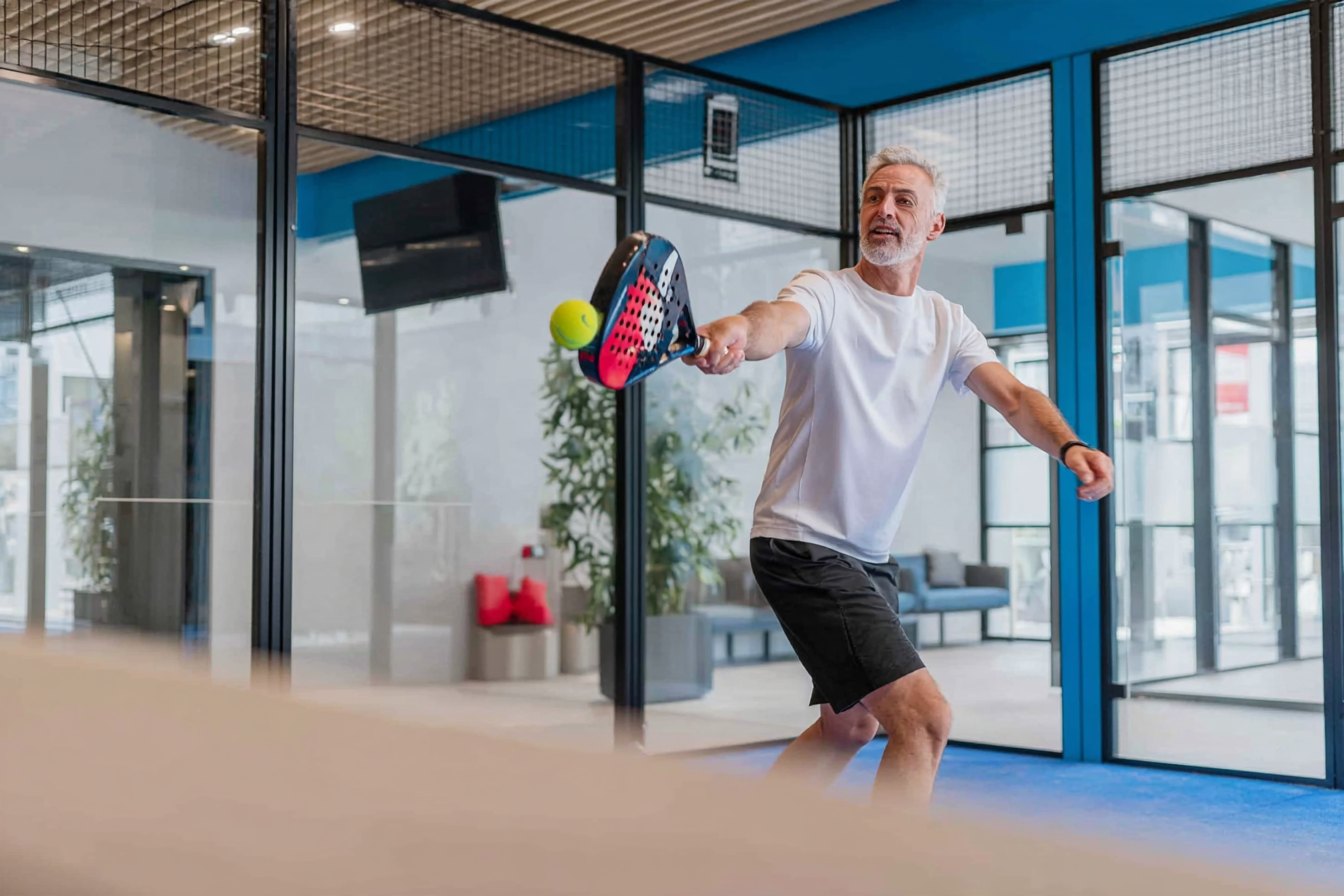
- fast changes of direction (tennis, squash)
The aim is to protect the prosthesis in the long term and avoid overloading it.
HOW KINEO CAN HELP AFTER A TOTAL KNEE REPLACEMENT
Early, structured physiotherapy is decisive for a good result after surgery.
EARLY PHASE: PAIN & SWELLING
Straight after surgery, the focus is on:
- reducing swelling
- relieving pain
- managing inflammation
We use:
- active & passive mobilisation
- lymphatic drainage
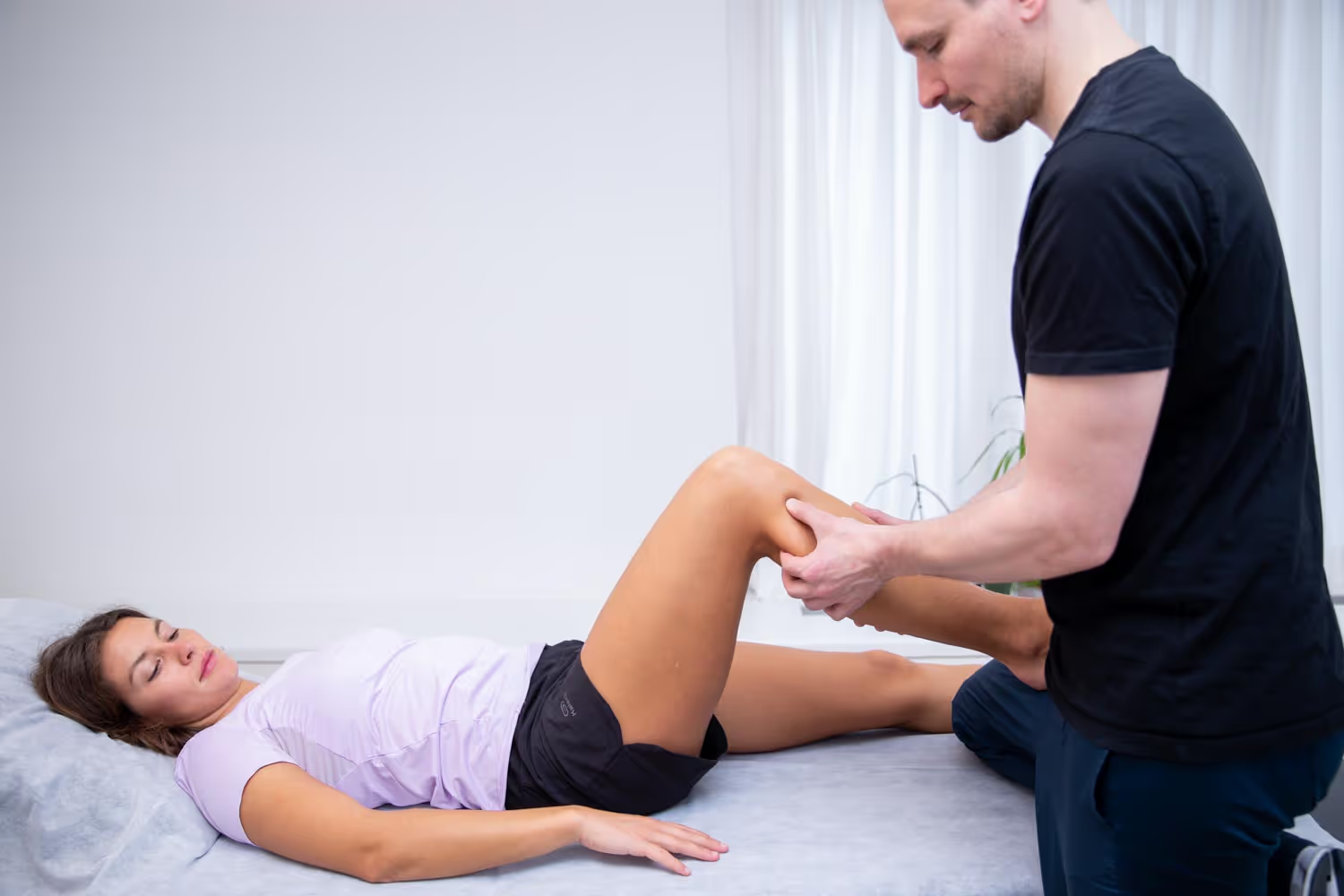
- manual therapy
- trigger point treatment
- cold compression (e.g. Game Ready)
FUNCTION & MOBILITY
As you progress, the focus is on:
- restoring knee mobility
- scar treatment
- improving your walking function
STRENGTHENING & FUNCTIONAL TRAINING
The next step is active build-up of:
- the quadriceps and gluteal muscles
- stability & coordination
- functional movement patterns
We also use:
- SensoPro training for balance & reaction
- gait analysis in the Kineo Runners Lab
- individual home exercises
LONG-TERM REHABILITATION
For lasting improvement, we recommend:
- medical training therapy (MTT)
- targeted strength training
- steady, progressive increases in load
The aim is a stable, resilient and pain-free joint in daily life.
HOW KINEO CAN HELP AFTER A TOTAL HIP REPLACEMENT
Structured follow-up treatment is just as decisive after a total hip replacement.
EARLY PHASE
Focus areas:
- pain control
- reducing swelling
- safe mobilisation
Methods:
- manual therapy
- active/passive movement exercises
- lymphatic drainage
- cold applications

ACTIVE HOME PROGRAMME
At the start, you receive an individual exercise programme for home:
- promoting mobility
- improving balance
- preventing muscle loss
- gait training
BUILD-UP PHASE
As you progress, the focus is on:
- building strength in the leg muscles
- hip stability
- improving your gait pattern
- fall prevention
TRAINING & LONG-TERM FUNCTION
For further improvement, we use:
- SensoPro training for coordination
- gait analysis in the Kineo Runners Lab
- medical training therapy
The aim: a stable, resilient hip for daily life, sport and quality of life.
FAQ: TOTAL JOINT REPLACEMENT (HIP & KNEE)
How long does a knee or hip prosthesis last?
On average, an endoprosthesis lasts about 10–15 years, often longer. How long it lasts depends on factors such as activity level, body weight, fitness and how well you manage loading in daily life.
When can I walk normally again after surgery?
Walking is usually started straight after surgery with support. Over the first few weeks, your gait improves steadily. You can usually expect largely normal walking after 6–12 weeks.
How long does rehabilitation after a joint replacement take?
The key phases are:
- after about 6 weeks: first everyday activities are manageable
- after about 3 months: clearly improved resilience
- after about 4–6 months: largely back to daily life and sport
- Full adaptation can take up to 12 months.
Which sports are allowed with a prosthesis?
Joint-friendly activities are best, such as:
- strolling, hiking
- cycling
- swimming / aqua fitness
- gymnastics and adapted strength training
You should rather avoid sports with high impact, jumps or a risk of falling.
Why is physiotherapy so important after an endoprosthesis?
Physiotherapy supports:
- reducing swelling and pain
- rebuilding strength and mobility
- improving your gait pattern
- the stability and function of the new joint
- a safe return to daily life and sport
CONCLUSION
A total joint replacement can reduce pain significantly and greatly improve your quality of life. What matters most, though, is good rehabilitation.
With targeted physiotherapy, active training and sensible load management, you can integrate your new hip or knee into daily life in the best possible way.