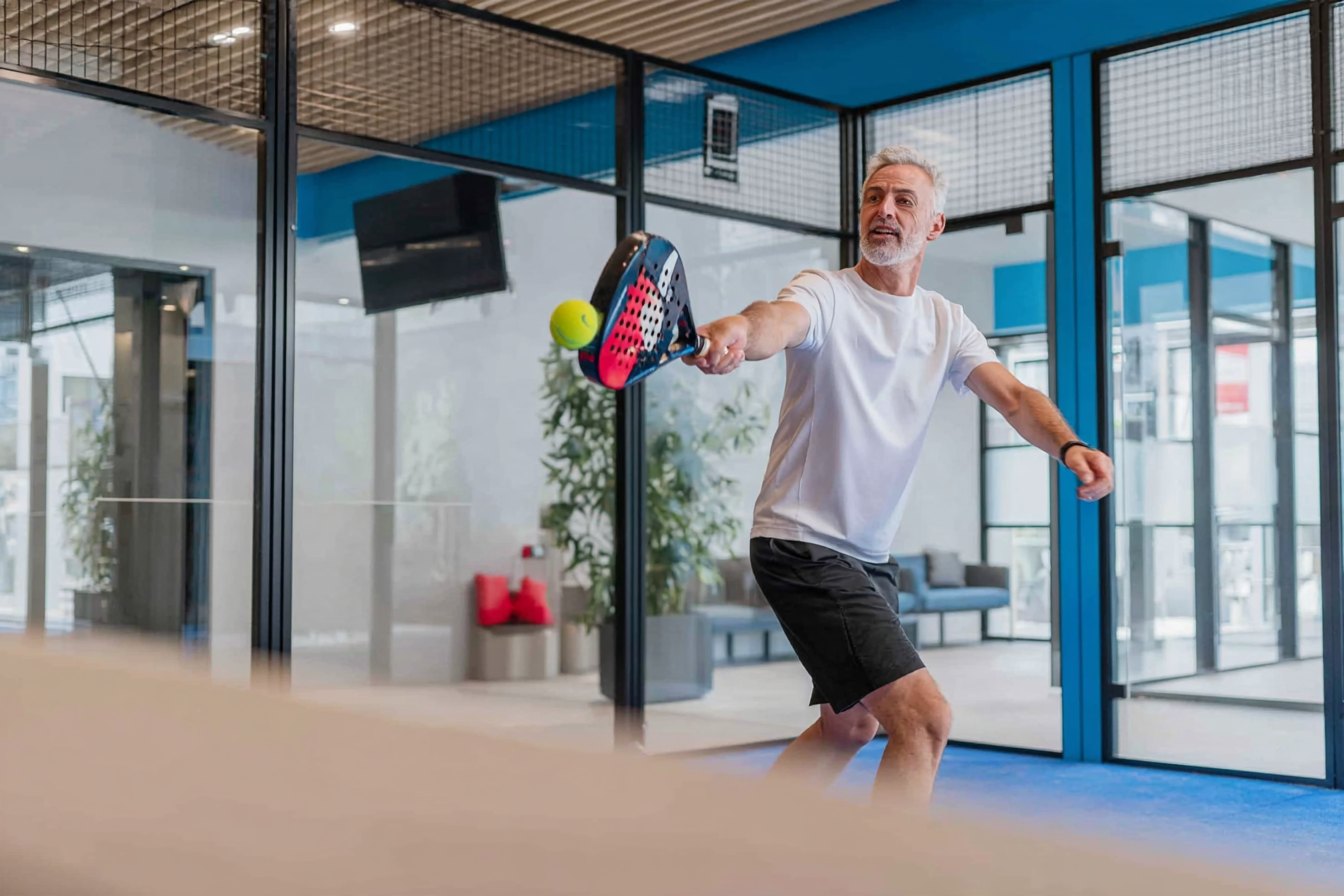

SPINAL STENOSIS: NARROWING OF THE SPINE
WHAT IS SPINAL STENOSIS?
A spinal stenosis (spinal canal stenosis) describes a narrowing of the spinal canal, in which the spinal cord and important nerves run.
This narrowing can lead to increased pressure on:
- nerve structures
- blood vessels
- the spinal cord itself
This can cause pain, neurological symptoms and, in advanced cases, permanent nerve irritation.
Spinal stenosis most often occurs in the lumbar spine (LS), as this section is under particular strain in everyday life. It mainly affects older people, as wear and tear increases with age.
COMMON CAUSES OF SPINAL STENOSIS
The most common cause is degenerative changes in the spine.
These include:
- wear of the intervertebral discs
- thickening of ligaments and joint structures
- bony growths (osteoarthritis)
Over time, these changes mean that the space in the spinal canal becomes narrower and narrower.
Other possible causes are:
- herniated discs
- spondylarthrosis (joint wear of the spine)
- spondylolisthesis (slipped vertebra)
Usually it is an interplay of several factors over a long period.
SYMPTOMS OF SPINAL STENOSIS
Typical of spinal stenosis is that the symptoms occur mainly when walking and standing.
People affected often report:
- pain in the lower back
- pain radiating into the buttocks or legs
- increasing symptoms with prolonged loading
- tingling or numbness in the legs
- loss of strength in the lower limb
A very typical feature is the so-called "spinal claudication":
The pain gets better when you bend forward, sit or ride a bike.
Why?
Because the spinal canal opens up slightly in this position and the pressure on the nerves falls.
Simply standing still usually does not bring enough relief.
WHAT TO DO ABOUT SPINAL STENOSIS?
If you notice numbness, increasing weakness or severe neurological symptoms, you should definitely have it checked by a doctor.
Depending on its severity, spinal stenosis can affect the nervous system and should therefore be taken seriously.
With milder to moderate symptoms, you can become active yourself. The following strategies can help to improve symptoms and increase your resilience.
EXERCISE FOR SPINAL STENOSIS
A lack of exercise often makes back problems worse.
Even if exercise is hard when you are in pain:
Targeted activity is one of the most important factors for improvement.
Exercise helps to:
- stabilise the trunk muscles
- promote blood flow
- improve the nutrient supply to the discs
- increase the back's resilience
What matters is not "a lot", but correctly dosed exercise.
BACK-FRIENDLY SPORTS
Particularly suitable are joint-friendly, so-called low-impact activities:
- walking
- cycling (very good for spinal stenosis!)
- swimming / aqua fitness
- yoga
- Pilates
These sports encourage movement without heavy impact loading or extreme compression of the spine.
Less suitable are sports with:
- jumps
- quick changes of direction
- high axial loading
e.g.:
- tennis
- basketball
- volleyball
- intensive HIIT with jumps
What always matters: yes to exercise, but without provoking severe pain.
EXERCISES & STRENGTHENING AT HOME
A central part of therapy is building up the trunk muscles.
It is important:
- not only to train the back
- but also to strengthen the abdominal muscles
Why?
A stable muscular balance relieves the spine and improves control in everyday life.
HEAT & RELAXATION FOR SPINAL STENOSIS
Muscle tension often occurs in spinal stenosis as a protective reaction.
Heat can help to:
- reduce muscle tension
- improve blood flow
- relieve pain subjectively
Heat therapy
Suitable options are:
- heat patches from the pharmacy
- hot water bottle or heating pad
- warm full bath
Heat is easy to apply and can be integrated well into everyday life.
RELAXATION & MASSAGE
Manual relaxation techniques can also bring short-term relief:
- massage of the surrounding muscles
- manual therapy
- myofascial techniques
Important:
These methods do not change the narrowing in the spinal canal itself, but they can positively influence pain processing and muscle tension.
HOW KINEO CAN HELP WITH SPINAL STENOSIS
At KINEO, we follow an evidence-based, active and individual treatment approach for spinal stenosis.
The aim is to:
- reduce your pain
- improve your walking distance
- restore your resilience in everyday life
CONSERVATIVE PHYSIOTHERAPY FOR SPINAL STENOSIS
At the start, a thorough clinical examination comes first.
We analyse:
- mobility of the spine
- muscular function
- the nervous system (neurodynamics)
- adjacent structures such as hip and pelvis
ACUTE PHASE: PAIN REDUCTION & MOBILISATION
In the acute phase, we work with:
- manual therapy for mobilisation
- soft tissue techniques to reduce tension
- dry needling for myofascial trigger points
In addition, we specifically treat neurodynamics, that is, the mobility of the nervous system.
ACTIVE REHABILITATION
A central part is active training:
We work on:
- building strength in the trunk muscles
- improving posture
- coordination and motor control
- gradual increases in load
You receive an individually adapted exercise programme for home.
TRAINING & LONG-TERM STABILITY
As things progress, we often recommend a complementary:
medical training therapy (MTT) over about 3 months.
Here you can build up in a targeted way under guidance:
- muscle strength
- mobility
- stability
In addition, we use equipment such as the SensoPro trainer to improve your coordination and sensorimotor function.
GOAL OF THERAPY
Our goal is not only short-term pain reduction, but:
- long-term resilience
- more confidence in movement
- a return to everyday life, work and sport
KINEO accompanies you step by step.
FAQ: SPINAL STENOSIS
What is spinal stenosis, simply explained?
A narrowing of the spinal canal that can put pressure on nerves and cause pain or numbness.
What helps most with spinal stenosis?
Targeted exercise, strengthening of the trunk muscles and individually adapted physiotherapy.
Which exercise is good for spinal stenosis?
Cycling, walking, swimming, yoga and Pilates are usually well suited.
Why is the pain better when sitting?
Because the spinal canal opens up in a slightly bent position and the pressure on the nerves falls.
Does spinal stenosis have to be operated on?
Not necessarily. Many cases can be treated conservatively with physiotherapy and training.