

Acromioclavicular joint osteoarthritis (AC joint osteoarthritis): understanding and treating pain on top of the shoulder
Pain directly on top of the shoulder, especially when raising your arm, lying on your side or when pressure is put on the joint: this is typical of acromioclavicular joint osteoarthritis.
Many people describe it like this:
“I can still move my arm, but this one spot on my shoulder really hurts with certain movements.”
This small, often overlooked joint, the AC joint, can cause major limitations in everyday life.
The good news: with targeted physiotherapy and active training, the complaints can be reduced significantly.
What is acromioclavicular joint osteoarthritis?
In AC joint osteoarthritis, the cartilage between:
- the collarbone (clavicle) and
- the roof of the shoulder (acromion)
wears down. This leads to friction, inflammation and pain under load.
The AC joint is small, but biomechanically extremely important for:
- raising your arm
- overhead movements
- pushing and supporting movements
- pressure (e.g. lying on your side in bed)
Causes and risk factors
It usually develops gradually and has several causes:
- Age-related wear and tear (often from 50+)
- Overuse from sport (strength training, tennis, CrossFit, manual work)
- Previous injuries such as collarbone fractures or AC joint separations
- Genetic predisposition to cartilage degeneration
- Repeated pressure on the joint
Sporty and active people in particular are often affected.

Typical symptoms of AC joint osteoarthritis
Very characteristic are:
- Localised pain on top of the shoulder
- Pain with overhead movements
- Pain when moving the arm across in front of the body (e.g. putting on a jacket)
- Pain when lying on the affected side
- Tenderness directly over the joint
- Clicking or grinding when moving
- A feeling of loss of strength
Many people first think of “shoulder tendinitis”, but the cause often lies in the AC joint.
Diagnosing AC joint osteoarthritis
The diagnosis is made using:
- Targeted clinical tests (e.g. the cross-body test)
- Pain provocation directly over the joint
- Shoulder mobility and strength tests
- X-rays to show bony changes
A precise examination is crucial, as AC joint complaints differ greatly from other shoulder problems.
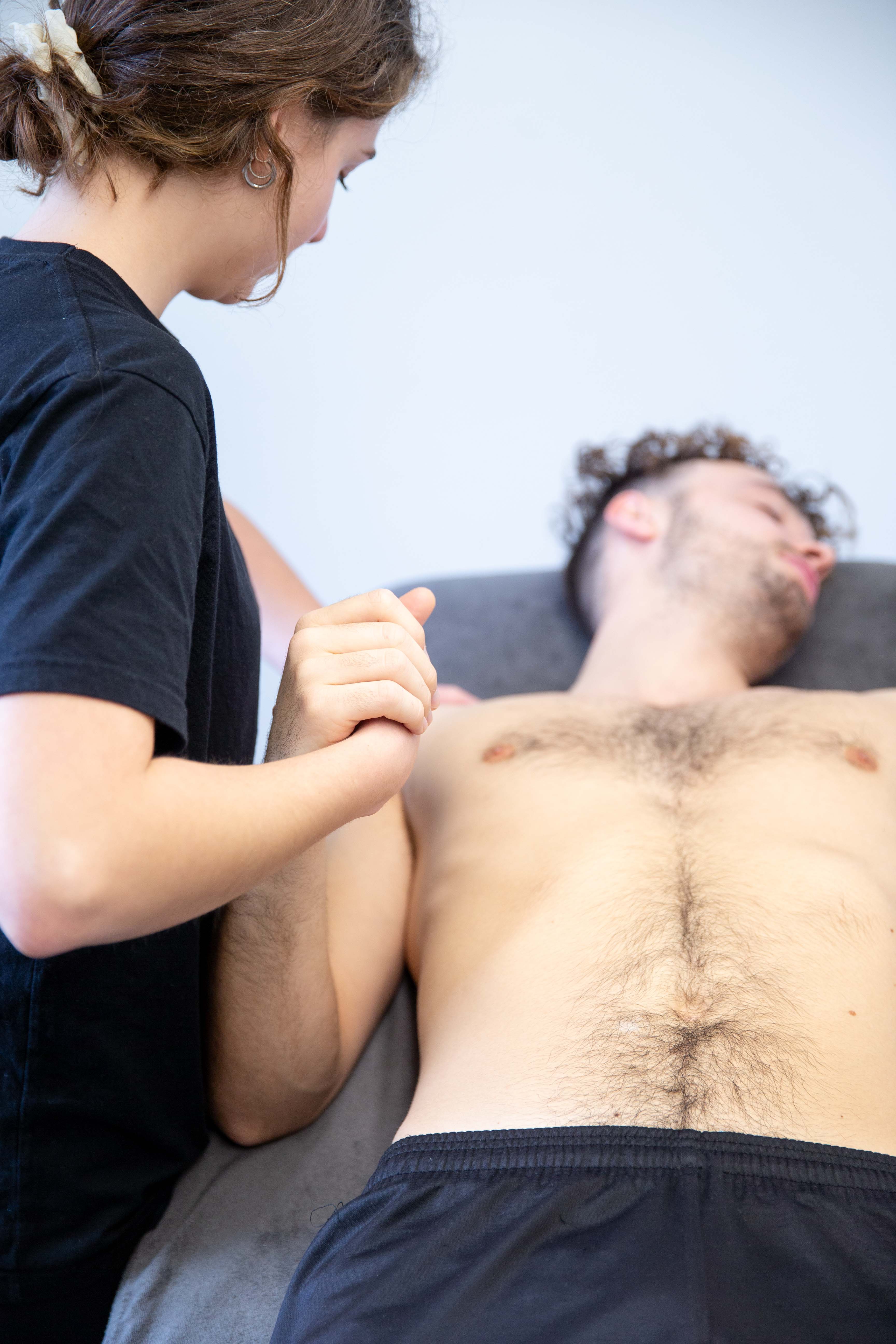
What you can do yourself for AC joint osteoarthritis
Reduce aggravating movements
- Temporarily reduce overhead loading
- Don’t lean on the shoulder
- Avoid lying on the painful side
Heat for chronic irritation
- Heat pad or warm shower to relax the muscles
- Promotes blood flow around the joint
Important exercises for home
These exercises relieve the AC joint by guiding the shoulder better biomechanically.
1. Shoulder blade activation
- Stand upright
- Draw your shoulder blades back and down
- Hold for 10 seconds, 10 repetitions
Reduces pressure on the AC joint.
2. External rotation with a resistance band
- Elbow against your body
- Pull the band outwards
- 15 repetitions
Strengthens the rotator cuff to relieve the joint.
3. Pendulum exercises
- Lean your upper body slightly forward
- Let your arm swing loosely
- 30–60 seconds
Promotes joint lubrication without pressure.
4. Chest stretch
- Forearms against a door frame
- Lean slightly forward
- Hold for 30 seconds
Improves shoulder position and relieves the joint.
How physiotherapy at KINEO helps with AC joint osteoarthritis
At KINEO Physiotherapie, we don’t just treat the painful joint, but the entire mechanics of the shoulder.
Manual therapy and mobilisation
- Specific mobilisation of the AC joint
- Releasing tension in the shoulder girdle
- Myofascial techniques around the shoulder and chest
Additional measures
- Shockwave therapy for chronic irritation
- Heat applications as preparation
- Kinesiology taping for relief in everyday life
The crucial part: active training
Without targeted strengthening, the pain comes back.
We train with you:
- Rotator cuff
- Shoulder blade muscles
- Thoracic spine extension
- Movement coordination when raising the arm
This takes the pressure off the AC joint for the long term.

Ergonomics, everyday life and prevention
We show you specifically:
- How to perform overhead movements in a joint-friendly way
- How your workstation should be set up
- Which sleeping position relieves your AC joint
- How you can continue to do sport without pain
Long-term care at KINEO
AC joint osteoarthritis doesn’t need rest; it needs the right load.
That’s why at KINEO you get:
- Individually tailored treatment plans
- A personal home exercise programme
- Regular adjustments to your progress
- Concrete guidance for your everyday life
Conclusion: AC joint osteoarthritis responds very well to treatment
Even though cartilage wear cannot be reversed, pain and limitations can be reduced significantly through targeted physiotherapy and training.
Many patients are surprised how quickly the complaints improve once the shoulder works biomechanically correctly again.
Book an appointment for pain on top of the shoulder
If you have pain directly at the AC joint, especially with overhead movements or when lying on your side, a targeted examination is worthwhile.
Book your appointment at KINEO Physiotherapie now and get your shoulder moving again without pain.