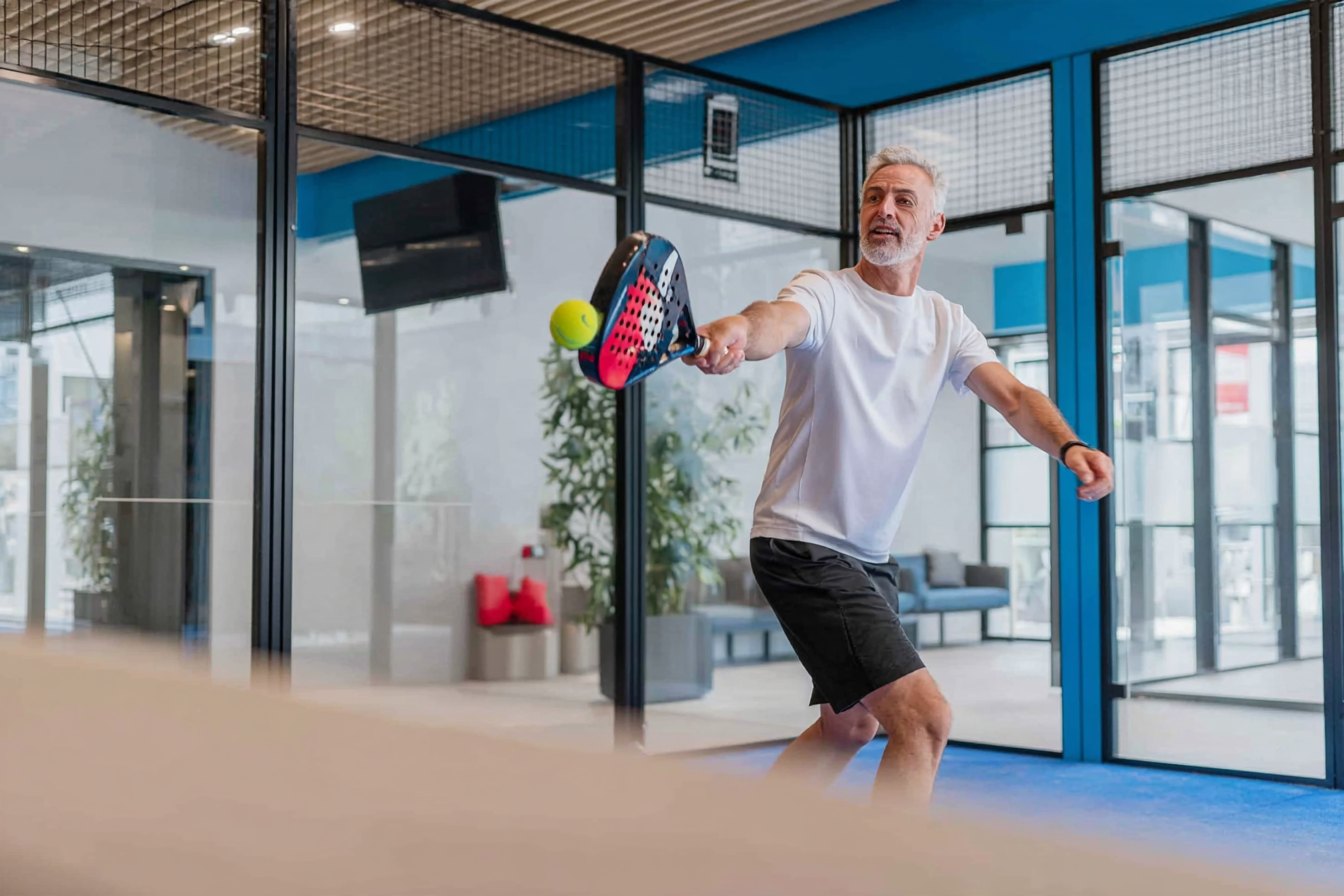

Back problems in sport
Your back is the central axis of your musculoskeletal system. In almost every sporting movement, whether running, jumping, throwing or lifting, the spine and muscles transmit forces, stabilise your body and enable complex movements.
It is precisely this constant load that makes the back particularly prone to overload and injury in athletes.
In sport, there are also:
- high intensities
- repetitive loads
- sport-specific, often one-sided movement patterns
The result: typical patterns of symptoms, from acute muscle tension to chronic pain and structural changes.
Why back problems occur in athletes
Back pain rarely has one trigger. It is usually a combination of several factors.
Overload and too little recovery
Training phases that are too intense without enough recovery overwhelm the adaptability of muscles, fascia and intervertebral discs.
One-sided movement patterns
Sports such as tennis, golf or throwing disciplines load the trunk asymmetrically. Over time, muscular imbalances and a higher susceptibility to injury develop.
Weak or imbalanced core muscles
Many athletes train hard, but not the deep stabilising muscles in a targeted way. An imbalance between the abdominal, back and hip muscles reduces control of the spine under load.
Restricted mobility of the hip and thoracic spine
If the hip or thoracic spine is stiff, the lumbar spine often compensates, a classic overload mechanism.
Technique errors in training
Incorrect lifting techniques in squats or deadlifts can create localised overload that develops into serious problems over time.

Typical patterns of symptoms in sport-related back problems
Lumbar spine syndrome (lumbar syndrome)
Dull, pulling pain in the lower back, often radiating into the buttocks, worse with load or longer sitting.
Muscle tension and trigger points
Localised muscle hardening with tenderness to pressure and possible radiating pain.
Disc problems
One-sided, radiating pain, possibly accompanied by numbness or loss of strength.
Sciatica
Burning pain from the lower back through the buttocks into the leg, worse when sitting.
Thoracic spine dysfunction
Common in rotation sports, leading to compensatory overload of the lumbar spine.
What you can do yourself for acute back pain
Relative rest instead of bed rest
Avoid loads that trigger pain, but stay in light movement.
Cold in the acute phase (24–48 h)
Cool for 15–20 minutes, several times a day.
Then heat for tension
Hot water bottle, warm shower or cherry stone pillow.
Relieving positions
Lying on your back with a pillow under your knees, or lying on your side with a pillow between your knees.
Gentle mobilisation
Pelvic tilts lying on your back: slowly alternate between arching and rounding your lower back.
If you have numbness, tingling or muscle weakness: see a doctor.
Effective exercises to strengthen your back
Forearm plank
Hold for 20–60 seconds, 3 sets. Neutral back, tension in the abdomen and glutes.
Superman
Lying on your front, lift your arms and legs, hold for 10–15 seconds, 8–10 repetitions.
Russian twists
Train rotational stability, 15 reps per side, 3 sets.
Kettlebell deadlift
Hip-dominant movement with a neutral spine, 10–12 reps, 3 sets.
Pallof press with band
Anti-rotation exercise, 10 reps per side, 3 sets.

Improve mobility and recovery
Cat-cow on all fours
10–15 repetitions to mobilise the entire spine.
Thoracic rotation
8–10 reps per side to improve thoracic spine mobility.
Hip mobilisation in a lunge
1–2 minutes per side, ideal before training.
Active recovery
20–30 minutes of easy movement such as swimming, cycling or walking.
Sport-specific prevention
Strength training
Focus on technique in squats, deadlifts and bench press. Include core training and anti-rotation exercises.
Running
Optimise hip mobility, trunk stability and running technique. Vary your shoes and routes.
Rotation sports (golf, tennis, martial arts)
Train thoracic spine mobility + rotational stability. Balance out asymmetries.
Swimming and water sports
Strengthen shoulder blade stability, thoracic spine mobility and the posterior chain.
How we support you with physiotherapy at KINEO
Comprehensive analysis of your back in the context of your sport
We don't just look at the point of pain, but at your entire musculoskeletal system and your sport-specific movements.
Manual therapy and mobilisation
Releasing blockages, improving joint mobility, myofascial techniques and neuromobilisation.
Physical therapy measures
Heat, cold, electrotherapy or shockwave for chronic trigger points.
Progressive functional training
Building deep stabilisation → integration into functional movements → sport-specific loading.
Movement analysis and technique coaching
Video analysis, correction of lifting and sport techniques, coaching of optimal movement patterns.
Complementary techniques as needed
Dry needling, kinesio taping, sensorimotor stimulation or medical flossing.
Individual home exercise programme
So that you stay pain-free in the long term and avoid relapses.

FAQ: back problems in sport (short)
Should I take a break if I have back pain?
No. Only reduce loads that trigger pain and stay in light, pain-free movement.
When do I need to see a doctor?
If you have numbness, tingling, loss of strength or severe, persistent pain.
Is strength training good for the back?
Yes, as long as technique, progression and core stability are right.
Heat or cold for back pain?
Cold in the first 24–48 h, then heat to relax the muscles.
How do I prevent back problems in the long term?
Core training, good hip and thoracic spine mobility, clean technique and enough recovery.
Conclusion: your back is trainable and extremely adaptable
Back problems in sport are common, but very much open to influence if you:
- build stability in a targeted way
- improve mobility
- optimise technique
- take recovery seriously
The earlier you react, the faster you get back to pain-free performance.
Book your appointment now for a sport-specific back analysis and get your back back into top shape.