
What is restless legs syndrome (RLS)?
Restless legs syndrome is a neurological disorder that triggers a strong, barely controllable urge to move the legs. People affected describe tingling, pulling, burning or inner restlessness, especially in the evening and at night at rest.
Typical: movement brings immediate relief, while lying still makes the symptoms worse.
The result is often difficulty falling and staying asleep and a marked reduction in quality of life.
RLS is not a muscle or joint disease, but a disorder of sensory processing in the nervous system, although it can be clearly influenced by physical factors.

Causes and risk factors
The exact cause is not fully understood. The following factors are well described scientifically:
- genetic predisposition (running in families)
- low iron levels (ferritin!)
- chronic conditions such as diabetes or kidney failure
- neurological conditions such as Parkinson's disease
- certain medications (e.g. antidepressants, antihistamines)
- pregnancy (especially the last trimester, usually reversible)
Iron deficiency is one of the most common and most treatable triggers.
Typical symptoms
- strong urge to move the legs at rest
- abnormal sensations: tingling, pulling, burning, "pins and needles"
- worse in the evening / at night
- clear relief from walking or stretching
- sleep problems, daytime tiredness
The diagnosis is made clinically on the basis of these criteria and, if needed, blood tests (especially the ferritin level).
What can you do yourself?
1. Use exercise in a targeted way
Walks, easy cycling or gentle mobilisation in the evening can reduce symptoms.
2. Stretch the calf and thigh muscles
Reduces muscular tension, which can increase the perception of restlessness.
3. Warmth before bed
A warm bath, heat pad or warm shower have a calming effect on the nervous system.
4. Optimise sleep hygiene
Fixed times, a dark room, no screen light late in the evening.
5. Reduce triggers
Less caffeine, alcohol and nicotine.
6. Have your iron status checked
Check your ferritin level and, if needed, supplement (under medical supervision).
Medication (prescribed by a doctor)
Depending on severity, the following are used:
- Dopamine agonists (e.g. pramipexole, ropinirole)
- Gabapentin / pregabalin
- Iron supplements in case of deficiency
- Sleep-promoting medication if needed

How can physiotherapy support you with RLS?
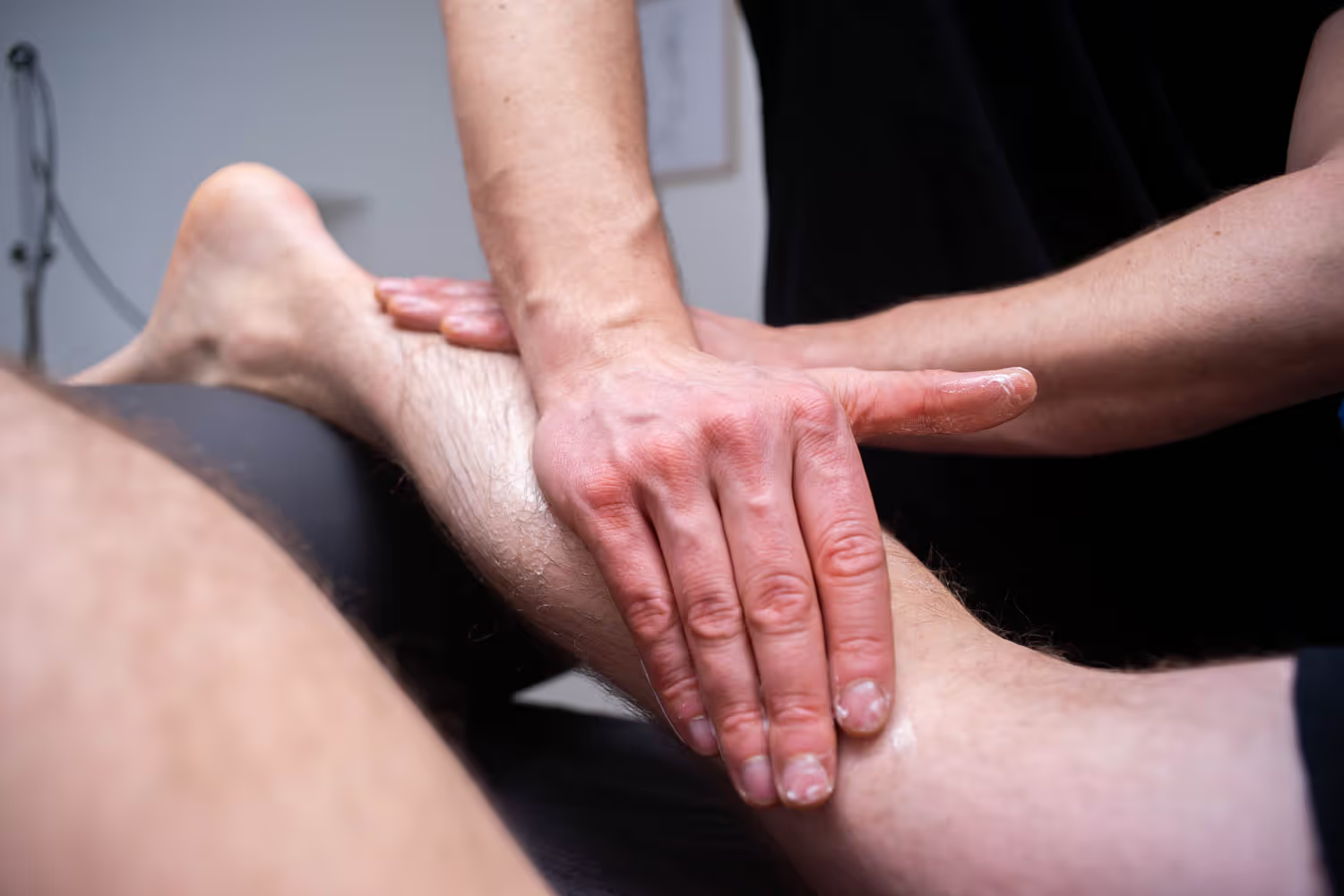
Even though RLS has a neurological cause, peripheral states of tension and stress on the nervous system can make the symptoms worse. This is where physiotherapy comes in as support.
Myofascial treatment & trigger points
- Releasing increased tension in the calves, thighs and lower back region
- Improving local circulation
- Reducing myofascial trigger points that can intensify abnormal sensations
Regulating the nervous system
Gentle manual techniques, calm holds and breathing work promote parasympathetic activity, so the body comes out of its "inner alarm state".
Combination with targeted stretching or mobilisation exercises
After treatment, simple exercises help prolong the effect and keep tension low.
Important: these measures don't cure RLS, but they can clearly reduce the intensity and frequency of symptoms.

How does KINEO help you with restless legs?
At KINEO we follow a holistic, evidence-based approach that takes the nervous system, muscles and everyday life into account.
We support you with:
- myofascial techniques and trigger point treatment
- individual stretching and evening routines for home
- breathing and relaxation strategies to regulate the nervous system
- advice on exercise, sleep and everyday factors
- interdisciplinary collaboration if needed (e.g. iron status, medication)
The aim is not just short-term relief, but calmer evenings and restful sleep.

FAQ: restless legs syndrome
Is RLS a muscle disease?
No. It is a neurological disorder of sensory processing.
Why does movement help immediately?
Movement changes the sensory feedback to the nervous system and briefly reduces the abnormal sensations.
Should I have my iron level checked?
Yes. A low ferritin level is a common and very treatable trigger.
Can massages and fascia treatments help?
They can reduce tension and calm the nervous system: supportive, but not curing the cause.
Does RLS go away again?
In pregnancy, often yes. Otherwise it is usually chronic, but very treatable.
If your legs won't settle in the evening, your sleep suffers, and with it your quality of life.
With the right strategies, you can clearly reduce the symptoms.
Book your appointment at KINEO for calmer nights and more relaxed legs.