
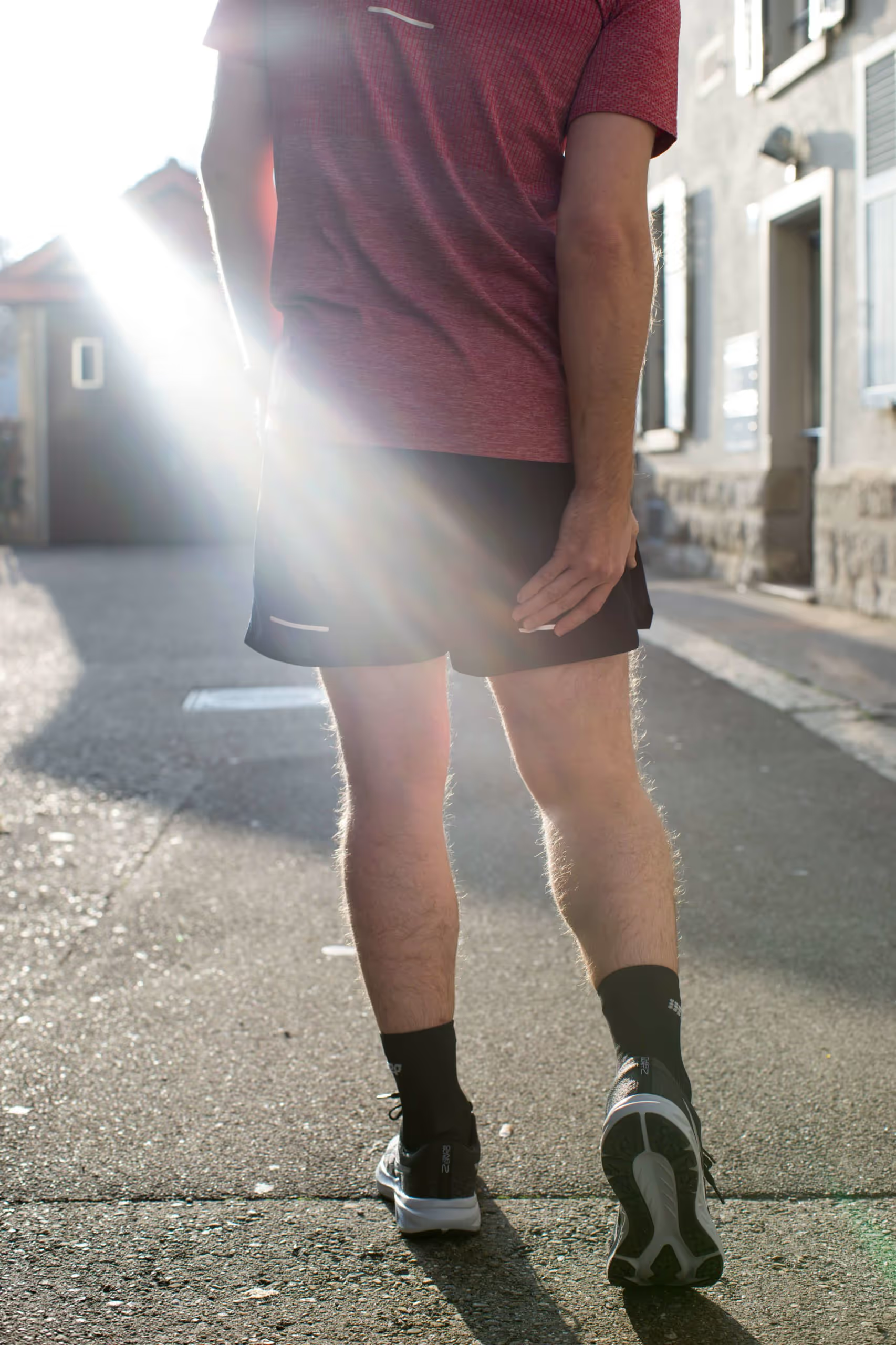
WHICH SYMPTOMS OCCUR IN PIRIFORMIS SYNDROME?
Pain in the buttock can be very unpleasant and, at the same time, hard to place. Perhaps you know this pulling, deep feeling in your bottom that radiates into the thigh and increasingly limits you in everyday life. This is exactly how piriformis syndrome can feel.
Typical signs are:
- pulling or stabbing pain in the buttock
- radiation into the back of the thigh
- stronger symptoms when sitting
- possible pain in the lower back (lumbar spine)
- tenderness in the area between the sacrum and the side of the buttock
Many people affected describe sitting becoming a real strain, especially long car journeys or office work.
Piriformis syndrome is counted among back complaints, but is closely linked to the sciatic nerve. The sciatic nerve runs right next to the piriformis muscle and can be affected by tension or irritation.
WHERE IS THE PIRIFORMIS MUSCLE?
The piriformis muscle lies deep in the buttock, under the gluteus maximus. It connects the sacrum with the thigh bone and takes on important tasks:
- External rotation of the hip
- partial abduction (spreading out) of the leg
- Stabilisation of the hip and pelvis
DIFFERENTIAL DIAGNOSIS: SCIATICA OR SLIPPED DISC?
Because the sciatic nerve runs very close to the piriformis muscle, the symptoms can be similar or overlap.
When the nerve is directly irritated or pinched, this is called sciatica. Typical are stabbing pains that occur with sudden movements such as coughing or sneezing.
Piriformis syndrome can also feel similar to a slipped disc. If numbness or tingling also occur, you should get it checked by a doctor.
WHICH CAUSES LEAD TO PIRIFORMIS SYNDROME?
The cause is often mundane, but very effective in everyday life.
Sitting for a long time, especially in the office, means that the buttock muscles
- become less mobile
- lose elasticity
- develop increased baseline tension
That makes them more sensitive to load and irritation.
It can also arise in sport, particularly in runners, through:
- overload
- weak gluteal muscles
- unfavourable running technique
WHAT YOU CAN DO YOURSELF
Even if the pain can be stubborn, you are not helplessly at its mercy.
1. Reduce tension
With acute symptoms, rest is often decisive. Pause activities that put strain on the area so that it can settle.
- With acute irritation: apply cold (pain-relieving, anti-inflammatory)
- With tension: use heat (blood flow, relaxation)
Heat can be supported, e.g., with ointments or a warm bath with essential oils (lavender, rosemary or lemon oil).
2. Stretch the piriformis in a targeted way
Without targeted treatment, the problem often persists or comes back.
Important approaches:
- regular stretching of the piriformis
- improving movement patterns
- adjusting training load
- varying running routes
If the symptoms persist, a physiotherapy assessment makes sense.
HOW KINEO PHYSIOTHERAPY CAN HELP YOU
If the pain limits your everyday life or isn't getting better, targeted therapy is crucial.
Functional physiotherapy for piriformis syndrome
At the beginning there is always pain relief:
- Trigger point therapy and dry needling to release muscle tension
- manual techniques to treat fascia and connective tissue
- Shockwave therapy to support healing
As soon as the acute pain subsides, the decisive step follows: working on the cause.
Here we analyse:
- Movement patterns
- muscular imbalances
- poor posture and incorrect loading
Afterwards an individual programme is built up:
- targeted stretching exercises
- functional strength training
- improving coordination and motor control of the trunk, pelvis and leg
In addition, you can train through:
- Medical training therapy (MTT) in Thalwil, Wipkingen or Escher Wyss
- SensoPro trainer at all locations
The goal is not just being pain-free, but a resilient, stable and mobile body in everyday life and sport.
FAQ: PIRIFORMIS SYNDROME
1. How long does piriformis syndrome last?
That is individual. With targeted therapy, many cases improve within a few weeks; chronic courses can take longer.
2. Can I keep doing sport despite the pain?
Light exercise is often possible, but load that triggers pain should be reduced so as not to risk it becoming chronic.
3. How can I tell the difference from a slipped disc?
Numbness, marked nerve deficits or sudden loss of strength point more towards a disc problem and should be checked.
4. Does stretching really help?
Yes, but only if it is properly dosed and embedded in an overall programme of strength and control.
5. When should I go to physiotherapy?
If the pain lasts longer, keeps coming back or limits you in everyday life, a targeted physiotherapy assessment makes sense.