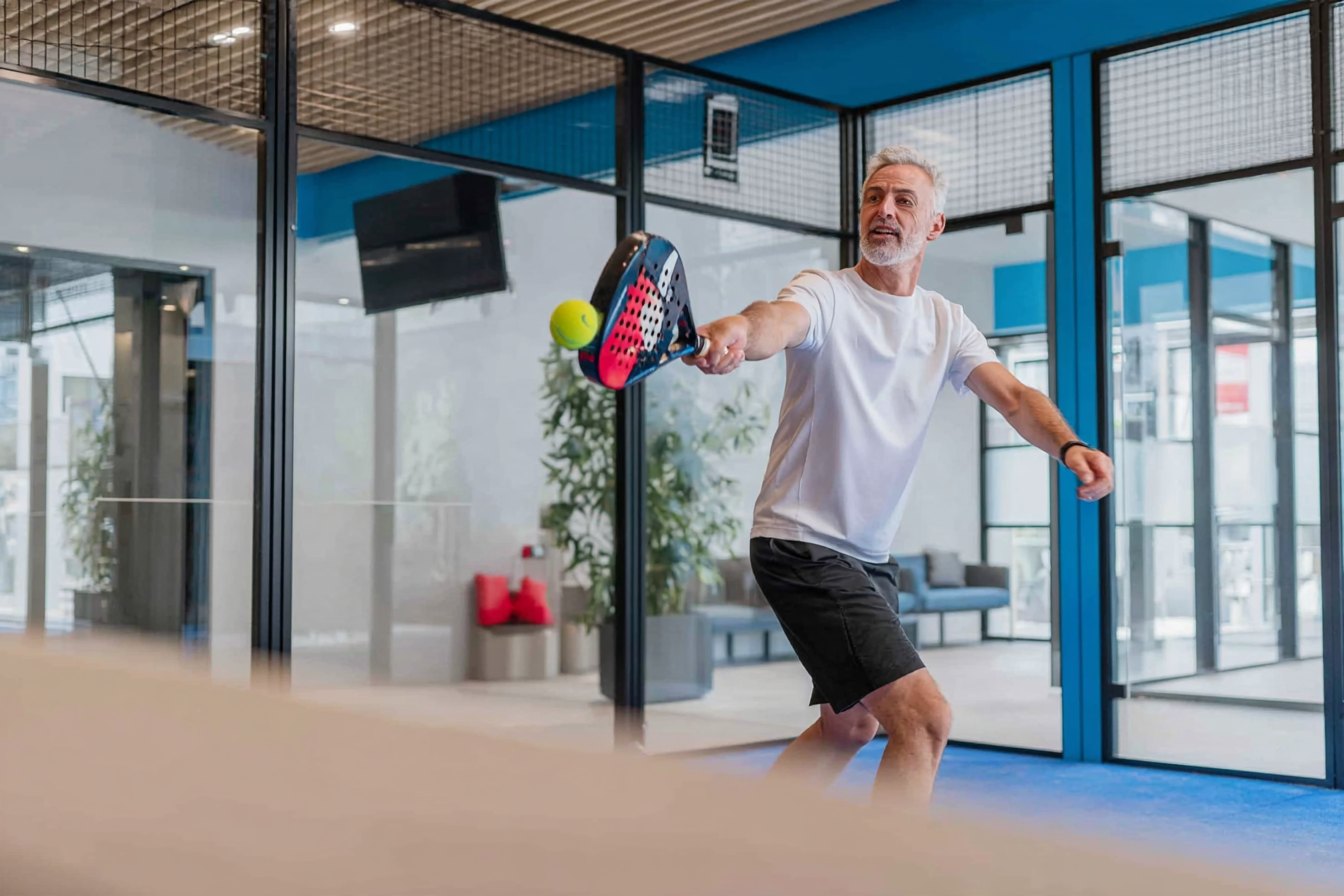

WHAT IS A MENISCUS TEAR?
A meniscus tear (also called a meniscus lesion or meniscus damage) usually occurs through a sudden overload or twisting movement in the knee. It is one of the most common knee injuries in sport, but it can also occur in everyday life or through degenerative changes.
The meniscus is a crescent-shaped disc of cartilage in the knee joint, lying between the thigh bone (femur) and the shin bone (tibia). Each knee has two menisci:
- medial meniscus
- lateral meniscus
Their main functions are:
- shock absorption in the knee joint
- load distribution between the joint surfaces
- stabilisation of the knee during movement
A tear can occur in either meniscus, although the medial meniscus is affected much more often.
Types of meniscus tear
Different tear patterns are distinguished:
- bucket-handle tear
- longitudinal tear
- transverse tear
- radial tear
- flap tear
- horizontal tear
The exact pattern is especially important for treatment and prognosis.
SYMPTOMS OF A MENISCUS TEAR
An acute meniscus tear typically shows itself through:
- sudden, stabbing knee pain
- pain on the inner or outer side of the knee (depending on the structure affected)
- restricted movement
- sometimes swelling or irritation
Important:
The pain does not come directly from the meniscus itself, because it has hardly any nerves. The symptoms arise from the consequences in the joint, for example:
- reduced shock absorption
- altered pressure conditions in the knee
- loose pieces of meniscus that can get caught (joint locking, “catching sensation”)
CAUSES OF A MENISCUS TEAR
There are two main causes:
1. Traumatic (injury-related) meniscus tears
These usually result from:
- sudden twisting movements in the knee under load (knee torsion)
- sports with high loads and changes of direction
Typical high-risk sports:
- skiing and snowboarding
- football
- handball
- tennis
The cruciate ligaments are often involved as well.
2. Degenerative (wear-related) meniscus damage
This develops gradually over time through:
- repeated micro-injuries
- age-related cartilage wear
- chronic overload or incorrect loading
Typical risk factors:
- repetitive kneeling work (e.g. tiling)
- frequent squats under load
- insufficient recovery
- muscular imbalances
TREATMENT OF A MENISCUS TEAR
A meniscus tear only heals completely on its own in certain cases. Smaller lesions in the well-supplied area can regenerate, but targeted therapy is often necessary.
Treatment always depends on:
- the type and location of the tear
- symptoms and loss of function
- stability of the knee joint
- the person's loading demands
Conservative treatment
Conservative therapy is mainly used for:
- degenerative meniscus damage
- stable, small tears
- incidental findings with few symptoms
Goals of conservative treatment:
- pain reduction
- improved load tolerance of the knee
- restoration of function
- building up the surrounding muscles
Typical measures:
- adjusting your load
- physiotherapy support
- targeted strength building
- functional training
Surgical treatment
Surgery is recommended if:
- conservative therapy does not help enough
- there is severe pain
- locking or catching occurs
- mobility is clearly restricted
The bucket-handle tear is particularly relevant, as parts of the meniscus can get caught in the joint here and cause acute locking.
Surgery today is usually done:
- arthroscopically (minimally invasive / “keyhole surgery”)
WHAT YOU CAN DO YOURSELF FOR A MENISCUS TEAR
A meniscus tear does not automatically mean the end of your sporting activity. What matters is a structured approach to the injury.
Acute phase: first measures
RICE rule
- R – Rest: stop loading immediately
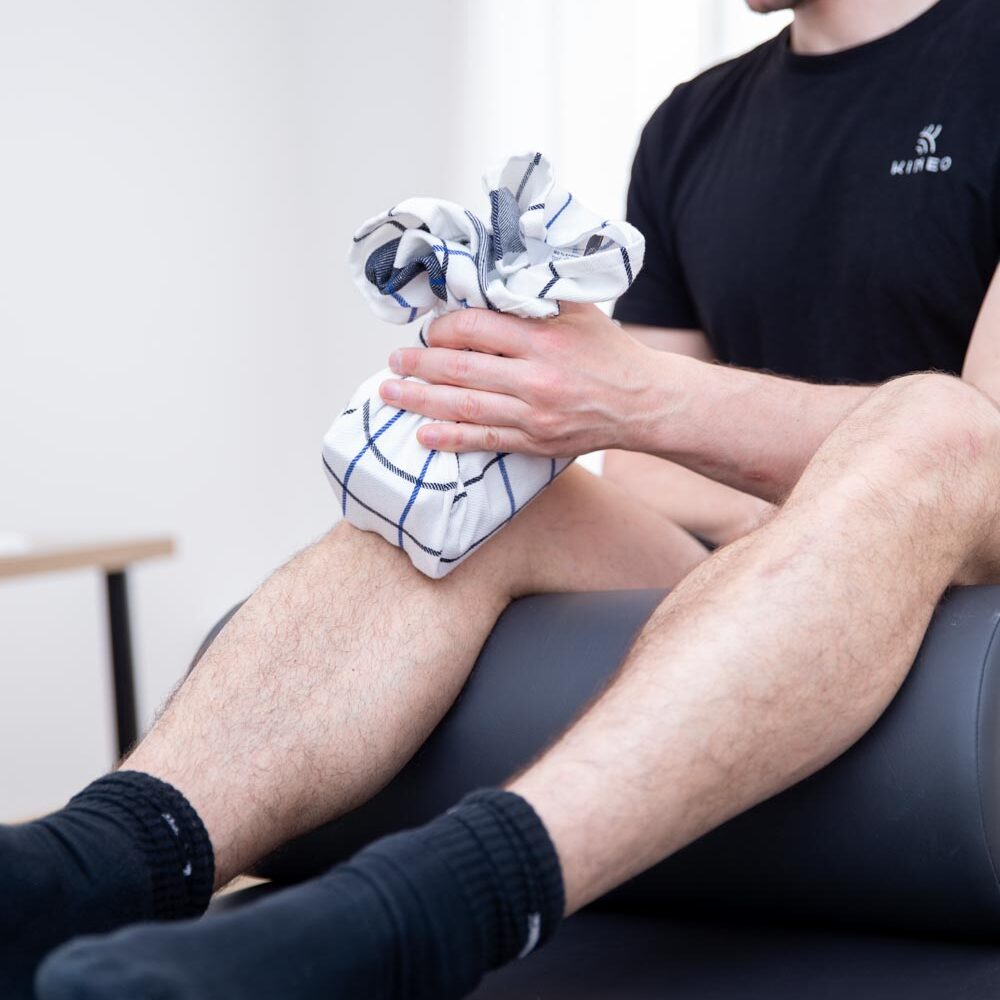
- I – Ice: cool the knee (10–15 minutes, never directly on the skin)
- C – Compression: light compression to reduce swelling
- E – Elevation: raise the leg to take the load off
Cold and heat
- In the first 48 hours: cold to relieve pain and reduce swelling
- After that (from about 48 h): heat can promote metabolism and support healing
Movement after the injury
After a meniscus injury or surgery:
- increase your load slowly
- respect pain as a clear limit
- follow your doctor's instructions without fail
Joint-friendly sports:
- walking
- swimming
- Pilates & yoga
- cycling
Knee brace
In the early phase, a brace can:
- give stability
- improve confidence in the knee
- offer protection under load
Important:
- use it only temporarily
- do not wear it permanently, as the muscles' own stabilisation can otherwise decrease
Strength training after a meniscus tear
Targeted leg training is crucial for:
- stability of the knee joint
- returning to everyday life and sport
- preventing new injuries
Training should:
- be built up slowly
- be done in a controlled way
- be tailored to you

PREVENTING MENISCUS AND KNEE INJURIES
Good knee health rests on three key factors:
1. Regular activity
Movement is essential, because cartilage is nourished through the joint fluid. This is only distributed optimally through movement.
2. The right training dose
Too much load increases the risk of overuse.
Too little load weakens the tissue.
Important:
- increase gradually
- avoid overload
- take recovery seriously
3. Strong muscles
Strong leg muscles clearly reduce the load on the knee and protect the meniscus in the long term.

HOW KINEO CAN HELP WITH A MENISCUS TEAR
Physiotherapy care at KINEO supports you in both the conservative and the post-operative phase.
Goals of therapy:
- restoring strength, stability and coordination
- a safe return to everyday life and sport
- long-term prevention of new injuries
Early phase after the injury or surgery
In the early phase, the focus is on:
- reducing swelling (e.g. lymphatic drainage)
- pain relief
- gentle mobilisation
In addition:
- surrounding muscles are treated manually
- initial mobility is improved
Build-up phase
As soon as the knee can take more load:
- active mobilisation
- individual strength training
- functional exercises
The aim is a gradual build-up of:
- muscle strength
- stability
- movement quality
Training and taking responsibility
A central part of therapy is:
- clear exercise instruction
- a consistent home programme
A lasting result can only be achieved through regular training outside therapy.
Additional training options at KINEO
- Medical training therapy (MTT) in Wipkingen, Escher Wyss or Thalwil
- individual training under supervision
- sensorimotor training on the SensoPro
FAQ: MENISCUS TEAR
1. Can a meniscus tear heal on its own?
Small tears in the well-supplied area can partly heal. However, many meniscus injuries need targeted therapy.
2. Does every meniscus tear need surgery?
No. Many cases are treated conservatively. Surgery is only necessary for certain tear patterns or severe symptoms.
3. How long does healing take?
Between a few weeks and several months, depending on severity and treatment.
4. Can I do sport with a meniscus tear?
Only to a limited extent and adapted. Pain is an important warning sign here.
5. What helps best to prevent it?
Strong leg muscles, good load management and regular functional training.