
Herniated disc (disc prolapse)
What is a herniated disc?
A herniated disc, medically a disc prolapse, means that the outer fibrous ring of an intervertebral disc tears and parts of the inner, gel-like core move outwards. This can put pressure on neighbouring nerves. It can cause pain, tingling, numbness or loss of strength, but it doesn't have to.
Important to know: many herniated discs are found by chance on an MRI scan without the person having any symptoms. The finding alone therefore does not explain any pain.
Structure and function of the discs
Between your vertebrae lie discs like small shock absorbers. They consist of:
- a firm outer fibrous ring (annulus fibrosus)
- a gel-like core (nucleus pulposus)
This structure distributes compressive, tensile and shear forces with every movement. It keeps your spine mobile and cushions loads when walking, lifting or twisting.
How does a herniated disc develop?
Repeated or unaccustomed loading can cause small tears in the fibrous ring. Displacement of the core is a normal change depending on age and load. It only becomes a problem when nerves are irritated or compressed.
Herniated discs can occur in all sections of the spine:
- Cervical spine: neck, shoulder, arm
- Thoracic spine: mid back (rare)
- Lumbar spine: lower back, buttock, leg (most common)
Typical symptoms
Depending on location and extent, symptoms can be very different.
In general:
- Back pain with movement
- Pain radiating into the arm or leg
- Tingling or numbness
- Muscle weakness
Cervical/thoracic spine:
- Neck and shoulder pain
- Symptoms down into the hands/fingers
- Loss of strength in the arms
Lumbar spine:
- Lower back pain (lumbago)
- Radiation into the leg (sciatica)
- Worse when bending, coughing, sitting
- Caution: bladder or bowel problems → have them checked by a doctor immediately

What can you do yourself about a herniated disc?
The good news: most herniated discs heal very well without surgery. Movement is one of the most important factors.
Movement and sport
Movement promotes blood flow and the metabolism of the disc and reduces pain.
Suitable (low impact):
- Pilates (adapted)
- Gentle yoga
- Nordic walking
- Cycling in an upright position
- Backstroke
Temporarily unsuitable:
- Rotation sports (tennis, golf, squash)
- Skiing
- Contact sport
- Jerky, explosive movements
Step position (very effective for the lumbar spine)
- Lie on your back with your legs at 90° on a stool/sofa
- Takes the load off nerves and muscles
- 10–20 minutes, several times a day
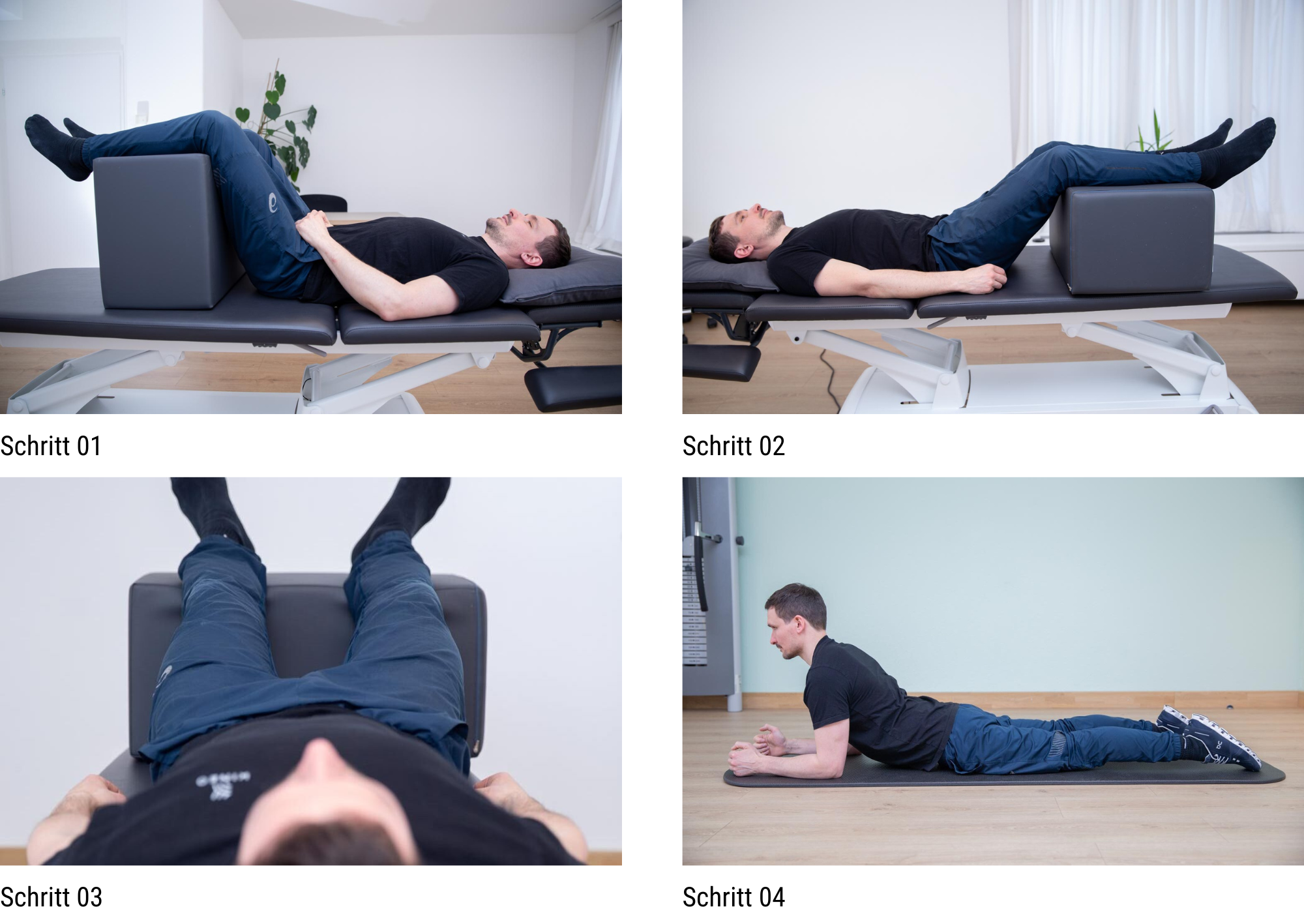
Later you can gradually move on to lying on your stomach and pushing yourself up with your arms (gentle extension).
Heat, fluids, relaxation
- Heat relaxes tense muscles
- Drink enough (about 30 ml/kg/day)
- A warm bath for muscle relaxation
Important basic rules
- No bed rest
- Tolerate pain up to a maximum of 4/10
- Patience: clear improvement often after 4–8 weeks
How can you prevent it?
- Change position often in everyday life
- Lift with your legs
- Regular strength training for the trunk and hips
- A combination of strength and endurance
- Maintain mobility of the hips and thoracic spine
How does physiotherapy help with a herniated disc?
Our approach at KINEO is phase-based, individual and active.
Phase 1: acute phase
Goal: calm the pain, make movement possible
- Manual therapy for relief
- Soft tissue techniques, dry needling if appropriate
- Gentle mobilisation
- temporary posture adjustments
Phase 2: rehab phase
Goal: address the causes, build stability
- Training of the deep trunk muscles
- Establishing muscle balance
- Coordination & proprioception
- Progressive load build-up
Phase 3: prevention
Goal: prevent recurrences
- Training specific to everyday life
- Ergonomics advice
- Individual home exercise programme
- Self-management strategies

How long does healing take?
- Clear improvement often after 6–8 weeks
- Tissue adaptation can take months
- Consistency in training is crucial
Conclusion: active instead of anxious
A herniated disc is not a "broken back". With the right management, movement and targeted physiotherapy, in the vast majority of cases you can become pain-free and resilient again, without surgery. Book your appointment today.
FAQ: herniated disc
Does a herniated disc have to be operated on?
In most cases, no. Over 90% can be treated conservatively.
Can I move despite the pain?
Yes. Movement is essential for healing and pain reduction.
How long does the pain last?
Often clear improvement within weeks; full recovery takes time.
Is sitting bad for the disc?
Long, rigid sitting, yes. Changing position often is crucial.
When do I need to see a doctor immediately?
With numbness in the groin area or bladder/bowel disturbances.